

+2 Daha


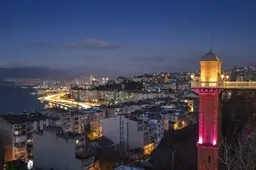
Izmir is one of the cities located in the west of Türkiye with a long historical past. Due to its geographical location, it has been in the interaction area of various cultures throughout history; this situation has left its traces in the architectural texture and urban structure of the city. The Historical Elevator, one of the important structures in Izmir, is a remarkable example in terms of the city's transportation infrastructure as well as its social and cultural development. Built in 1907 by Jewish businessman Nesim Levi Bayraklıoğlu, the structure was designed not only to facilitate transportation between two different elevations, but also as a functional solution for the urban life of the period.

Izmir Historical Elevator. (Source: Izmir Art)
The historical elevator is located in the Karataş district of Konak, Izmir, between Mithatpaşa Street and Halil Rıfat Paşa Street, known today as Şehit Nihatbey Street. There is a height difference of approximately 58 meters between these two streets. At the beginning of the 20th century, this height difference was overcome by a 155-step staircase. However, the steep staircase structure caused various difficulties in terms of access, especially for the elderly, the sick, and those carrying loads.
In this context, Nesim Levi Bayraklıoğlu, a businessman from the Jewish community of the period, financed the construction of an elevator structure in 1907 in order to overcome the height difference in question. Although there are different narratives about the design and construction process of the structure, some sources suggest that Levi developed this idea based on the impressions he gained during his European travels. According to another narrative, the structure came to the fore as a result of an accident in Levi's close vicinity. It is known that bricks brought from Marseille were used in the construction of the structure and that the structure was built in accordance with the technical possibilities of the period. The elevator initially operated with water and steam power and is considered to be one of the first examples built with this function in Türkiye.
There is information in the sources that the income obtained after the construction of the structure was used to meet the needs of the Karataş Jewish Hospital for a period. The tower, which is approximately 40 meters high, was integrated into the urban fabric both functionally and structurally during the period it was built; over time, it has taken its place in urban memory as a symbolic structure.
The Historical Elevator was built in the form of a four-stage tower in terms of architecture. The lowest part of the structure was made of stone material, while the upper three layers were made of brick. The brick sections were separated from each other with horizontal moldings; the corner areas were highlighted with protrusions. There are various decorative elements, such as egg frieze, plant, and star motifs on the entrance facade of the tower, especially in the section where the elevator cabin is located. These decorations provide information about the aesthetic understanding of the period when the structure was built.
There is an inscription written in French and Hebrew on the lower part of the stone section of the tower. The inscription states, “The elevator was built in 1907 by Nesim Levi.” The structure exhibits a form that gradually narrows upwards, and there is a wooden viewing terrace on iron consoles on its top floor. The cast iron railings on the terrace are decorated with decorative motifs and are an example of the period’s building ornamentation. When the elevator cabin is in operation, the outside view can be seen from the tower’s small windows; this architectural arrangement adds a visual dimension to the structure’s usage process.
The historical elevator was used for different functions throughout the 20th century and underwent various physical and functional transformations. During World War I, the lower floor of the structure was used as a casino, the middle floor as a photography studio, and the upper floor as a movie theater. During this period, the structure hosted various social and cultural events as well as transportation. In the post-war years, the structure was rented to different people and institutions; due to a lack of maintenance and repair, it eventually became unusable.
In 1942, the building was purchased by Şerif Remzi Reyent, a businessman known for his fig trade. However, in 1960, as a result of a dispute between Reyent and the Izmir Municipality, the building was decommissioned and began to be used as a warehouse. After Reyent died in 1973, the building remained unused for a long time; in 1983, it was donated to the Izmir Metropolitan Municipality by his niece Ayla Ökmen.
Following the donation, restoration work was initiated in order to re-function the building. In the first phase, which was carried out in 1985, the old water-powered mechanism of the elevator was converted to an electric system. In 1992, a more comprehensive restoration process was carried out within the scope of the "Izmir Historical Elevator and Its Surroundings Cultural Development Project". Within this scope, the street texture around the building was also rearranged; the building and its surroundings were evaluated in the context of urban tourism.
The entrance to the Historical Elevator is provided via the route currently known as “Dario Moreno Street”. This street began to be named after Dario Moreno, a musician born in Izmir, who lived in this area with his mother for a while in 1990. The street draws attention with the traditional housing types defined as “gum houses” on both sides. These structures reflect the characteristic features of Izmir’s traditional civil architecture and are currently used as various cafes, galleries, and commercial establishments. Dario Moreno Street and its surroundings have been taken under protection within the scope of cultural heritage, together with the Historical Elevator, and are considered an urban area of importance in terms of urban identity.
Today, the Historical Elevator is one of the important tourist focal points of Izmir. The structure is operated by Izmir Metropolitan Municipality and hosts cafes, restaurants, and similar social areas on its upper floor. The observation terrace offers visitors a wide panorama of Izmir Bay and the city skyline. The structure is open seven days a week between 08:00 and 24:00, and the use of the elevator is free of charge.
The historical Elevator attracts intense visitor interest, especially during sunset hours; the physical location of the structure and the access to the view are among the reasons why it is preferred in terms of social gatherings and recreational uses. The restaurant and resting areas located on the upper floor of the structure are operated in the context of urban tourism. The structure, which has remained standing for more than 105 years, both maintains its functionality and constitutes a historical reference point in terms of urban memory.
The construction process of the structure is evaluated in a context related to the social needs of the period, and is an infrastructure solution implemented by Nesim Levi Bayraklıoğlu. The structure plays a role in the formation of the urban identity of Izmir with its architectural features, transformations over time, and functional continuity today. Located in the Karataş region, this structure provided a solution to facilitate pedestrian access during the period it was built, and today it continues to exist as a multifunctional space integrated with urban tourism.

Henüz Tartışma Girilmemiştir
"Izmir Historical Elevator" maddesi için tartışma başlatın
The Birth of the Historical Elevator
Architectural Features
Historical Transformations
Dario Moreno Street
Current Status