

+1 Daha


Murata Rifles are the first domestically developed and manufactured rifles of Japan, introduced in 1880. The first model was named Murata Type 13, in reference to the 13th year of Emperor Meiji’s reign.
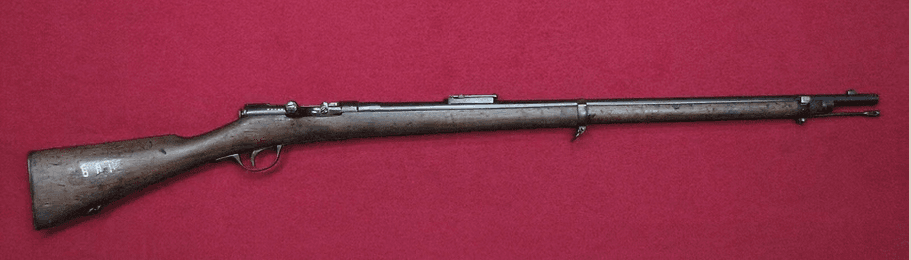
Murata Type 13 - Single Shot (Military Rifles)
This rifle marked the beginning of Japan’s domestic military arms industry, following a period during which the Imperial Japanese Army had relied on a variety of imported European firearms. The development of the Murata Rifle required the establishment of an industrial infrastructure in Japan.
The Murata rifle represented a critical step in Japan’s military modernization and industrialization. Following the Meiji Restoration, Japan rapidly turned to importing Western weaponry to match the technological superiority of Western nations. French Chassepot rifles, British Enfields, and American Rolling Block systems were among the models adopted. However, by the late 1870s, Japan began seeking to produce its own rifle. Tsuneyoshi Murata, a sharpshooter and military officer who studied European weapons systems, designed the first Japanese-made rifle inspired by the French Gras and Dutch Beaumont rifles. This design became the “Meiji 13 Murata”, adopted by the army in 1880.
Murata’s design was heavily influenced by modern Western firearms. Due to Japan’s still-developing industrial base, the production process involved support from the American Winchester company for machinery and ammunition. Initially, barrels were imported from Belgium, while other components were manufactured in Japan. The rifle’s most notable feature was its single-shot action, using metallic cartridges similar to the French Gras system. The rifle was further developed into the Type 18 model in 1885. Both models served as Japan’s main infantry weapons during the First Sino-Japanese War (1894–1895). As a symbol of Japan's transition from dependency to domestic production, the Murata Rifle played a key role in the country's technological and industrial transformation.
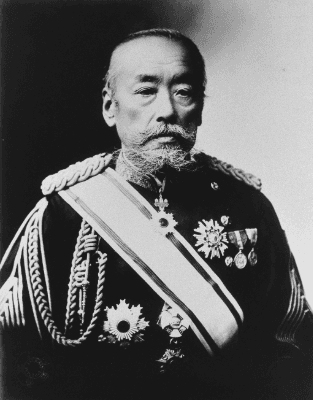
Murata Tsuneyoshi (National Diet Library)
The Murata Rifle was a single-shot, bolt-action weapon chambered in 11mm. Over time, design improvements led to the development of newer models:
The Murata Rifle was the standard infantry weapon of the Imperial Japanese Army and was actively used in several major conflicts. Despite technical improvements, the Type 22 model was found lacking during combat in the First Sino-Japanese War, prompting its replacement by the more modern Arisaka Type 30 rifle in 1898. However, due to limited production, Murata rifles remained in service into the later stages of the Russo-Japanese War (1904–1905).
Major Conflicts Involving Murata Rifles:
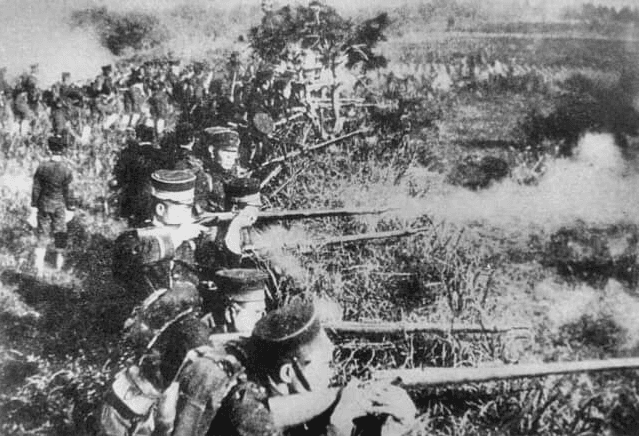
Japanese Soldiers Using Murata Rifles in the First Sino-Japanese War - 1894-1895 (Rekishijin)
Murata rifles required frequent maintenance, particularly the bolt mechanism, due to the lack of high-strength alloy steels. As such, the rifle was sometimes nicknamed the "poor man’s Beaumont."
By 1918, the Murata Rifle had been retired from active military service. Many units were sold on the civilian market and repurposed as hunting rifles, often with modifications like removed bayonet lugs and de-rifled barrels. Some examples remained intact and continued to be used as civilian firearms, even today.
One of the most notable international episodes involving Murata Rifles occurred during the Philippine struggle for independence. Filipino revolutionaries attempted to procure Murata rifles from Japan.
Revolutionary leaders Andres Bonifacio and Mariano Ponce coordinated with Japanese forester Nakamura Yaroku to supply rifles to the Katipunan movement. However, this attempt failed when the ship Nunobiki Maru, carrying the weapons, sank in a typhoon off the coast of Taiwan.
As the first indigenous firearm of Japan, the Murata Rifle symbolizes the beginning of the country’s military independence and industrial modernization. First manufactured in the 13th year of the Meiji era, it became an enduring symbol of Japan’s technological transformation. While combat experiences exposed its technical weaknesses, the Murata Rifle nonetheless served as the main infantry weapon of the Japanese army in several major conflicts.


Henüz Tartışma Girilmemiştir
"Murata Rifles" maddesi için tartışma başlatın
Development of the Murata Rifle
Murata Rifle Models and Technical Evolution
Battlefield Use of the Murata Rifle
Civilian Use and International Influence
Other Nations That Used Murata Rifles:
Bu madde yapay zeka desteği ile üretilmiştir.
