


Bu içerik Türkçe olarak yazılmış olup yapay zeka ile otomatik olarak İngilizceye çevrilmiştir.
+2 Daha
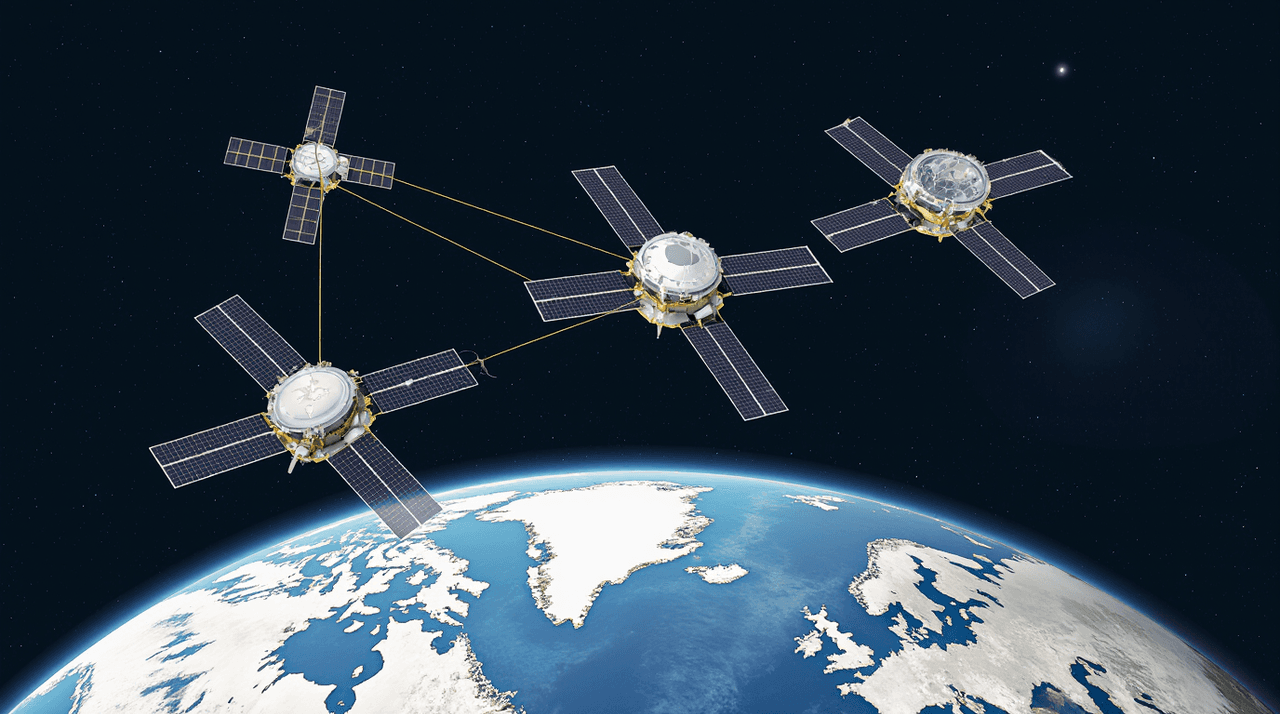
Nano Satellite Technologies (Generated with Artificial Intelligence)
Basic Features | Modular structure (especially CubeSat standard), low production and launch costs, short development time, solar panel power system and battery storage unit, small-scale data processing and communication systems. | ||||||||
|---|---|---|---|---|---|---|---|---|---|
Orbital Types | Low Earth Orbit (LEO) is typically preferred; this orbit provides low latency and low energy requirements. | ||||||||
Subsystems | Structural system, power module, communication unit, attitude control, thermal control, propulsion system, data processing unit, payload. | ||||||||
Application Area(s) | Earth observation (agriculture military reconnaissance and disaster management. scientific experiments and technology demonstration communication and IoT networks environmental disaster monitoring) | ||||||||
Advantage(s) | Low cost and rapid production easy access for educational and research institutions. flexible mission planning | ||||||||
Challenge(s) | Limited energy capacity orbital congestion and space debris risk. thermal management and radiation tolerance constraints short mission lifetime | ||||||||
Nano satellite technologies are small-scale satellite systems that stand out in space research due to their low cost, rapid production, and flexible mission design capabilities. Weighing only a few kilograms, these satellites are used by both government institutions and the private sector for purposes such as Earth observation, communication, scientific experiments, and space exploration. The miniaturization of electronic components, increased energy efficiency, and reduced manufacturing costs have accelerated the adoption of this technology.
The fundamental structure of nano satellites is designed in a modular format. The most common form, the CubeSat standard, consists of 10-centimeter cubic units that can be combined into configurations such as 1U, 3U, or 6U. Each satellite comprises subsystems including power, communication, attitude control, thermal regulation, propulsion, data processing, and payload hosting. These subsystems operate in synchronization to enable integrated mission execution.
Power systems typically consist of high-efficiency solar panels and lithium-ion batteries. Thermal balance is achieved through a combination of passive and active methods. Passive systems employ reflective coatings and multilayer insulation, while active systems monitor temperature distribution using sensors and microcontrollers.
Nano satellites primarily operate in the Low Earth Orbit (LEO) region. This orbit, located close to Earth’s surface, results in low communication latency and requires less energy for data transmission. However, atmospheric drag limits the orbital lifespan. Some systems employ electric micro-thrusters to perform orbital corrections.
Nano satellites operating in higher orbits (MEO and HEO) require specialized protection against radiation and magnetic field effects. Such satellites are used for navigation or deep-space observations.
Nano satellites are used across various scientific and industrial fields:
The thermal subsystem of nano satellites is designed to balance extreme temperature variations encountered in space. It operates using multilayer coatings, reflective surfaces, and passive cooling elements. Maintaining thermal equilibrium ensures efficient operation of electronic components and extends mission lifespan.
Structural materials are high-strength aluminum alloys. This structure provides protection against vibration loads during launch and micrometeoroid impacts in space.
While most nano satellites operate without propulsion or with passive orbit maintenance systems, advanced models utilize micro-electric or chemical propulsion systems. Electric propulsion systems provide low thrust but high specific impulse through ion or plasma acceleration principles. These systems offer advantages in fuel efficiency and extended mission duration.
The future of nano satellites is based on the concepts of constellations and formation flying. This architecture enables multiple satellites to operate in coordinated fashion, creating global coverage. Innovations such as advanced imaging sensors, artificial intelligence-based mission control, and autonomous orbit management are enhancing the scientific and commercial significance of nano satellites.
Advances in energy storage materials and micro-propulsion systems are enabling the development of longer-lived, higher-capacity nano satellites. Furthermore, the growing adoption of reusable launch systems is further reducing the production and access costs of these satellites.
The limited volume and mass of nano satellites impose design constraints on energy capacity, thermal management, and radiation tolerance. Their orbital lifespan is short, and regular orbital corrections may be necessary due to atmospheric drag. Additionally, orbital congestion and space debris risks necessitate new regulations for sustainable operations.
Nano satellite technologies have transformed space research by introducing economies of scale, rapid production, and flexible mission planning, thereby democratizing access to space. These technologies provide access to a broad user base ranging from educational institutions to private companies. Global efforts to miniaturize systems, improve energy efficiency, and advance autonomous control will ensure that nano satellites become a fundamental component of both scientific research and commercial space infrastructure in the future.
Fevgas, Georgios, Thomas Lagkas, Panagiotis Sarigiannidis, and Vasileios Argyriou. “Advances in Remote Sensing and Propulsion Systems for Earth Observation Nanosatellites.” *Future Internet* 17, no. 1 (2025): 16. Accessed November 1, 2025. https://doi.org/10.3390/fi17010016.
Gao, Wanying and Kehang Li. “Survey on Micro-Nano Cluster Applications and Its Guidance, Navigation and Control Technology Status.” *Journal of Physics: Conference Series* 1802 (2021): 022094. Accessed November 1, 2025. https://doi.org/10.1088/1742-6596/1802/2/022094.
Kapás, Kornél, Tamás Bozóki, Gergely Dálya, János Takátsy, László Mészáros, and András Pál. “Attitude Determination for Nano-Satellites – I. Spherical Projections for Large Field of View Infrasensors.” *Experimental Astronomy* 51, no. 2 (2021): 515–527. Accessed November 1, 2025. https://doi.org/10.1007/s10686-021-09730-y.
NASA. *Applications of Nano-Satellites and Cube-Satellites in Microwave and RF Domain.* NASA/TM—2015-218735. Glenn Research Center, Cleveland, Ohio; U.S. Army CERDEC, Aberdeen Proving Ground, Maryland, 2015. Accessed November 1, 2025. https://ntrs.nasa.gov/api/citations/20150009386/downloads/20150009386.pdf.
Peraza-Acosta, B., J. I. Grageda-Arellano, C. Couder-Castañeda, and others. “Design and Manufacture of CubeSat-Type Nanosatellite Thermal Subsystem.” *Scientific Reports* 15 (2025): 3695. Accessed November 1, 2025. https://doi.org/10.1038/s41598-025-86688-3.
Sutyarjoko, Meiditomo, Ary Setijadi, Riza Muhida, Tata Sudiyanto, Adhi Murbini, and Agus Budiyono. “Nanosat Technology Survey & Its Applications.” *Journal of Instrumentation, Automation, and Systems* 10, no. 3 (2023): 107–118. Accessed November 1, 2025. https://doi.org/10.5281/zenodo.10825392.

Nano Satellite Technologies (Generated with Artificial Intelligence)
Basic Features | Modular structure (especially CubeSat standard), low production and launch costs, short development time, solar panel power system and battery storage unit, small-scale data processing and communication systems. | ||||||||
|---|---|---|---|---|---|---|---|---|---|
Orbital Types | Low Earth Orbit (LEO) is typically preferred; this orbit provides low latency and low energy requirements. | ||||||||
Subsystems | Structural system, power module, communication unit, attitude control, thermal control, propulsion system, data processing unit, payload. | ||||||||
Application Area(s) | Earth observation (agriculture military reconnaissance and disaster management. scientific experiments and technology demonstration communication and IoT networks environmental disaster monitoring) | ||||||||
Advantage(s) | Low cost and rapid production easy access for educational and research institutions. flexible mission planning | ||||||||
Challenge(s) | Limited energy capacity orbital congestion and space debris risk. thermal management and radiation tolerance constraints short mission lifetime | ||||||||
Henüz Tartışma Girilmemiştir
"Nano Satellite Technologies" maddesi için tartışma başlatın
Structural and Systemic Features
Orbital Characteristics and Positioning
Subsystems and Functions
Application Areas
Thermal and Mechanical System Design
Propulsion Systems and Maneuverability
Technological Trends and Future Perspectives
Challenges Encountered