


Bu içerik Türkçe olarak yazılmış olup yapay zeka ile otomatik olarak İngilizceye çevrilmiştir.
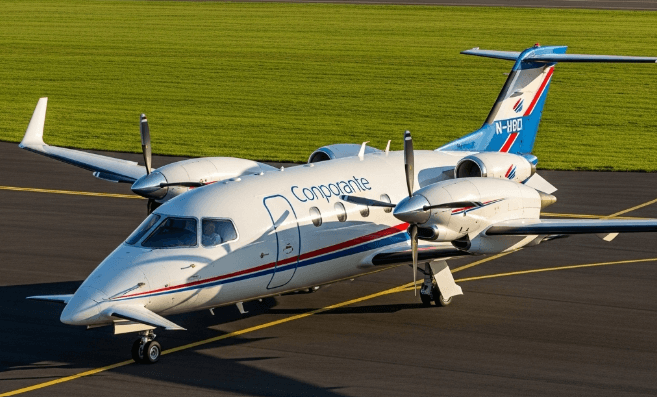
Piaggio P.180 Avanti
Entry into Service(Text) | 1990 | ||||||||
|---|---|---|---|---|---|---|---|---|---|
Aircraft Type(s) | Twin-engine turboprop business jet with forward wing (canard) design | ||||||||
Producer(s) | Piaggio Aerospace (Italy) | ||||||||
First Flight(s)(Text) | 23 October 1986 | ||||||||
Models | P.180 Avanti EVO (advanced aerodynamics and increased power) P.180 Avanti II (enhanced engines and modernized cockpit) P.180 Avanti | ||||||||
The Piaggio P.180 Avanti is a twin-turboprop business jet manufactured by Italian company Piaggio Aerospace. Unlike other turboprop aircraft, it features a pusher propeller configuration and a three-surface design (canard, main wing, and tail surfaces). This architecture provides the aircraft with high speed and fuel efficiency. The Avanti is used in business and private aviation for its laminar-flow fuselage and quiet cabin structure.
Piaggio P.180 Avanti (X Haluk Bayraktar)
The development of the Piaggio P.180 Avanti began in the mid-1980s when Piaggio engineers sought a new design that would combine the fuel economy of propeller-driven aircraft with the speed and comfort of jets. The goal was to produce a business aircraft capable of higher speeds with lower fuel consumption and a spacious cabin. The first prototype flew in 1986 and after testing received certification in 1990 entering service. Later variants, the Avanti II and Avanti EVO, were updated to meet modern standards through improvements in performance, avionics, and cabin features.
Piaggio P.180 Avanti (Wetzel Aviation)
The most distinctive design features that set the P.180 Avanti apart from other aircraft are:

Piaggio P.180 Avanti (generated by artificial intelligence.)
The advantages offered by the Piaggio P.180 Avanti’s design make it suitable for a variety of applications:
Baykar’s Acquisition of Piaggio Aerospace: Baykar has acquired the majority stake in Italy’s Piaggio Aerospace. The acquisition was completed with the approval of the Italian government, and Baykar’s bid was accepted over international competitors.
Use of the P.180 Avanti Platform: Piaggio’s P.180 Avanti turboprop aircraft is a model distinguished by its performance and efficiency. Baykar plans to integrate unmanned aerial vehicle technologies onto this platform.
European Production and Market Expansion: Baykar aims to increase its production capacity in the European market by utilizing Piaggio Aerospace’s manufacturing facilities in Italy.
Employment and Production Capacity: Baykar has committed to preserving the existing workforce at Piaggio and expanding production capacity.
Technological Integration and R&D: Baykar is integrating Piaggio’s engineering and manufacturing capabilities into its own UAV projects to advance new product development. As part of this effort, work is underway on unmanned variants of the P.180 platform.
Piaggio P.180 Avanti Landing Selçuk Bayraktar (Selçuk Bayraktar)
Air Charter Service. "Piaggio Avanti P.180." *Air Charter Service USA*. Accessed May 25, 2025. https://www.aircharterserviceusa.com/aircraft-guide/private/piaggio-italy/piaggioavantip180.
Avanti EVO. "P.180 Avanti EVO." *Avanti EVO*. Accessed May 25, 2025. https://avantievo.piaggioaerospace.it.
Eygün, Murat Emre. "Piaggio Aerospace Hakkında Bilinmesi Gerekenler." *SavunmaTR.* Accessed May 25, 2025. https://www.savunmatr.com/piaggio-aerospace-hakkinda-bilinmesi-gerekenler/.
Global Air. "Aircraft Specifications: Piaggio P.180 Avanti." *Global Air.* Accessed May 25, 2025. https://www.globalair.com/aircraft-for-sale/specifications?specid=727.
Goyer, Isabel. "Piaggio P.180 Avanti." *Plane & Pilot Magazine*. Accessed May 25, 2025. https://www.planeandpilotmag.com/scroll/piaggio-p-180-avanti/.
Haluk Bayraktar. "Untitled Post." X. Accessed May 25, 2025. https://x.com/haluk/status/1872603200269992443/photo/2.
Kington, Tom. "Italy Sells Piaggio Aerospace to Turkish Drone Maker Baykar." *Defense News*. Accessed May 26, 2025. .
Piaggio Aerospace. "P.180 Avanti II Brochure." Piaggio Aerospace. Accessed May 25, 2025. https://www.piaggioaerospace.it/yep-content/media/P180AvantiII_brochure.pdf.
Selçuk Bayraktar. "Cenova'daki Piaggo Aerospace'in pistine Piaggio P180 uçağıyla ilk inişimiz..." YouTube. Accessed May 25, 2025. https://www.youtube.com/watch?v=Qu3dKRQLq_U.
Skybrary. "PIAGGIO P-180 Avanti." Accessed May 25, 2025. *Skybrary*. https://skybrary.aero/aircraft/p180.
Wetzel Aviation. "WETZEL AVIATION | Piaggio P180 Avanti EVO 3014 | 2022." YouTube. Accessed May 25, 2025. https://www.youtube.com/watch?v=auTV7Y-dFxU.

Piaggio P.180 Avanti
Entry into Service(Text) | 1990 | ||||||||
|---|---|---|---|---|---|---|---|---|---|
Aircraft Type(s) | Twin-engine turboprop business jet with forward wing (canard) design | ||||||||
Producer(s) | Piaggio Aerospace (Italy) | ||||||||
First Flight(s)(Text) | 23 October 1986 | ||||||||
Models | P.180 Avanti EVO (advanced aerodynamics and increased power) P.180 Avanti II (enhanced engines and modernized cockpit) P.180 Avanti | ||||||||
Henüz Tartışma Girilmemiştir
"Piaggio P.180 Avanti" maddesi için tartışma başlatın
Development Purpose and History
Design Features
Technical Specifications
Key Features and Applications
Partnerships and Key Developments