

Bu içerik Türkçe olarak yazılmış olup yapay zeka ile otomatik olarak İngilizceye çevrilmiştir.
Subscapularis Muscle is a deep muscle that plays a critical role in shoulder mobility and stability. As the largest and strongest member of the rotator cuff, it performs essential functions in both daily activities and athletic movements. This text provides a detailed examination of the subscapularis muscle’s anatomical structure, morphological features, embryological origin, innervation and vascular supply, and its clinical significance.
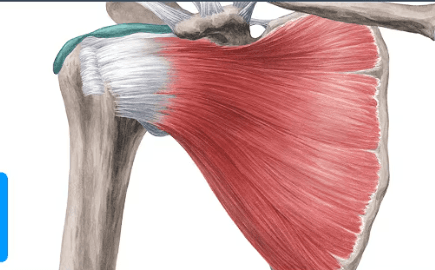
The subscapularis muscle is a powerful and broad muscle located on the anterior, or costal, surface of the scapula. It originates from the medial two-thirds of the subscapular fossa on the inner surface of the scapula and receives additional support from intermuscular septa and grooves along the axillary border of the scapula. Its fibers extend laterally outward and insert onto the lesser tubercle of the humerus and the anterior portion of the shoulder joint capsule. In some individuals, the tendon of the muscle may extend further by passing through the intertubercular groove (bicipital groove), a variation that can be clinically significant. The subscapularis bursa, situated between the subscapularis muscle and the scapula, facilitates smooth movement during muscle contraction. This bursa reduces friction between the tendon and bone and establishes a potential communication pathway with the shoulder joint cavity. Additionally, the bursa creates a gliding plane between the subscapularis and the serratus anterior muscle, preventing friction between these two structures. As the widest and thickest muscle of the rotator cuff, the subscapularis forms the anterior wall of the glenohumeral joint and plays a fundamental role in shoulder stability.
Embryologically, the subscapularis muscle develops from the ventral muscle mass. This developmental origin gives it a structural similarity to other flexor muscles of the upper limb. Anatomically and functionally, it belongs to the scapulohumeral or intrinsic shoulder muscle group, which consists of muscles that directly influence the shoulder joint and connect the scapula to the humerus.
The muscle is innervated by the upper and lower subscapular nerves (C5–C6), which arise from the posterior cord of the brachial plexus. This dual nerve supply is essential for maintaining the muscle’s function. Blood supply is provided by branches of the subscapular artery and the lateral thoracic artery. These vessels must be carefully preserved during surgical procedures, as they are critical for maintaining adequate blood flow necessary for muscle healing and viability.
The subscapularis muscle is responsible for medially rotating the humerus and adducting the arm toward the trunk. As part of the rotator cuff, it stabilizes the shoulder joint. When the arm is raised, the subscapularis pulls the head of the humerus downward and anteriorly, preventing excessive superior migration of the humeral head. This function helps prevent instability during shoulder movements. Weakness or injury to the muscle can lead to anterior shoulder instability, increasing the risk of shoulder dislocation. The subscapularis muscle can tear due to traumatic events or repetitive microtrauma. While such tears often result from sudden forceful movements, they may also occur as a consequence of degenerative changes associated with aging. The muscle’s tendon may become inflamed due to overuse or inflammatory processes, a condition known as tendinitis. In clinical assessment, physical examination tests such as the lift-off test and the bear-hug test are used to evaluate subscapularis function. Imaging techniques including magnetic resonance imaging (MRI) and ultrasound are highly effective in assessing tendon tears and structural integrity. Treatment approaches vary depending on the severity of the injury. Conservative management, including rest, physical therapy, and nonsteroidal anti-inflammatory drugs (NSAIDs), is preferred for mild or partial tears. Complete tears typically require surgical repair, usually performed arthroscopically with the goal of restoring functional recovery.
Bratton, Robert L. Subscapularis Dysfunction. Accessed July 18, 2025.
Chalmers, Peter N. *Subscapularis: Home Exercise Program (HEP)*. University of Utah. Accessed July 18, 2025. https://www.chalmersmd.med.utah.edu/pdfs/HEPsubscapularis.pdf.
Mokhtech, Miloud. “Anatomy of the Subscapularis: A Review.” ResearchGate. Date Published: May 2019. Accessed July 18, 2025. https://www.researchgate.net/publication/333278457_Anatomy_of_the_Subscapularis_A_Review.
StatPearls Publishing. "Anatomy, Shoulder and Upper Limb, Subscapularis Muscle." *NCBI Bookshelf*. Accessed July 9, 2025. https://www.ncbi.nlm.nih.gov/books/NBK513344/#:~:text=The%20subscapularis%20muscle%20is%20a,)%20scapula%20(wing%20bone.

Henüz Tartışma Girilmemiştir
"Subscapularis Muscle" maddesi için tartışma başlatın
Anatomical Structure
Morphology and Attachment Points
Embryological Origin and Classification
Innervation and Vascular Supply
Function and Clinical Relevance