


Bu içerik Türkçe olarak yazılmış olup yapay zeka ile otomatik olarak İngilizceye çevrilmiştir.
+2 Daha
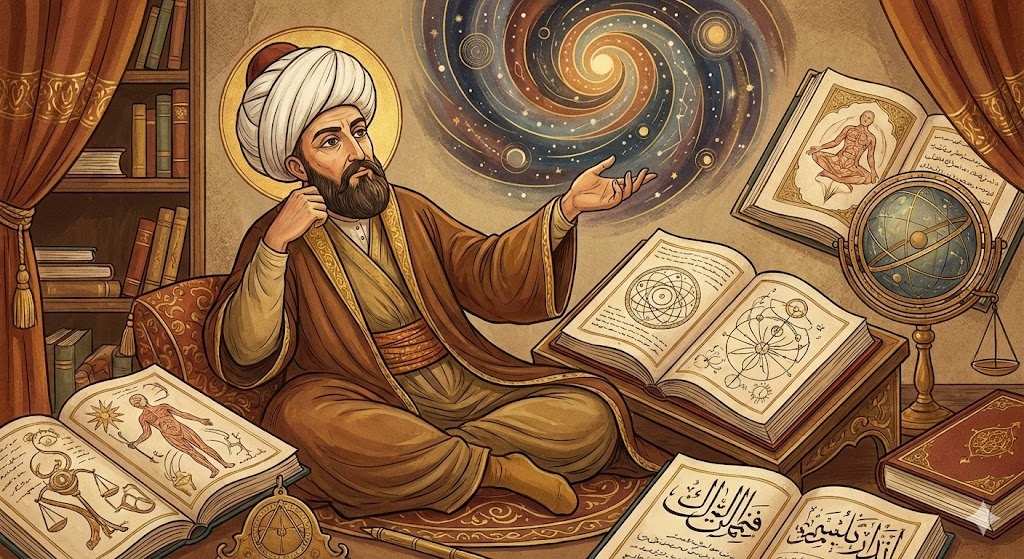
Erzurumlu İbrahim Hakkı, Yapay zeka ile oluşturulmuştur.
Tefviznâme is a didactic and Sufi poetic work composed by Erzurumlu İbrahim Hakkı, a prominent mystic, scholar, and poet of the 18th century, who exhorts the believer to entrust all matters to God (tefviz). This poem appears in the "Hâtime" (Conclusion) section of the poet’s encyclopedic work completed in 1757, Marifetnâme, and in the "İlahinâme" section of his Divan. It is among the most renowned works of Turkish-Islamic literature. Inscribed in memory through its refrain "Mevlâ görelim neyler, neylerse güzel eyler," the poem is regarded as a masterpiece of classical Turkish poetry for both its literary and Sufi depth.
The title "Tefviz" literally means "to entrust a matter to its rightful party" or "to delegate." In Sufi terminology, it denotes the believer’s surrender of personal will (cüzi irade) to the divine will (külli irade), and after taking necessary precautions, leaving the outcome entirely to the Creator. In this work, İbrahim Hakkı explores "tefviz" as an advanced stage beyond "tevekkül" (reliance on God). According to the poet, one must not grieve over the past, worry about the future, but fulfill the demands of the present moment and leave judgment to God.
Tefviznâme is composed in the "murabba" (quatrains) form, a traditional structure of Divan poetry, and consists of fifteen stanzas. Written in the aruz meter "Mef'ûlü mefâ'îlü mefâ'îlü fe'ûlün," the poem blends a didactic tone with lyrical expression. The recurring refrain at the end of each quatrain—"Mevlâ görelim neyler / Neylerse güzel eyler"—reinforces the central themes of absolute surrender and hüsn-i zan (good expectation). The language is simpler than the heavy Ottoman Turkish of its time, yet full comprehension requires familiarity with Sufi terminology.
The poem functions as a spiritual remedy against pessimism and despair. Beginning with the lines "Hak şerleri hayr eyler / Zannetme ki gayr eyler," it teaches that every event in creation conceals a divine wisdom and that the ultimate outcome is invariably good. İbrahim Hakkı urges the reader not to be fixated on the outward appearance of events but to focus on their inner, hidden wisdom. For this reason, the work has been read for centuries as a text of consolation and healing, memorized widely from tekkes to public gatherings, and set to music as an ilahi for devotional performance.

Representative drawing depicting Erzurumlu İbrahim Hakkı in a state of contemplation. (Generated by artificial intelligence.)
Hak şerleri hayr eyler
Zan etme ki ğayr eyler
Ârif ânı seyr eyler
Mevlâ görelim neyler
Neylerse güzel eyler…

Erzurumlu İbrahim Hakkı, Yapay zeka ile oluşturulmuştur.
Henüz Tartışma Girilmemiştir
"Tefvizname (Poetry)" maddesi için tartışma başlatın
Conceptual Framework: Tefviz
Literary Features and Form
Content and Worldview
First Quatrain