

Bu içerik Türkçe olarak yazılmış olup yapay zeka ile otomatik olarak İngilizceye çevrilmiştir.
+2 Daha
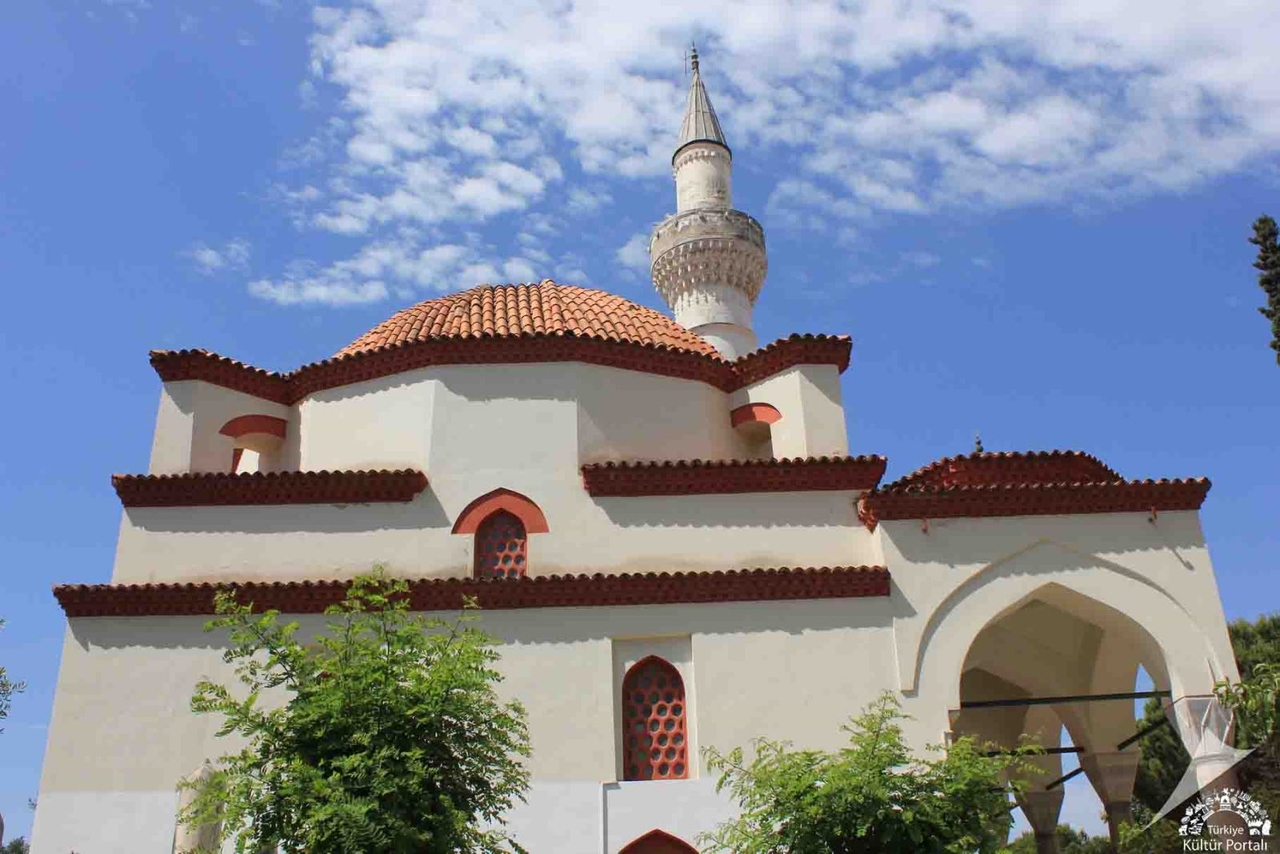
Üveys Paşa Camii, built in 1568 by Kara Üveys Paşa, is one of the oldest Ottoman mosques in Aydın. It is located in the Köprülü neighbourhood of the Efeler district in Aydın province. Although the mosque lacks an inscription plaque on its entrance, it is dated to the Hijri year 976 (Gregorian 1568) based on the date recorded by the contemporary poet Kadı Muhyiddin Efendi.【1】
The founder of the structure is Üveys Paşa, a high-ranking Ottoman statesman of the 16th century known in sources as Kara Üveys Paşa. During the reign of Murad III (1574–1595), Üveys Paşa held strategic posts including Chief Treasurer, and Governor of Egypt. He died in 1591 during a rebellion in Aleppo.【2】 Research into his estate (muhallefat) and charitable foundations has documented that in addition to this mosque in Aydın, he commissioned other works near Hırka-i Şerif in Istanbul and in Cairo.【3】
Since its construction, the mosque has been one of the city’s key focal points and is mentioned in Evliya Çelebi’s Seyahatname. The building is among the few historical structures in Aydın to have survived the major fires and destruction during the Greek occupation (1919–1922), giving it significant value as part of the city’s collective memory.【4】
Üveys Paşa Camii exhibits the typical characteristics of 16th-century Classical Ottoman architecture, with a square plan and a single dome. The walls of the structure are built using an alternating pattern of stone and brick, a technique that provides both structural stability and visual dynamism to the façade.【5】

Üveys Paşa Camii (Culture Portal)
On the northern façade of the mosque lies the “son cemaat yeri,” which serves as the entrance area. This section features a portico supported by four columns and divided into three bays. Access to the prayer hall (harim) is through a crowned portal on the central axis of the northern façade, characterized by marble thresholds and a low arch. The transition from the square base to the central dome is achieved through squinches placed at the corners.【6】
The interior decorations visible in the mosque are not original to its 1568 construction. The penwork ornamentation on the dome and walls was added during later repairs, primarily in the 19th century. These embellishments reflect the influence of Westernizing trends prevalent in Anatolia during the late Ottoman period, particularly the Baroque style. Lighting is provided by rectangular windows with pointed relieving arches on the lower level and smaller windows on the upper level.【7】
Üveys Paşa, the founder of the mosque, held high administrative positions in the 16th-century Ottoman bureaucracy, including Chief Treasurer and Governor. During the reign of Murad III (1574–1595), he served not only as Chief Treasurer but also as Governor of Budin and Egypt, playing an active role in the empire’s financial and administrative management. Sources highlight his meticulous oversight of fiscal matters and his sensitivity toward safeguarding state revenues. This administrative stance established him as a decisive figure within the bureaucratic balance of his era.【8】
Üveys Paşa died in 1591 during a rebellion in Aleppo. Posthumous estate (muhallefat) records reveal that he possessed considerable wealth, which he used to commission charitable foundations across various regions of the empire. In addition to this mosque in Aydın, he founded another mosque bearing his name near Hırka-i Şerif Camii in Istanbul and several waqf buildings in Cairo. The Üveys Paşa Camii in Aydın stands as one of the most tangible architectural legacies reflecting his influence in the provinces and his commitment to philanthropy.【9】
Within the urban fabric of Aydın, Üveys Paşa Camii holds importance not merely as an architectural monument but also as a carrier of the city’s historical memory. Given the extensive fires and destruction that occurred in the urban center of Aydın during the National Struggle and particularly during the Greek occupation, the survival of this structure until the present day enhances its value. As one of the representatives of 16th-century Ottoman architecture in Western Anatolia, the mosque gains documentary significance through its presence at Evliya Çelebi'sSeyahatnamein. The mosque occupies an important place in Aydın’s cultural heritage due to its reflection of the political standing of its founder, Kara Üveys Paşa, and its status as one of the city’s oldest Ottoman-era structures.【10】
[1]
"Üveys Paşa Camii - Aydın," Türkiye Kültür Portalı, Erişim 28 Ocak 2026, https://www.kulturportali.gov.tr/turkiye/aydin/gezilecekyer/uveys-pasa.
[2]
İlhan Gök, "III. Murad'ın Devlet Adamlarından Kara Üveys Paşa'nın Hayatı ve Muhallefatı (1591)," Tarih Dergisi, Erişim 28 Ocak 2026, https://dergipark.org.tr/en/download/article-file/2782283.
[3]
Fatih Yücel, "Üveys Paşa ve Hırka-i Şerîf Yakınlarında Üveys Paşa’ya Atfedilen Cami," 29 Mayıs Üniversitesi, Erişim 28 Ocak 2026, https://openaccess.29mayis.edu.tr/xmlui/bitstream/handle/20.500.12723/3861/09_115_2023_fyucel.pdf?sequence=1.
[4]
Hayri Mert Ulusoy, "Evliya Çelebi Seyahatnamesi'nde Gizemli Hazine: Üveys Paşa Cami," Adnan Menderes Üniversitesi Haber Merkezi (GZT), Erişim 28 Ocak 2026, https://gzt.adu.edu.tr/haber/evliya-celebi-seyahatnamesi-nde-gizemli-hazine-uveys-pasa-cami-9139.
[5]
"Üveys Paşa Camii," T.C. Kültür ve Turizm Bakanlığı Aydın İl Kültür ve Turizm Müdürlüğü, Erişim 28 Ocak 2026, https://aydin.ktb.gov.tr/TR-64463/uveys-pasa-camii.html.
[6]
"Üveys Paşa Camii," T.C. Efeler Belediyesi, Erişim 28 Ocak 2026, https://www.efeler.bel.tr/efeler/tarihi-ve-turistik-bolgeler/uveys-pasa-camii.
[7]
"Üveys Paşa Camii - Aydın," Türkiye Kültür Portalı, Erişim 28 Ocak 2026, https://www.kulturportali.gov.tr/turkiye/aydin/gezilecekyer/uveys-pasa.
[8]
İlhan Gök, "III. Murad'ın Devlet Adamlarından Kara Üveys Paşa'nın Hayatı ve Muhallefatı (1591)," Tarih Dergisi, Erişim 28 Ocak 2026, https://dergipark.org.tr/en/download/article-file/2782283.
[9]
Fatih Yücel, "Üveys Paşa ve Hırka-i Şerîf Yakınlarında Üveys Paşa’ya Atfedilen Cami," 29 Mayıs Üniversitesi, Erişim 28 Ocak 2026, https://openaccess.29mayis.edu.tr/xmlui/bitstream/handle/20.500.12723/3861/09_115_2023_fyucel.pdf?sequence=1.
[10]
Hayri Mert Ulusoy, "Evliya Çelebi Seyahatnamesi'nde Gizemli Hazine: Üveys Paşa Cami," Adnan Menderes Üniversitesi Haber Merkezi (GZT), Erişim 28 Ocak 2026, https://gzt.adu.edu.tr/haber/evliya-celebi-seyahatnamesi-nde-gizemli-hazine-uveys-pasa-cami-9139. Ayrıca bknz. "Üveys Paşa Camii - Aydın," Türkiye Kültür Portalı, Erişim 28 Ocak 2026, https://www.kulturportali.gov.tr/turkiye/aydin/gezilecekyer/uveys-pasa.
Henüz Tartışma Girilmemiştir
"Üveys Paşa Camii" maddesi için tartışma başlatın
Architectural Features
The Identity of the Founder Üveys Paşa and His Waqf Foundations
Significance