

+1 Daha

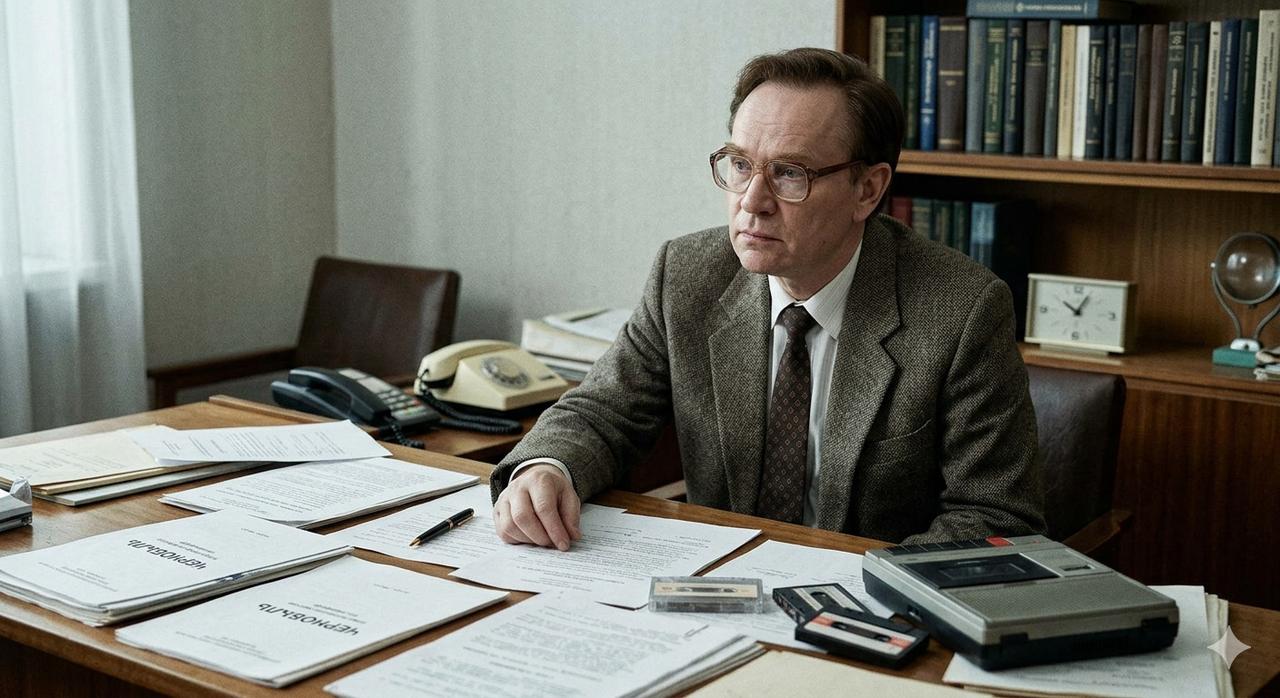
(Yapay zeka ile oluşturulmuştur)
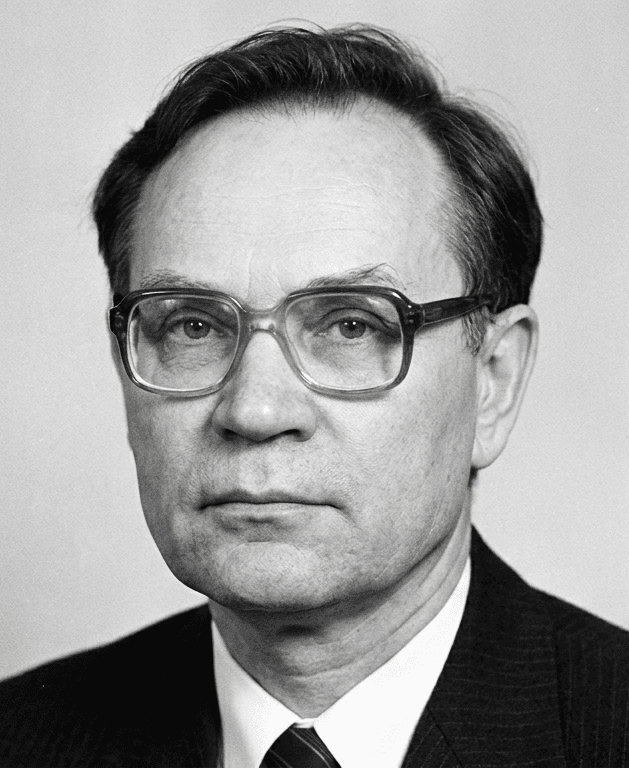
Valeri Alekseyevich Legasov (Russian: Валерий Алексеевич Легасов; 1 September 1936 – 27 April 1988) was a Soviet inorganic chemist and member of the Academy of Sciences of the USSR. He specialized in nuclear physics and plasma methods, the synthesis and study of new compounds involving elements under abnormally high oxidation states, nuclear and plasma technologies, energy conservation technologies, and hydrogen energy. He is known for his work on the commission investigating the Chernobyl Nuclear Disaster.
Valeri was born on 1 September 1936 in Tula, Russian Soviet Federative Socialist Republic, to a family of civil servants. He attended middle school in Kursk. He graduated from the Mendeleev Moscow Institute of Chemical Technology in 1961. He earned his doctorate in science in 1972 and devoted his entire scientific career to chemistry and chemical engineering in nuclear energy.
In 1983 he was appointed First Deputy Director of the I.V. Kurchatov Institute of Atomic Energy. He became a professor in the field of inorganic chemistry in 1978. From 1978 to 1983 he served as a professor at the Moscow Institute of Physics and Technology and from 1983 onward he headed the Department of Radiochemistry and Chemical Technology at the Faculty of Chemistry of Moscow State University. He was elected a Corresponding Member of the Academy of Sciences of the USSR in 1976 and a Full Academician in 1981.
In various interviews he emphasized that nuclear energy was not merely a source of power but the future of civilization, requiring high discipline, a culture of safety, and “scientific ethics.”【1】
An interview with Valeri Legasov at the Kurchatov Institute in 1983 (rabbitholefiles)
Legasov joined the Chernobyl Commission to investigate the Chernobyl Nuclear Disaster on 26 April 1986.
On the orders of Mikhail Gorbachev, General Secretary of the Communist Party of the USSR, he was sent to Pripyat, near the site of the accident, alongside Boris Shcherbina, Deputy Chairman of the Council of Ministers of the USSR. Legasov informed the state about the disaster zone.
- With Shcherbina’s assistance, he oversaw the deployment of tons of sand and boron to extinguish the fire at Unit 4 of the Chernobyl Nuclear Power Plant.
- He insisted on evacuating Pripyat, located four kilometers from the plant, due to dangerously high radiation levels, and ensured the evacuation was carried out within 36 hours.
- He guided the initial design phase of the first containment structure to enclose the damaged reactor.
In August 1986, Valeri Legasov chaired the Soviet delegation at the International Atomic Energy Agency’s (IAEA) meeting in Vienna. In a five-hour presentation, he disclosed the technical causes of the disaster and the design flaws compounded by human error.
While Western scientists praised this transparency, it caused unease within the Soviet leadership and the KGB. He was accused of disloyalty for exposing state nuclear secrets.
Upon his return from Vienna, he began a systematic process of ostracism. According to historical documents and subsequent testimonies, the title of “Hero of Socialist Labour,” for which he had been nominated twice after the accident, was revoked by Mikhail Gorbachev, General Secretary of the Communist Party of the USSR. During this period, Legasov was closely monitored by the KGB and isolated by his colleagues at the Kurchatov Institute.
His health rapidly deteriorated due to exposure to high doses of radiation during his duties on the Chernobyl Commission. He suffered from acute radiation effects, myelodysplastic syndrome, and profound depression triggered by radiation-induced neurological damage.
Valeri Legasov took his own life on 27 April 1988, one day after the first anniversary of the Chernobyl Disaster, at the age of 51. He was buried at the Novodevichy Cemetery in Moscow. His recorded audio testimonies before death exposed the hidden truths behind the disaster and compelled necessary reforms within the Soviet nuclear program.
On 20 September 1996, the then President of Russia, Boris Yeltsin, posthumously awarded Legasov the country’s highest honor, the title of Hero of the Russian Federation, for his “courage and heroism” during the Chernobyl cleanup.
He was portrayed by Jared Harris in the HBO/Sky five-part miniseries Chernobyl (2019).
In 1976 he was awarded the USSR State Prize for his success in creating a new field in chemical science and technology: the synthesis of noble gas compounds.
In 1984 he received the Lenin Prize for a series of studies examining the application of noble gas compounds and other fluorine-containing compounds in specialized areas of science and technology.
Moskovskogo gosudarstvennogo universiteta imeni M. V. Lomonosova (MSU). “Legasov Valerij Alekseevich.” Kimya Fakültesi. Accessed May 13, 2026. https://www.chem.msu.ru/chleny-rossijskoj-akademii-nauk/legasov-valerij-alekseevich
rabbitholefiles. “Valery Legasov RARE 1983 footage Part 1 - Академик Валерий Легасов - ENG SUB.” YouTube, 3:58. June 27, 2019 (Original release: 1983). Accessed May 13, 2026.
[1]
rabbitholefiles, “Valery Legasov RARE 1983 footage Part 1 - Академик Валерий Легасов - ENG SUB,” YouTube video, 3:58, 27 June 2019 (Original publication: 1983), https://www.youtube.com/watch?v=osVBgF-TZUY.

(Yapay zeka ile oluşturulmuştur)
Henüz Tartışma Girilmemiştir
"Valeri Alekseyevich Legasov" maddesi için tartışma başlatın
Life
Birth and Academic Career
Professional Career
Chernobyl Disaster and Cleanup
Vienna Report
Death
After His Death
Media
Awards Received