

This article was automatically translated from the original Turkish version.
The Clock | 01.23 | ||||||||
|---|---|---|---|---|---|---|---|---|---|
The Nature of the Facility | Nuclear power plant with four reactors, each with a capacity of 1000 MW | ||||||||
The World’s Learning | 30 April 1986 | ||||||||
Historical | 26 April 1986 | ||||||||
Reactor Type | pressure-tube reactor graphite-moderated RBMK-1000 | ||||||||
First Detection | 28 April 1986 | ||||||||
Prominent Health Effect | Increase in childhood thyroid cancer | ||||||||
Chernobyl Disaster is the general term for the nuclear accident that occurred on 26 April 1986 in the fourth reactor unit of the Chernobyl Nuclear Power Plant in Ukraine and the wide-ranging radiological, environmental, social, and health consequences that followed. The accident resulted from a combination of flawed reactor design, the disabling of safety systems during an experimental procedure, and operational errors; as a result of the explosions and fire, a significant portion of radioactive material from the reactor core was released into the atmosphere.
Chernobyl Disaster (Anadolu Ajansı)
Following the disaster, the radioactive cloud spread over large parts of Europe and many regions of the Northern Hemisphere, primarily affecting Ukraine, Belarus, and Russia. The incident is described as one of the most serious accidents in the nuclear power industry and the only accident in the history of commercial nuclear energy to result in radiation-related deaths.
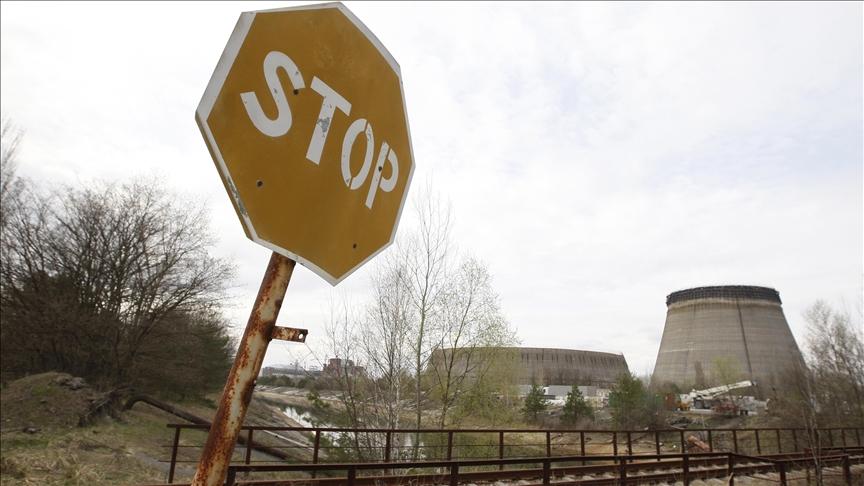
Chernobyl Nuclear Power Plant is a nuclear energy complex located north of Kyiv in Ukraine, near the border with Belarus, in the Pripyat River basin and around an artificial lake.
The plant consisted of four reactors, each with a capacity of 1,000 megawatts. These reactors were of the RBMK-1000 type, featuring graphite moderation and pressure tube construction. The fuel used was lightly enriched uranium dioxide. Water served both as a coolant and as the medium for generating steam to drive the turbines. Reactor power and reaction levels were controlled by control rods. Safety systems, including an emergency core cooling system, were part of the design.【1】

Chernobyl Disaster (Anadolu Ajansı)
The town of Pripyat, built for plant workers, was located near the plant site. Pripyat is approximately 3 kilometers from the plant and had a population of about 49,000.【2】 The old town of Chernobyl lies further southeast. The total population living within the 30-kilometer zone around the plant ranged between 115,000 and 135,000.
The Chernobyl Nuclear Power Plant became internationally known following the accident in reactor number four on 26 April 1986. Since then, the plant has become one of the primary symbols in discussions on nuclear safety, radiological contamination, evacuation, long-term health monitoring, and international cooperation.
The Chernobyl Disaster emerged from a series of technical and operational interventions during a planned experiment in reactor number four on 25 April 1986, culminating in explosions at 01:23 on 26 April 1986. The purpose of the experiment was to test whether the turbines could continue to generate sufficient power to operate the main circulation pumps after a loss of external electrical supply.【3】
Before the experiment, the reactor’s power was first reduced to half. Subsequently, the safety system designed to activate during emergencies—the emergency core cooling system—was disabled. Most of the control rods were withdrawn; only eight out of 215 remained in the reactor. While the power level should have been maintained at 700 MW, it dropped to as low as 200 MW. The cooling system was not used, and eight pumps were operated simultaneously to produce more steam. As the reactor power fell to a very low level, steam pressure decreased and the water level in the steam separators dropped below the safety limit.
These actions caused the reactor to enter an unstable operating condition. Disabling the automatic shutdown mechanisms further exacerbated this instability. When the operator attempted to shut down the reactor, a sudden and massive power surge occurred due to a design feature of the control rods.【4】
At 01:23 on 26 April 1986, the first explosion occurred. A few seconds later, a second explosion followed. The interaction of extremely hot fuel with cooling water caused fuel fragmentation, rapid steam generation, and a pressure increase. At this stage, the reactor’s upper lid was blown off, fuel channels ruptured, and control rods became jammed. Subsequently, intense steam production throughout the core triggered a massive explosion. It was reported that the second explosion ejected fragments from the fuel channels and hot graphite, and that hydrogen generated by the reaction between zirconium and high-temperature steam also contributed to the process.【5】
As a result of the explosions, the core of reactor number four was largely destroyed and a significant portion of the reactor building was damaged. The graphite moderator caught fire, igniting a fire that released radioactive fuel and other radioactive materials into the atmosphere. A large portion of the radiation released from the reactor affected the surrounding environment immediately. The fire lasted for several days, and during the initial phase of the accident, plant workers and first responders were exposed to very high radiation doses.【6】
Immediately after the accident, plant workers and firefighters from Pripyat and Chernobyl formed the first response teams. Fires that broke out after the explosions were addressed, and fires on the roof of the turbine building were extinguished within a few hours. Those involved in the initial response received extremely high radiation doses; emergency personnel and staff on the plant site formed the group exposed to the highest doses. Among the approximately 1,000 initial emergency personnel, some received lethal radiation doses.【7】
During the first hours and subsequent days after the accident, personnel exposed to radiation received medical monitoring. Of the 600 individuals present at the site, 134 were confirmed to have developed acute radiation sickness due to high doses. Within the first three months, 28 people died. It was reported that two plant workers died on the night of the explosion and that additional deaths occurred in the following weeks due to acute radiation syndrome.【8】

Chernobyl Disaster (Anadolu Ajansı)
Emergency operations were not limited to firefighting. Auxiliary water pumps delivered 200–300 tons of water per hour to the damaged reactor’s remaining structure, but the operation was halted after half a day due to the risk of submerging units one and two. From the second day after the accident until the tenth day, helicopters dropped approximately 5,000 tons of boron, dolomite, sand, clay, and lead onto the burning core. This effort aimed to suppress the fire and limit the spread of radioactive particles.
Following the initial response, broader emergency and cleanup operations were launched. An administrative commission was established on 26 April 1986. Over time, the number of personnel assigned to cleanup and recovery tasks increased significantly; it was reported that between 1986 and 1990, approximately 600,000 people, and in another assessment, more than 850,000 cleanup workers between 1986 and 1989, were exposed to significant radiation. These personnel were known by various names: cleanup workers, liquidators, emergency workers, and rehabilitation operation workers. In some areas of the site, where radiation levels were too high, humans known as “biological robots” were used instead of robots.
The radioactive cloud reached Scandinavia, where elevated radiation levels were first detected by Swedish experts. Thus, the existence of a major nuclear accident was first publicly announced through Sweden.【9】
The world did not immediately learn of the accident. Full global awareness occurred several days after the event, by 30 April 1986. This delay was due to the failure of authorities to provide timely and transparent information following the explosion.
In the early phase of the accident, no official statements were issued for a prolonged period. Soviet authorities remained silent regarding the scale and nature of the disaster. This silence, combined with foreign radio broadcasts, incomplete information, false reports, and rumors circulating among the public, heightened fear and panic. The concealment of information and delays in communication created an atmosphere of speculation and uncertainty.【10】
The discovery of the accident was not confined to the Soviet Union. In Europe, during the initial days, assessments of the situation were overly optimistic and inadequate. However, rising radiation measurements and the trajectory of the radioactive cloud clearly demonstrated that the incident was not a local but an international nuclear disaster.【11】
Following the accident, large quantities of radioactive material were released into the atmosphere and dispersed over a wide area by winds blowing northward. The radioactive cloud reached Scandinavia on 28 April 1986; elevated radiation levels were first detected by Swedish experts. In the initial phase, the Soviet Socialist Republics were most affected; other affected countries included Poland, Scandinavia, Austria, northern Italy, southern Germany, Romania, Bulgaria, and Greece.【12】
Radioactive contamination was concentrated primarily in Ukraine, Belarus, and the Russian Federation. It was reported that the contaminated area in these three regions covered approximately 150,000 km², with soil Cs-137 concentrations exceeding 37 kBq/m². In strictly controlled areas, concentrations exceeded 555 kBq/m², affecting approximately 10,300 km². Another assessment indicated that approximately five million people in Ukraine, Belarus, and Russia lived in areas with contamination above 37 kBq/m², and about 400,000 lived in areas with more severe contamination above 555 kBq/m².【13】
The dispersion was not limited to the immediate vicinity. Radioactive clouds were detected in Japan on 2 May, in China on 4 May, and in the United States and Canada on 5–6 May, indicating that the entire Northern Hemisphere was affected by low-level radiation. The cloud mass traveled over Central and Northern Europe for 11 days via different air currents. Particles of Cs-134, Cs-137, and I-131 smaller than 2 micrometers were transported over long distances.【14】
The distribution of radioactive materials was not uniform. Accumulation increased in areas affected by rainfall. In the United Kingdom, heavy rainfall in northern Wales, northern England, and parts of Scotland led to increased deposition of Cs-134, Cs-137, and I-131, with soil contamination reaching three times the normal level and radioactive materials entering the food chain. Similarly, in Turkey, rainfall during the passage of the radioactive cloud over Thrace and the Eastern Black Sea region, particularly in hazelnut, tobacco, and tea production areas, increased contamination.【15】
The environmental impacts of the dispersion were observed in agricultural land, forests, water sources, and the food chain. Plains, animal pastures, and farmland became contaminated through radioactive clouds and rainfall; over the long term, forests and forest products became major contaminated areas. The area near the reactor where trees died directly from radiation was named the “Red Forest.” Mushrooms, wild berries, milk, meat, fish, and other local products were among the key components of the food chain affected by radioactive contamination.【16】
Areas deemed unsuitable for human habitation were identified after the accident. Areas with radiation levels exceeding 1480 kBq/m² were classified as uninhabitable and evacuated. In areas with contamination levels between 37 and 555 kBq/m², periodic health monitoring was conducted; in areas between 555 and 1480 kBq/m², stricter controls and restrictions on local foodstuffs were implemented. Thus, radioactive dispersion became a process not only of environmental contamination but also of population displacement and the establishment of long-term monitoring zones.【17】
Following the Chernobyl Disaster, radioactive isotopes released into the atmosphere contaminated natural habitats at varying levels. In the short term, plains, animal pastures, and farmland became contaminated through radioactive clouds and rainfall; radioactive materials entered the food chain via meat, milk, and similar products. In the long term, forests and forest products became one of the primary carriers of contamination.【18】
Radioactive contamination was not confined to the plant’s immediate vicinity. Semi-natural and natural ecosystems, particularly agricultural areas, became contaminated with Cs-137, Cs-134, and I-131. Due to their high bioavailability and mobility, these radionuclides continued to circulate through the food chain. Accumulation in soil varied by location; contamination increased in areas with rainfall, and rural contamination had more severe consequences for agricultural production and local livelihoods.
Contamination in rural areas led to widespread restrictions. Approximately 23,000 km² of land became contaminated, resulting in large-scale limitations on agricultural activities and rural and urban evacuations. Some areas remained designated as “special zones.” In areas classified by radiation levels, measures such as health monitoring, food restrictions, forestry and agricultural limitations, and water and land management were implemented. Areas with radiation levels exceeding 1480 kBq/m² were classified as uninhabitable.【19】
Forest ecosystems exhibited one of the most prominent environmental effects of the accident. Trees near the reactor died directly from radiation, and this area became known as the “Red Forest.” Later, abnormally fast-growing pine and oak trees were observed in this region. It was also reported that forest and steppe fires posed a risk of recontaminating large areas. Consequently, forest management, fire prevention, and water source monitoring became key environmental measures.【20】
In the early phase of the accident, agricultural products, especially milk, were among the most important carriers of environmental contamination. In subsequent years, this changed, and forest products became more prominent. The proportion of dose from mushrooms and berries was 10–15% in 1987 but rose to 40–45% by 1996. High levels of Cs-137 found in mushrooms, wild berries, and trees were linked to increased contamination among communities consuming these products.
Environmental impacts were not limited to contamination and restrictions. Local food consumption, consumption of wild animals and fish, use of milk and meat, time spent outdoors, use of surface water, and wood consumption for heating were among the main environmental factors influencing exposure. Thus, environmental consequences formed a continuous network of relationships among soil, water, forests, agriculture, livestock, and human daily life environments.【21】
Subsequent assessments also noted that wildlife populations strengthened in areas from which human settlement had been withdrawn. A major scientific study published in 2015 indicated that mammal populations in the exclusion zone had increased and that long-term data provided no evidence of negative effects of radiation on mammal abundance. Other assessments also indicated that the absence of humans had turned the region into a special refuge for wildlife.
International assessments conducted after the Chernobyl Disaster addressed the accident’s impacts on health, environment, social life, and economy. At the United Nations level, a call for international cooperation was issued in 1990, and the same year, a cooperation process regarding Chernobyl was initiated. In 1991, the Chernobyl Trust Fund was established, followed by numerous research and assistance projects in health, nuclear safety, environment, clean food production, rehabilitation, and information. In 2002, the approach shifted from humanitarian aid to long-term development, and in 2009, the International Chernobyl Research and Information Network was created to support sustainable development. In 2016, 26 April was officially recognized as International Chernobyl Disaster Remembrance Day.【22】

Chernobyl Disaster (Anadolu Ajansı)
World Health Organization and International Atomic Energy Agency assessments identified limited availability of local health data as a primary concern. In 1989, concerns were raised that local physicians were directly attributing various biological and health effects to radiation. Subsequently, international expert evaluations were conducted in heavily contaminated areas at the request of the Soviet government. Between March 1990 and June 1991, 50 field missions were carried out involving 200 experts from 25 countries, comparative studies with control groups were conducted, and no significant health disorders were conclusively linked to radiation at that stage.【23】
Assessments by UNSCEAR, IAEA, WHO, and the Chernobyl Forum highlighted the increase in thyroid cancer among those exposed during childhood and adolescence as the primary and clear health effect. The 2005 Chernobyl Forum study, revised in 2006, and UNSCEAR evaluations concluded that, apart from the increase in thyroid cancer, there was no evidence of a large-scale public health impact attributable to radiation. No significant increase was observed in overall cancer incidence, total cancer mortality, or non-malignant diseases; a clear rise in leukemia in the general population was also not evident. Similarly, it was assessed that the vast majority of the affected population was not expected to experience serious health consequences.【24】
These assessments placed particular emphasis on psychological and social consequences. Factors such as fear of radiation, misperceptions, displacement, dependency culture, and increased smoking and alcohol consumption were emphasized as having a more prominent health burden than direct radiation doses in many cases. Evacuations were noted to have traumatic outcomes, misinformation led to increased rates of pregnancy termination, and social fragmentation left lasting effects.
In contrast, some international and quasi-international assessments established a more direct causal link between thyroid cancer and the accident. The Mobile Diagnostic Laboratories, the International Federation of Red Cross and Red Crescent Societies, and the Red Crescent Society indicated that the observed increase in cancer in high-risk areas was causally related to Chernobyl. Particularly, the risk was noted to be higher in children under the age of 10, and screenings conducted after 1997 evaluated the rise in thyroid cancer cases as a direct consequence of the accident.
Methodological debates also played a significant role among international assessments. The lack of comparable reliability in disease registration systems across countries, the frequent use of ecological study designs, the absence of individual exposure data, statistical methodological challenges, and the difficulty of separating health outcomes from economic and social collapse were identified as major factors complicating the interpretation of results. Therefore, it was emphasized that reliable evidence requires well-designed epidemiological studies and a shared data infrastructure on an international scale.
Anadolu Ajansı. "Tarihi trajedi: Çernobil." YouTube, 7:05. Accessed April 23, 2026. https://www.youtube.com/watch?v=amBiuGsNne4.
Anadolu Ajansı. "Çernobil nükleer felaketi 36. yılında Rusya-Ukrayna savaşıyla yeniden hatırlandı." Accessed April 23, 2026. https://www.aa.com.tr/tr/dunya/cernobil-nukleer-felaketi-36-yilinda-rusya-ukrayna-savasiyla-yeniden-hatirlandi/2573052.
Anadolu Ajansı. "Çernobil'deki patlamanın etkileri 35. yılında devam ediyor." Accessed April 23, 2026. https://www.aa.com.tr/tr/dunya/cernobildeki-patlamanin-etkileri-35-yilinda-devam-ediyor/2220831
Türk Tabipleri Birliği. Çernobil Nükleer Kazası Sonrası Türkiye’de Kanser. 1. Baskı. Ankara: Türk Tabipleri Birliği Yayınları, 2006. https://www.ttb.org.tr/kutuphane/cernobil_06.pdf.
UNSCEAR. "Assessments of the radiation effects from the Chernobyl nuclear reactor accident." United Nations Scientific Committee on the Effects of Atomic Radiation. Accessed April 23, 2026. https://www.unscear.org/unscear/en/areas-of-work/chernobyl.html.
United Nations. "International Chernobyl Disaster Remembrance Day." Accessed April 23, 2026. https://www.un.org/en/observances/chernobyl-remembrance-day.
World Nuclear Association. "Chernobyl Accident 1986." Accessed April 23, 2026. https://world-nuclear.org/information-library/safety-and-security/safety-of-plants/chernobyl-accident.
Özcan Kara, Pelin, and Emel Ceylan Günay. "Çernobil Kazası ve Etkileri / Chernobyl Accident and Its Consequences." Mersin Üniversitesi Tıp Fakültesi, Nükleer Tıp Anabilim Dalı. Accessed April 23, 2026. https://dergipark.org.tr/tr/download/article-file/643445
[1]
World Nuclear Association, ''Chernobyl Accident 1986,'' worldnuclear.org, Last accessed 23 April 2026, https://world-nuclear.org/information-library/safety-and-security/safety-of-plants/chernobyl-accident
[2]
''Chernobyl Accident 1986.''
[3]
''Chernobyl Accident 1986.''
[4]
''Chernobyl Accident 1986.''
[5]
''Chernobyl Accident 1986.''
[6]
Gamze Varol Saraçoğlu, "Son Yirmi Yılda Çernobil Kazası Sonrası Dünyada Yaşananlar," içinde Çernobil Nükleer Kazası Sonrası Türkiye’de Kanser (Ankara: Türk Tabipleri Birliği Yayınları, 2006), 18. https://www.ttb.org.tr/kutuphane/cernobil_06.pdf
''Chernobyl Accident 1986.''
[7]
''Chernobyl Accident 1986.''
[8]
''Chernobyl Accident 1986.''
UNSCEAR, "Assessments of the radiation effects from the Chernobyl nuclear reactor accident," United Nations Scientific Committee on the Effects of Atomic Radiation, Last accessed 23 April 2026, https://www.unscear.org/unscear/en/areas-of-work/chernobyl.html
[9]
Pelin Özcan Kara ve Emel Ceylan Günay, "Çernobil Kazası ve Etkileri / Chernobyl Accident and Its Consequences," Mersin Üniversitesi Tıp Fakültesi, Nükleer Tıp Anabilim Dalı, 33. https://dergipark.org.tr/tr/download/article-file/643445
[10]
Gamze Varol Saraçoğlu, "Son Yirmi Yılda Çernobil Kazası Sonrası Dünyada Yaşananlar," içinde Çernobil Nükleer Kazası Sonrası Türkiye’de Kanser (Ankara: Türk Tabipleri Birliği Yayınları, 2006), 11-15.
[11]
Gamze Varol Saraçoğlu, "Son Yirmi Yılda Çernobil Kazası Sonrası Dünyada Yaşananlar," içinde Çernobil Nükleer Kazası Sonrası Türkiye’de Kanser (Ankara: Türk Tabipleri Birliği Yayınları, 2006), 13-15.
[12]
Pelin Özcan Kara ve Emel Ceylan Günay, "Çernobil Kazası ve Etkileri / Chernobyl Accident and Its Consequences," Mersin Üniversitesi Tıp Fakültesi, Nükleer Tıp Anabilim Dalı, 33. https://dergipark.org.tr/tr/download/article-file/643445
[13]
''Chernobyl Accident 1986,''
Gamze Varol Saraçoğlu, "Son Yirmi Yılda Çernobil Kazası Sonrası Dünyada Yaşananlar," içinde Çernobil Nükleer Kazası Sonrası Türkiye’de Kanser (Ankara: Türk Tabipleri Birliği Yayınları, 2006), 19, 52.
[14]
Gamze Varol Saraçoğlu, "Son Yirmi Yılda Çernobil Kazası Sonrası Dünyada Yaşananlar," içinde Çernobil Nükleer Kazası Sonrası Türkiye’de Kanser (Ankara: Türk Tabipleri Birliği Yayınları, 2006), 20.
[15]
Alpaslan Türkkan, "Çernobil Nükleer Santral Kazasının Türkiye'ye Etkileri," içinde Çernobil Nükleer Kazası Sonrası Türkiye’de Kanser (Ankara: Türk Tabipleri Birliği Yayınları, 2006), 51.
[16]
Gamze Varol Saraçoğlu, "Son Yirmi Yılda Çernobil Kazası Sonrası Dünyada Yaşananlar," içinde Çernobil Nükleer Kazası Sonrası Türkiye’de Kanser (Ankara: Türk Tabipleri Birliği Yayınları, 2006), 21.
[17]
Pelin Özcan Kara ve Emel Ceylan Günay, "Çernobil Kazası ve Etkileri / Chernobyl Accident and Its Consequences," 34.
[18]
Gamze Varol Saraçoğlu, "Son Yirmi Yılda Çernobil Kazası Sonrası Dünyada Yaşananlar," içinde Çernobil Nükleer Kazası Sonrası Türkiye’de Kanser (Ankara: Türk Tabipleri Birliği Yayınları, 2006), 11-37.
[19]
Gamze Varol Saraçoğlu, "Son Yirmi Yılda Çernobil Kazası Sonrası Dünyada Yaşananlar," içinde Çernobil Nükleer Kazası Sonrası Türkiye’de Kanser (Ankara: Türk Tabipleri Birliği Yayınları, 2006), 20.
[20]
Gamze Varol Saraçoğlu, "Son Yirmi Yılda Çernobil Kazası Sonrası Dünyada Yaşananlar," içinde Çernobil Nükleer Kazası Sonrası Türkiye’de Kanser (Ankara: Türk Tabipleri Birliği Yayınları, 2006), 20.
[21]
Gamze Varol Saraçoğlu, "Son Yirmi Yılda Çernobil Kazası Sonrası Dünyada Yaşananlar," içinde Çernobil Nükleer Kazası Sonrası Türkiye’de Kanser (Ankara: Türk Tabipleri Birliği Yayınları, 2006), 22.
[22]
United Nations, "International Chernobyl Disaster Remembrance Day," un.org, Last accessed 23 April 2026, https://www.un.org/en/observances/chernobyl-remembrance-day
[23]
''Chernobyl Accident 1986.''
[24]
UNSCEAR, "Assessments of the radiation effects from the Chernobyl nuclear reactor accident," United Nations Scientific Committee on the Effects of Atomic Radiation, Last accessed 23 April 2026, https://www.unscear.org/unscear/en/areas-of-work/chernobyl.html


The Clock | 01.23 | ||||||||
|---|---|---|---|---|---|---|---|---|---|
The Nature of the Facility | Nuclear power plant with four reactors, each with a capacity of 1000 MW | ||||||||
The World’s Learning | 30 April 1986 | ||||||||
Historical | 26 April 1986 | ||||||||
Reactor Type | pressure-tube reactor graphite-moderated RBMK-1000 | ||||||||
First Detection | 28 April 1986 | ||||||||
Prominent Health Effect | Increase in childhood thyroid cancer | ||||||||
Chernobyl Nuclear Power Plant
Course of the Accident
Initial Response and Emergency Operations
Discovery of the Accident
Radioactive Dispersion and Affected Areas
Environmental Consequences
International Assessments