

Bu içerik Türkçe olarak yazılmış olup yapay zeka ile otomatik olarak İngilizceye çevrilmiştir.
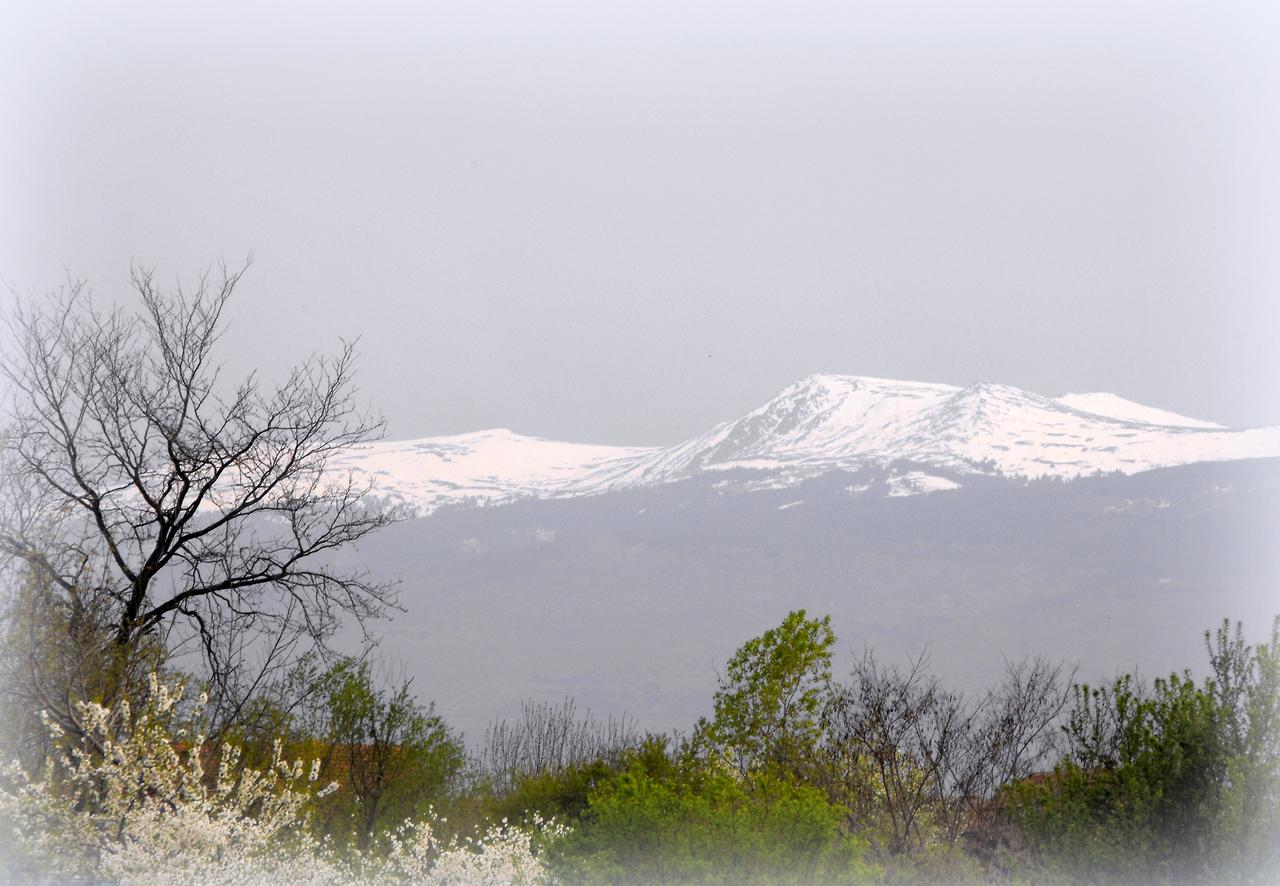
Vitosha Mountain is a mountain massif located immediately south of Bulgaria’s capital Sofia and is one of the country’s most renowned natural symbols. Its proximity to the center of Sofia—less than 10 kilometers away—has made it the capital’s closest recreational and tourism destination. The highest point of the mountain is the peak of Cherni Vrah (Black Peak), reaching 2290 meters. With an area of 278 km², it covers approximately 0.25 percent of Bulgaria’s total land area.
Vitosha Mountain belongs to the Plana-Zavalska range in southwestern Bulgaria and is surrounded by the Sofia, Pernik and Samokov basins. It extends 19 kilometers from east to west and 23 kilometers from north to south. The mountain is primarily composed of syenite rock; karstic features are present in the Bosnek area due to the prevalence of limestone. Located within the continental European climate zone, the mountain exhibits alpine climate characteristics at elevations above 1000 meters.
Geomorphologically, Vitosha is particularly famous for its block streams (stone rivers). These are periglacial slope deposits that are widespread in the higher elevations of the mountain. Some of Europe’s largest block streams are found in areas such as Zlatnite Mostove (“Golden Bridges”) and Yurushki Most. The lengths of these stone rivers range from several meters to 2.2 kilometers, with widths reaching 600–700 meters.

Vitosha Mountain, Stone Rivers (Flickr)
Vitosha is divided into four vegetation zones: oak and hornbeam forests up to 1100–1400 meters, beech forests between 1400 and 1840 meters, coniferous forests between 1700 and 2050 meters, and subalpine vegetation above 1900 meters. The mountain has been found to host 148 endemic, 85 relict and 351 rare species. Approximately 28 percent of Bulgaria’s terrestrial vertebrate species live here.
With about 90 percent of its area within the boundaries of the Vitosha Nature Park, the mountain was declared the first national park in the Balkans in 1934. Two reserves lie within the park: “Bistriško Branište” (beech and fir forests) and “Torfeno Branište” (high mountain peat bogs). Over 180 bird species, numerous insects and mammals inhabit Vitosha. More than half of the plant species common in Bulgaria are found on this mountain.
The landscape of the mountain has been shaped by human activity throughout history. Hunting, agriculture, animal husbandry, logging, coal and iron production, gold mining, stone quarries and reforestation efforts have transformed its terrain during various periods. The most intense human impact occurred during the Ottoman period through agricultural and mining activities. Since 1934, conservation has taken precedence, replacing economic exploitation with nature protection and recreation.
Due to its proximity to Sofia, Vitosha is a major attraction for both domestic and international tourists, with annual visitor numbers ranging between 2.5 and 4 million. It is preferred in summer for its cool climate and in winter for its sunnier conditions compared to the often foggy capital. Two major ski centers are located on the northern slopes: Aleko and Vetrovala-Koniarnika. Aleko also serves as the starting point for popular hiking trails and is connected to Sofia by a 6.3-kilometer cable car.

Vitosha Mountain (Flickr)
The development of tourism infrastructure began in the early 20th century with mountain lodges. By the 1970s, the Aleko ski center had become one of Bulgaria’s leading winter sports destinations. Sofia hosted the Winter Universiade in 1983 and 1989, with Aleko serving as the main venue. However, today the tourism facilities face maintenance and operational challenges.
Vitosha is one of Bulgaria’s most intensively studied mountains. Research in zoology, botany, hydrology and speleology has a long tradition. For example, studies on insects (Diptera) have identified 1272 species belonging to 58 families, representing approximately 32 percent of all known fly species in Bulgaria.
Bozhkov, Petko. “Morphometric Characteristics of Block Streams: A Case Study of the Vladayska River Basin, Vitosha Mountain (Bulgaria).” *Journal of the Bulgarian Geographical Society* 50 (2024): 65–74. https://jbgs.arphahub.com/article/119556/
Dogramadjieva, Elka, and Vasil Marinov. “The Role of Vitosha Mountain in the Development of Sofia as a Tourist Destination: Current State and Attitudes.” *Journal of Environmental and Tourism Analyses* 1, no. 1 (2013): 5–20. https://core.ac.uk/reader/26949510
Hubenov, Zdravko. “The Dipterans (Insecta: Diptera) of the Vitosha Mountain.” Historia Naturalis Bulgarica 26 (2018): 1–66. https://www.nmnhs.com/historia-naturalis-bulgarica/pdfs/000420000262018.pdf
Stella. "Stone river on Vitosha Mountain, Bulgaria." Flickr. Accessed September 24, 2025. https://www.flickr.com/photos/29865701@N02/23317536061
Stella. "Vitosha Mountain 2290 m, view from Sofia, at dusk." Flickr. Accessed September 24, 2025. https://www.flickr.com/photos/29865701@N02/25751076064
Tzvetkov, Jordan. “Historical Dynamics of Human Impact on Landscapes of Vitosha Mountain (SW Bulgaria).” *Journal of Landscape Ecology* 15, no. 2 (2022): 80–95. https://www.researchgate.net/publication/364344586_Historical_dynamics_of_human_impact_on_landscapes_of_Vitosha_Mountain_SW_Bulgaria

Henüz Tartışma Girilmemiştir
"Vitosha Mountain" maddesi için tartışma başlatın
Geographical Location and Natural Structure
Natural Environment and Biodiversity
Human Impact and Historical Use
Tourism
Scientific Research