

This article was automatically translated from the original Turkish version.
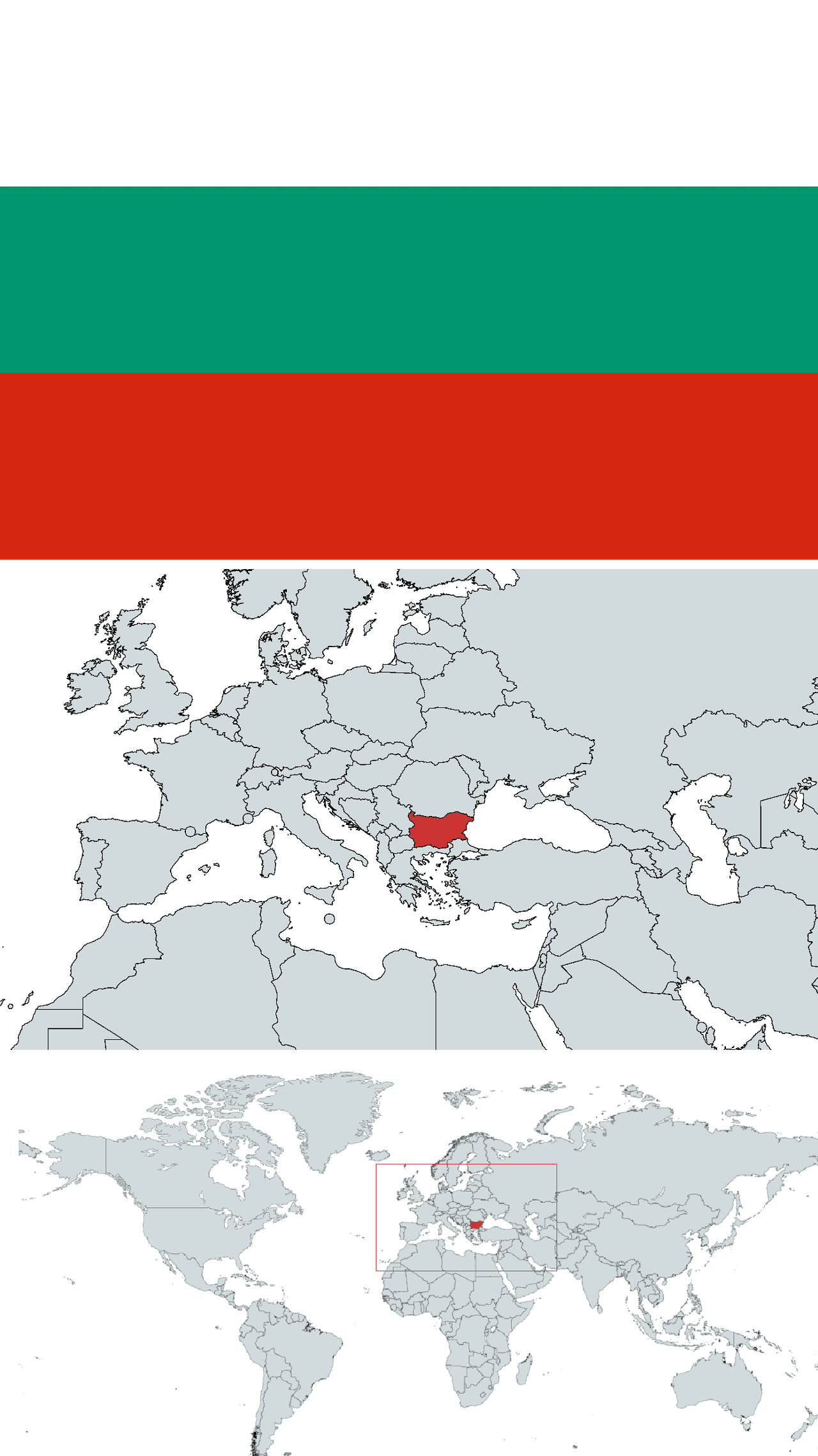
Bulgaria is a East Europe country located in place and bordering the Black Sea. With an area of 110,910 km², country shares its northern border with Romania, its western border with Serbia and North Macedonia, and its southern border with Greece and Türkiye. Its capital and largest city is Sofia. Bulgaria is known for its rich historical heritage, cultural diversity, and natural beauty. Plovdiv, one of the country’s oldest cities, is recognized as one of Europe’s oldest continuously inhabited settlements. Additionally, the Rila Monastery and the Kazanlak Thracian Tombs, both listed on UNESCO’s World World Heritage List, are like important historical and cultural sites house.
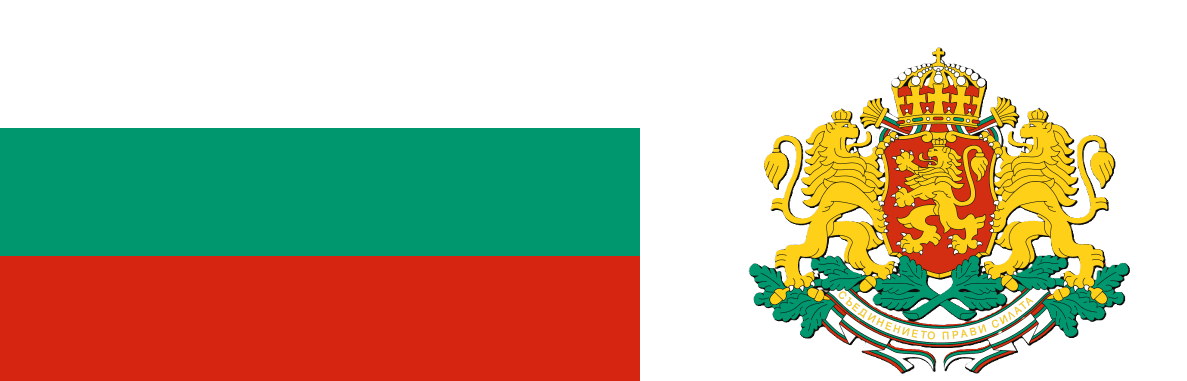
Bulgaria’s Flag and Coat of Arms
Its economy is based on industry, agriculture, and tourism. Bulgaria is a member of the European Union (EU) and NATO. The national currency is the Lev, and the country became an EU member in 2007. Agriculture has traditionally been a vital part of the economy, with sunflower, cereal crops, and wine production being particularly prominent. The tourism sector has developed around the Black Sea coastal resorts, ski centers, and spa tourism. The country exhibits ethnic diversity, with Bulgarians forming the majority of the population, while Turks and Roma constitute the largest minority groups.
Mila Rodino was written and composed in 1885 by Bulgarian poet and composer Tsvetan Radoslavov. The anthem was composed during the Serbo-Bulgarian war to boost the morale of Bulgarian soldiers heading to the front. The lyrics strongly reflect Bulgaria’s struggle for independence and its homeland for freedom. Bulgaria has used several national anthems throughout its history. “Mila Rodino” was officially adopted as the national anthem in 1964 and has since become an integral part of the nation’s identity.
The territory of Bulgaria has been inhabited since the 6th century BCE under the influence of Thracians, Celts, Greek colonies, and the Roman Empire. The Thracian civilization was one of the earliest and most powerful in the region, and the Odrysian Kingdom under King Seuthes III became a major power in the Balkans during the 5th century BCE. The Thracians were renowned for their rich gold craftsmanship, fierce warriors, and religious beliefs. Today, the Kazanlak Thracian Tombs, and the Sveshtari Tombs bear witness to this civilization.
In the 4th century BCE, the conquests of Alexander the Great influenced the region, but the real transformation occurred in the 1st century BCE with the expansion of the Roman Empire into the Balkans. Thrace was organized into the Roman provinces of Moesia and Thrace. Cities such as Philippopolis (modern Plovdiv) and Serdica (modern Sofia) became important Roman centers. During the Roman period, roads, water arches, and theaters were constructed to strengthen the region economy. After the division of the Roman Empire in the 4th century, the territory of Bulgaria became part of the Byzantine Empire.
In the 7th century, Proto-Bulgarian tribes of Asia origin, under the leadership of Khan Kubrat, established the Great Bulgarian Khanate, but were later dispersed by Khazar pressure. A group of Proto-Bulgarians led by Khan Asparuh crossed the Danube River in 681, united with local Slavic communities, and founded the First Bulgarian Empire.
The First Bulgarian Empire became a powerful force in the Balkans through decades of warfare with the Byzantines. Under Khan Krum (803–814), major victories were achieved against Byzantium, and the capital Pliska became a significant center. During the reign of Khan Boris I (852–889), the Bulgarians adopted Christianity, developed the Slavic alphabet, and established cultural centers in Preslav and Ohrid. Under Tsar Simeon I (893–927), the empire reached its peak, growing large enough to threaten Byzantium. However, in 1018, it was conquered by Byzantine Emperor II. Basil and incorporated into the Byzantine Empire.
Bulgaria remained under Byzantine administration from 1018 to 1185. During this period, Bulgarians launched numerous revolts against Byzantine rule but failed to regain independence. In 1185, brothers Asen and Peter led a successful uprising against Byzantium and established the Second Bulgarian Empire. With its capital at Tırnova, the empire became one of the most powerful states in the Balkans during the 12th and 13th centuries. Under Ivan Asen II (1218–1241), Bulgaria reached its economic and political zenith. However, internal strife and the threat of the Ottoman Empire weakened the state, and it was fully conquered by the Ottoman Empire in 1396.
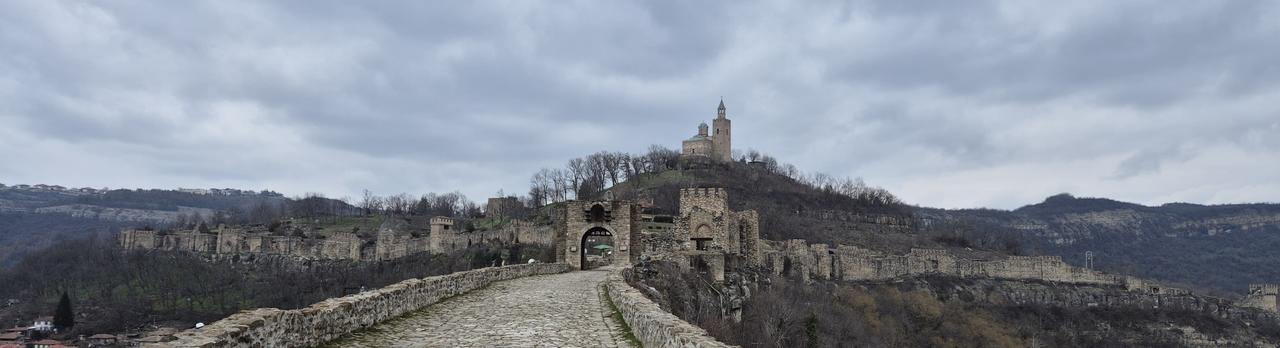
Bulgarian Tsars’ Fortress in Tırnova: Tsarevets
In the late 14th century, Bulgaria began to be conquered as part of the Ottoman Empire’s expansion policy. The capture of Edirne by the Ottomans in 1362 gave them a foothold in the Balkans, and after their victory at the Battle of Sırpsındığı in 1364, they began direct intervention in Bulgarian territories.
The Battle of Kosovo in 1389, led by Sultan Murad I, strengthened Ottoman dominance in the Balkans, and Bulgarian Tsar Ivan Shishman remained a vassal ruler. However, the Bulgarian Kingdom effectively ended in 1393 when Bayezid I captured Tırnova. In 1396, the Ottomans decisively defeated the Crusader army led by King Sigismund of Hungary at the Battle of Nicopolis, fully incorporating Bulgaria into Ottoman territory.
From this point onward, Bulgaria was administered as part of the Ottoman Rumelia Eyalet and became one of the foundational pillars of Ottoman rule in the Balkans.
With its incorporation into the Ottoman Empire, Bulgaria underwent significant administrative, economic, and social changes. The Ottomans organized Bulgarian territories under the province system, directly linking them to the central administration. The country was divided into sanjaks under the governance of Ottoman governors.
Throughout this period, the Bulgarian people lived with considerable autonomy under Ottoman rule, preserving their religious and cultural identity under the leadership of the Orthodox Church.
The Ottoman Empire’s expansion in Europe began to stall by the end of the 17th century, affecting Ottoman administration in Bulgaria and the Balkans. After the Treaty of Karlowitz in 1699, the Ottoman Empire suffered territorial losses, and Russia and Austria began to incite Christian populations within Ottoman territories.
The 19th century was a period of accelerating revolts and independence movements against Ottoman rule in Bulgaria. Nationalist currents from Europe, the weakening of Ottoman central authority, and Russian encouragement of Christian populations in the Balkans accelerated Bulgarian independence efforts.
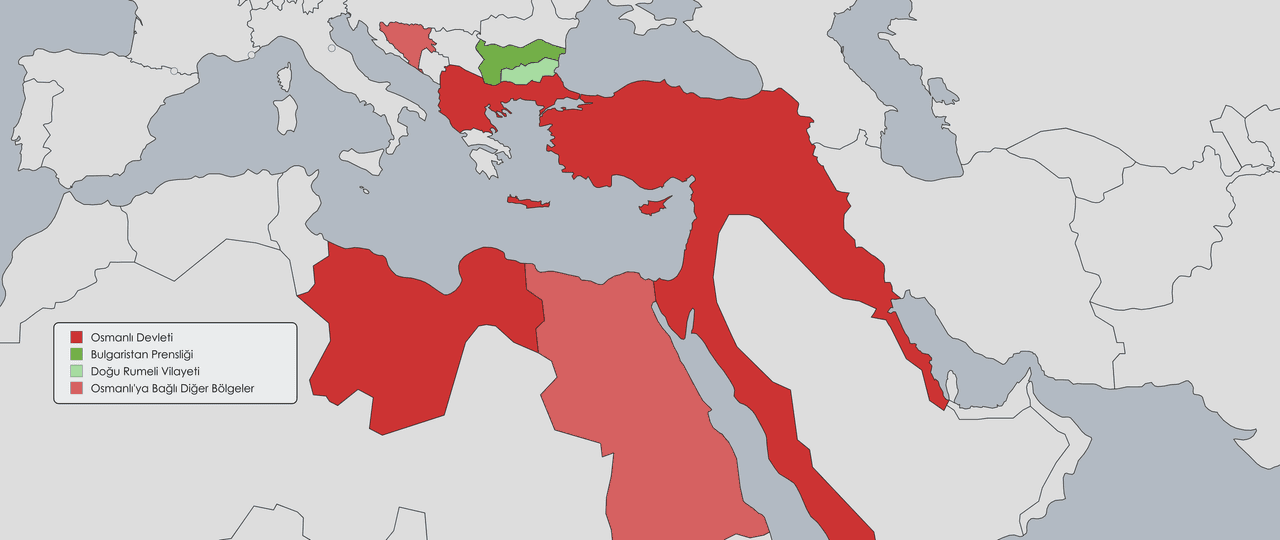
Ottoman Empire and the Principality of Bulgaria in 1880
Although the Treaty of San Stefano envisioned a large Bulgaria, the Congress of Berlin (1878) revised this decision, and Bulgaria was recognized as an autonomous principality (building) under Ottoman suzerainty.
From this point onward, Bulgaria fully separated from the Ottoman Empire, laying the foundations for the modern Republic of Bulgaria. For approximately 500 years under Ottoman rule, Bulgaria had been an inseparable part of the Ottoman state system, but nationalist movements in the 19th century enabled it to regain independence.
At the beginning of the 20th century, Bulgaria, newly separated from the Ottoman Empire, sought to expand its territorial claims in the Balkans. In 1912, Bulgaria joined Serbia, Greece, and Montenegro in the First Balkan War against the Ottoman Empire. During this conflict, the Ottomans lost most of their European territories, and Edirne was captured by the Bulgarian army. However, the question of dominance over Macedonia created disputes among the Balkan states.
Bulgaria, having shouldered the heaviest burden in the war, sought to claim a large portion of Macedonia, but Serbia and Greece refused to share these territories. This led to the outbreak of the Second Balkan War in 1913. While Bulgaria attempted to retain the territories it had gained from the Ottomans, it was forced to fight its former allies Serbia and Greece, as well as Romania and the Ottoman Empire. The Ottoman Empire regained Edirne and Kırklareli, while Bulgaria lost much of Macedonia and suffered a severe defeat. The Treaty of Bucharest (1913) resulted in Bulgaria suffering major territorial losses to Serbia, Greece, and Romania, ending its expansionist ambitions in the Balkans.
After the Balkan Wars, Bulgaria severed its ties with the Ottoman Empire and sought new opportunities to reclaim lost territories. In 1915, Bulgaria allied with Germany and Austria-Hungary, joining World War I on the side of the Central Powers. During the war, Bulgaria conducted major military operations against Serbia and Romania, occupying much of Macedonia. However, as the Central Powers began to lose the war, Bulgaria suffered a serious defeat.
When the war ended in 1918, Bulgaria was counted among the defeated nations and faced harsh penalties. Under the 1919 Treaty of Neuilly, Bulgaria lost territory to Serbia, Greece, and Romania, was forced to pay heavy war reparations, and had its military size severely restricted. This agreement created a major economic crisis and political instability, generating widespread discontent toward the government people.
After World War I, Bulgaria struggled with economic collapse, political instability, and unrest caused by territorial losses. In 1923, a military coup led by General Aleksandar Tsankov overthrew the government and established an authoritarian regime. Tsankov’s repressive rule brutally suppressed socialist and communist movements, yet internal unrest persisted.
In 1934, a nationalist group called Zveno seized power, dissolved parliament, and ended the democratic process. However, in 1935, King Boris II regained control and established his own authoritarian regime. King Boris’s government led Bulgaria to establish close close relations with Germany, bringing the country into Nazi Germany’s sphere of influence. In 1940, with German support, Bulgaria regained Southern Dobruja from Romania and became more integrated into Germany’s Eastern European policies.
In 1941, Bulgaria joined Nazi Germany in the war but did not declare war on the Soviet Union. The Bulgarian army occupied parts of Yugoslavia and Greece, but no major front was opened on Bulgarian soil. The sudden death of King Boris II in 1943 increased political uncertainty in the country, and as Nazi Germany began to retreat, Bulgaria’s leadership faced a difficult situation.
September in 1944, the Soviet Union entered Bulgaria and established a communist government in Sofia. During this period, Bulgaria adopted an anti-Nazi stance, withdrew from the Axis Powers, and sided with the Allies by the end of the war. However, Bulgaria was still recognized as a defeated nation, and the 1947 Paris Peace Treaty resulted in minor border adjustments.
After World War II, Bulgaria fell entirely under the influence of the Soviet Union. In 1946, the monarchy was abolished and the People’s Republic of Bulgaria was proclaimed. Socialist economic policies were implemented, agriculture was collectivized, and industrialization accelerated. From 1954 until 1989, the country was ruled by Todor Jivkov, leader of the Bulgarian Communist Party, who established a harsh communist regime.
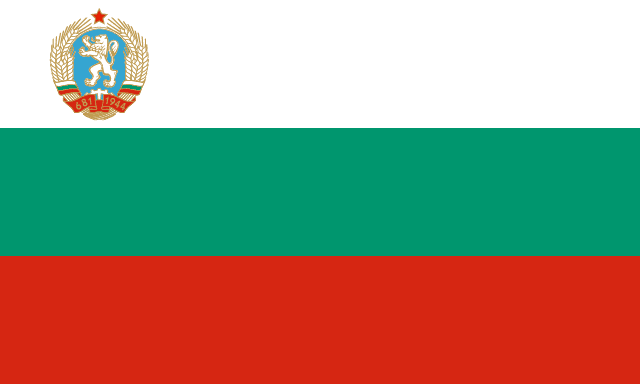
Flag of the People’s Republic of Bulgaria
During this period, Bulgaria developed close economic and political ties with the Soviet Union and implemented major reforms in industry and agriculture. However, because its economy was entirely dependent on the Soviet Union, Bulgaria was directly affected by Soviet economic crises. In the 1980s, the Bulgarian government implemented repressive policies against the country’s Turkish and Muslim minorities, launching a forced name-changing campaign. This led to the emigration of thousands of Turks to Türkiye.
With the wave of change sweeping through the Eastern Bloc in 1989, the communist regime in Bulgaria collapsed, and a transition to a multi-party democratic system began. Jivkov’s government was overthrown, and Bulgaria rapidly embraced West-style reforms. The first free elections were held in 1990, and a new constitution was adopted in 1991.
Bulgaria is a country in Eastern Europe located on the eastern part of the Balkan Peninsula and bordering the Black Sea. With an area of 110,910 km², it shares borders with Romania to the north, Serbia and North Macedonia to the west, Greece and Türkiye to the south, and the Black Sea to the east. The 378-kilometer-long coast coastline along the Black Sea provides Bulgaria with significant sea access and trade advantages. Bulgaria is one of Europe’s most mountainous countries, characterized by extensive forested areas and agricultural lands.
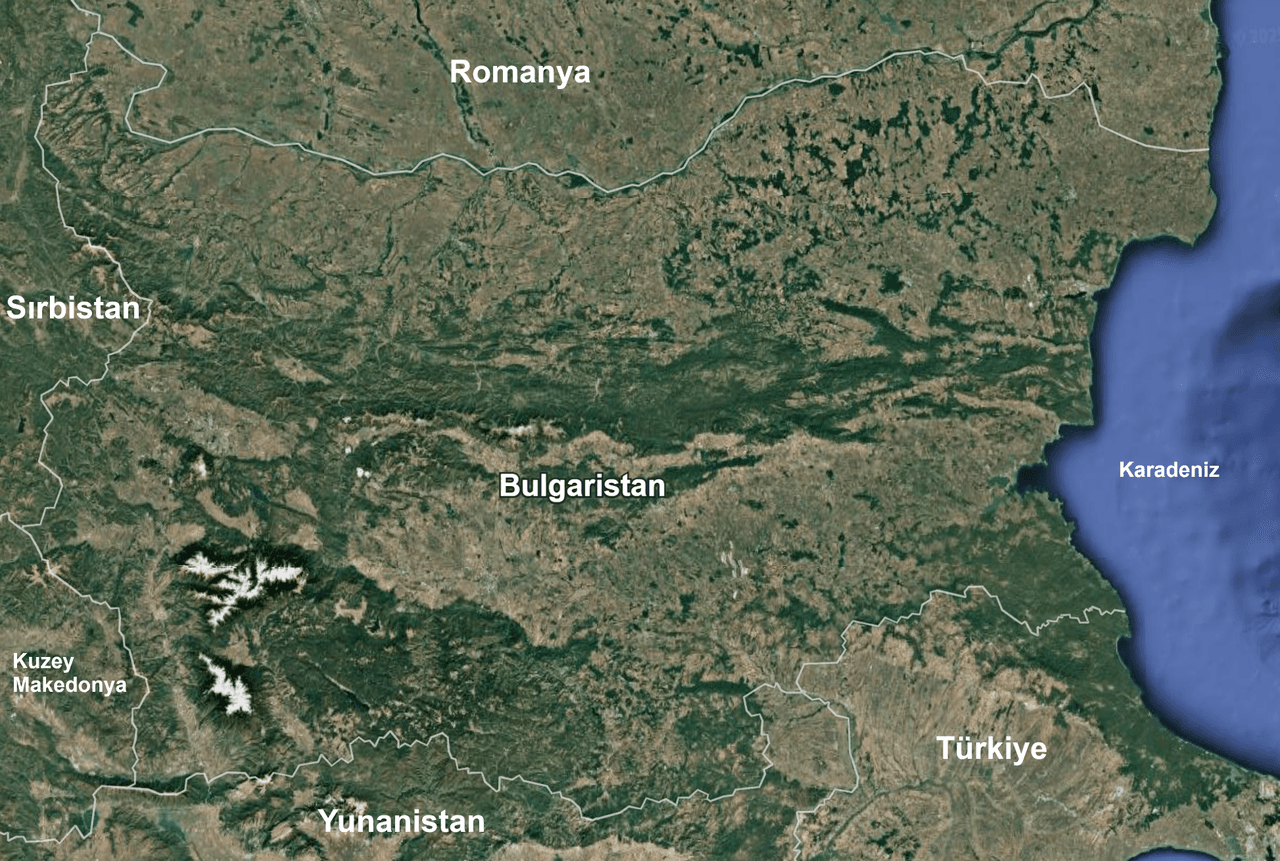
Bulgaria’s Geography – Satellite Image
Bulgaria’s total border length is 2,201 kilometers. Its land borders are as follows:
Bulgaria’s topography is highly diverse, consisting of extensive mountainous areas and plateaus. Mountains, plains, and river valleys define the country’s landscape.
The Balkan Mountains, which divide Bulgaria from east to west, are one of the country’s most important mountain chains. They extend from the Serbian border in the west to the Black Sea coast in the east. The highest peak is Botev Peak at 2,376 meters. The Balkan Mountains form a climatic and geographic barrier between northern and southern Bulgaria.
The Rila Mountains, located in southwestern Bulgaria, are the highest in the country. The highest point, Musala Peak at 2,925 meters, is also the highest point in the Balkans. The Rila Mountains are home to Rila National Park, one of Bulgaria’s most important national parks.
Rhodope Mountains
Located in southern Bulgaria near the Greek border, the Rhodope Mountains contain the country’s most forested areas. The Rhodope Mountains are known for Golyam Perelik Peak, which reaches 2,191 meters. This region is famous for its natural beauty, caves, and thermal springs.
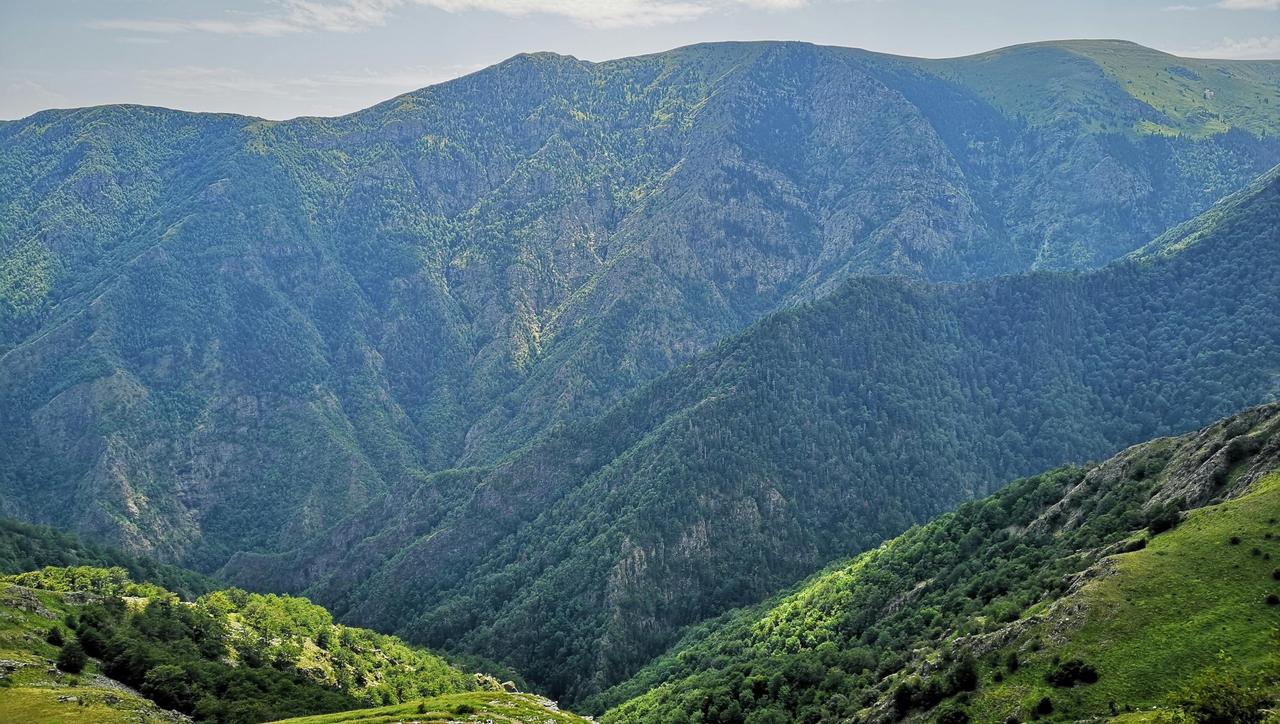
Rhodope Mountains – Plovdiv (Hristo Ivanov)
Pirin Mountain, located in southwestern Bulgaria, is the country’s second-highest peak at 2,914 meters, with Vihren Peak. These mountains host the Bansko Ski Center, an important destination for winter tourism.
Located in southeastern Bulgaria near the Turkish border, the Istranca (Strandja) Mountains consist of low hills descending toward the Black Sea coast. This region contains extensive forest areas where natural habitats are preserved.
The Danube Plain, stretching along the Danube River in northern Bulgaria, consists of extensive agricultural lands and is one of the country’s most fertile farming regions. This area is significant for the production of wheat, maize, sunflower, and grape. The Danube Plain extends to the Romanian border and is surrounded by low hills.
The Thracian Plain, located in southern Bulgaria and encompassing the cities of Plovdiv and Stara Zagora, is a vast and fertile region. It is one of the country’s main agricultural production centers, known for vineyards, tobacco, and cereal production.
The Struma and Mesta River Valleys in southwestern Bulgaria are fertile valleys following the major rivers flowing toward Greece. These regions are of great importance for viticulture and fruit production.
Bulgaria is a country rich in water resources, with numerous rivers and lake. One of its most important rivers is the Danube, which forms the northern border of the country. The Danube flows parallel to the Romanian border, providing vital flow water for agriculture in northern Bulgaria.
Meriç River is Bulgaria’s longest river, flowing through the Thracian Plain toward Greece and Türkiye. The Struma and Mesta Rivers originate in the Pirin and Rila Mountains and flow toward Greece.
In addition to natural lakes, Bulgaria has dam lakes and artificial reservoirs. Important lakes include Pomorie (Ahiyolu), Atanasovsko, and Varna Lakes near Burgas. The Seven Rila Lakes in the Rila Mountains are among the country’s most popular natural tourism destinations.
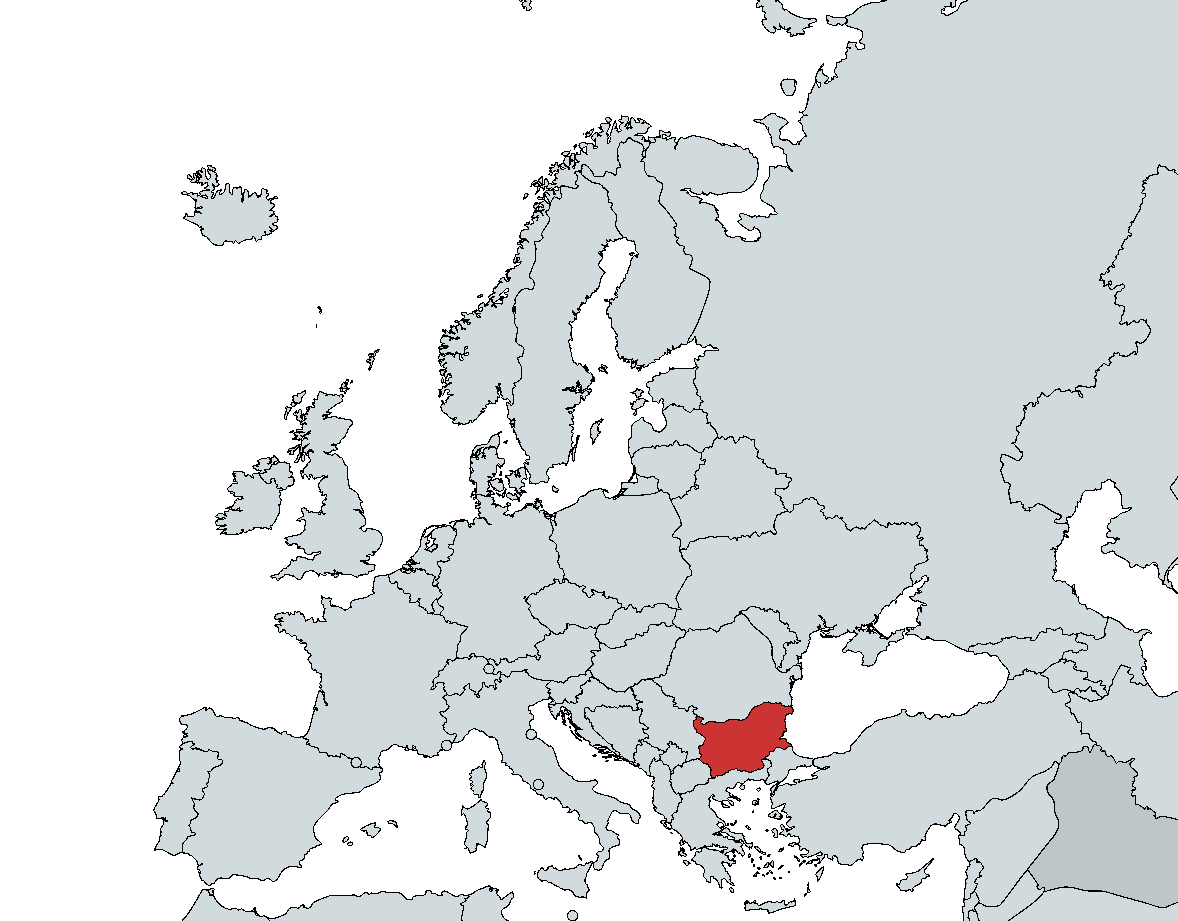
Bulgaria’s Location in Europe
Bulgaria has a 378-kilometer-long coastline along the Black Sea. The Black Sea coast is known for sandy beaches, bays, and resort towns. Varna and Burgas are Bulgaria’s largest port cities and hold major importance for tourism and trade. Coastal towns such as Nessebar, Sozopol, and Albena are renowned for their historical heritage and natural beauty.
Bulgaria has a temperate continental climate, with different climate types due to its mountainous terrain and Black Sea coastline. The northern and inland regions exhibit continental climate characteristics, while the Black Sea coast has a milder and more humid climate. The Balkan Mountains act as a climatic barrier between northern and southern Bulgaria, especially accentuating temperature differences in winter. Moving from west to east, the influence of land increases, and the climate becomes milder due to the Black Sea’s influence.
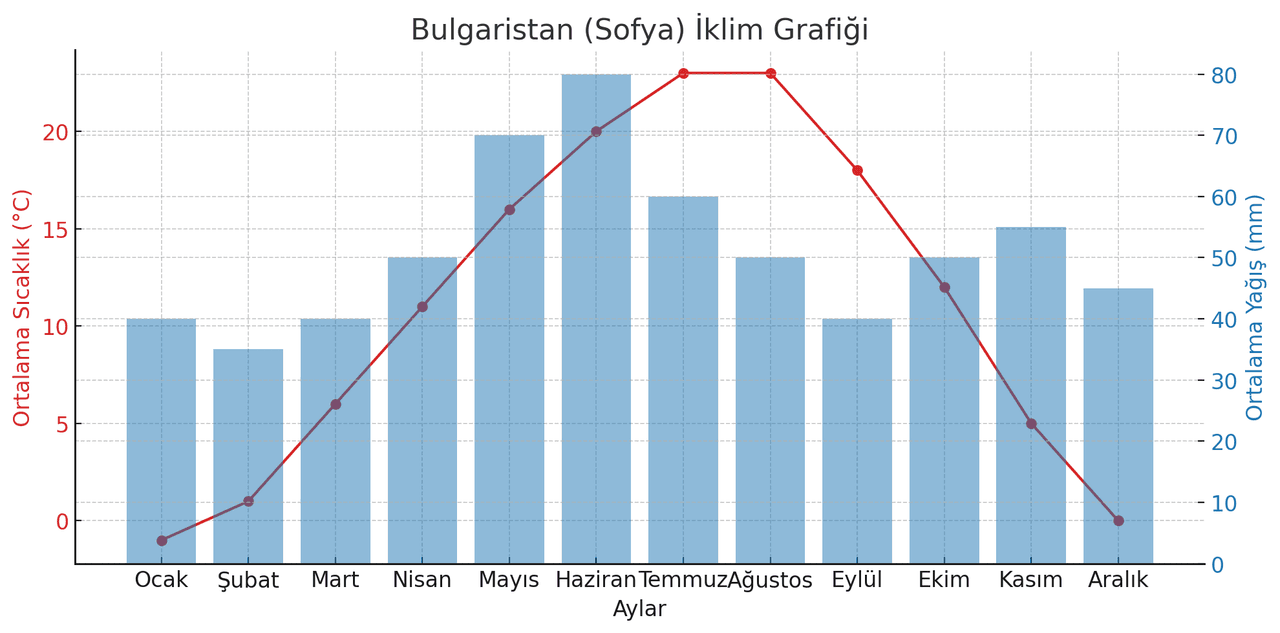
Sofya Climate Graph
Winter temperatures typically range from -5°C to 5°C, while write temperatures range from 25°C to 35°C. The lowest temperatures are recorded in high-altitude areas such as the Rila, Pirin, and Rhodope Mountains. Snow precipitation can be prolonged, especially in mountainous areas, providing a significant advantage for ski tourism.
The inland areas and the Danube Plain are the regions where the continental climate is most pronounced. Summers are hot and dry, while winters are cold and snowy. Annual temperature variations are high, and frost events are common in winter.
This region is one of the most agriculturally significant areas in Bulgaria, but severe winter frosts and summer droughts can affect agricultural production.
The Black Sea coast has a milder and more humid climate compared to inland areas. Summers are cooler and winters are milder here, with less temperature variation due to the sea’s influence.
Although tropical storms and heavy rainfall are rare on the Black Sea coast, cold air masses from the sea can affect coastal areas in winter. This region is of great importance for sea tourism and experiences heavy tourist influxes in summer.
In Bulgaria’s mountainous areas, particularly the Rila, Pirin, Rhodope, and Balkan Mountains, a harsh mountain climate prevails. Temperatures remain low throughout the year, and winters are severe.
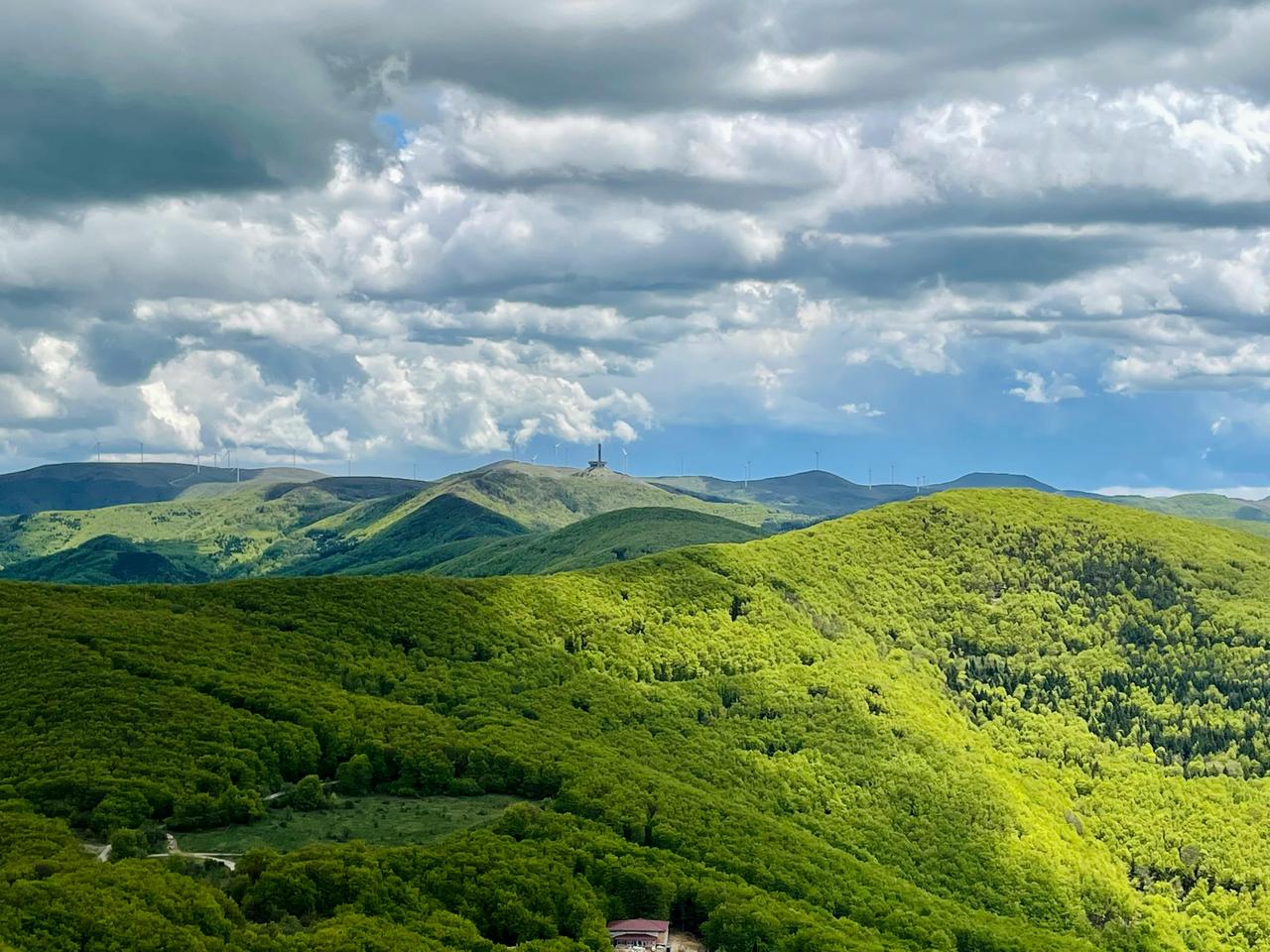
Balkan Mountains – Shipka (Desislav Todorov)
This climate is highly favorable for ski tourism, and Bulgaria’s most important ski centers are located in these regions. Ski resorts such as Bansko, Pamporovo, and Borovets maintain snow cover for much of the year.
In southern Bulgaria, particularly in the Thracian Plain and areas near the North Macedonian border, transitional climate characteristics are observed. This region lies between the Mediterranean and continental climates.
This region is one of the most productive agricultural areas, particularly famous for wine production. The milder climate enhances the region’s economic importance.
Annual average precipitation in Bulgaria ranges from 500 to 1,200 mm. The highest rainfall occurs in mountainous areas, while the lowest is recorded in the Danube and Thracian Plains.
With a population of 6.5 million, Bulgaria is one of the countries with the lowest population density in Europe. Its population has experienced a significant decline since the 1990s, a trend that continues today. The population, which was 9 million in 1989, has been continuously decreasing due to declining birth rates, emigration, and aging.
Bulgaria is a country that concentrates the majority of its population in large cities while rapidly depopulating rural areas. 75% of the population lives in urban areas, while the rural population has fallen below 25%.
Largest Cities (approximate 2023 populations):
Sofia is the capital and largest city, housing 22% of the country’s population and serving as Bulgaria’s economic, cultural, and political center. Varna and Burgas are major port cities on the Black Sea coast with significant importance for trade and tourism.
Rural areas are experiencing fast population loss. Particularly in mountainous regions and small towns, the youth population is declining while the elderly population is increasing. People migrating from rural areas typically move to large cities like Sofia, Plovdiv, and Varna or abroad. Although the country’s population is approximately 6.5 million, only 4.7 million people live within Bulgaria’s borders.
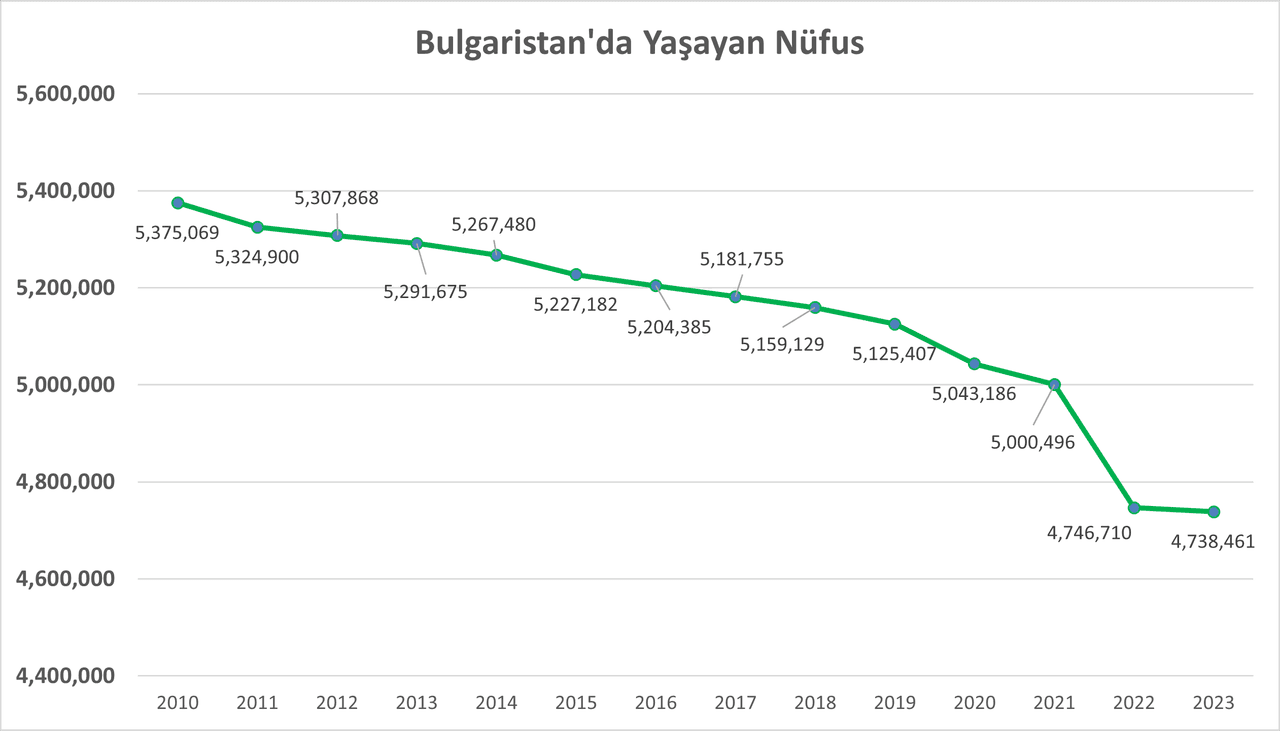
Annual Change in Population Living in Bulgaria
Although Bulgaria is one of the most homogeneous countries in the Balkans, it is home to various ethnic groups.
Bulgarians constitute the majority ethnic group and are spread throughout the country. However, due to population decline and emigration, the proportion of ethnic Bulgarians has been decreasing since 1990.
Turks are the largest minority group, making up 8.4% of the population. The Turkish population in Bulgaria is a legacy of the Ottoman period and is concentrated especially in northeastern Bulgaria and the Kırklareli region. Cities such as Razgrad, Silistra, Shumen, and Kırklareli have significant Turkish populations.
Roma constitute 4.4% of the population, but it is believed that actual numbers exceed official records. The Novel community generally lives in low-income segments and faces serious challenges in education and employment.
Other minority groups include Russians, Armenians, Greeks, Jews, and Pomaks (Muslim Bulgarians).
Although Bulgaria is officially a secular state, the majority of its population is Orthodox Christian.
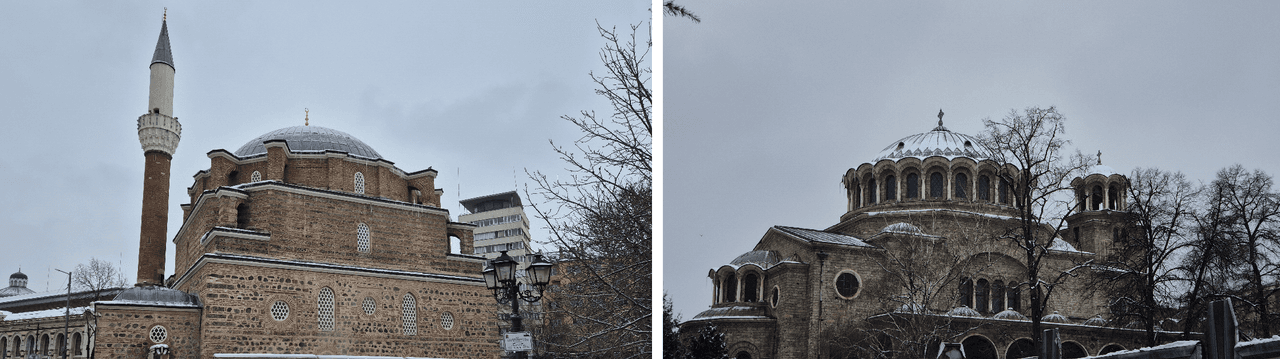
Historical Banya Bashi Mosque and Historical Sveta Nedelya Church in Sofia City Center
The Bulgarian Orthodox Church is the largest religious authority in the country, and the majority of the population identifies as Orthodox Christian. Muslims are primarily composed of Turks and Pomaks (Muslim Bulgarians) and live mainly in northeastern Bulgaria and around the Rhodope Mountains.
Catholic and Protestant communities are small and concentrated mainly in western and northern regions.
With a literacy rate of 98.4%, Bulgaria ranks among Europe’s most educated countries.
Bulgaria’s education system includes 12 years of compulsory education. The country has over 50 university and higher education institutions. The largest and most prestigious universities include Sofia University, Plovdiv University, and Varna Technical University.
Bulgaria is one of Europe’s fastest-declining populations due to low birth rates and high emigration rates.
Since 1989, approximately 2 million people have left the country, migrating to Germany, the United Kingdom, Türkiye, USA, and Canada. The largest Bulgarian diaspora is in Germany and Türkiye. Since most emigrants are young and educated, Bulgaria’s aging population has become a major problem.
Due to its geopolitical position, Bulgaria plays a vital bridge role between Europe, the Balkans, the Black Sea, and the Middle East. Since the 1990s, the country has pursued democratization and Western integration policies, joining Western institutions. Today, as a member of the European Union (EU) and NATO, Bulgaria follows a pro-Western foreign policy. However, due to historical and economic ties, it maintains relations with Russia and other former Eastern Bloc countries.
Bulgaria became a full member of the European Union on 1 January 2007. This membership triggered significant reforms in the country’s political, economic, and legal structures and accelerated its integration with Europe. Thanks to EU funds, major investments have been made in infrastructure, education, and agriculture.
However, Bulgaria remains under strict EU scrutiny on issues such as corruption, organized crime, and the rule of law. Although full accession to the Schengen Area has been delayed, membership for air and sea borders was approved in 2024. Full Schengen membership for land borders is still pending.
Within the EU, Bulgaria actively pursues policies on agriculture, energy security, and regional development. Due to its strategic position in the Black Sea region, it has become one of the EU’s key partners in energy projects.
Bulgaria joined NATO in 2004, integrating into the Euro-Atlantic security system. As a strategic NATO partner in the Balkans, the country has participated in military modernization programs.
Design for the 20th Anniversary of Bulgaria’s NATO Membership
Bulgaria’s NATO membership has complicated its relations with Russia. Particularly due to Russia’s growing military presence in the Black Sea, Bulgaria has become one of the countries supporting NATO’s presence in the region.
Relations between Türkiye and Bulgaria have been shaped by historical, cultural, and economic ties. The Ottoman-era common legacy and the Turkish minority in Bulgaria are key elements of the bilateral relationship.
Türkiye is one of Bulgaria’s largest trading partners. Bilateral trade reached $7.4 billion in 2022. Bulgaria serves as an important transit route for Türkiye to access Europe.
Relations between Bulgaria and Russia have a complex historical background. Bulgaria gained independence in 1877–1878 with Russian support after the Russo-Turkish War. However, after the Cold War, Bulgaria turned toward the West and embraced NATO and EU membership.
For many years, Bulgaria was heavily dependent on Russia for energy, particularly natural gas and oil imports. However, after Russia’s Ukraine invasion of Ukraine, Bulgaria implemented policies to reduce its dependence on Russian natural gas, turning to alternative energy sources such as LNG terminals and the Southern Gas Corridor.
Historically, Bulgaria has had tense relations with North Macedonia and Serbia due to the Macedonian issue. However, during its EU accession process, Bulgaria improved relations with North Macedonia and enhanced economic cooperation with Serbia.
Greece has supported Bulgaria’s EU membership. The two countries cooperate in trade, tourism, and energy. Particularly, the Greece-Bulgaria natural gas interconnection is strategically important for enhancing energy independence.
Bulgaria has developed strong diplomatic and military relations with the United States. The U.S. supports Bulgaria’s role within NATO and provides military assistance. Additionally, U.S. investments in Bulgaria are increasing, and bilateral trade is growing.
China has become an important economic partner for Bulgaria. Under China’s Belt and Road Initiative, infrastructure investments in Bulgaria are planned. However, due to concerns within the EU regarding Chinese influence, Bulgaria is carefully evaluating these investments.
Bulgaria cooperates with the Middle East in trade and security. It has strengthened economic ties with Türkiye, Saudi Arabia, and the United Arab Emirates. It also undertakes joint projects with North African countries in agriculture and trade.
The Bulgarian Armed Forces demonstrate their commitment to national defense, contributing to NATO and international peace operations, and supporting national security. Army; they consist of land, air, and naval forces. Focusing on modernization, Bulgaria invests in various defense projects to meet NATO requirements.
The Bulgarian Land Forces constitute the country’s largest military component and are primarily responsible for territorial defense, participation in NATO operations, and support for internal security. The army maintains a high operational readiness level within the framework of national defense and NATO obligations. It also actively participates in international peacekeeping missions, contributing to NATO and United Nations operations in various regions.
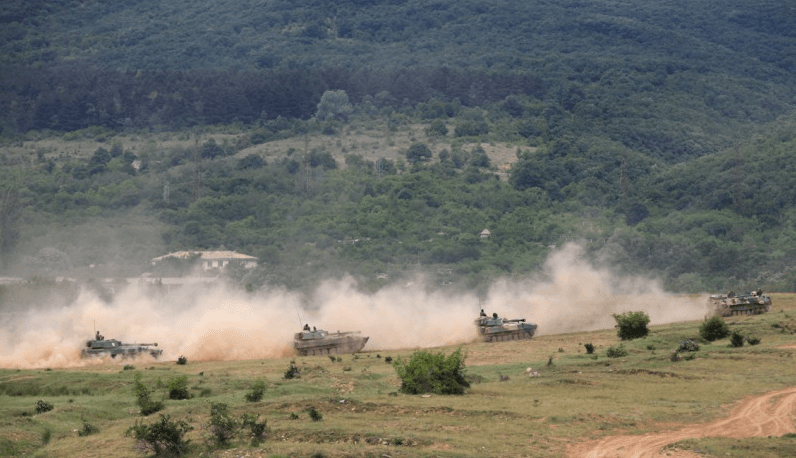
“Thracian Guards-2013” Exercise
The land forces, equipped with armored units, artillery systems, and rocket systems, strive to adapt to modern warfare conditions. However, the Bulgarian army still uses Soviet-era equipment and is working on acquiring new armored vehicles and equipment under modernization programs.
The Bulgarian Air Forces operate to protect the country’s airspace, contribute to NATO’s integrated air defense system, and ensure the security of strategic facilities. They also play a vital role in search-and-rescue operations and humanitarian missions. Bulgaria plans to retire its Soviet-era MiG-29 fleet and replace it with F-16 Block 70 fighter jets supply.
The air forces, currently operating Soviet-era aircraft, are taking steps to modernize their inventory. New-generation fighter acquisitions aim to strengthen air defense. Joint exercises and air policing missions with NATO enhance Bulgaria’s integration into international security mechanisms.
The Bulgarian Naval Forces are responsible for protecting the country’s maritime borders in the Black Sea. They also actively participate in NATO’s maritime security operations. The navy undertakes duties such as safeguarding the coastline and exclusive economic zone, conducting mine-clearance operations, and contributing to international security missions.
The fleet consists of frigates, corvettes, and mine countermeasure vessels. Bulgaria, lacking a Submarine fleet, aims to strengthen its patrol boats and coastal security units to ensure maritime security.
As a NATO member, Bulgaria contributes to numerous international military operations. It has supported missions in Afghanistan, Kosovo, and the Baltic Air Policing. It also plays an active role in NATO’s efforts to enhance Black Sea security.
Bulgaria participates in European Union military and humanitarian missions and supports EU peacekeeping operations in Africa. It also deploys troops to United Nations peacekeeping missions, particularly in Africa and the Middle East.
Bulgaria’s economy operates under free MARKET conditions, is open to international trade, and is based on industry, services, and agriculture. Since becoming a full member of the European Union (EU) in 2007, Bulgaria has accelerated its economic reforms, improved its investment climate, and upgraded its infrastructure. Classified by the World Bank as an “upper-middle-income” economy, Bulgaria largely maintains macroeconomic stability and possesses significant potential in industrial production, agriculture, and tourism.
However, the country still faces challenges such as low wages, population decline, and labor emigration. Despite improvements in the investment environment, corruption and deficiencies in public management remain limiting factors for economic growth.
Bulgaria’s economy is vulnerable to global economic fluctuations. Changes in energy prices, fluctuations in EU markets, and volatility in foreign direct investment significantly impact economic growth.
The industrial sector constitutes a significant part of Bulgaria’s economy. Key industries include machinery manufacturing, automotive parts, electronics, metal processing, and chemical industry. Industrial facilities are concentrated in major cities such as Sofia, Plovdiv, and Varna.
The energy sector plays a crucial role in Bulgaria’s industrial infrastructure. Bulgaria holds a strategic position in ensuring EU energy supply security and is a transit country for natural gas pipelines from Russia to Europe. Nuclear energy production also holds an important place in the economy, with a large portion of the country’s electricity production supplied by the Kozloduy Nuclear Power Plant.
The services sector constitutes the largest part of Bulgaria’s economy, accounting for approximately 60% of GDP. Banking, finance, information technologies, and retail are among the fastest-growing sectors.
Tourism is one of the sectors contributing significantly to Bulgaria’s economic growth. Black Sea coastal resorts, historical cities, and ski centers attract millions of tourists annually. Particularly ski resorts such as Bansko, Pamporovo, and Borovets, along with coastal cities like Varna and Burgas, lead tourism revenues.
The agricultural sector holds an important place in the country’s economic structure, contributing approximately 5–7% to GDP. Cereals, sunflower, tobacco, and grapes are Bulgaria’s leading agricultural products. The country also has a strong tradition in wine production and is recognized as one of Europe’s major wine producers.
Livestock farming, particularly in milk and dairy production, holds a significant position. Milk and dairy exports are in high demand in EU markets.
Bulgaria is heavily dependent on European Union (EU) countries for foreign trade. A large portion of its exports and imports occurs with EU countries such as Germany, Italy, Romania, and Greece. Türkiye and Russia are also important trading partners of Bulgaria.
Bulgaria is heavily dependent on imports for energy, particularly natural gas and oil from Russia. However, in line with EU energy policies, it is seeking alternative energy sources to ensure energy supply security.
Bulgaria has one of the lowest corporate tax rates in Europe and offers various incentives to make its business environment attractive. Particularly information technology, automotive manufacturing, energy, and tourism are key sectors for foreign investors.
However, corruption, deficiencies in public administration, and issues with the rule of law remain the main factors limiting foreign investment. EU funds provide significant financial source for infrastructure development and economic reforms.
Bulgaria is undertaking major projects using EU funds to modernize its energy and transportation infrastructure. Natural gas pipelines, nuclear energy investments, and renewable energy projects are among the most important investments in this area. Transportation infrastructure, especially roads, railways, and ports, is being upgraded to enhance integration with Europe, making Bulgaria an important part of Europe’s logistics corridors.
Bulgaria stands out as one of the most important tourism destinations in the Balkans due to its natural beauty, historical heritage, thermal springs, and Black Sea coastal resorts. The country offers a wide range of tourism activities, including cultural tourism, sea tourism, winter tourism, eco-tourism, and health tourism. Its EU membership and integration into the Schengen Area have led to a significant increase in tourist numbers.
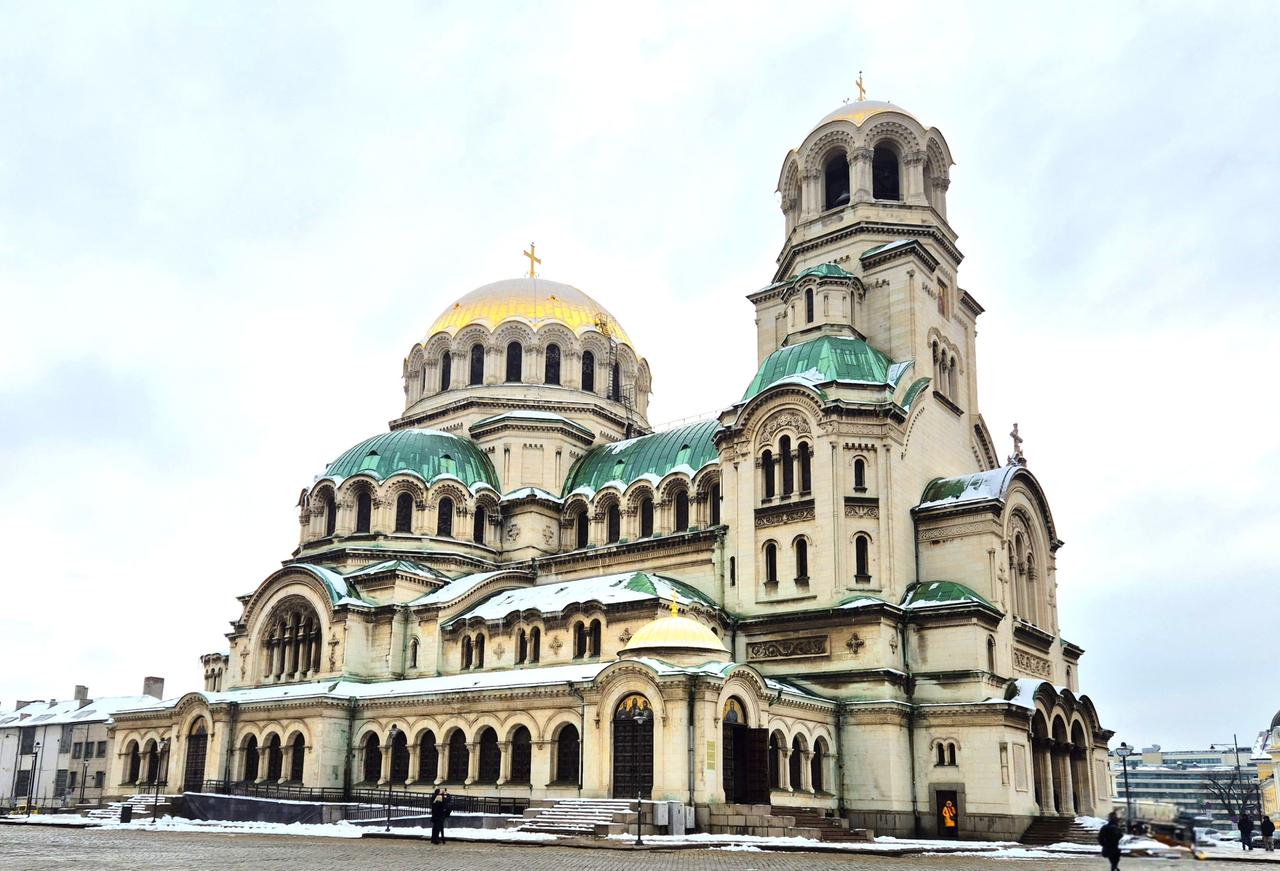
Aleksandr Nevski Cathedral – Sofia
Bulgaria attracts millions of tourists annually due to its affordable vacation options and visa-free access for visitors from many countries. Tourists from Europe, Russia, the Middle East, and the Balkans contribute significantly to the country’s tourism potential.
The tourism sector is one of Bulgaria’s most important economic sectors and holds a significant share of Gross Domestic Product (GDP). The country holds a competitive position in Europe in terms of international tourism revenues and welcomes millions of tourists annually. Particularly during summer months, Black Sea coastal resorts and during winter months, ski centers generate a large portion of tourism revenues.
Although Bulgaria’s tourism sector suffered a major blow in 2020 due to the COVID-19 pandemic, it began recovering by 2022, and tourist numbers increased again in 2023. The country continues to be a popular destination for European and Russian tourists, as well as visitors from Türkiye and Middle Eastern countries.
The beaches and resort towns along the Black Sea coast are among Bulgaria’s most popular tourist destinations. Numerous resorts are located around the cities of Varna and Burgas in the east. The Black Sea’s mild climate, clean beaches, and affordable hotels enhance the appeal of summer tourism.
Main Resort Towns and Beaches:
Bulgaria hosts some of the best ski resorts in the Balkans. Ski resorts offer more affordable prices compared to the Alps in Europe, making them attractive to both professional and amateur skiers.
Prominent Ski Resorts:
Winter tourism is also supported by spa tourism. Thermal hotels located near ski resorts provide a significant advantage for tourists seeking relaxation after winter sports.
Bulgaria possesses numerous important historical sites protected by UNESCO, reflecting its rich historical past and cultural heritage. Historical structures from ancient Thracian civilizations to the Ottoman period offer great potential for cultural tourism.
Prominent Cultural and Historical Destinations:
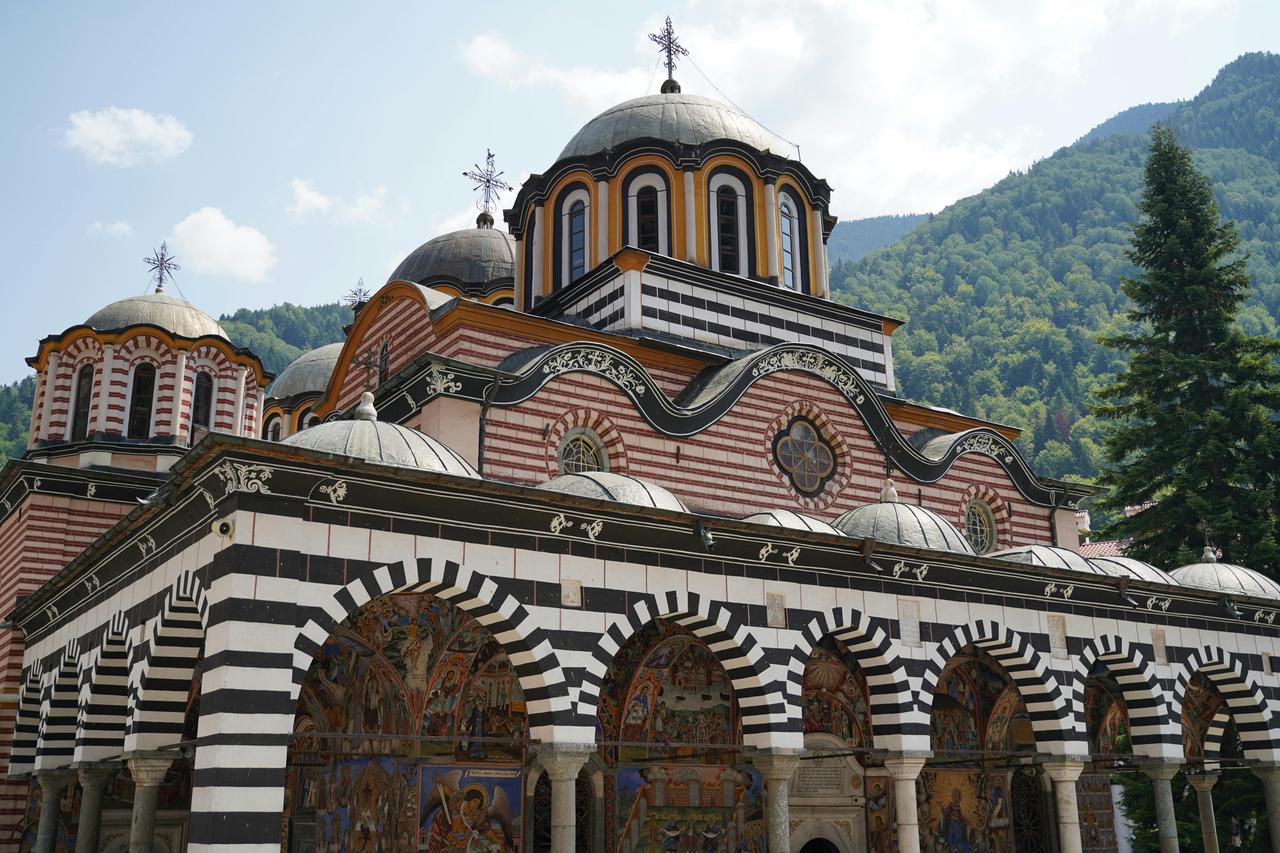
Rila Monastery (Vaan)
Bulgaria is one of the countries with the richest mineral water sources in Europe, with hundreds of spas and thermal facility across the country.
Prominent Spa Centers:
Spa tourism is particularly favored by health tourists from Europe and the Middle East.
Bulgaria Ministry of Defence. “History of the Bulgarian Air Force.” Ministry of Defence of Bulgaria. Accessed February 22, 2025. https://mod.bg/en/ba_vvs_history.html.
Central Intelligence Agency. “Bulgaria.” The World Factbook. Accessed February 22, 2025. https://www.cia.gov/the-world-factbook/countries/bulgaria/.
Eyice, Semavi. “Bulgaristan.” *TDV İslâm Ansiklopedisi.* Accessed February 22, 2025. https://islamansiklopedisi.org.tr/bulgaristan#5-bulgaristanda-turk-mimarisi.
Global Firepower. "Bulgaria Military Strength." Global Firepower. Accessed February 22, 2025. https://www.globalfirepower.com/country-military-strength-detail.php?country_id=bulgaria.
Halaçoğlu, Yusuf. “Bulgaristan.” *TDV İslâm Ansiklopedisi.* Accessed February 22, 2025. https://islamansiklopedisi.org.tr/bulgaristan#2-osmanli-donemi.
Kuyucuklu, Nazif. “Bulgaristan.” *TDV İslâm Ansiklopedisi.* Accessed February 22, 2025. https://islamansiklopedisi.org.tr/bulgaristan#1.
National Statistical Institute. “Население по градове и пол.” Национален статистически институт. Accessed February 22, 2025. https://www.nsi.bg/bg/content/2981/.
Rewilding Europe. “Bulgaria’s Rhodope Mountains Witness Historic European Bison Return.” Rewilding Europe. Accessed February 22, 2025. https://rewildingeurope.com/news/bulgarias-rhodope-mountains-witness-historic-european-bison-return/.
Tzvetkova, Juliana. Bulgaria: The Essential Guide to Customs & Culture. London: Kuperard, 2023.
Wilson Center. “Bulgaria: Political Crisis with No End in Sight.” Accessed February 22, 2025. https://www.wilsoncenter.org/article/bulgaria-political-crisis-no-end-sight.
İpşirli, Mehmet. “Bulgaristan.” TDV İslâm Ansiklopedisi. Accessed February 22, 2025. https://islamansiklopedisi.org.tr/bulgaristan#4-bulgaristan-vakiflari.
———. “History of the Bulgarian Land Forces.” Ministry of Defence of Bulgaria. Accessed February 22, 2025. https://mod.bg/en/ba_sv_history.html.
———. “History of the Bulgarian Navy.” *Ministry of Defence of Bulgaria.* Accessed February 22, 2025. https://mod.bg/en/ba_vms_history.html.

Bulgaria’s National Anthem
History of Bulgaria
Early Communities and Antiquity
Proto-Bulgarians and the First Bulgarian Empire (681–1018)
Byzantine Rule and the Second Bulgarian Empire (1018–1396)
Ottoman Conquest and Early Period (1396–1453)
Bulgaria Under Ottoman Rule (15th–17th Centuries)
Status of Bulgaria Under Ottoman Administration
Bulgaria in the 17th and 18th Centuries
19th Century: Bulgarian Uprisings
Key Developments
1878–1908: Separation from the Ottoman Empire and Full Independence
Balkan Wars and Final Separation from the Ottoman Empire (1912–1913)
World War I and Its Consequences (1914–1918)
Path to World War II and Internal Turmoil (1920–1941)
World War II and Its Consequences (1941–1945)
Communist Bulgaria (1946–1989)
Geography of Bulgaria
Boundaries and Neighbors
Mountains
Balkan Mountains
Rila Mountains
Pirin Mountain
Istranca Mountains (Strandja Mountains)
Plains and Valleys
Danube Plain
Thracian Plain
Struma and Mesta Valleys
Rivers and Lakes
Black Sea Coast and Coastal Strip
Climate of Bulgaria
Climate Types by Region
1. Continental Climate (Inland and Northern Bulgaria)
2. Temperate Climate (Black Sea Coast)
3. Mountain Climate (Rila, Pirin, Rhodope, and Balkan Mountains)
4. Transitional Climate (Thracian Plain and Southern Bulgaria)
Precipitation and Seasonal Characteristics
Demographics of Bulgaria
Key Demographic Indicators (2023)
Population Distribution and Urbanization
Ethnic Composition
Ethnic Distribution (2021 Official Data):
Religious Distribution
Religious Distribution (2021 Data):
Education and Literacy Rate
Educational Levels:
Migration and Population Decline
Bulgaria’s International Relations
Relations with the European Union
EU Membership and Integration Process
Relations with NATO and Defense Policy
Defense Policy and Contributions
Relations with Türkiye
Historical and Cultural Ties
Economic Relations
Political and Military Relations
Relations with Russia
Historical and Strategic Relations
Energy Dependence
Ukraine War and Tensions with Russia
Relations with Balkan Countries
Relations with Serbia and North Macedonia
Relations with Greece
Relations with the United States
Relations with China
Relations with the Middle East and Africa
Bulgarian Armed Forces
Key Military Indicators (2023)
Land Forces
Inventory and Equipment
Air Forces
Inventory and Equipment
Naval Forces
Inventory and Equipment
International Missions and NATO Participation
Bulgaria’s Economy and Trade
Key Economic Indicators (2023)
Sectoral Distribution
Industry and Production
Services and Tourism
Agriculture and Food Production
Foreign Trade and Economic Partners
Main Export Items:
Main Import Items:
Foreign Investment and Business Environment
Energy and Transportation Infrastructure
Tourism in Bulgaria
Role of Tourism in the Economy
Tourist Regions and Types
Sea Tourism
Winter and Ski Tourism
Cultural and Historical Tourism
Spa and Health Tourism