Bu içerik Türkçe olarak yazılmış olup yapay zeka ile otomatik olarak İngilizceye çevrilmiştir.
+2 Daha
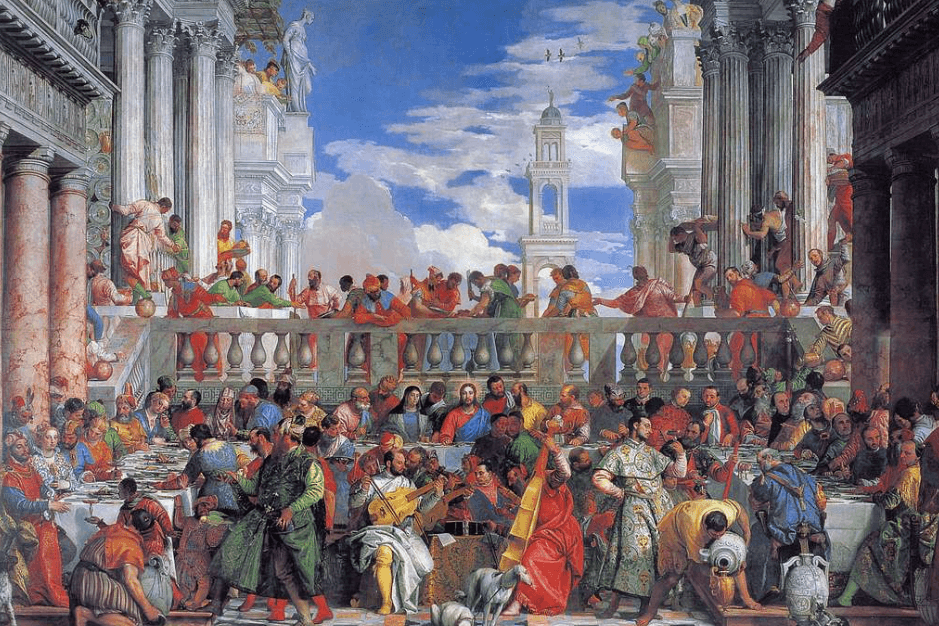
The Wedding Feast at Cana, painted by Italian artist Paolo Veronese between 1562 and 1563, depicts the miracle of the wedding at Cana as described in the Bible. The scene illustrates the moment when Jesus turns water into wine. The painting is currently on display at the Louvre Museum.
The Wedding Feast at Cana portrays the miracle of the wedding at Cana as recounted in the Gospel of John in the New Testament. According to the narrative, Jesus is invited to a wedding along with his mother Mary and his disciples. When the wine runs out, Mary informs Jesus of the situation. Following Jesus’s instruction, stone jars are filled with water, which is then transformed into wine. This event is regarded in Christianity as Jesus’s first miracle.
Paolo Veronese presents this religious narrative within a grand banquet scene. The painting features numerous figures including musicians, servants, nobles, and foreign guests. The wedding feast is rendered with elaborate architectural elements, a long table arrangement, and crowded groups of figures, with Jesus positioned at the center of the composition.
The Wedding Feast at Cana measures approximately 6.77 meters in height and 9.94 meters in width. It is among the largest paintings in the collection of the Louvre Museum.
The Wedding at Cana by Veronese | 🎨 How to read a painting (Youtube)
The composition is structured around architectural elements and groupings of figures. In the background, columns, terraces, and an open sky are visible. Perspective lines converge toward the center of the composition, where Jesus is seated, flanked by Mary and the disciples.
The painting is divided into two main sections. The lower section depicts the wedding banquet and the groups of figures, while the upper section shows the architectural structure and the sky. Numerous figures including servants, musicians, and guests are portrayed throughout the composition.
The painting employs red, blue, green, and gold tones. According to Louvre sources, Veronese used expensive pigments imported from the East. The clothing of the figures, the table arrangement, and architectural details are rendered with striking clarity through the skillful use of light.
The Wedding Feast at Cana was commissioned for the refectory of the San Giorgio Maggiore Benedictine Monastery in Venice. The commission was dated 6 June 1562, and the painting was completed in approximately 15 months.
In 1797, the painting was taken to Paris by Napoleon’s troops and later incorporated into the Louvre’s collection. To facilitate its transport, the canvas was cut into two pieces. Although some artworks were returned to Italy in 1815, The Wedding Feast at Cana remained in Paris.
The painting is displayed in the Salle des États at the Louvre Museum. It hangs directly opposite the Mona Lisa.
The Wedding Feast at Cana includes historical figures believed to represent 16th-century Europe and the Ottoman world. According to various art historical interpretations, the painting depicts King Francis I of France, Queen Mary I of England, Archduchess Eleanor of Austria, and the Ottoman Sultan Suleiman the Magnificent. Some analyses also suggest that the woman standing near Suleiman may be Hürrem Sultan.
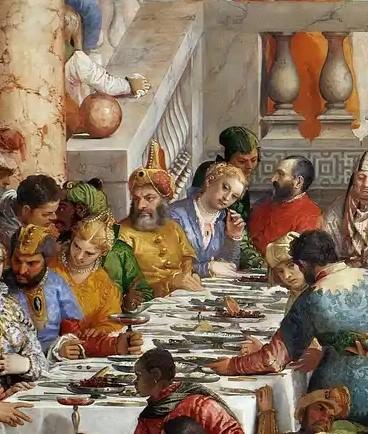
Figure of Suleiman the Magnificent in The Wedding Feast at Cana (GetArchive)
The figures wearing turbans, along with their distinctive Eastern garments and rich fabric details, are interpreted within the context of diplomatic and commercial relations between Venice and the Ottoman Empire in the 16th century. These elements demonstrate Veronese’s integration of diverse cultural identities within his composition.
The inclusion of historical figures alongside the religious narrative reflects a common representational approach of the Renaissance period. Thus, the painting not only depicts the miracle at Cana but also serves as a multifigured composition reflecting the social and political environment of its time.
The Wedding Feast at Cana is a large-scale oil painting completed by Paolo Veronese in 1563 and belongs to the Venetian Renaissance painting tradition. The work depicts the miracle of the wedding at Cana as described in the Bible.
The painting features a complex composition with more than 130 figures. Architectural elements, groupings of figures, and a carefully constructed perspective system are combined to create a scene that spans a broad horizontal space.
The Wedding Feast at Cana belongs to the Venetian Renaissance painting tradition. The work reflects the Venetian school’s characteristic emphasis on color and monumental composition.
The multitude of figures, the integration of architectural structures into the scene, and the expansive composition are associated with the Mannerist style of the 16th century. The density of figures and the theatrical staging of the scene exemplify this stylistic approach.
The painting is regarded as one of the pioneering visual arrangements that influenced the later Baroque period’s preference for large-scale, dramatic, and multifigured compositions.
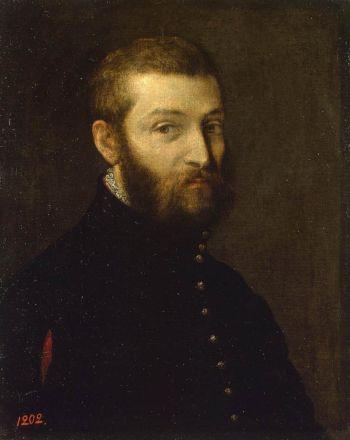
Portrait of Paolo Veronese (Store norske leksikon)
Paolo Veronese (1528–1588) was a painter associated with the Venetian school during the Italian Renaissance. Born in Verona, he primarily worked in Venice.
He produced large-scale paintings on religious and mythological subjects, often incorporating expansive architectural spaces, numerous figures, and decorative compositional arrangements.
Among his notable works are The Wedding Feast at Cana, The Feast in the House of Levi, and the ceiling frescoes of the Church of San Sebastiano.
ArtDiario. “Paolo Veronese: The Wedding at Cana.” Accessed May 13, 2026. https://www.artdiario.com/art/paolo-veronese-the-wedding-at-cana/.
ArtsCodex. "Kana’da Düğün." Accessed May 13, 2026. https://www.artscodex.com/post/kana-da-d%C3%BCg%C3%BCn.
Louvre Museum. "From the Mona Lisa to the Wedding Feast at Cana." Accessed May 13, 2026. https://www.louvre.fr/en/explore/the-palace/from-the-mona-lisa-to-the-wedding-feast-at-cana
Visual Arts Cork. “Wedding Feast at Cana.” Accessed May 13, 2026. https://web.archive.org/web/20160519101542/http://www.visual-arts-cork.com/famous-paintings/wedding-feast-at-cana.htm

Henüz Tartışma Girilmemiştir
"Wedding in Canada (Table)" maddesi için tartışma başlatın
Subject
Visual Composition
Use of Color and Light
Historical Context
Location in the Louvre
Historical Figures in the Painting
Artistic Significance
Artistic Movement and Style
About the Artist