


This article was automatically translated from the original Turkish version.
+2 More
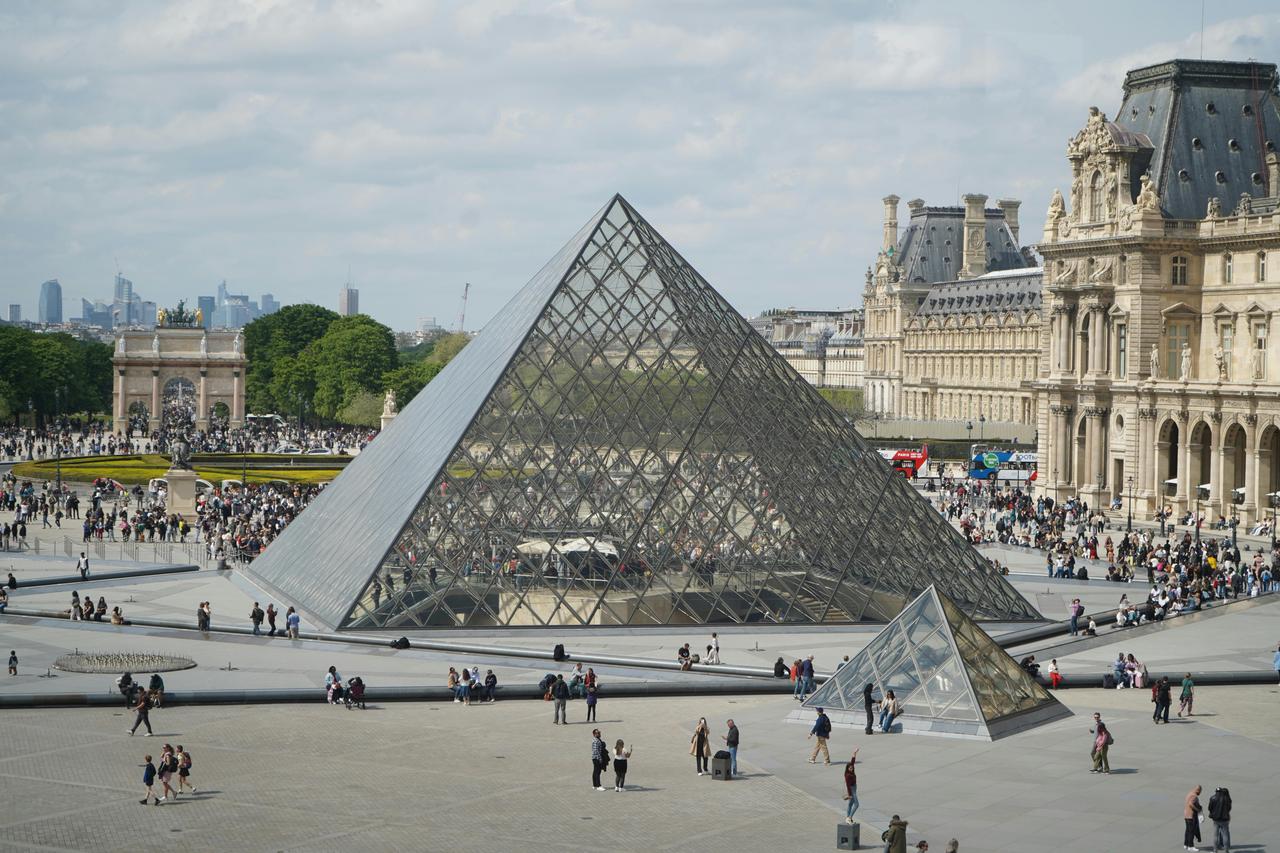
Louvre Museum (Musée du Louvre)
Location | Paris / France | ||||||||
|---|---|---|---|---|---|---|---|---|---|
Foundation | 1793 (conversion to museum) | ||||||||
Initial Function | Defensive fortress (Philippe Auguste period) | ||||||||
Main Entrance | Glass Pyramid (Ieoh Ming Pei, 1989) | ||||||||
Architectural Style(s) | Renaissance Modern Baroque | ||||||||
Material(s) | iron and glass Seine limestone | ||||||||
Plan Layout | Cour Napoléon Cour Carrée Rectangular medieval walls | ||||||||
Superstructure | Second Empire colonnades and zinc roof Renaissance column-pilaster facades Gothic pointed arches | ||||||||
Modern Additions | structures providing natural light underground foyer area Glass pyramid entrance | ||||||||
Famous Works | Seated Scribe Code of Hammurabi Venus de Milo Mona Lisa | ||||||||
The Louvre Museum is an institution located in the center of Paris along the banks of the Seine River and is known as the largest and most visited art museum in the world. Originally constructed in 1190 by King Philip II as a defensive fortress, the Louvre was transformed in the 16th century during the reign of François I into a royal palace in Renaissance style and gradually evolved into a space dedicated to the arts. Following the French Revolution, it opened to the public in 1793 under the name “Muséum Central des Arts”, acquiring its modern identity as a museum. Its collection, which began with 537 works at its opening, now encompasses nearly 500,000 pieces spanning a broad spectrum from Ancient Near Eastern artifacts and Islamic art to European painting, sculpture and graphic arts.

The Louvre Museum (Photo: )
The history of the Louvre began in 1190 when King Philip II of France initiated its construction. Originally built as a fortress to protect the western boundary of Paris from Viking raids, the structure was a rectangular keep surrounded by walls 78 meters in length and featured a central circular donjon (main tower) approximately 15 meters in diameter. The primary building material was limestone quarried from the Seine River. During this period, the fortress was encircled by defensive outworks and served not only a strategic but also a symbolic protective function.
In the 14th century, King Charles V transformed the Louvre from a fortress into a royal residence. This transformation, influenced by Gothic architecture, introduced large windows, ornate towers and elaborate stonework within the interior spaces. Defensive functions receded into the background, while comfort features were enhanced, reinforcing the palace’s prestigious urban position. During this period, the first royal library was moved into the Louvre, marking an important step toward its emergence as an intellectual center.
The Louvre’s Renaissance character began in 1546 when François I appointed the Italian architect Pierre Lescot to oversee its reconstruction. Lescot abandoned Gothic elements in favor of a classical architectural language based on symmetry and proportion. During this period, the Cour Carrée (Square Courtyard) was added, and the façades were adorned with columns, pilasters and reliefs.
François I also invited numerous artists from Italy, including Leonardo da Vinci, to France and laid the foundation of the museum’s collection by bringing their artworks to the Louvre. Among these works is the La Joconde (Mona Lisa). Construction continued under Louis XIII and Louis XIV, with many architectural wings of the Louvre completed during their reigns.
After Louis XIV moved the royal court to the Palace of Versailles, the Louvre ceased to function as a royal residence and became a cultural center housing academies, workshops and artists. Although the building underwent various additions and restorations during this period, it remained incomplete. The establishment of the Musée Central des Arts in 1793 after the French Revolution was pivotal in shaping the Louvre’s identity as a museum. At its opening, 537 works were displayed, the majority drawn from the French Royal Collection; the museum’s opening to the public was regarded as a revolutionary symbol.
During the era of Napoleon Bonaparte, the Louvre was renamed the “Musée Napoléon” and enriched by thousands of artworks brought from military campaigns across Europe. Although most of these works were returned after Napoleon’s defeat in 1815, some remained permanently in the Louvre (for example, the Egyptian Seated Scribe). Under Napoleon III, the northern and southern wings of the Louvre were connected by architects Visconti and Lefuel, creating the Cour Napoléon (Napoleon Courtyard). This period defined the Louvre’s monumental character through Second Empire architecture.

Old Louvre Building Courtyard (Rawpixel)
In 1981, President François Mitterrand launched the Grand Louvre Project to adapt the museum to contemporary needs. As part of this project, architect Ieoh Ming Pei designed a glass pyramid, which was installed in the center of the Cour Napoléon in 1989. The pyramid provides natural light to the new underground entrance, creating both a functional and symbolic transformation. This period also saw the development of the Louvre’s digital infrastructure, improved accessibility and expansion of temporary exhibition spaces.
The Louvre’s developmental milestones continued in 2012 with the opening of Louvre-Lens in northern France. This museum aims to bring the Louvre’s collection into contact with regional communities and promote the democratization of art. The Louvre Abu Dhabi, opened in 2017, is the product of cultural cooperation between France and the United Arab Emirates and is grounded in a universal approach to museology.
The Louvre Museum’s architectural fabric began in the 12th century with the construction of a defensive fortress by King Philip II along the Seine River. This early rectangular structure was surrounded by 78-meter-long limestone walls and featured a circular donjon approximately 15 meters in diameter and moats; these medieval remains are visible today in the Salle Basse in the basement. In the 14th century, King Charles V’s conversion of the fortress into a palace emphasized Gothic elements—pointed-arch windows, ornate turrets and refined stonework—while defensive functions receded. The first royal library was installed within the palace, transforming it into an intellectual center.
With the Renaissance, reconstruction efforts led by Pierre Lescot from 1546 replaced Gothic details with a classical façade based on proportional harmony: columns, pilasters and reliefs added around the Cour Carrée reflected the aesthetic refinement of the period. In the 19th century, during the reign of Napoleon III, architects Visconti and Lefuel connected the northern and southern wings under the name Cour Napoléon, adding arcaded façades, sculptural decorations and iron-supported roof systems characteristic of Second Empire architecture.
In 1989, Ieoh Ming Pei’s glass and steel pyramid provided a modern entrance space bathed in natural light at the center of the Cour Napoléon, offering centralized access to all wings of the museum. Additionally, the glass-roofed internal courtyards known as the Cours Marly and Cours Puget display statues from 17th–19th century palace gardens, while the Jardin du Carrousel functions as a luxury open-air gallery with a landscape design by Jacques and Peter Wirtz.
By the 21st century, the Louvre Museum entered a major modernization process due to increasing visitor numbers, structural wear, and the need for digital transformation. This process includes strengthening the museum’s physical infrastructure and integrating digital systems.

Louvre Museum Glass Pyramid (Pexels)
Salon Carré was created between 1661 and 1692 by Louis Le Vau during the reconstruction of the Louvre Palace as a corner room in the Denon wing. In 1692, it was assigned to the Royal Academy of Painting and transformed into one of the first exhibition spaces illuminated by natural light, with restricted windows and an added skylight. In the 19th century, decorative renovations by Félix Duban adorned the ceiling with shades of blue and arranged the walls to accommodate Italian Renaissance paintings. Today, Salon Carré displays works by early Renaissance masters known as the “Primitifs Italiens.”
Salle des États is the largest gallery on the first floor of the Denon wing. Designed by Hector Lefuel between 1855 and 1857 to reflect the grandeur of Napoleon III’s Second Empire, the room’s high ceilings and large windows are framed by wall arrangements that evoke the splendor of the palaces of Louis XIII and Louis XIV. In 1966, this space was specifically chosen for the Mona Lisa, and its background wall was enriched with Paolo Veronese’s monumental painting “Noces de Cana,” whose sea-blue tones emphasize the color palette of Venetian painters. Today, Salle des États houses both the Louvre’s most iconic masterpieces and key works of the Venetian School.
Most of the statues displayed in Cour Marly were designed for royal gardens such as those of Versailles or the Tuileries, conceived in harmony with nature. Among the collection’s most iconic pieces is Guillaume Coustou’s sculpture group Chevaux de Marly (Marly Horses). These elegant and dynamic horse figures, commissioned by Louis XIV for the Château de Marly, represent a powerful expression of French Baroque sculpture. Adorned with mythological themes, these works carry meanings associated with water and nature.
This courtyard, named after Pierre Puget, one of the most important sculptors of French Baroque art, highlights commissions from the reign of Louis XIV. Among Puget’s dramatic and allegorical figures, Milon de Crotone and Persée et Andromède stand out. These sculptures convey not only aesthetic value but also moral and philosophical messages. Milon symbolizes the consequences of excessive human pride and strength, while Andromède explores themes of heroism and salvation. Cour Puget also includes Rococo works from the 18th century focused on elegant subjects, as well as Neoclassical and Romantic sculptures from the 19th century.
Cour Visconti, originally one of the open courtyards of the medieval palace, was transformed in 2012 by the design of Rudy Ricciotti and Mario Bellini into a two-story exhibition space for the “Arts of Islam” department, covered with glass and golden-metal mesh. The upper level, with its undulating metal ceiling that focuses daylight and integrates with the glass floor, has the character of an “architectural jewel”; the lower level, illuminated by subdued lighting, presents its collection of ceramics, metalwork, and miniatures in a cave-like atmosphere.
Some of the objects in this section were illicitly removed from Türkiye and later incorporated into the Louvre’s collection. The most prominent example is a tile panel from the Tomb of Sultan II. Selim in the garden of Hagia Sophia in Istanbul. This Ottoman-era artifact holds significant historical, cultural, and aesthetic value. The Turkish Ministry of Culture and Tourism has long been pursuing its return.

Tile Panel (AA)
In addition, numerous objects such as Iznik ceramics, gold- and silver-inlaid metalwork from the Mamluk period, and ivory boxes from Al-Andalus illustrate the artistic diversity and technical mastery of the Islamic world. Many of these pieces were acquired in previous centuries by European Orientalist collectors and subsequently sold to public museums.
The Louvre Museum’s collection spans a time period from antiquity to 1848 and encompasses both Western art and the artistic traditions of ancient civilizations. The museum’s collections are divided into nine main creative departments:
The Louvre Museum houses approximately 35,000 works, making it one of the richest art collections in the world. This collection features a broad chronological and geographical scope extending from antiquity to the 19th century. Among the museum’s most popular works are masterpieces from diverse civilizations and artistic periods.

Mona Lisa Painting (Pixabay)
As the most visited museum in the world, the Louvre Museum is one of the most important focal points of Parisian tourism. Tourists flock to the museum to view its collections, engage with the history of art, and discover the world’s most famous artworks. In addition to its rich art collections, the Louvre offers a comprehensive tourism experience through guided tours, virtual exhibition tours, and interactive educational programs.
Digital navigation systems and audio guides available in multiple languages ensure that international visitors can navigate the museum comfortably. In line with its commitment to accessibility, the Louvre has implemented special accommodations for visitors with disabilities, providing barrier-free access to enable unhindered visits.
The Louvre Museum is one of the most prestigious art museums in the world, recognized globally as a symbol of Paris’s cultural heritage. Opened to the public in 1793, the museum houses an extensive collection spanning from prehistoric times to the 21st century. As the most visited museum in the world by annual visitor numbers, the Louvre is regarded internationally as a reference point for the preservation, research, and public presentation of art. The location of the museum along the banks of the Seine River in Paris was designated a UNESCO World Cultural Heritage Site in 1991, providing an important framework that reflects the Louvre’s universal value. The Louvre Pyramid, constructed as part of the museum’s architectural modernization, has been honored with architectural and cultural heritage awards as a pioneering project that unites contemporary and classical artistic sensibilities.
The Louvre’s global brand strategy extends beyond Paris alone. The Louvre-Lens, opened in northern France in 2012, stands out as a cultural decentralization initiative aimed at bringing the museum’s collections to regional communities. The main exhibition space, called the “Galerie du Temps,” presents over 5,000 years of art in a single uninterrupted narrative, placing works from different eras in dialogue. This model, which prioritizes local engagement, reflects the Louvre’s vision of an accessible and education-focused museum.
In addition, the Louvre Abu Dhabi, which opened in 2017, is the result of a cultural cooperation agreement signed between France and the United Arab Emirates. This museum aims to display artifacts from different civilizations together in accordance with a universal museum philosophy, supporting the Louvre’s vision of multicultural, boundary-transcending art and diplomacy. These developments demonstrate that the Louvre remains one of the most important institutions not only for France but also for global art history and cultural diplomacy.

Louvre Abu Dhabi (Diego F. Parra, Pexels)
In 2025, The robbery at the Louvre Museum in Paris, the capital of France, was targeted by thieves who stole the French Royal Jewels displayed in the Galerie d’Apollon. On the morning of October 19, a group of four individuals entered the museum through a window on the first floor using a truck crane mounted on the exterior facade. They broke two security vitrines with a spiral cutter and stole eight jewels dating from the 19th century. The robbery lasted only a few minutes; the museum was evacuated after the alarm system was triggered, and the thieves escaped on two scooters. During their escape, the crown belonging to Empress Eugénie fell and was later found damaged near the museum.
Following the incident, the museum was closed for the day. French President Emmanuel Macron and Culture Minister Rachida Dati made public statements. President Macron stated that the stolen items would be recovered and the perpetrators brought to justice. Minister Dati described the operation as carried out “professionally.” Interior Minister Laurent Nuñez announced that the investigation was being conducted by the organized crime unit, and an interim report by the Court of Auditors indicated deficiencies in the museum’s security systems.
Anadolu Ajansı. “Dünyanın en büyük koleksiyonlarından İslam Sanat Eserleri Louvre'da sergileniyor.” Accessed April 30, 2025. https://www.aa.com.tr/tr/dunya/dunyanin-en-buyuk-koleksiyonlarindan-islam-sanat-eserleri-louvreda-sergileniyor/1281410
Anadolu Ajansı. “Fransa’da Louvre Müzesi’nden Tarihi Mücevherler Çalındı.” Accessed October 20, 2025. https://www.aa.com.tr/tr/dunya/fransada-louvre-muzesinden-tarihi-mucevherler-calindi/3720985#
Art & Object. "An Inside Look at the History of the Louvre." Art & Object. Accessed April 24, 2025. https://www.artandobject.com/news/inside-look-history-louvre
Collections du Louvre. "Louvre Müzesi Koleksiyonları." Musée du Louvre. Accessed April 24, 2025. https://collections.louvre.fr/en/
Diego F. Parra. The Louvre Abu Dhabi in United Arab Emirates JPG. Pexels. Accessed April 24, 2025. https://www.pexels.com/photo/the-louvre-abu-dhabi-in-united-arab-emirates-15127414/
France 24. “Le musée du Louvre cambriolé, huit bijoux d'une 'valeur inestimable' dérobés.” Accessed October 20, 2025. https://www.france24.com/fr/france/20251019-le-mus%C3%A9e-du-louvre-cibl%C3%A9-par-un-braquage-le-site-reste-ferm%C3%A9-dimanche
Griselda Belba. Louvre Museum JPG. Pexels. Accessed April 30, 2025. https://www.pexels.com/tr-tr/fotograf/31780165/
Musée du Louvre. "De la Joconde aux Noces de Cana." Musée du Louvre. Accessed April 24, 2025. https://www.louvre.fr/decouvrir/le-palais/de-la-joconde-aux-noces-de-cana
Musée du Louvre. "La Galerie du Temps du Louvre-Lens s’offre une Cure de Jouvence." Accessed April 24, 2025. https://www.louvre.fr/decouvrir/vie-du-musee/la-galerie-du-temps-du-louvre-lens-s-offre-une-cure-de-jouvence
Musée du Louvre. "Le Louvre Abu Dhabi." *Musée du Louvre*. Accessed April 24, 2025. https://www.louvre.fr/le-louvre-en-france-et-dans-le-monde/le-louvre-abu-dhabi
Musée du Louvre. "Le Louvre-Lens." *Musée du Louvre*. Accessed April 24, 2025. https://www.louvre.fr/le-louvre-en-france-et-dans-le-monde/le-louvre-lens
Musée du Louvre. "Le Salon par Excellence." *Musée du Louvre*. Accessed April 24, 2025. https://www.louvre.fr/decouvrir/le-palais/le-salon-par-excellence
Musée du Louvre. "Les Collections du Musée du Louvre." Musée du Louvre. Accessed April 24, 2025. https://www.louvre.fr/decouvrir/les-collections-du-musee-du-louvre
Musée du Louvre. "Louvre Müzesi Ziyaretçiler." Musée du Louvre Press Room. Accessed April 24, 2025. https://presse.louvre.fr/8-7-million-visitors-to-the-louvre-in-2024/
Musée du Louvre. "Lumière sur la Sculpture." Musée du Louvre. Accessed April 24, 2025. https://www.louvre.fr/decouvrir/le-palais/lumiere-sur-la-sculpture
Musée du Louvre. "L’Histoire des Collections." *Musée du Louvre*. Accessed April 24, 2025. https://www.louvre.fr/recherche-et-conservation/departement-des-antiquites-grecques-etrusques-et-romaines/l-histoire-des-collections-5
Musée du Louvre. "The Louvre’s Masterpieces." *Musée du Louvre*. Accessed April 24, 2025. https://www.louvre.fr/en/explore/visitor-trails/the-louvre-s-masterpieces
Musée du Louvre. "Un Jardin au Cœur du Louvre." Musée du Louvre. Accessed April 24, 2025. https://www.louvre.fr/decouvrir/le-palais/un-jardin-au-coeur-du-louvre
Musée du Louvre. "Une Pyramide pour Symbole." *Musée du Louvre*. Accessed April 24, 2025. https://www.louvre.fr/decouvrir/le-palais/une-pyramide-pour-symbole
Musée du Louvre. "À la découverte des Arts de l’Islam." Musée du Louvre. Accessed April 24, 2025. https://www.louvre.fr/decouvrir/le-palais/a-la-decouverte-des-arts-de-l-islam
Pexels. "Clear Glass Museum During Golden Hour JPG." Pexels. Accessed April 24, 2025. https://www.pexels.com/photo/clear-glass-museum-during-golden-hour-2363/
Rawpixel. M. Binelli. "Cour du Louvre, côté de Saint-Germain-l'Auxerrois". Plume et encre noire. Paris, musée Carnavalet JPG. Rawpixel. Accessed April 30, 2025. https://www.rawpixel.com/image/7725977/image-art-public-domain-building
Vlada Karpovich. Louvre Museum JPG. Pexels. Accessed April 30, 2025. https://www.pexels.com/tr-tr/fotograf/fransa-kent-simgesi-gorulecek-yer-paris-4452037/
Wikilmages. Mona Lisa JPG. Pixabay. Accessed April 30, 2025. https://pixabay.com/tr/photos/sanat-tablo-mona-lisa-klasik-kad%C4%B1n-74050/

Louvre Museum (Musée du Louvre)
Location | Paris / France | ||||||||
|---|---|---|---|---|---|---|---|---|---|
Foundation | 1793 (conversion to museum) | ||||||||
Initial Function | Defensive fortress (Philippe Auguste period) | ||||||||
Main Entrance | Glass Pyramid (Ieoh Ming Pei, 1989) | ||||||||
Architectural Style(s) | Renaissance Modern Baroque | ||||||||
Material(s) | iron and glass Seine limestone | ||||||||
Plan Layout | Cour Napoléon Cour Carrée Rectangular medieval walls | ||||||||
Superstructure | Second Empire colonnades and zinc roof Renaissance column-pilaster facades Gothic pointed arches | ||||||||
Modern Additions | structures providing natural light underground foyer area Glass pyramid entrance | ||||||||
Famous Works | Seated Scribe Code of Hammurabi Venus de Milo Mona Lisa | ||||||||
History
Architectural Features
Museum Galleries
Salon Carré (Le Salon par excellence)
Salle des États
Cour Marly
Cour Puget
Cour Visconti (Arts de l’Islam)
Collections
Highlighted Works
Tourism Activities
Visitor Demographics (2024)
International Recognition and Awards
The 2025 Louvre Museum Robbery