
+1 Daha


The yellow-eyed penguin (Megadyptes antipodes) gets its name from its distinctive yellow eye iris and the bright yellow band extending backward from its eyes; It is the rarest penguin species on the New Zealand mainland, with its range limited to the southern and southeastern coasts of the South Island, Stewart Island, and the Subantarctic Islands, and is strictly confined to quiet coves in slopes and valleys covered with dense vegetation. Estimated at approximately 7,000 individuals in the early 2000s, the total population has declined rapidly in recent years, with breeding populations falling to between 1,600 and 1,800 pairs due to threats such as the side effects of commercial fishing, pressure from invasive predatory mammals, changes in marine food sources, and disease. As a result of this serious and continuous decline, the species is classified as “Endangered” (EN) on the IUCN Red List. Fishing restrictions, predator control, and measures to protect breeding areas are vital for the survival of this critically important species.
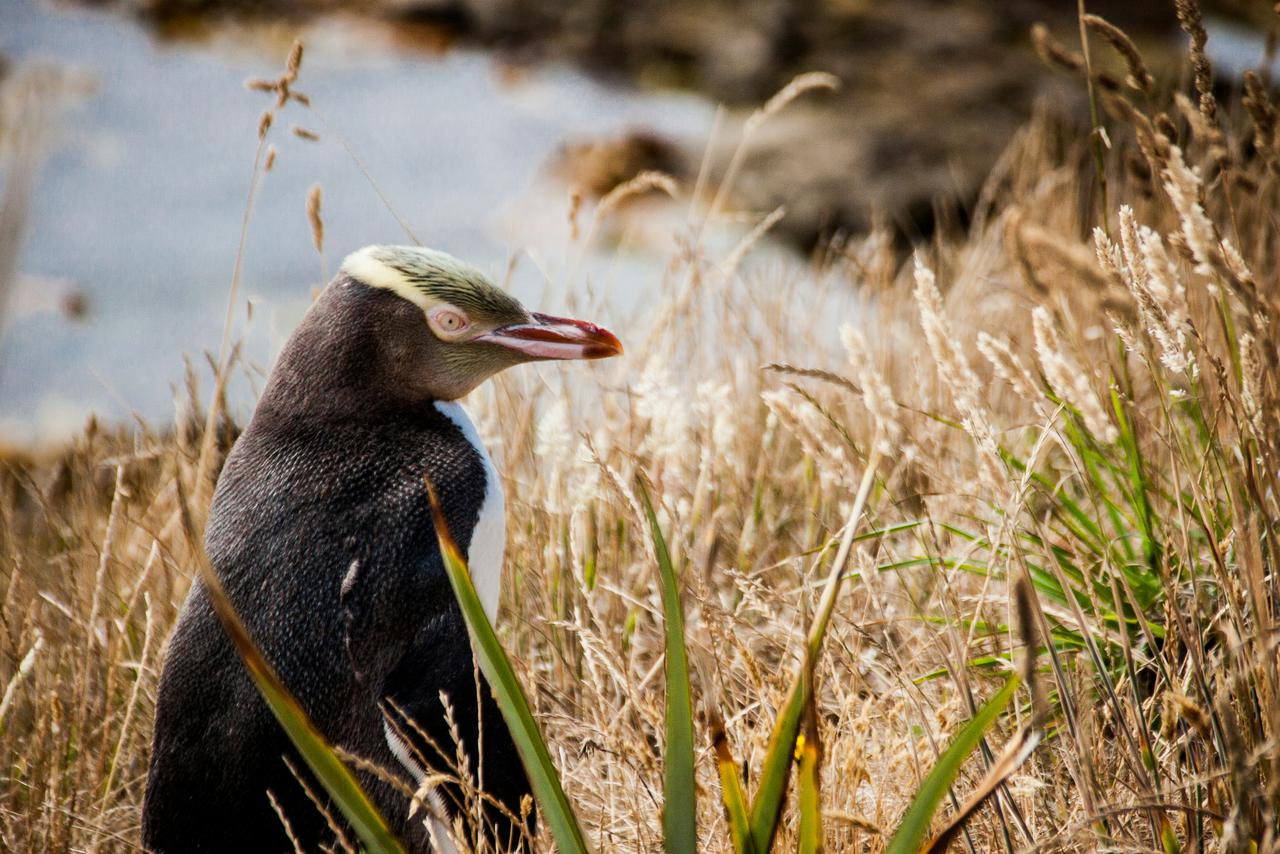
The yellow-eyed penguin (Megadyptes antipodes) is a medium-sized penguin, averaging 62–79 cm in height and reaching a weight of approximately 5–8 kg during the pre-breeding period. Its feathers are dark, bluish-gray-blue on the back and rear of the head, while the belly is bright white; however, the species' most distinctive feature is a bright yellow eye ring that starts around the eye and merges at the back of the head, along with a pale yellow iris. Its beak is long, thin, and reddish-brown in color, its feet are pink, and its wings (flippers) are covered with strong, short feathers to provide powerful propulsion in the water. Sexual dimorphism is minimal in yellow-eyed penguins; males and females appear nearly identical in plumage and coloration, but males are generally slightly longer and have a heavier body mass than females.
The yellow-eyed penguin (Megadyptes antipodes), the only species in its own genus Megadyptes, diverged early from all other modern penguin species. Molecular phylogenetic studies indicate that the Megadyptes genus originated from a more basal lineage outside the groups containing the crested penguins (Eudyptes genus) and little penguins (Eudyptula genus), likely diverging around the Oligocene-Miocene boundary approximately 15 million years ago. This early divergence implies that the yellow-eyed penguin is evolutionarily more unique than other penguins and has developed its own distinct line of adaptation.
The fossil record suggests that the oldest known fossil remains of the Megadyptes genus date back to the Pleistocene epoch (approximately 2.5 million years ago) and that this lineage has a relatively long history along the coasts of New Zealand.
Studies on the modern population genetics have revealed that yellow-eyed penguin populations exhibit a high degree of genetic isolation. The mainland (South Island) and Subantarctic Islands (Auckland and Campbell Islands) populations form distinct genetic units with very limited gene flow. This situation indicates that the species historically existed in isolated colonies in different geographical regions and that this circumstance increases the importance of local adaptations in the conservation of populations. For example, populations on the Auckland Islands are genetically distinct from those on the mainland and may exhibit adaptations to different threats.

Yellow-eyed Penguin (Pixabay)
Yellow-eyed penguins (Megadyptes antipodes) typically prefer sheltered bays and coastal areas for nesting that are protected from sea winds and have dense vegetation cover (forested areas, thick scrub, or grassy slopes); this makes them one of the most terrestrial penguin species in New Zealand. Colonies are established along the southeast coast of the South Island and in areas such as Stewart, Auckland, and Campbell Islands, with nests scattered and isolated from one another.
During the breeding season, parents venture out to sea daily to feed their chicks. Foraging routes vary depending on seasonal conditions and the population's geographic location. For example, penguins on the mainland typically venture up to 17 to 25 km offshore in search of food, but this distance may increase as their chicks grow. Diving depths mostly range from 20 to 120 meters, but successful hunting dives are usually concentrated at depths of 50 to 80 meters, with an average dive time of 3-4 minutes.
The diet of yellow-eyed penguins (Megadyptes antipodes) consists of fish. The main fish species hunted include coastal species such as rockfish (Hemerocoetes), rockfish (Notothenia), and sometimes small moray eels. The remainder of the diet is usually composed of squid (especially arrow squid); krill and crustaceans constitute a very small component of the diet.
The hunting preferences of yellow-eyed penguins show little regional or seasonal variation; fish remain the dominant prey throughout almost all stages of the feeding cycle (incubation, chick rearing, and post-moult). However, seasonal changes affect the proportions of fish species.
Yellow-eyed penguins typically hunt during the day and hunt alone in mid-depth waters to catch their prey. Complex social hunting strategies such as “cooperative net patterns with synchronized dives in flocks” or “raids on fish schools in tube formations” have not yet been described in the literature for this species. Current studies have focused more on individual feeding cycles, the precise distribution of prey components, and changes in dive depths and durations over time.

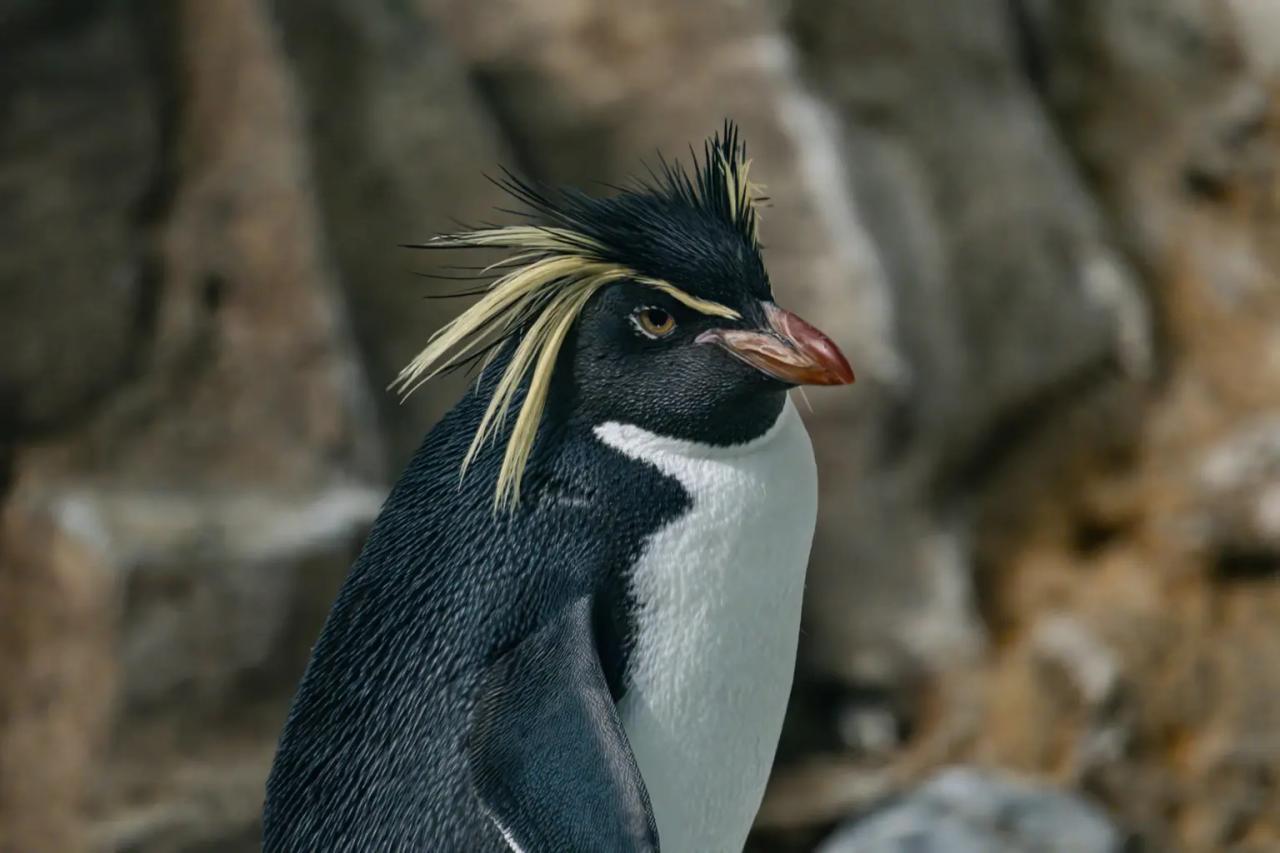
Yellow-eyed Penguin (Unsplash)
Yellow-eyed penguins are monogamous; pairs usually return to the same nesting area as the previous year, but may find a new mate if one partner is lost. The breeding season usually begins in August or September, with males arriving at the nesting grounds slightly before the females. Females lay two large eggs between mid-September and mid-October, usually 3-5 days apart. The second egg is usually smaller than the first and has a lower chance of survival.
The eggs undergo a long incubation period lasting approximately 62 to 70 days, during which the parents take turns incubating them. After hatching, for the first 6 weeks or so, the parents protect the chick from predators and cold during this “brooding period”; during this time, one parent stays at the nest while the other forages at sea. After the protection period ends (late October to early December), both parents go out on foraging trips at the same time, leaving the chicks alone in the nest. Unlike other penguin species, yellow-eyed penguin chicks do not form crèche groups and usually wait for their parents in isolated nests.
Chicks molt (fledge) and take their first flight at sea when they are approximately 100 to 107 days old (usually in February-March). After the breeding season ends, adults enter their molting period, which typically occurs between late February and April and lasts about 3 to 4 weeks. During this molting period, penguins remain on land, do not enter the water, and are therefore dependent on the fat reserves accumulated on land.
The yellow-eyed penguin (Megadyptes antipodes) is listed as Endangered (EN) on the IUCN Red List as of 2020. This high-risk category is determined by the fact that the species' population size has declined by more than 50% over the last three generations (approximately 36 years), particularly on the New Zealand mainland, and this decline is expected to continue.
Current population estimates indicate that the number of breeding pairs on the mainland and Stewart Island has fallen below 500; the total number of breeding pairs, including the Subantarctic Islands, is estimated to be between 1,600 and 1,800 pairs. This means that the number of mature individuals is only a few thousand, indicating that the population is highly fragmented and extremely vulnerable to threats.
Threats highlighted during the assessment include bycatch from commercial fishing, fluctuations in food sources (particularly related to rising sea surface temperatures), and increased pressure from terrestrial predatory mammals. The combination of these threats creates significant uncertainty regarding the future population trend of the species and necessitates conservation measures for its survival.
Beer, K. J. "Distribution of Yellow-eyed Penguins (Megadyptes antipodes) on the Auckland Islands" University of Otago, Department of Zoology. (2009) Accessed: 16 December 2025 https://www.otago.ac.nz/__data/assets/pdf_file/0019/301096/wildlife-management-report-235-076960.pdf.
BirdLife International. "Megadyptes antipodes." Datazone Birdlife. Accessed: 16 December 2025. https://datazone.birdlife.org/species/factsheet/yellow-eyed-penguin-megadyptes-antipodes
Birds New Zealand. "Birds New Zealand" The Magazine of the Ornithological Society of New Zealand, no 16. (2017). Accessed: 16 December 2025 https://www.birdsnz.org.nz/wp-content/uploads/2021/12/Bird_NZ_Magazine_December_2017_web.pdf
Cornell Lab Birds of the World "Yellow-eyed Penguin - Megadyptes antipodes). birdsoftheworld.org. Accessed: 16 December 2025 https://birdsoftheworld.org/bow/species/yeepen1/cur/introduction
Hegg, D. Giroir, T. Ellenberg, U. Seddon, P. J. "Relict and highly structured genetic diversity in the endangered Yellow-eyed Penguin Megadyptes antipodes." J Ornithol 153, (2012):457–466. Accessed: 16 December 2025 https://www.researchgate.net/publication/236833365_Yellow-eyed_Penguin_Megadyptes_antipodes_as_a_case_study_to_assess_the_reliability_of_nest_counts.
Moore, P. J. "Historical records of yellow-eyed penguin (Megadyptes antipodes) in southern New Zealand" Notornis Vol. 48 ( 2001): 145-156 Accessed: 16 December 2025. https://www.birdsnz.org.nz/wp-content/uploads/2021/12/Notornis_48_3_145.pdf.
Oceanwide Expeditions. "Yellow-Eyed Penguin." oceanwide-expeditions. Accessed: 16 December 2025. https://oceanwide-expeditions.com/to-do/wildlife/yellow-eyed-penguin.
Pixabay. "Guløjet penguen, Guløjepingvin, Megadyptes antipodes görseli JPG." Pixabay. Accessed: 16 December 2025 https://pixabay.com/tr/photos/gul%C3%B8jet-penguen-gul%C3%B8jepingvin-2186116/.
Richdale, L. E. "A Population Study of Penguins" Oxford University Press (1957):195 Accessed: 16 December 2025 https://www.researchgate.net/publication/275484319_A_Population_Study_of_Penguins_By_L_E_Richdale_Oxford_University_Press_1957_195_pages_2_plates_42s
Seaworld. "Yellow-Eyed Penguin." seaworld. Accessed: 16 December 2025. https://seaworld.org/animals/facts/birds/yellow-eyed-penguin/.
Stocksnap.io. "The Yellow-eyed penguin JPG." Stocksnap.io. Accessed: 16 December 2025. https://stocksnap.io/photo/penguin-wildlife-ZQZ6Q9LN9K
United States Fish and Wildlife Service. "Yellow-eyed penguin (Megadyptes antipodes)." ecos.fws.gov. Accessed: 16 December 2025. https://ecos.fws.gov/ecp/species/4608.
Unsplash. "black and white penguin on green grass during daytime JPG." Unsplash. Accessed: 16 December 2025. https://unsplash.com/photos/black-and-white-penguin-on-green-grass-during-daytime-1bizoiTNK-0.
van Heezik, Y. "Seasonal, geographical, and age-related variations in the diet of the yellow-eyed penguin (Megadyptes antipodes)" New Zealand Journal of Zoology Vol. 17, 2. (1990): 201-212 Accessed: 16 December 2025 https://www.tandfonline.com/doi/abs/10.1080/03014223.1990.10422597.


Henüz Tartışma Girilmemiştir
"Yellow-eyed Penguin (Megadyptes antipodes)" maddesi için tartışma başlatın
Morphological Characteristics and Systematic Position
Physical Description
Taxonomy and Evolution
Ecology, Behavior and Life Cycle
Habitat and Distribution
Nutritional Ecology
Reproductive Biology
Conservation Status
Bu madde yapay zeka desteği ile üretilmiştir.