



Beekeeping
Beekeeping is the art of humans forming a friendship with honeybees, caring for them, and thereby obtaining wonderful products such as honey. This tradition, practiced on Anatolian lands since ancient times, is invaluable for both nature and ourselves. Let us take a look into the world of these tiny, hardworking friends!
Getting to Know the Bee Family

(Generated by Artificial Intelligence)
A large family lives inside a single hive. This family has three distinct members: one Queen Bee, thousands of Worker Bees, and a variable number of Drone Bees depending on the season. Each has its own unique role, and all work together in harmony.
What Does Each One Do?
While the Queen Bee lays eggs to ensure the continuation of the family, Worker Bees take on all cleaning, feeding, and maintenance tasks within the hive. The sole biological purpose of Drone Bees is to mate with new Queen Bees and ensure the survival of the species. Worker bees are so diligent that they collect nectar from flowers according to the season, bring back pollen, and keep the hive always spotlessly clean.
A smiling child figure examining a bee with a magnifying glass. Simple, colorful illustration suitable for 10-year-olds.
How Is Beekeeping Done?

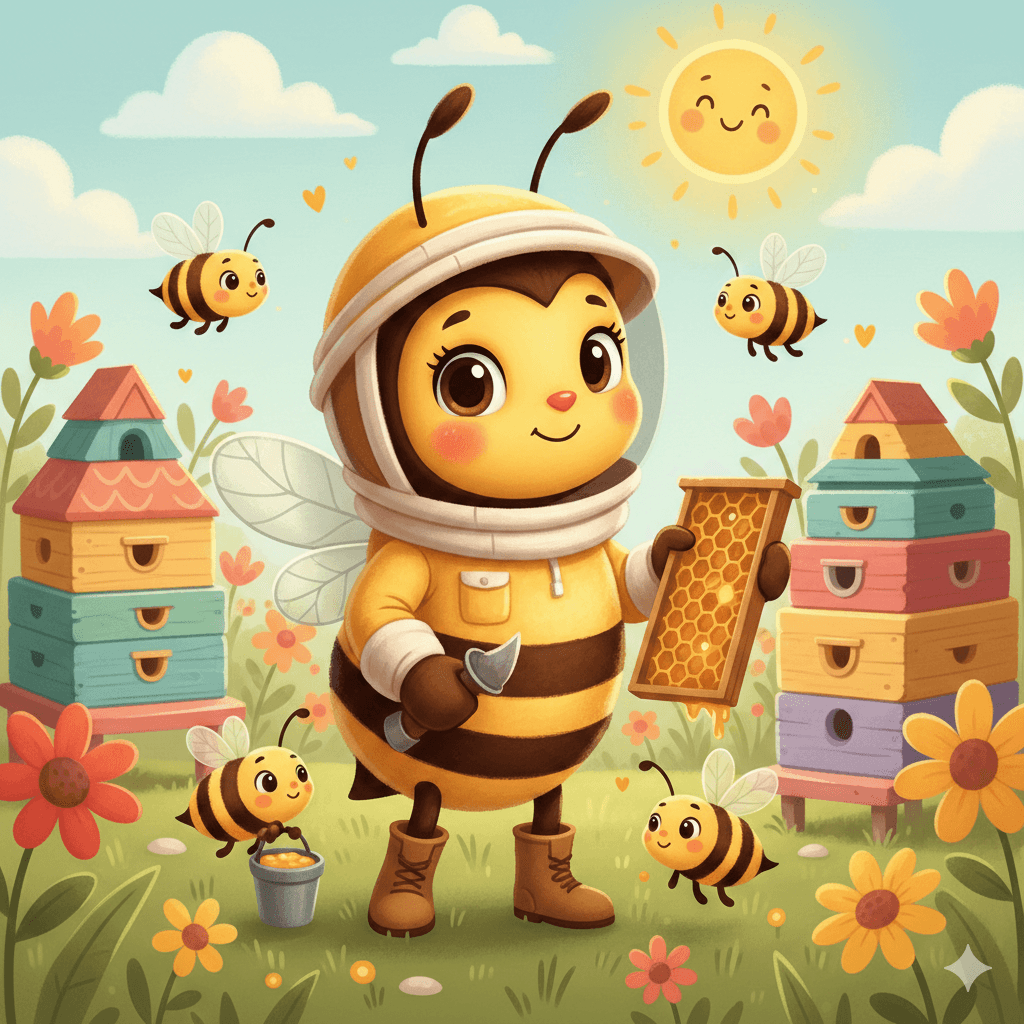
Visual representing Langstroth Hives (Generated by Artificial Intelligence)
To practice beekeeping, one first needs hives where bees can live comfortably. The most commonly used type of hive is the modern Langstroth hive made of wood. Beekeepers wear special clothing when tending to their bees and regularly inspect the hives.
Seasonal Care
When spring arrives, beekeepers open the hives to check the bees’ health and provide them with fresh combs. During summer, bees fly from flower to flower to produce the most honey. It is very important to leave the bees undisturbed in winter; they spend these cold days huddled together inside the hive and feeding on the honey they have stored.
Nature’s Secret Heroes
Bees do not only produce honey; they are also the secret heroes responsible for enabling plants to bear fruit. While collecting pollen from flowers, they transfer pollen from one flower to another, enabling pollination. Thanks to this, many of our favorite fruits and vegetables—such as apples, strawberries, and watermelons—can grow.
What Are Bee Products?
Thanks to beekeeping, our tables are not only graced with honey but also with other treasures: beeswax, from which the combs are made; pollen, the bees’ food; royal jelly, the special nourishment for the Queen Bee; and propolis, which disinfects the hive. Each of these products helps support our health.