



Beta Yeni Han 1554 Coffee Museum - Istanbul
Hans were large buildings where merchants and travelers journeying between cities would rest and securely store their goods hundreds of years ago. Beta Yeni Han in Istanbul is one such structure. However, it possesses a particularly significant feature that distinguishes it from others: its strong connection to the history of coffee.
📜 How Did Hans Operate in the Past?
In earlier times, hans functioned like a combination of today’s hotels and shopping centers. They typically featured a large open courtyard in the center. Travelers would tie their horses or camels in this courtyard and place the goods they carried in storage rooms on the ground floor known as mahzen.
Merchants lodged in small rooms on the upper floors. These rooms were sparsely furnished but provided a safe refuge for travelers. Hans served as vibrant social centers where people from different regions met, conducted trade, and exchanged news.

Beta Yeni Han 1554 Coffee Museum (
☕️ The First Stop for Coffee
Beta Yeni Han opened in 1554 in the Tahtakale district of Istanbul, the heart of commerce. This date coincides with the period when coffee first entered Istanbul’s daily life. Research and certain traces found within the building suggest that this site may have been one of the world’s first coffeehouses.
During restoration work inside the han, a significant discovery was made: a historical coffee roaster. The area where this roaster was located is called tahmis, a word of Arabic origin meaning “the place where coffee is roasted.” This furnace is recognized as one of the earliest sites in Istanbul where coffee began to be roasted.
⏳ Journey Through Time: Turkish Coffee Culture
Turkish coffee began to spread throughout the Ottoman Empire around 500 years ago. Coffee was not merely a beverage; it became a means for people to gather. Places known as kahvehane were established. These venues became important spaces where people conversed, read books, and socialized.
The culture and tradition of Turkish coffee—defined by its unique brewing method, presentation, and the conversational atmosphere it fostered—are so valued that in 2013 they were inscribed on UNESCO’s Representative List of the Intangible Cultural Heritage of Humanity. This recognition signifies that coffee is a shared heritage preserved for the entire world.

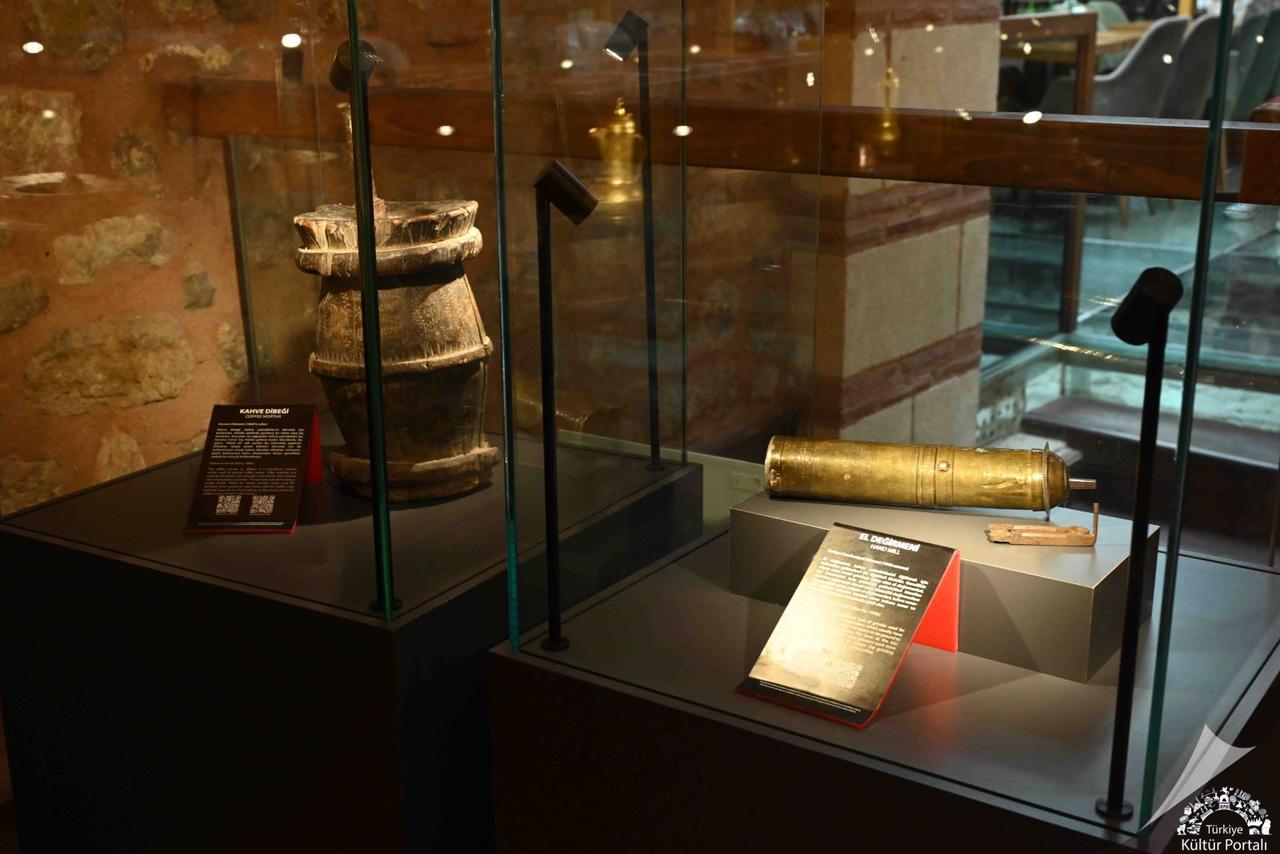
Beta Yeni Han 1554 Coffee Museum (Culture Portal)
🔍 What Can Be Seen in the Museum?
Today, Beta Yeni Han operates as a coffee museum while preserving its historical fabric. Visitors can trace the journey of coffee from its raw beans to the final cup served in a fincan.
In addition to the historical coffee roaster, the museum displays numerous artifacts such as old coffee grinders, cezves, cups, and coffee storage containers. These items illustrate how coffee was prepared and presented in the past.