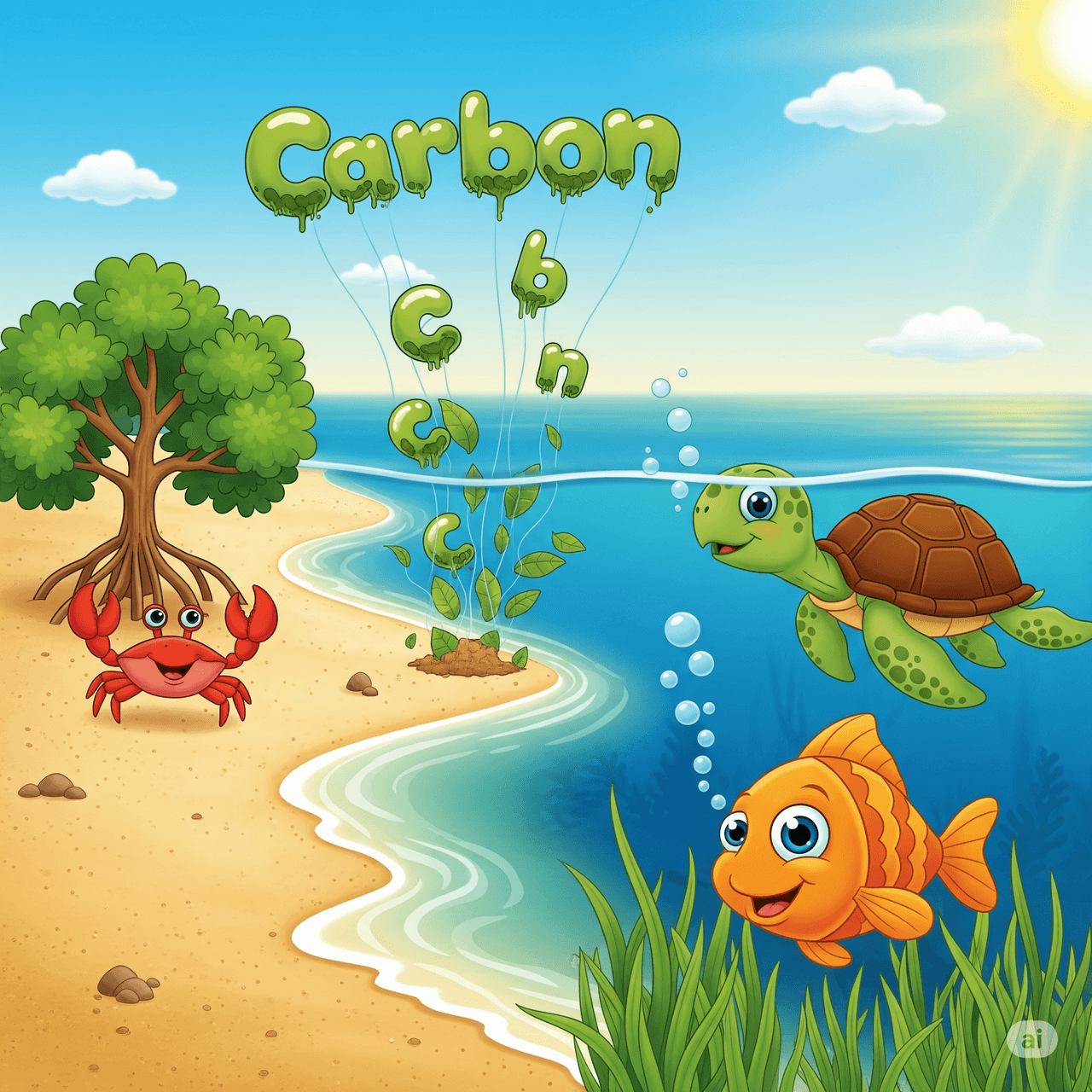




Blue Carbon
Blue carbon is the term given to the capture and storage of carbon dioxide (CO₂) from the atmosphere by certain plants and ecosystems in oceans and coastal areas. This system helps combat climate change.

(Generated with Artificial Intelligence.)
Who Produces Blue Carbon?
Certain specialized marine and coastal plants store blue carbon:
-Seagrasses (plants that live underwater)
-Mangrove forests (trees found along tropical coastlines)
-Salt marshes (wetlands near the sea)
These plants absorb carbon from the atmosphere through photosynthesis and store it for long periods in the soil, leaves and roots.
Why Is It Important?
Blue carbon ecosystems help slow climate change. They provide safe habitats for fish and birds and help keep the air clean by reducing greenhouse gases such as carbon dioxide.
Are They Under Threat?
Yes! If these areas are destroyed, the carbon stored within them is released back into the atmosphere, accelerating climate change. Therefore, their protection is essential.