



Filyos Tios Archaeological Site: The Lost City of the Black Sea
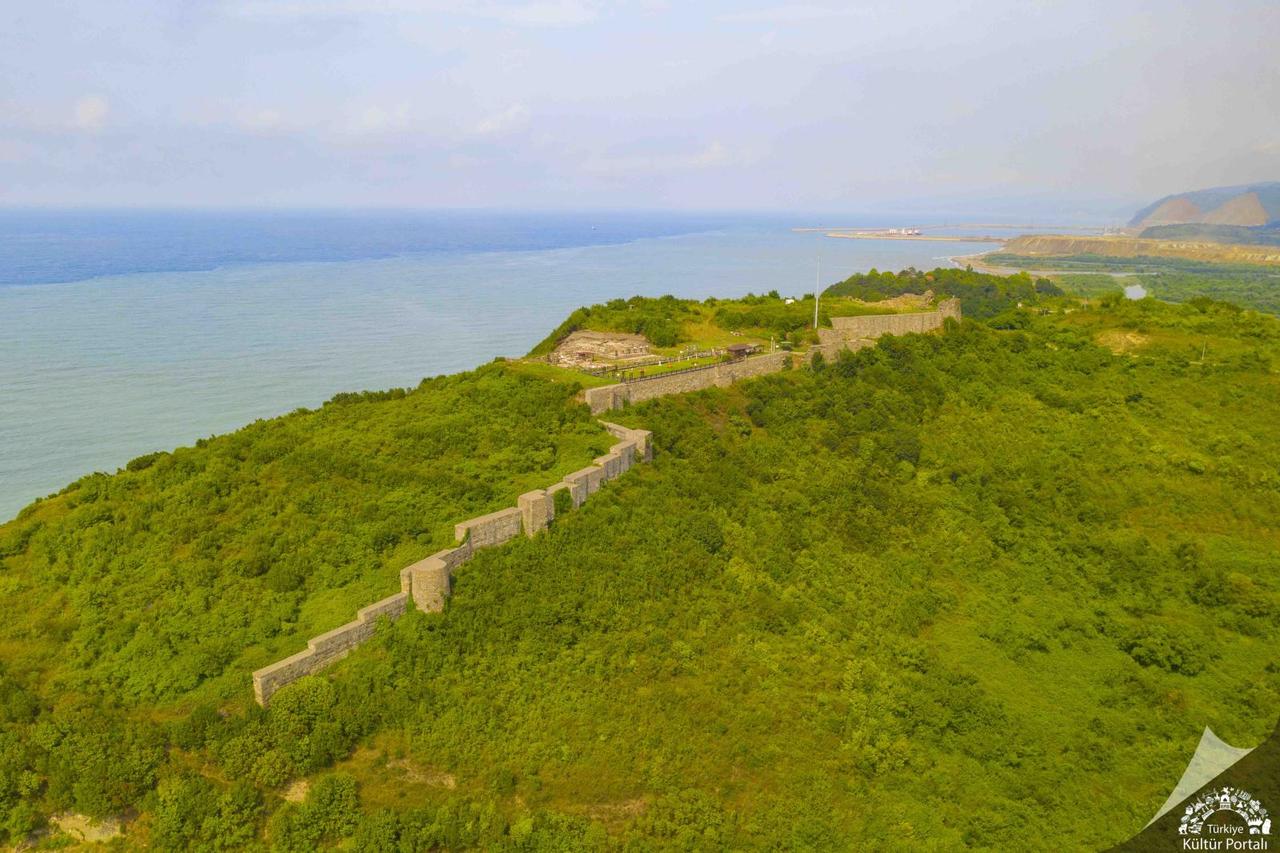
In the village of Filyos in Zonguldak, where the sea embraces the Billaios (Filyos) River, lies the vast ruins of an ancient city: Tios. For thousands of years, this city was one of the busiest ports on the Black Sea, where goods such as fish, wine, and grain were transported by ship. Because it lies outside modern settlements, Tios appears as if frozen in time, inviting us through its remains to the distant past.

(Image generated by artificial intelligence.)
History
Tios was founded exactly 2,700 years ago, in the 7th century BCE, by seafarers from Miletus who came from distant lands. Throughout history, it came under the rule of many powerful regimes, from the Roman Empire to Byzantium, from Genoese merchants to the Ottomans. Although the city changed its name—Tios, Tieion, Tium—and its appearance with each new era, it ultimately survived as a charming fishing village into the present day.
Architectural Features
Excavations in the city have uncovered the remains of a fortified acropolis, situated on the highest point and offering natural protection. Also revealed were a large theater where audiences watched performances, bathhouses with hot water pools, and ornate Roman temples with columned facades. The thick walls surrounding the city and the ancient quays where ships docked demonstrate how significant Tios was as a center of trade and daily life.

(Image generated by artificial intelligence.)
Usage and Conservation Process
Since 2006, scientists—specifically archaeologists—have been conducting excavations to uncover the secrets of Tios. Because no modern urban structures were built atop its ruins, Tios has been preserved in far better condition than other ancient cities along the Black Sea coast. This allows archaeologists to aim at revealing the full plan of a major ancient city, including its roads, houses, storage facilities, and even aqueducts that transported water.
Cultural and Historical Significance
Tios is historically unique as the first and only ancient city on Türkiye’s Black Sea coast to have been excavated without being overlaid by later settlements. Every ancient coin and shard of pottery found here provides valuable insights into the culture and daily life of the people who lived along the Black Sea during antiquity. These remains prove that the Black Sea region holds not only natural beauty but also a rich history spanning thousands of years.