


This article was automatically translated from the original Turkish version.
+1 More
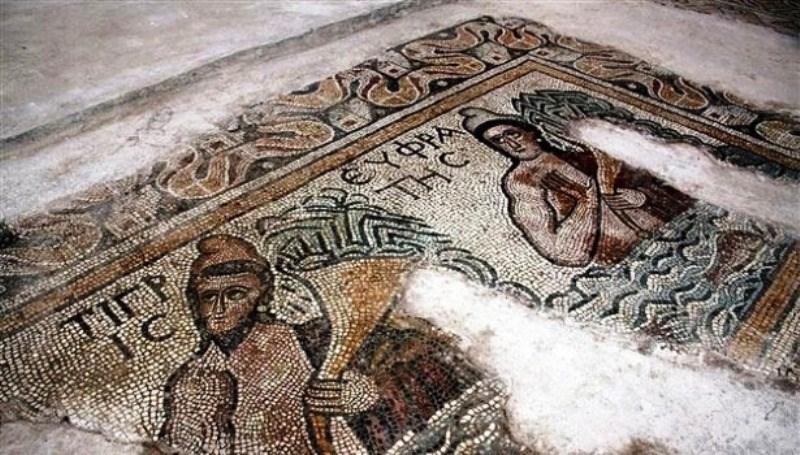
Ancient City of Hadrianopolis
Location | Karabük Province Viranşehir Site (near Budaklar Village) Eskipazar District | ||||||||
|---|---|---|---|---|---|---|---|---|---|
Period(s) | Late Hellenistic Early Byzantine Roman Empire | ||||||||
Foundation Date | 1st century BC | ||||||||
Most Well-Known Features | Roman and Byzantine architecture, early Byzantine mosaics, church remains, theater, baths, and rock-cut tombs | ||||||||
Prominent Structures | Mosaic churches, defensive structures, monumental cultic niches, villa, walls | ||||||||
Start of Excavations | 2003 | ||||||||
The Ancient City of Hadrianopolis is located 3 kilometers west of the Eskipazar district, at a site known as Viranşehir. The ancient city extends over a wide area encompassing the villages of Budaklar, Büyükyaylalar, Çaylı, and Beytarla. The ruins of the city are particularly concentrated around the Hacı Ahmetler neighborhood of Budaklar Village. This settlement, known in the Roman period as "Hadrianopolis in Paphlagonia," was established during the Late Hellenistic period and served as an important urban center throughout the Roman Imperial and Early Byzantine periods. Archaeological findings indicate that the city was founded in the 1st century BCE and remained inhabited until the 8th century CE.

Hadrianopolis Ancient City (TRT News)
The construction of Hadrianopolis during the Roman Empire is evident from its architectural remains. The city experienced intensive settlement especially during the Byzantine period, and structures from that era still survive as ruins today. The majority of the architectural remains at Hadrianopolis date to the Early Byzantine period. Although a significant portion of these structures was uncovered through illegal excavations, systematic archaeological investigations continue to document the architectural fabric in an organized manner.
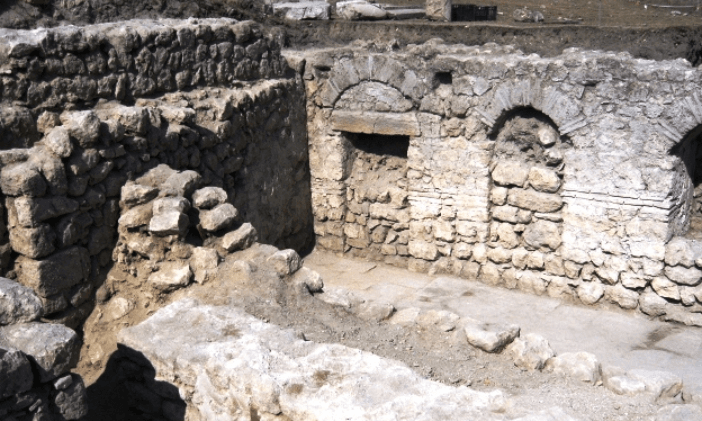
Hadrianopolis Ancient City (Culture Portal)
Archaeological research at the ancient city has so far identified two bathhouses, two churches, a defensive structure, rock-cut tombs, a theater, a vaulted and arched building, a monumental cult niche, a city wall, a villa, and various cult areas. Some of these structures date to the Roman period while others belong to the Byzantine era. The remains of three churches from the Early Byzantine period represent significant examples of the city’s religious architecture. One of these churches is located approximately two kilometers west of Eskipazar, near the entrance to the city, and its floor is decorated with mosaics. These mosaics depict personifications of the rivers Phison, Geon, Euphrates, and Tigris mentioned in the Bible, a composition that is rare in Anatolia.
The mosaics also feature various animal figures such as horses, deer, elephants, panthers, and griffins, as well as scenes of grape harvesting. For this reason, the city has occasionally been referred to as "Zeugma of the Black Sea." An inscription within the church reads, "The sanctuary of Himerios, faithful palace guard, and the highly honorable and worthy Valentina." This inscription, along with other structural elements, enables the dating of the building to the 6th century. Additionally, a Greek inscription on the atrium wall and a funerary inscription at the entrance highlight the building’s significance within the religious and social life of the period.
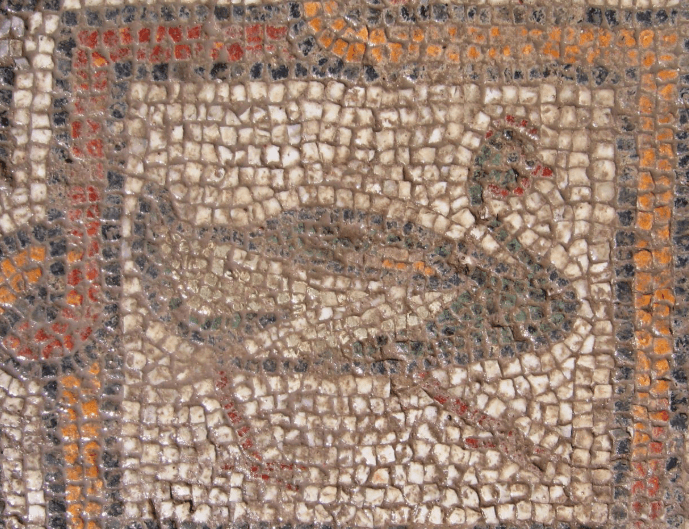
Mosaic Featuring an Animal Figure (Culture Portal)
Archaeological excavations at Hadrianopolis have been ongoing since 2003. In addition to the mosaic-covered churches, excavations have revealed a square-plan structure, defensive walls, and numerous portable cultural artifacts. Artifacts discovered during the excavations have been transferred to museums in neighboring provinces, while non-portable remains have been preserved in situ. Applications have been submitted by the Karabük Provincial Directorate to the Ministry of Culture and Tourism with the aim of transforming the site into an open-air museum.
As part of ongoing efforts, visitor infrastructure has been developed, some structures have been temporarily covered for protection, and new visitor areas have been created. It is reported that approximately 10,000 visitors per month during the summer months tour Hadrianopolis, the majority of whom are domestic tourists. In addition to visitors from East Asia and Europe, student groups frequently visit the site.
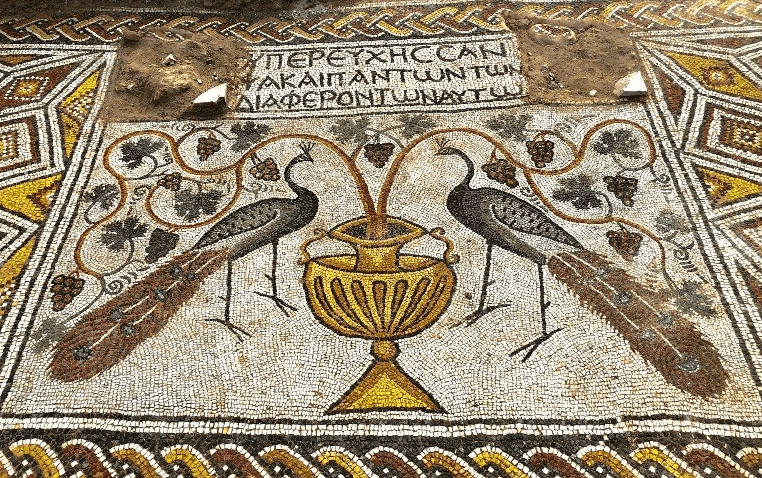
Mosaics Uncovered in the Ancient City of Hadrianopolis (Republic of Türkiye Karabük Governorate)
During excavations conducted in 2020 in the South Necropolis area, ceramic fragments dating to prehistoric periods were discovered for the first time. These handmade ceramics exhibit dense burnishing, dark surfaces, and various slip treatments, and are dated to the Early and Middle Chalcolithic periods and the Early Bronze Age. A total of over 170 ceramic fragments have been documented. The majority consist of bowls, jars, and plates, with examples produced using different techniques such as black-slipped, red-slipped, and black-topped finishes.
In addition to these finds, heavy stone weights interpreted as loom weights used in textile production have been identified in some structures at the site. These stone weights, some of which feature carved decorations, are dated to the Bronze Age. These tools associated with textile production provide evidence for an economy based on textile manufacturing in the Western Black Sea region during the Chalcolithic and Bronze Ages.
Located near Hadrianopolis, the Yazıboy Cave was discovered in 2023, and evidence of prehistoric stone tool production has been identified within it. Flint flakes found at the site suggest that the cave may have been used briefly by early hunter groups. This indicates that prehistoric settlement in the region was not limited to open areas but also included the use of caves. The location of the Yazıboy Cave, in proximity to natural resources and animal migration routes, supports this interpretation.
The Ancient City of Hadrianopolis provides valuable data on settlement patterns in the Western Black Sea region during the Late Antiquity and Byzantine periods. The mosaics, religious architectural remains, prehistoric ceramics, and textile-related finds uncovered at the site demonstrate that the region was inhabited not only during Antiquity but also in prehistoric times. The stratigraphically documented prehistoric fragments from the South Necropolis area, supported by in situ examples, hold the potential to further clarify the cultural layers of Hadrianopolis.
Kalkan, Emrullah, Ersin Çelikbaş, and Ferda Tatlı. “Hadrianopolis Antik Kenti ve Çevresinden Tarih Öncesi Dönemlere Ait Yeni Bulgular.” Türk Arkeoloji ve Etnografya Dergisi 89 (2025): 9–24. https://dergipark.org.tr/tr/pub/arkeolojiveetnografya/issue/90201/1489977
Ministry of Culture and Tourism. "Hadrianopolis Antik Kenti." Türkiye Kültür Portalı. Accessed April 25, 2025. https://www.kulturportali.gov.tr/turkiye/karabuk/gezilecekyer/hadrianopolis-antik-kenti
T.C.Karabük Valiliği. "Mozağin Başkenti Hadrianaupolis..." Accessed April 25, 2025. http://www.karabuk.gov.tr/mozaigin-baskenti-hadrianaupolis
TRT Haber. "Hadrianopolis Antik Kenti'nde Yeni Bulgular Ortaya Çıktı." TRT Haber, Accessed April 25, 2025.

Ancient City of Hadrianopolis
Location | Karabük Province Viranşehir Site (near Budaklar Village) Eskipazar District | ||||||||
|---|---|---|---|---|---|---|---|---|---|
Period(s) | Late Hellenistic Early Byzantine Roman Empire | ||||||||
Foundation Date | 1st century BC | ||||||||
Most Well-Known Features | Roman and Byzantine architecture, early Byzantine mosaics, church remains, theater, baths, and rock-cut tombs | ||||||||
Prominent Structures | Mosaic churches, defensive structures, monumental cultic niches, villa, walls | ||||||||
Start of Excavations | 2003 | ||||||||
No Discussion Added Yet
Start discussion for "Ancient City of Hadrianopolis" article
Historical Development and Settlement Phases
Architectural Structures and Archaeological Finds
Excavation and Conservation Efforts
Prehistoric Findings
Yazıboy Cave and Its Surroundings