



Geothermal Power Plant
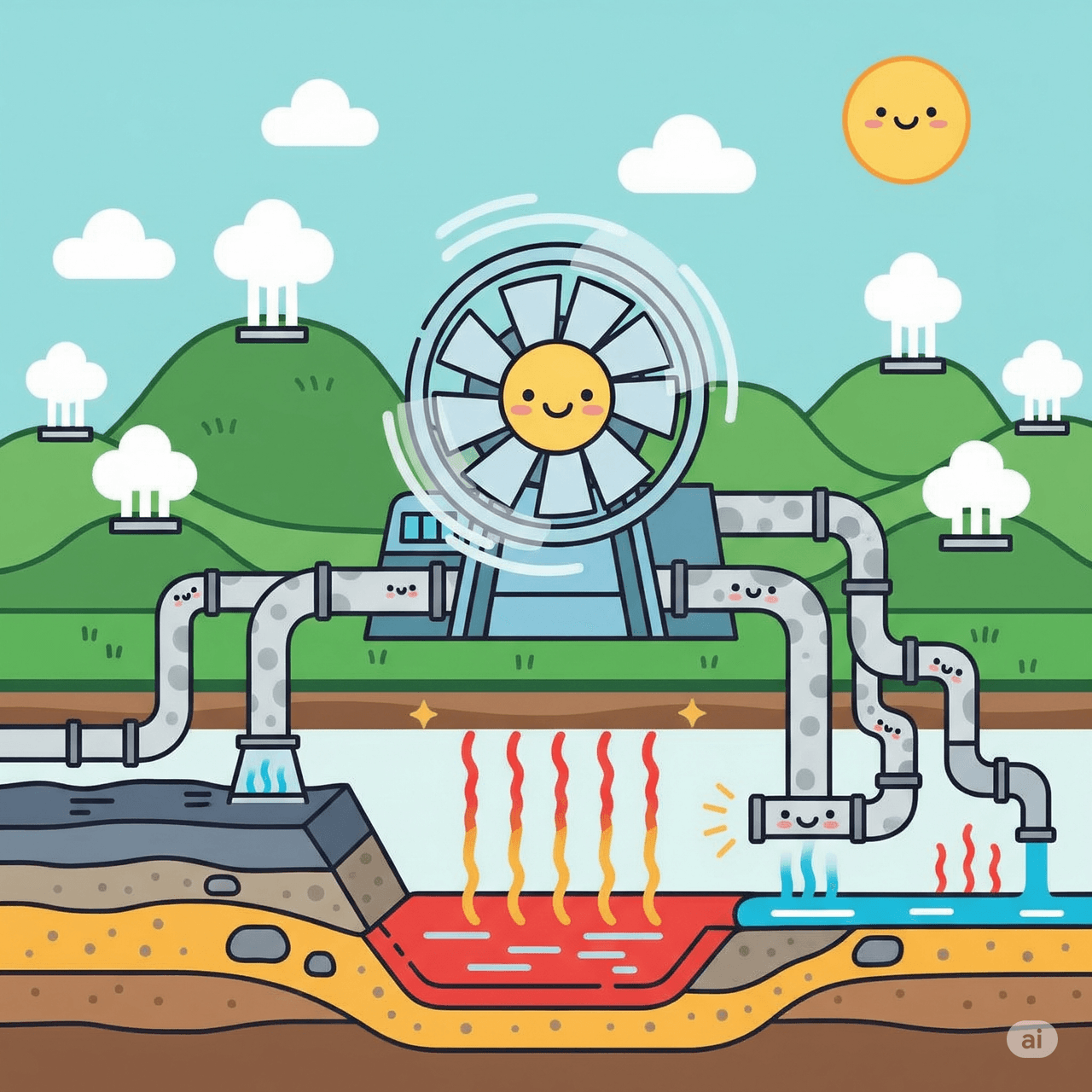
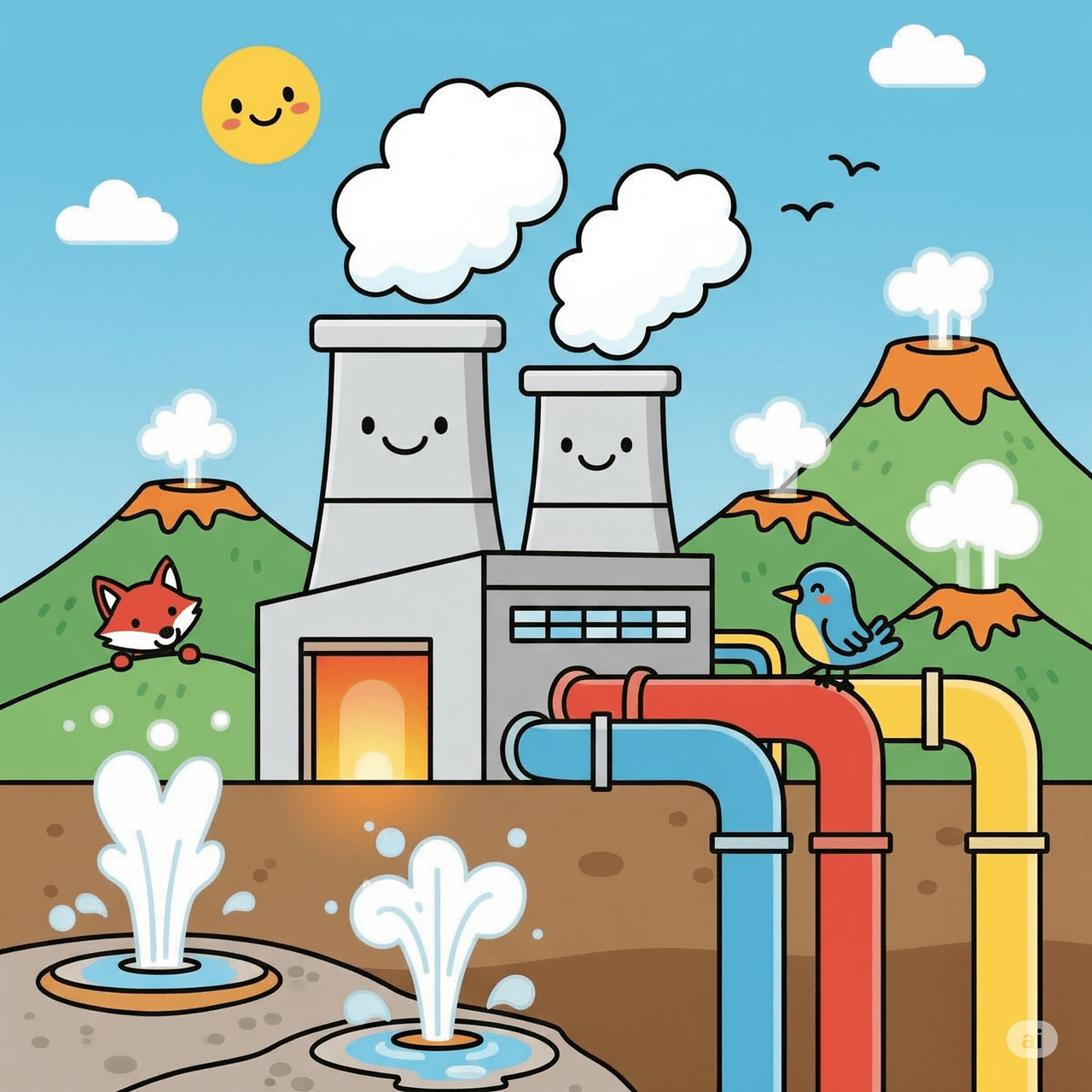
A geothermal power plant is a facility that generates electricity by harnessing the heat from within the Earth. Hot water and steam found deep underground are used in these plants to produce electricity. Geothermal energy is a renewable and clean source of energy. It provides electricity continuously without harming the environment.
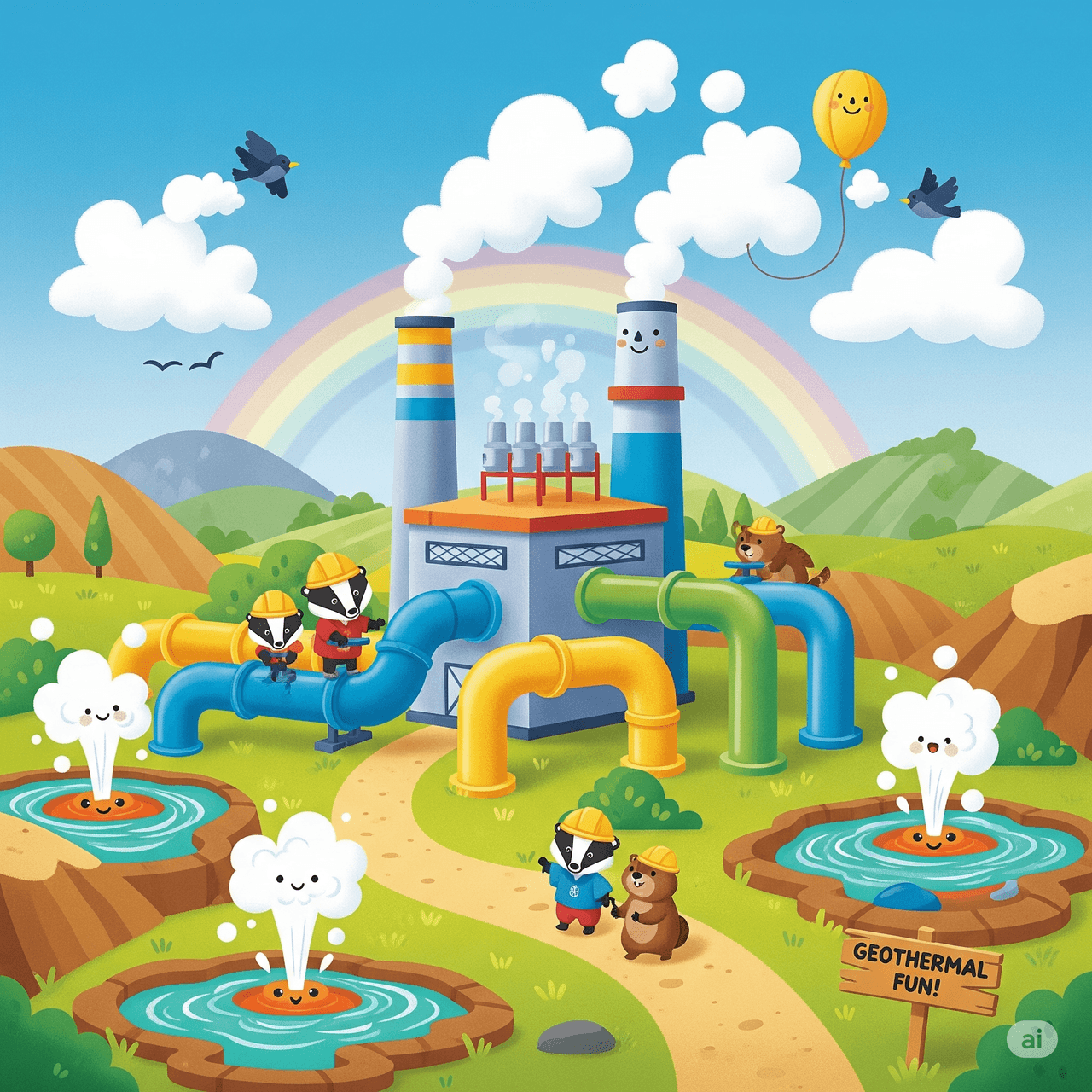
Image generated by artificial intelligence.
How Is Geothermal Energy Produced?
Hot water and steam beneath the Earth’s surface are brought to the surface through pipes. This hot steam drives special machines called turbines. As the turbines rotate, they activate electrical generators that produce electricity. The used steam is cooled and returned underground. This ensures that energy production continues without depleting the resource.
What Are the Advantages of Geothermal Energy?
Geothermal energy does not harm the environment or emit polluting gases. Unlike fossil fuels, it is not depleted because the Earth’s internal heat is continuously replenished. Additionally, it requires less land compared to other energy sources. In countries like Türkiye, which have abundant hot water sources, geothermal energy is a vital energy resource.
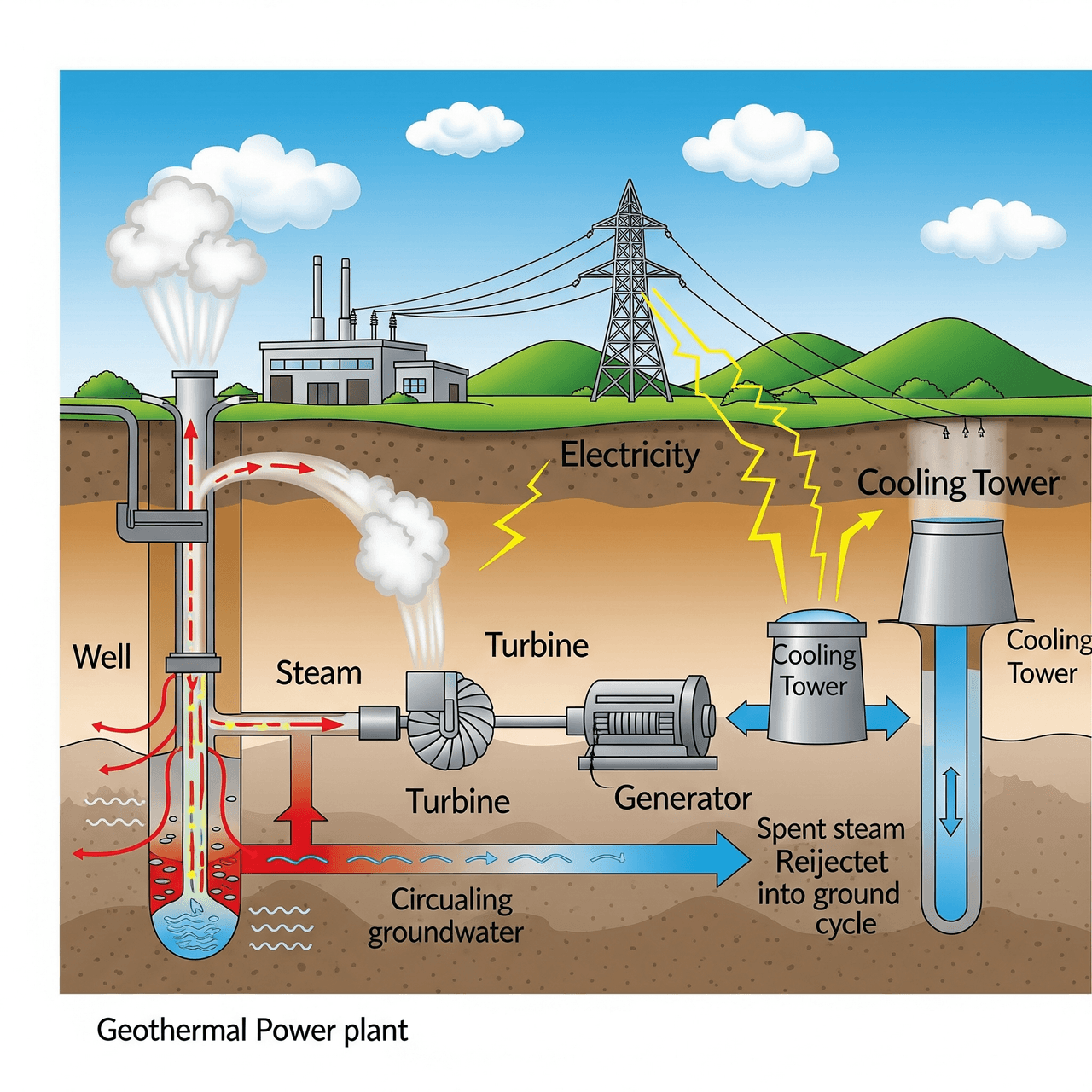
(Generated by Artificial Intelligence.)
Where Are Geothermal Power Plants Located?
Geothermal power plants exist in many countries around the world. Türkiye has also made significant progress in geothermal energy. The Aegean region, in particular, hosts numerous power plants due to its abundant hot water sources. These plants meet urban electricity demands while protecting the environment.
What Can Children Learn?
Geothermal power plants demonstrate how natural resources can be converted into electrical energy. They help us understand the importance of renewable energy sources and show one way to protect nature. We learn that sustainable energy production is possible through science and technology.