



Mitochondrion
Mitochondria are tiny energy centers that operate inside our cells. Just as a factory generates electricity, mitochondria produce the energy required by the cell. Thanks to this energy, the cells in our body move, grow, repair themselves, and carry out their functions.

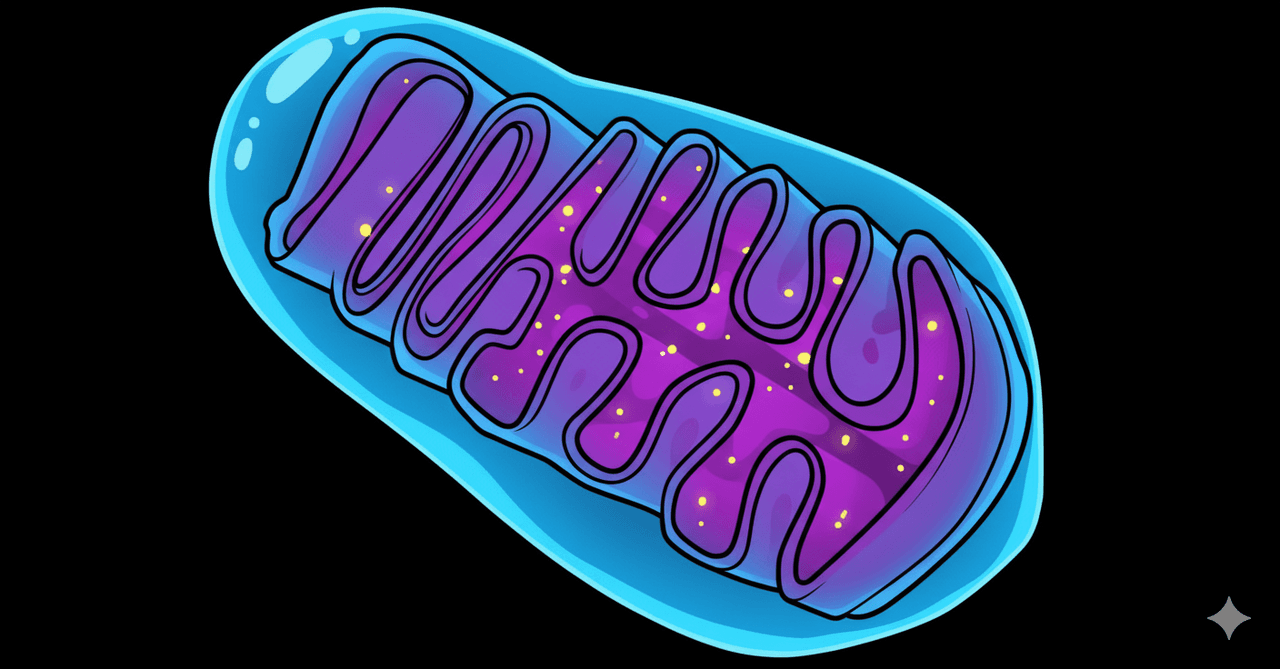
Mitochondria (generated by artificial intelligence)
What Is the Function of Mitochondria?
The most important function of mitochondria is to convert energy from food into a form that the cell can use. This energy is called ATP (Adenosine Triphosphate). ATP acts like the “fuel” that powers cellular activities.
Mitochondria break down food using oxygen and produce ATP during this process. This process is called cellular respiration. Thanks to cellular respiration, our muscles move, our heart beats, and our brain thinks!
During energy production, mitochondria use a specialized system: the electron transport chain. This chain carries electrons from food molecules in sequence, releasing energy that is then used to produce ATP. It functions like an energy transmission line!
What Is the Structure of Mitochondria?
The structure of mitochondria is highly specialized and layered:
- Outer membrane: This protective envelope separates the mitochondrion from the rest of the cell and allows small molecules to pass through.
- Inner membrane: It has a folded structure. These folds are called cristae. Cristae are the sites where ATP production occurs. The inner membrane is packed with specialized proteins and transport systems.
- Matrix: This is the gel-like fluid compartment inside the inner membrane. It contains the mitochondrion’s own DNA and certain specialized enzymes. These enzymes help break down food molecules to support energy production.
There are five specialized complexes in the inner membrane of mitochondria that work together to produce ATP. These complexes transport electrons and ultimately generate ATP. This system is called oxidative phosphorylation.

Mitochondria (generated by artificial intelligence)
Does Mitochondria Have Its Own DNA?
Yes! Mitochondria possess their own DNA, independent of the cell nucleus. This DNA allows them to produce certain proteins on their own. Scientists believe that mitochondria were once free-living organisms that gradually formed a symbiotic relationship with cells and became an integral part of them. This theory is known as the endosymbiotic theory.
In Which Cells Are Mitochondria Found?
Mitochondria are present in plant, animal, and human cells. However, the number of mitochondria varies in different cells. For example:
- Muscle cells contain many mitochondria because muscles require large amounts of energy.
- Nerve cells also contain a high number of mitochondria because thinking and transmitting information require energy.
- Heart cells, which work continuously, have a particularly high number of mitochondria.
Mitochondria can increase in number according to the cell’s energy demands, just as a heavily operating factory needs more generators!