




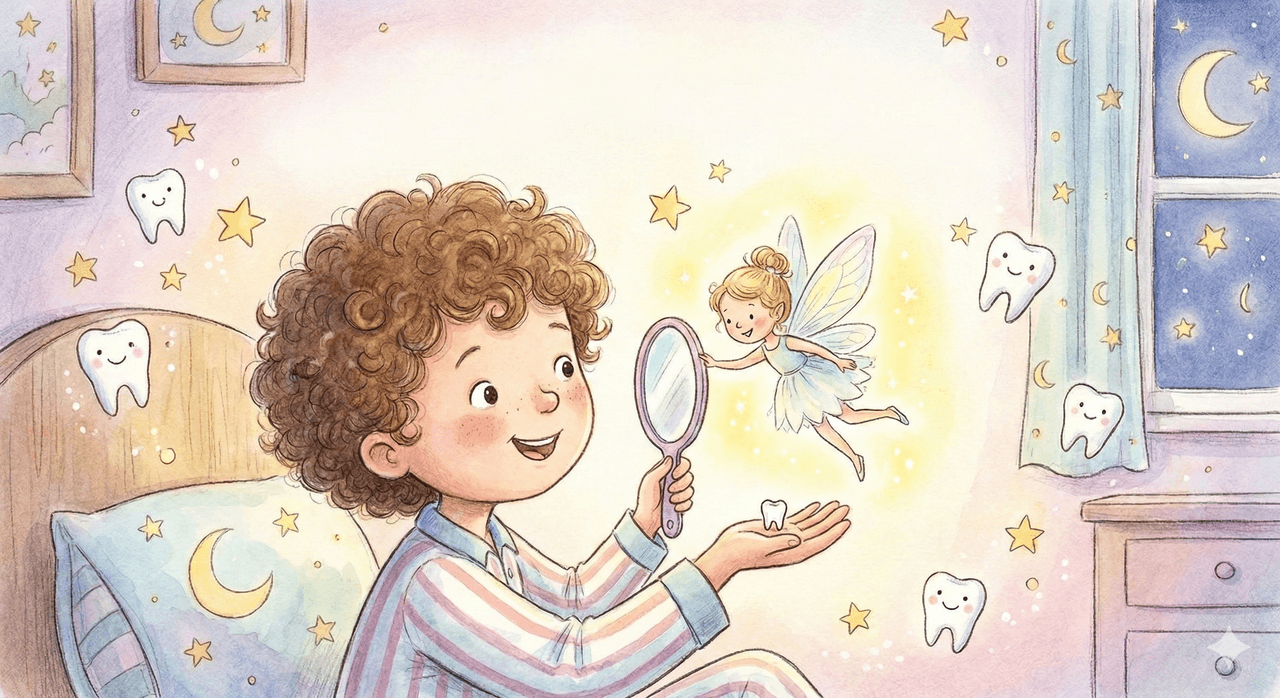
Our Milk Teeth
The first teeth to appear during infancy and remain with us throughout childhood are called "milk teeth". Have you ever looked in the mirror and examined these small white pearls?
Milk teeth not only help us chew and grind food properly but also contribute to forming a beautiful smile. Let us get to know these small yet vital helpers more closely!
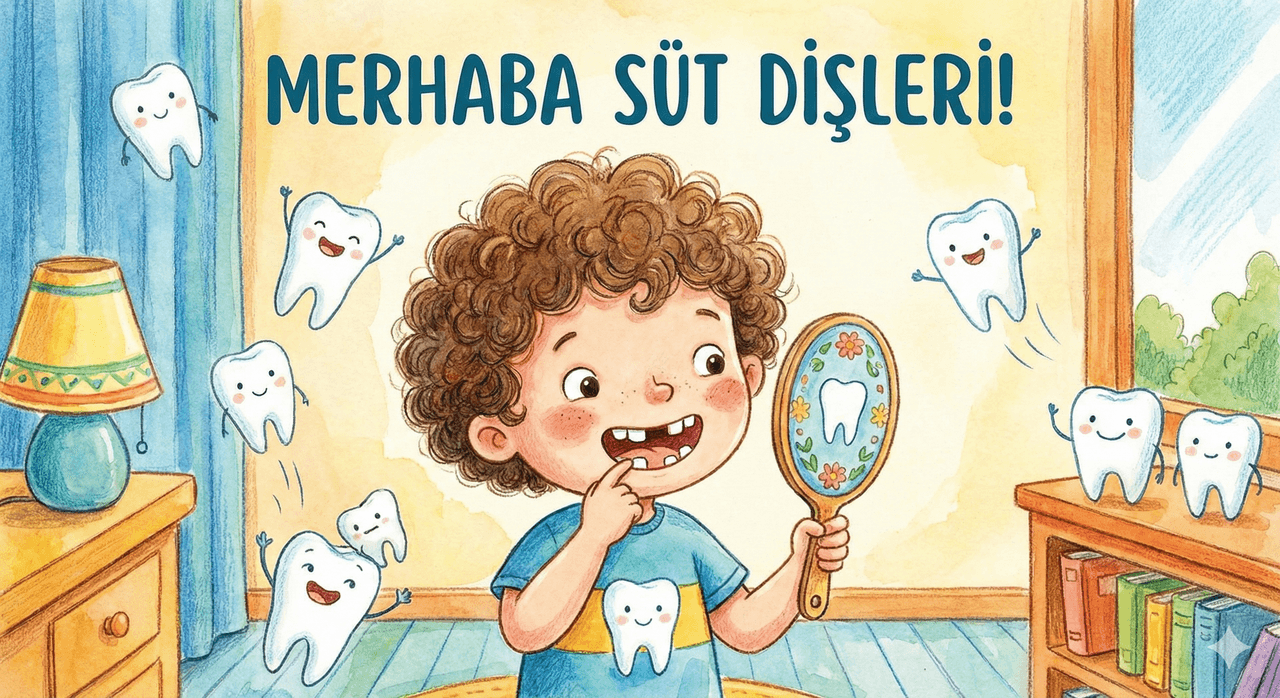
Child Examining Milk Teeth (Generated by Artificial Intelligence)
What Are Milk Teeth For?
Milk teeth help us chew and grind food easily, supporting healthy growth. They also play a crucial role in enabling us to pronounce words and letters correctly.
For example, if our front milk teeth fall out, we may find it slightly difficult to pronounce sounds like "f", "v", "s", and "z"—this is perfectly normal.
In addition, milk teeth have another hidden function: they act as space maintainers. They guide the permanent teeth that will emerge below and preserve the correct space for them to erupt in the proper position. If we lose our milk teeth too early, neighboring teeth may shift into the empty space, leaving insufficient room for the new teeth to come in.
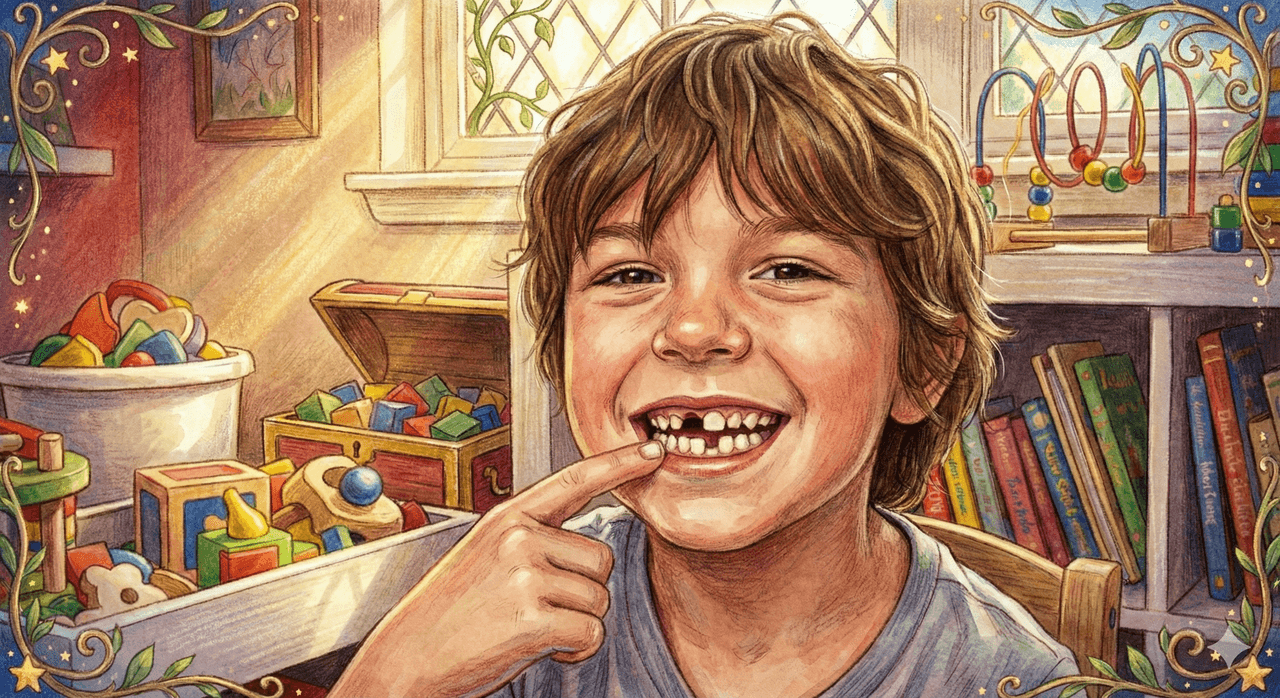
Child with Milk Teeth Starting to Fall Out (Generated by Artificial Intelligence)
How Do They Differ from Permanent Teeth?
Milk teeth are slightly smaller in size compared to the permanent teeth that will eventually replace them. They also have a slightly bluish-white color. In fact, one of the main reasons they are called "milk teeth" is precisely because of this distinctive white appearance!
The hard outer layer of milk teeth, called enamel, is thinner than that of permanent teeth. This makes them somewhat more susceptible to decay. The innermost part of the tooth, which provides vitality, is called the pulp; in milk teeth, this pulp occupies a much larger proportion of the tooth compared to permanent teeth.
How Should We Protect Our Teeth?
Tooth decay begins when invisible microorganisms in our mouth feed on sugary foods.
Consuming sugary foods or drinks especially before going to bed at night can be very harmful to our teeth.
Brushing our teeth twice a day with fluoride toothpaste is the best way to protect them.
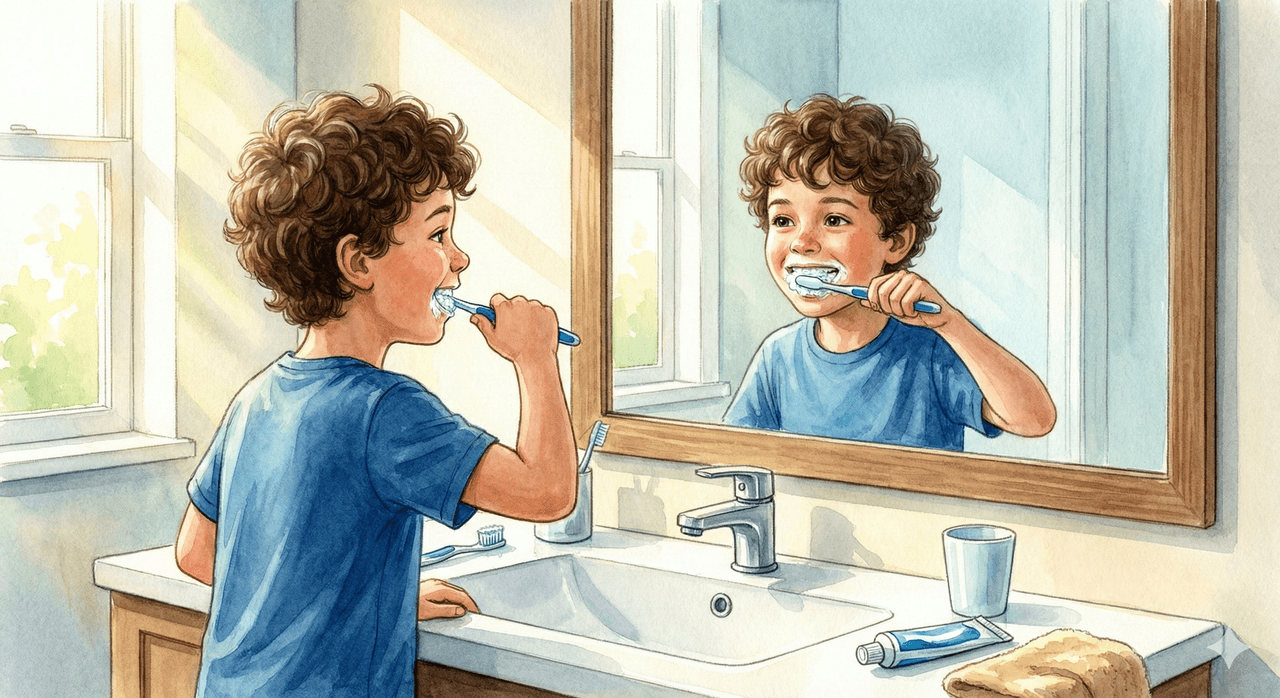
Child Brushing Teeth Regularly (Generated by Artificial Intelligence)
Eating a healthy diet, avoiding excessive sweets, and regularly visiting our dentist also help keep our milk teeth strong.