



Ribosome
Ribosomes are like small factories that produce the proteins responsible for carrying out essential functions throughout our body. Let’s explore this amazing world!
What Are Ribosomes?
Ribosomes are tiny structures found inside our cells that make proteins. Proteins are vital for our body to move, digest food, and even breathe. Without ribosomes, our cells could not perform these tasks! That is why we call them the “protein factories of the cell.”
Ribosomes are so small that we cannot see them with the naked eye. A single ribosome is about one billionth of a meter in size—that is, nanometer scale! Despite their tiny size, they accomplish enormous tasks.

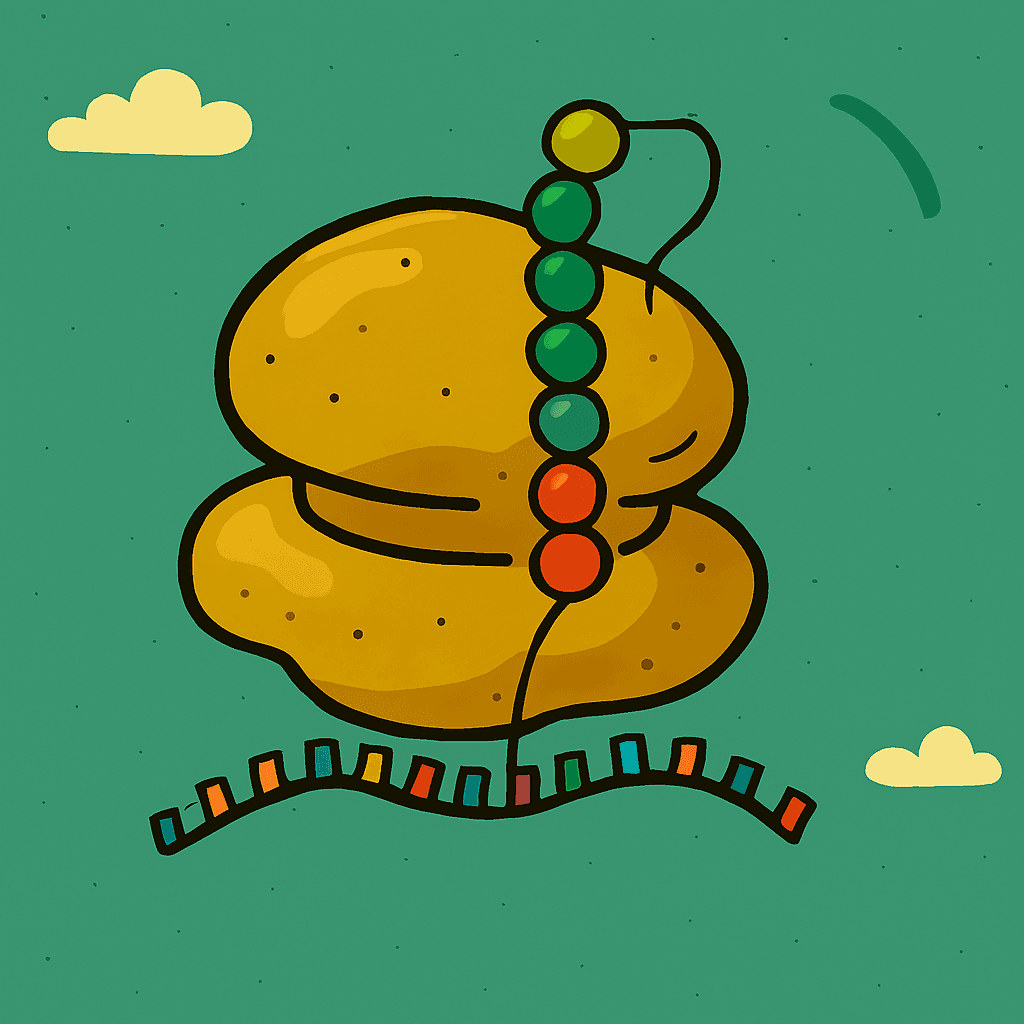
Ribosome (Generated by Artificial Intelligence.)
Where Are Ribosomes Found?
Ribosomes can be found in various locations within the cell:
- Free in the cytoplasm, the fluid inside the cell.
- Attached to a structure called the endoplasmic reticulum. These ribosomes typically produce proteins meant to be sent outside the cell.
- They are also found in specialized cell compartments such as mitochondria and chloroplasts.
A single cell can contain thousands, even millions, of ribosomes. For example, a bacterium may have more than 15,000 ribosomes, while a human cell can have over one million.
What Is the Structure of Ribosomes?
Ribosomes consist of two parts: a large subunit and a small subunit. These two parts come together to make proteins and separate once their work is done. Inside ribosomes, there are two key components:
- rRNA (ribosomal RNA): A type of molecule that gives the ribosome its shape. Two-thirds of the ribosome is made of rRNA!
- Proteins: Small helpers that make up the remaining portion. Bacteria have 55 different proteins, while human cells have 80.
What Do Ribosomes Do?
The primary function of ribosomes is to produce proteins. But this process is not random—they need a blueprint. This blueprint is delivered to ribosomes by a molecule called mRNA (messenger RNA). mRNA carries information copied from DNA in the cell nucleus and tells the ribosome how to build a specific protein.
Protein synthesis occurs in two stages:
- Transcription: The information in DNA is copied into mRNA.
- Translation: The ribosome reads the mRNA instructions and links together building blocks called amino acids to form a protein.
During this process, another molecule called tRNA (transfer RNA) brings the correct amino acids to the ribosome. The ribosome connects these amino acids in a chain, resulting in a finished protein!
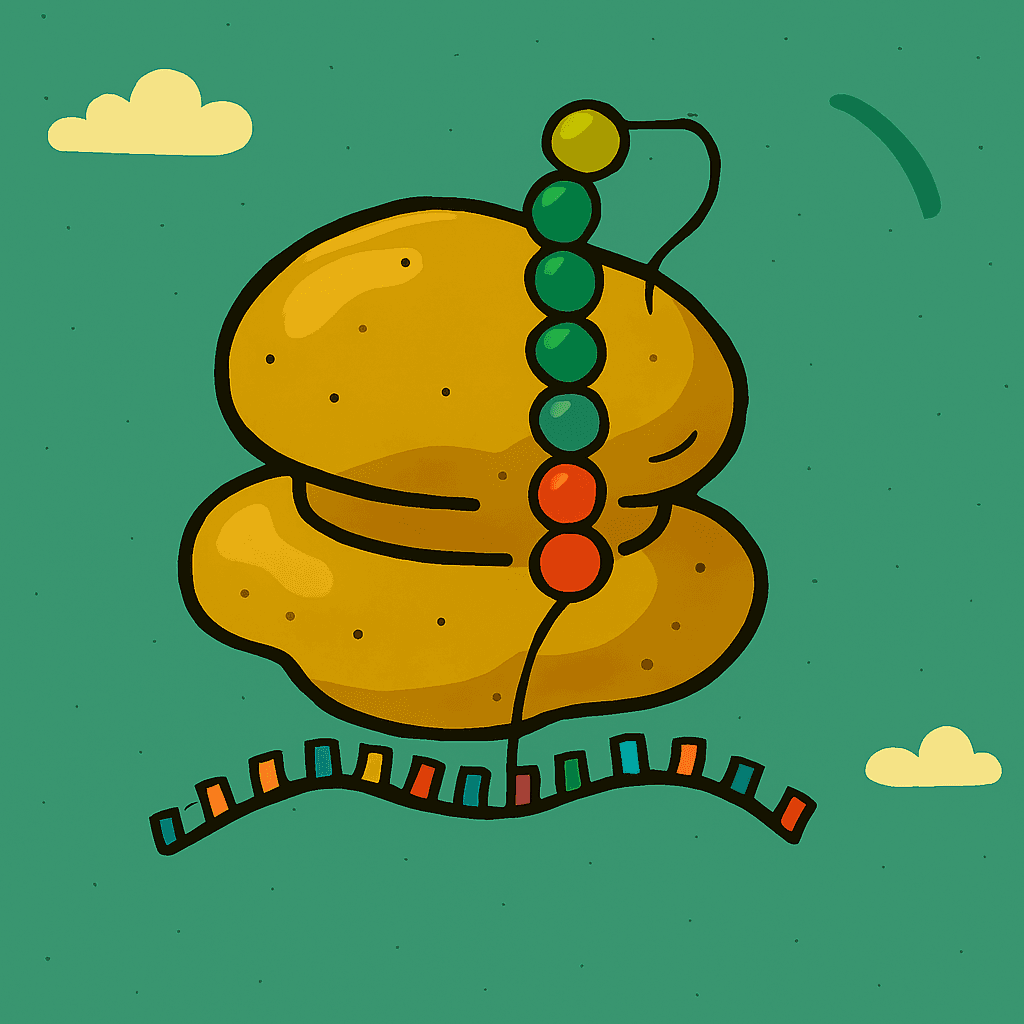
Ribosome in Protein Synthesis (Generated by Artificial Intelligence.)
Polyribosomes: Teamwork
Sometimes the cell needs to produce large amounts of the same protein. For this reason, ribosomes do not work alone—they form teams! Multiple ribosomes attach to a single mRNA molecule and produce the same protein simultaneously. This structure is called a polyribosome. Polyribosomes resemble beads on a string and enable rapid protein production.
Why Are Ribosomes Important?
Ribosomes are essential for life because proteins are required for the functioning of our cells and bodies. For example:
- Our muscles move using proteins.
- The food we eat is digested with the help of proteins.
- Our body fights germs using proteins.
Scientists are working hard to understand ribosomes in detail because this knowledge is crucial for developing new medicines. For instance, some antibiotics work by stopping bacterial ribosomes from functioning, thereby killing the microbes.
How Are Ribosomes Made?
Ribosomes are also produced inside the cell! This process begins in a special region called the nucleolus. rRNA is made here, while proteins are produced elsewhere in the cytoplasm by other ribosomes. These components then assemble to form complete ribosomes—much like putting together the pieces of a puzzle.