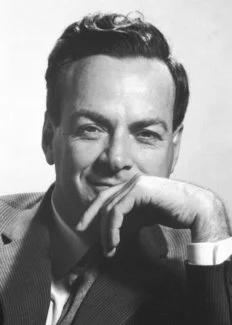



Richard Feynman
Richard P. Feynman was born on 11 May 1918 in New York. Even as a young child he enjoyed building his own tools at home: repairing radios, setting up electrical circuits, and creating a “little science workshop” in his house. His father, Melville, frequently asked him questions about nature and science, stimulating his imagination. Richard’s passion for learning began in this way.
Years of Education
Feynman first studied at the Massachusetts Institute of Technology (MIT) and later earned his doctorate at Princeton University. There he worked on quantum mechanics. He realized that he could explain mathematical formulas more easily through drawings, and during this period the earliest ideas of what would later make him famous—the Feynman Diagrams—took shape.
The Manhattan Project and Difficult Times
During World War II, as a young scientist, Feynman joined the Manhattan Project, which aimed to develop the atomic bomb. His greatest source of support during those years was his beloved wife, Arline, who was seriously ill. Despite her condition, Feynman continued his scientific work while caring for her with deep affection. This period was marked by both great achievements and profound losses.
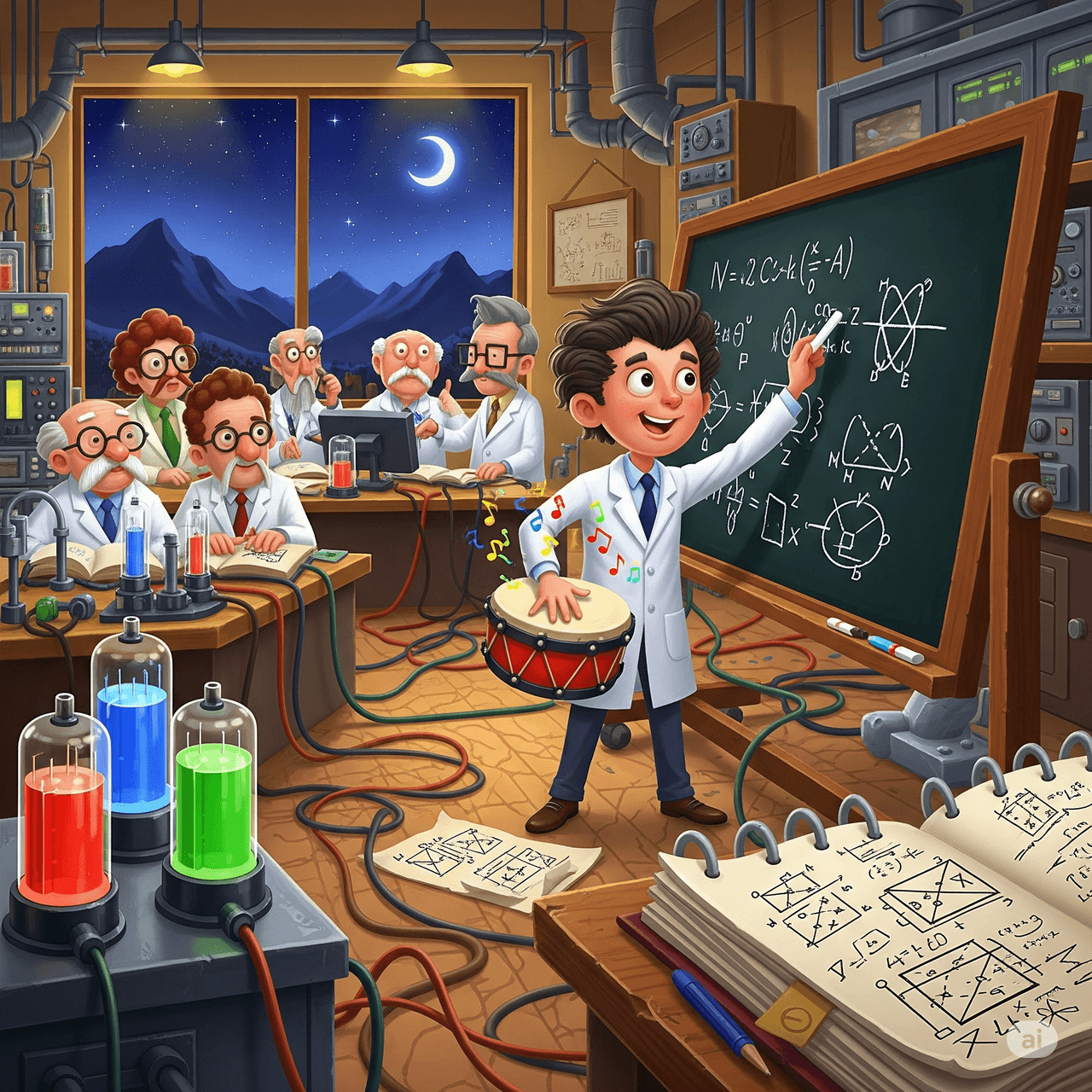
(Generated by artificial intelligence.)
Feynman Diagrams and the Nobel Prize
After the war, Feynman brought a completely new perspective to physics. He never lost the playful spirit of the child who loved to draw. He began explaining complex quantum calculations through simple sketches. These drawings became known as Feynman Diagrams and evolved into a universal language used by physicists around the world. In 1965 he was awarded the Nobel Prize in Physics for this breakthrough.
The Fun-loving Scientist
Feynman was not only a serious scientist. During lectures he told jokes and gave his students as many laughs as he did lessons in physics. In his free time he played bongo drums, painted pictures, and tried to pick locks. He always viewed science through the lens of play, saying, “Curiosity is the most beautiful game.”
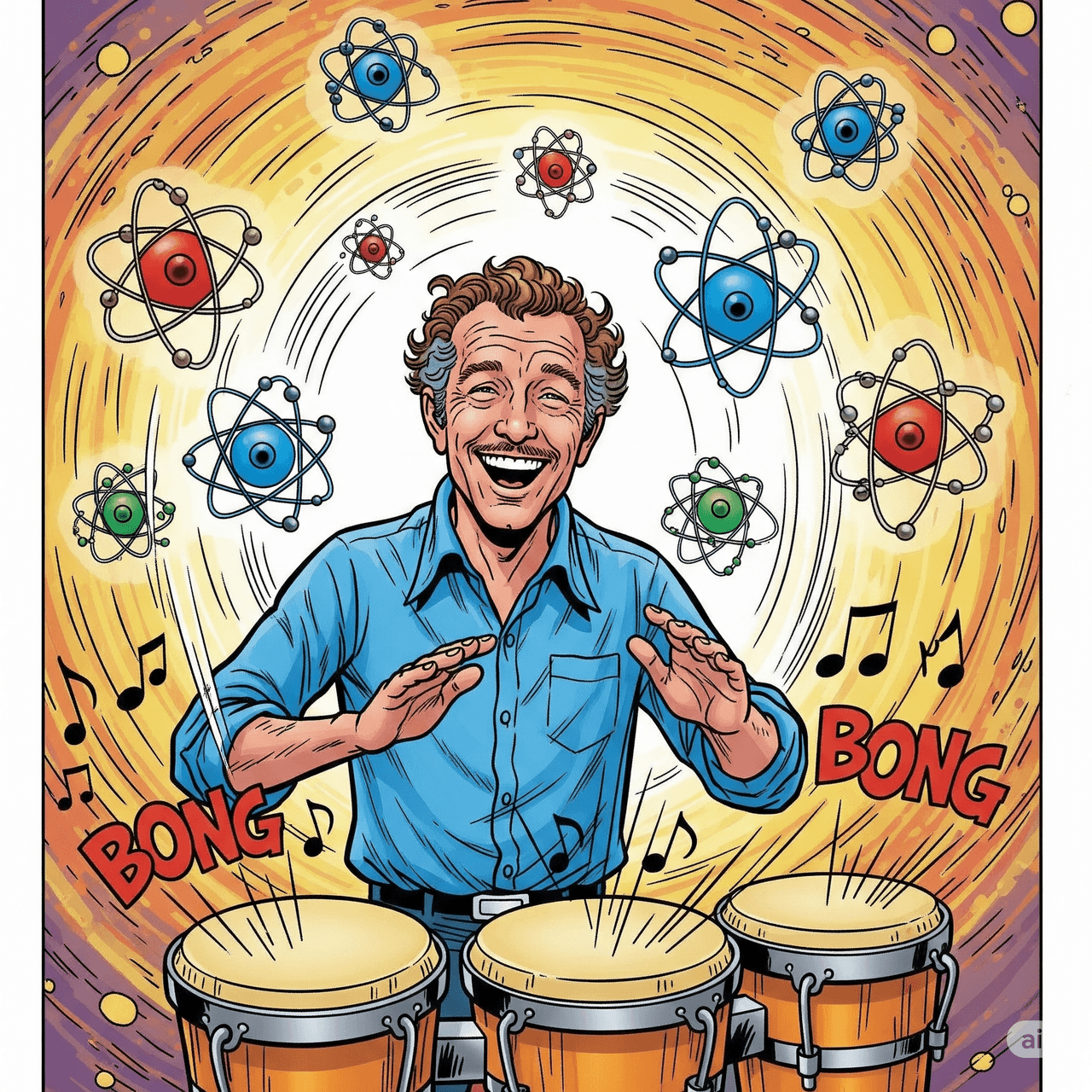
(Generated by artificial intelligence.)
The Challenger Disaster
In 1986, when the Challenger space shuttle exploded, Feynman joined the investigation commission. In front of everyone’s eyes, he demonstrated with a piece of icy rubber that the cause of the disaster was the failure of the O-ring seals. He refused to conceal the truth and spoke the facts with courage.
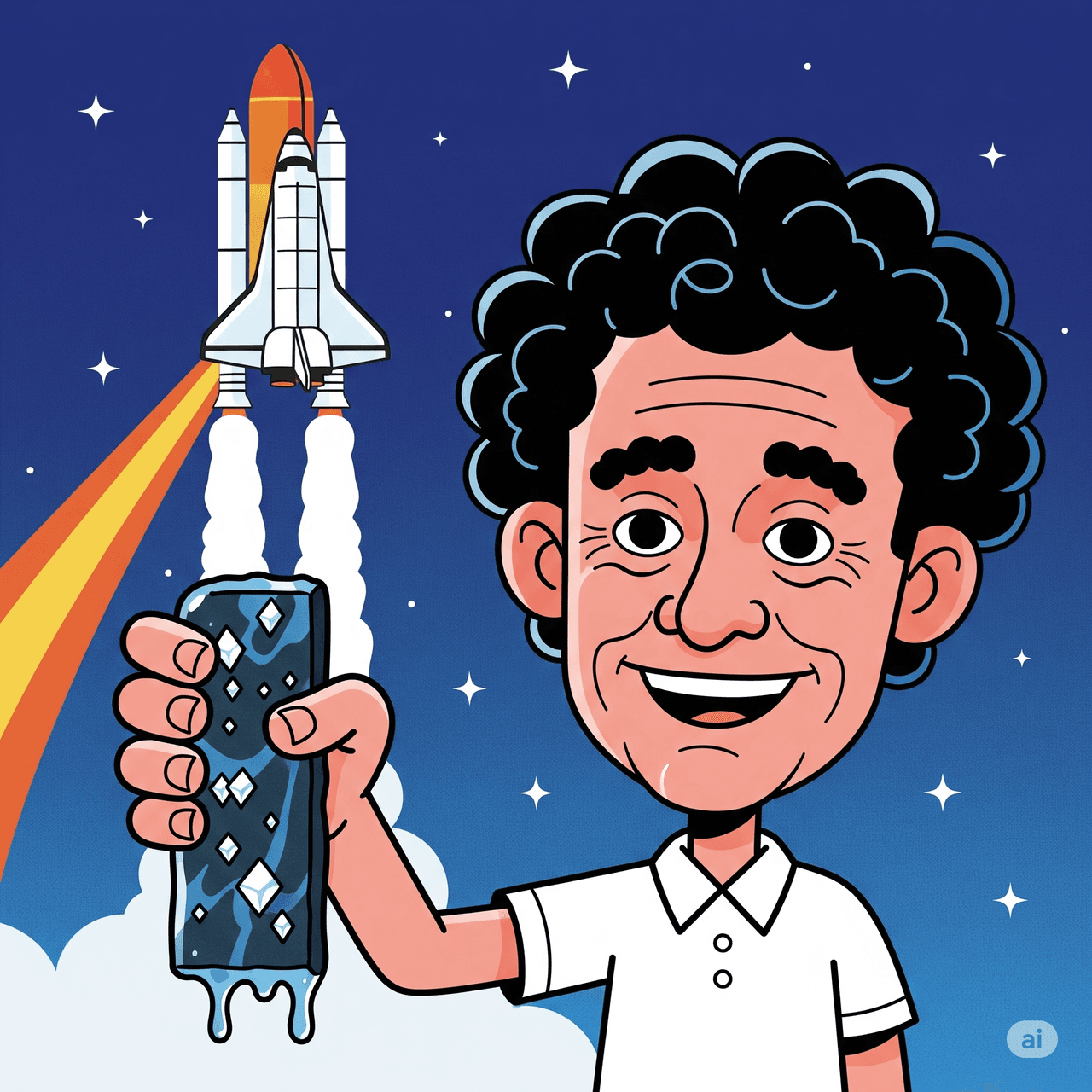
(Generated by artificial intelligence.)
Books and Stories
Feynman turned his fascinating life into stories. His book Surely You’re Joking, Mr. Feynman! remained on bestseller lists for weeks. In his books he wrote not only about science but also about his amusing adventures.