



Sayburç: Stories Whispered to the Stones
Hello, curious explorer! Have you ever wondered how people living thousands of years ago lived in their homes, what they believed in, or what they drew on their walls? Here is Sayburç, a portal to the past, like a time machine, offering answers to exactly these questions. This is a mysterious settlement filled with images carved into stone.
Sayburç is an extremely ancient archaeological site located in the city of Şanlıurfa in Türkiye. An archaeological site is a place where remains of structures, objects, and artifacts from past human populations are found. This special site is part of the equally famous “Stone Hills” project, which includes Göbeklitepe and Karahantepe. What makes Sayburç even more remarkable is the narrative reliefs carved into its walls.
Where is Sayburç and How Was It Discovered?
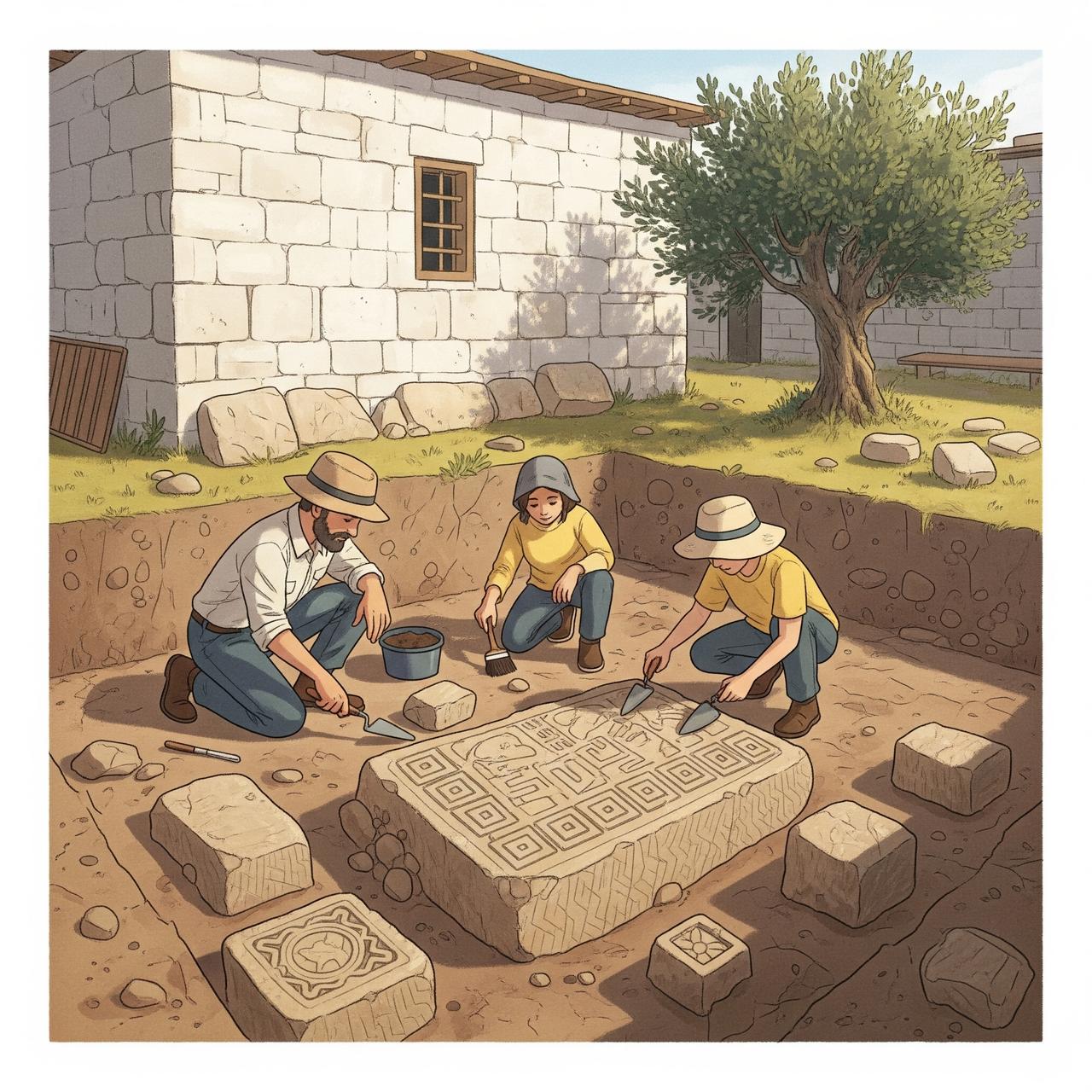
Sayburç is situated in a neighborhood belonging to the Karaköprü district of Şanlıurfa. Its discovery story is quite fascinating! In 2021, archaeologists noticed that stones used in the garden wall of a village house were from a very ancient period. Upon examining these stones, they realized they were fragments of significant structures dating back thousands of years.
Immediately following this discovery, excavation work began. The excavations are being conducted by experts from Istanbul University and the Şanlıurfa Archaeology Museum. Through these efforts, the hidden history beneath the soil is gradually coming to light, offering us new insights into the lives of the people who lived during that era.

(Generated by artificial intelligence.)
The Narrative on the Walls: What Makes Sayburç Special?
What truly sets Sayburç apart is a large, circular structure found within it. Along the edges of this structure, there are bench-like platforms called seki, designed for people to sit on. Figures carved onto these benches appear to tell a story. This may be one of the oldest known narrative depictions ever discovered!
The reliefs depict humans alongside predatory animals. In one scene, a human figure stands between two leopards. In another, a figure faces a bull while holding a snake in its hand. These images likely portray scenes reflecting the relationship between people and animals of that time, perhaps symbolizing courage or spiritual beliefs. Thus, Sayburç reveals not only stones but also the world and stories of those ancient people.
A Journey Through Time
Let us travel back in time! To approximately 11,000 years ago, a period before humans had invented writing or built large cities. This era is known as the Neolithic Age or the Polished Stone Age. During this time, humans began living together in villages, cultivating the land, and domesticating animals for the first time.
The people who lived at Sayburç were part of this era. They were among the first communities transitioning from a hunter-gatherer lifestyle to a settled way of life. They built their homes and special structures from stone and carved their beliefs and stories onto stone walls, just as they did at Sayburç. Sayburç offers us a valuable window into understanding this crucial transitional period.