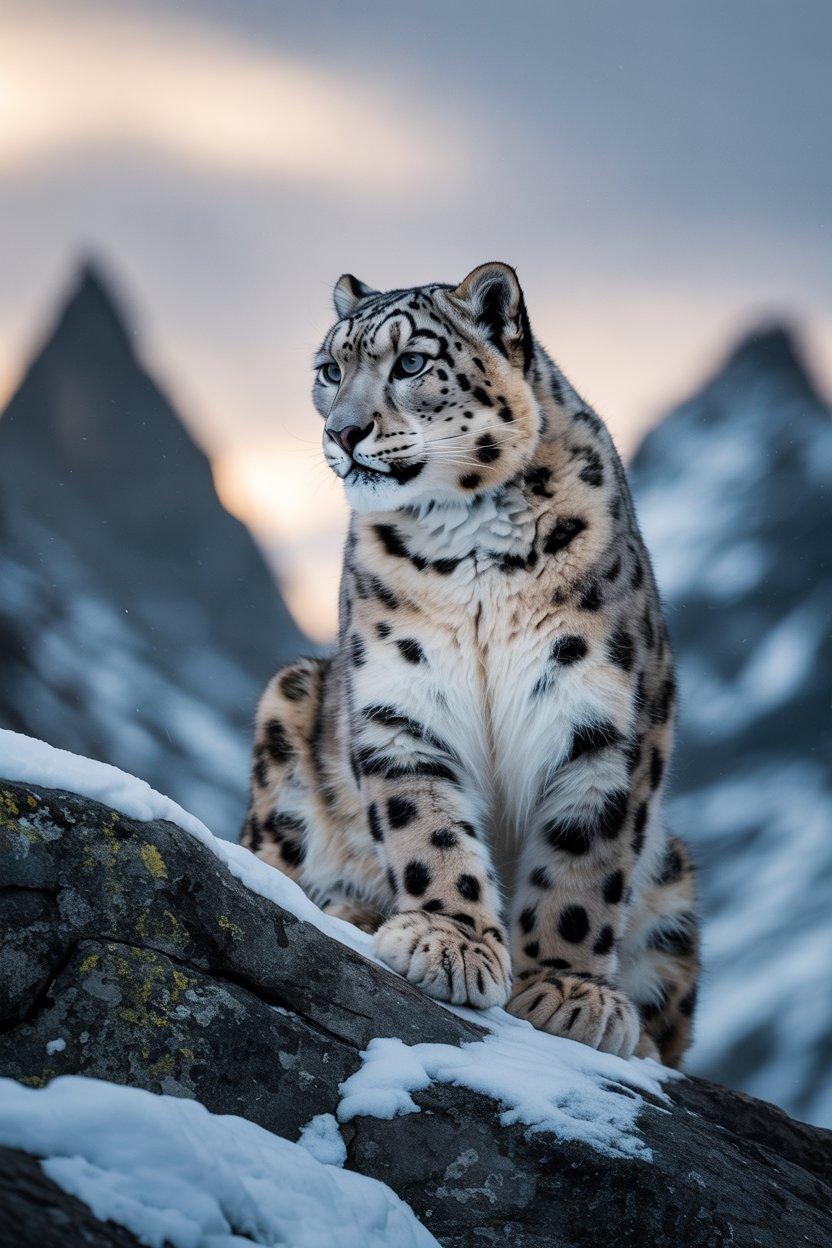




Snow Leopard
The snow leopard (Panthera uncia) belongs to the Felidae family. It is one of the strong and mysterious creatures of the mountains. They are distinguished by their long, powerful tails, which they use to maintain balance while climbing rugged mountain slopes and to stay warm in cold conditions.

Snow Leopard (Unsplash)
What Are Their Colors?
The coat color of snow leopards varies depending on their habitat and the season. Their fur is typically light gray, smoky, or yellowish-beige in tone, with black ringed and spotted patterns. During winter months, their fur becomes thicker and lighter in color, while in summer it is somewhat shorter and darker. The undersides are generally much lighter, approaching white.
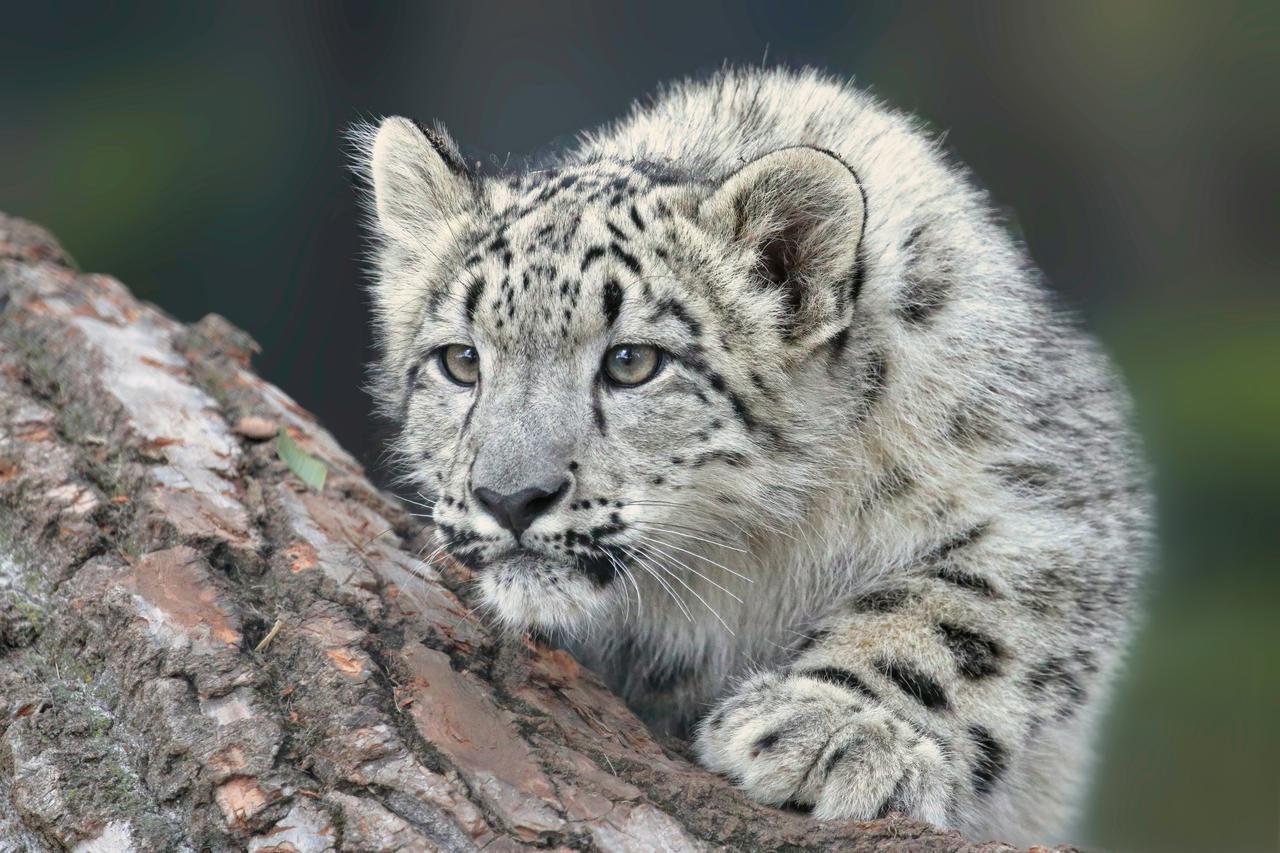
Snow Leopard (Unsplash)
How Large Do They Grow?
The body length of snow leopards, from head to tail, ranges between 90 and 115 cm. Their tails are exceptionally long, reaching up to 80 to 100 cm in length. Their weight typically falls between 22 and 55 kg.
How Long Do They Live?
In the wild, the average lifespan of snow leopards is 10 to 12 years. However, in protected environments such as zoos, they can live up to 20 years. Although they face few predatory threats, difficulties in finding prey, harsh climatic conditions, and human-induced threats are the main factors that shorten their lives.

Snow Leopard (Freepik)
What Do They Eat?
In the wild, snow leopards feed on Himalayan blue sheep, ibex, small deer species, rabbits, and birds found in mountainous regions. They most commonly prey on wild goats and sheep.
Where Do They Live?
Snow leopards typically inhabit high-altitude regions of Central and South Asia. They are most commonly found in the Himalayas, the Pamir Mountains, the Tian Shan, and the Altai Mountains.
They do not occur naturally in Türkiye. They prefer rocky slopes, steep valleys, and snow-covered mountainous areas at elevations between 3,000 and 5,000 meters.

Snow Leopard (Unsplash)
Conservation Status
The snow leopard is classified as “Vulnerable” by the International Union for Conservation of Nature (IUCN), indicating that its wild population has declined and it remains at risk.