


This article was automatically translated from the original Turkish version.
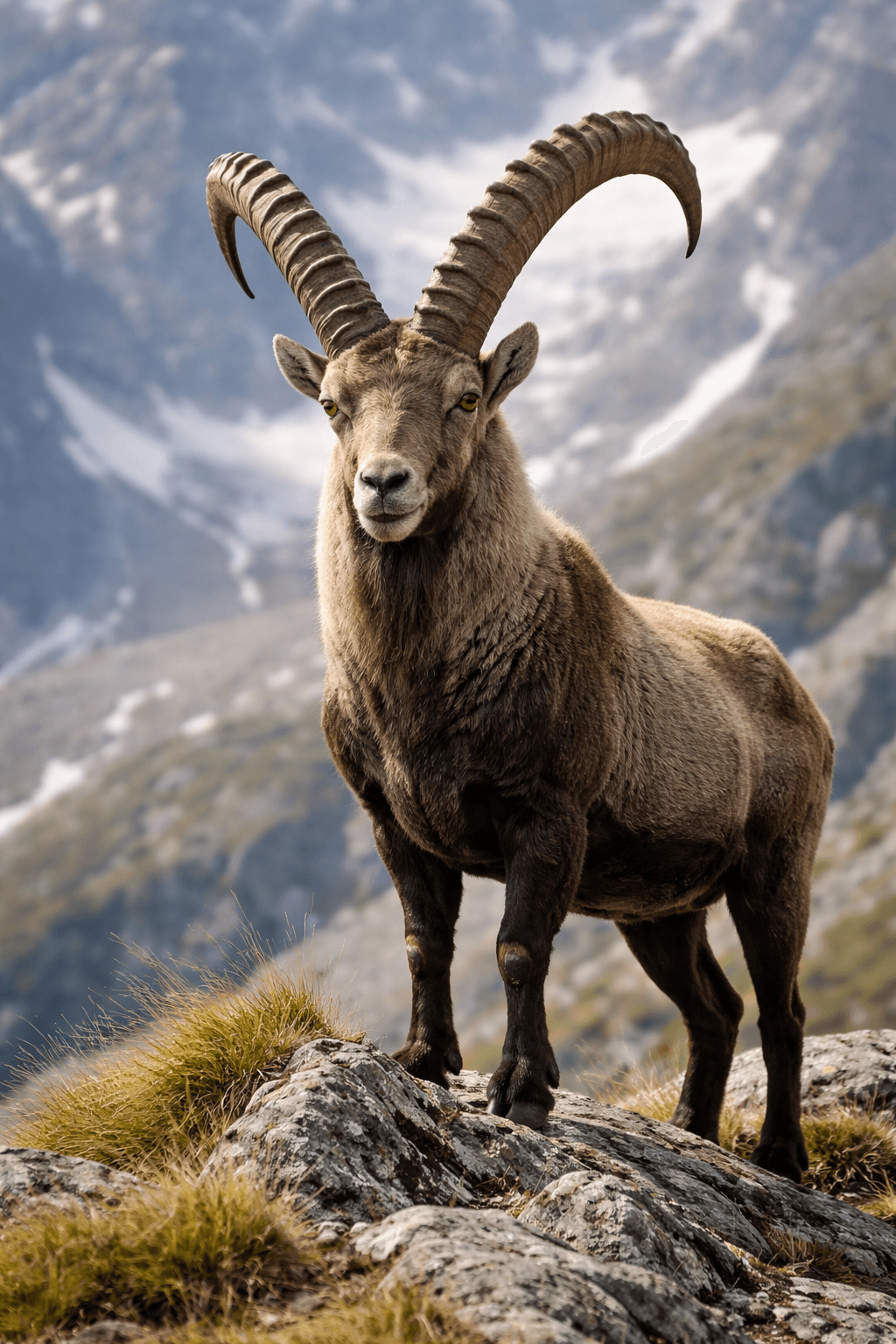
Wild Goat
(Generated by Artificial Intelligence)
Wild Goat (Capra aegagrus)
Living Area | forests caves Sheer cliffs | ||||||||
|---|---|---|---|---|---|---|---|---|---|
Physical Characteristics | Female: 35-60 kg Male: 50-95 kg | ||||||||
Average Lifespan | 15-20 years | ||||||||
Diet Type | Herbivorous | ||||||||
Wild goat (Capra aegagrus) is a mammalian species recognized as the ancestor of the domestic goat (Capra hircus), which holds major economic importance worldwide. It belongs to the family Bovidae. Thanks to its exceptional adaptability, this species has a wide distribution across the globe and in Türkiye it primarily inhabits steep and mountainous terrain in the Aegean, Mediterranean, Southeastern, Eastern, and Black Sea regions. Its main habitats consist of cliffs, precipices, and areas near the tree line, ranging from sea level up to 4,500 meters in elevation.
Wild goats possess a strong and muscular body structure adapted to mountainous environments. Their body length ranges from 120 to 180 cm, with shoulder heights between 70 and 100 cm. Males can weigh between 50 and 95 kg, while females are smaller, weighing 35 to 60 kg.
The most distinctive morphological feature of the species is the males’ thick, backward-curving horns, which can reach up to 100 cm in length; females have shorter and thinner horns. Their thick coat changes color seasonally and is typically shades of brown-gray. Males develop a prominent beard during winter months and a dark stripe running along the spine. Their hind legs are shorter than their forelegs, and their flexible hooves enable exceptional agility on vertical surfaces and steep rocky terrain.

Wild Goat
As a herbivorous species, the wild goat plays a direct role in shaping the vegetation of its ecosystem. Its diet varies according to season and habitat diversity. Field studies, such as those conducted in Çamoluk, Giresun, have identified that wild goats actively consume 16 out of 27 different woody plant species.
Their food sources include dwarf juniper (Juniperus communis), large juniper (J. excelsa), various oak species (Quercus spp.), Scots pine (Pinus sylvestris), hawthorn (Crataegus spp.), rosehip, and willow. They consume the fruits, young branches, leaves, needles, and cone-like structures of these plants throughout the year. During winter months, they retreat to secluded areas where snow cover is minimal to continue feeding.
In Türkiye, wild goats are distributed over a wide area from the Datça Peninsula through the Taurus and Anti-Taurus Mountains to the steep ranges of Eastern Anatolia. Important habitats include the Aladağlar, Tunceli, Hakkâri, Erzurum (Oltu, İspir), Artvin, and Gümüşhane provinces. Recent inventory surveys and conservation efforts have led to population increases.
For example, in Gümüşhane, the population has tripled in recent years and the rate of twin births has risen. Despite legal protection, illegal hunting and competition for food resources with domestic animals remain limiting factors for population growth. Population density becomes particularly noticeable during the mating season, when females form herds and males approach these groups.
International Union for Conservation of Nature and Natural Resources (IUCN) lists the wild goat as "Vulnerable." In Türkiye, it is under strict protection. Inventory and monitoring programs conducted in Wildlife Development Areas and state hunting reserves are critical for the species’ sustainability. Conservation efforts, including the use of camera traps, anti-poaching measures, and supplemental feeding during harsh winters, have contributed to population growth. It is recommended that forestry activities include planting native plant species that support wild goat nutrition to meet their ecological needs.
Arpacık, Ahmet, and Alptuğ Sarı. “Yaban Keçisi (Capra aegagrus Erxleben, 1777)’nin Diyetini Oluşturan Bazı Odunsu Bitki Türleri: Giresun, Çamoluk Örneği.” Ormancılık Araştırma Dergisi 9, no. 2 (2022): 78–86. Accessed March 4, 2026. https://search.trdizin.gov.tr/tr/yayin/detay/1145083/yaban-kecisi-capra-aegagrus-erxleben-1777nin-diyetini-olusturan-bazi-odunsu-bitki-turleri-giresun-camoluk-ornegi
Orman Genel Müdürlüğü. *Oltu Yaban Hayatı Geliştirme Sahası Yaban Keçisi Popülasyonları Çalışmaları.* Ankara: Orman Genel Müdürlüğü Yayınları. Accessed March 4, 2026. https://www.ogm.gov.tr/doguanadolu/yayinlarimiz-sitesi/Yayinlarimiz/Muhtelif%20Yay%C4%B1nlar/Oltu%20YHGS%20Yaban%20Ke%C3%A7isi%20%20Populasyonlar%C4%B1%20%C3%87al%C4%B1%C5%9Fmalar.pdf
Paşalı, Hasan. “Türkiye’de Yaban Keçisi (Capra aegagrus aegagrus).” Accessed March 4, 2026. https://dergipark.org.tr/en/download/article-file/1475068
Tarım TV. "Yaban Keçilerinin Sayısı Artıyor." Video. Accessed March 4, 2026. https://www.tarimtv.gov.tr/tr/video-detay/yaban-kecilerinin-sayisi-artiyor-12207

Wild Goat
(Generated by Artificial Intelligence)
Wild Goat (Capra aegagrus)
Living Area | forests caves Sheer cliffs | ||||||||
|---|---|---|---|---|---|---|---|---|---|
Physical Characteristics | Female: 35-60 kg Male: 50-95 kg | ||||||||
Average Lifespan | 15-20 years | ||||||||
Diet Type | Herbivorous | ||||||||
No Discussion Added Yet
Start discussion for "Wild Goat (Capra aegagrus)" article
Physical and Morphological Characteristics
Feeding Habits and Diet
Geographic Distribution and Population Status
Conservation Status and Management