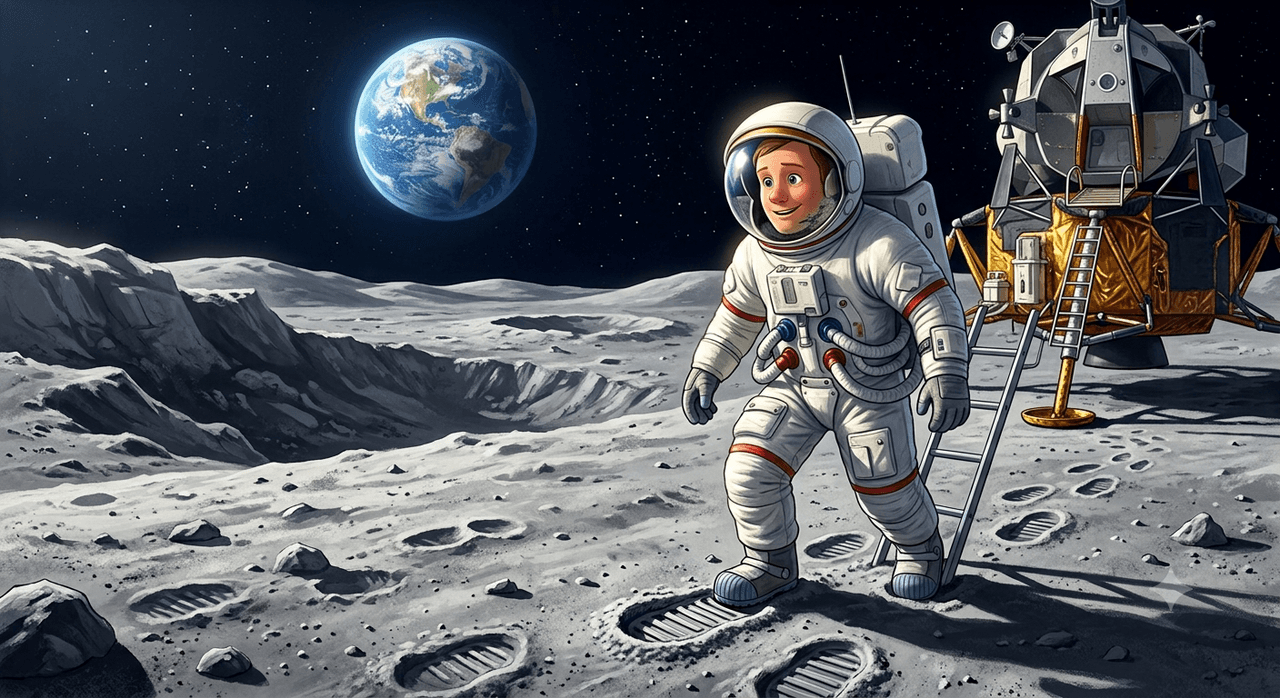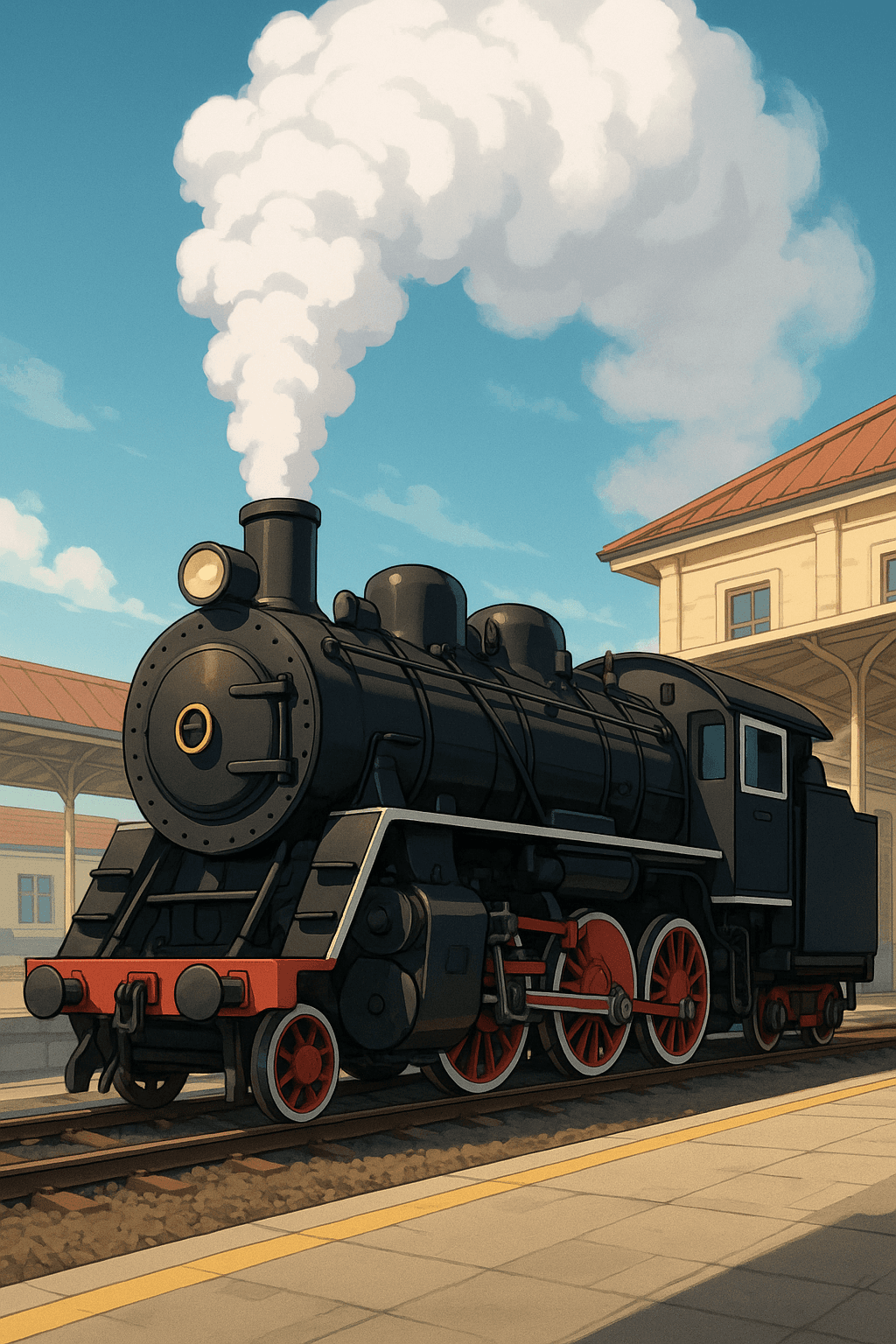




Steam Locomotive
A steam locomotive is a type of train powered by steam. Fuels such as coal are burned in the boiler section to convert water into steam. High-pressure steam drives pistons, which rotate the wheels and propel the train forward. The used steam is expelled through the chimney.

Steam Locomotive (Generated by Artificial Intelligence)
History
The first steam locomotives were built in England in the early 1800s. The locomotive named “Rocket,” developed by George Stephenson, began operation in 1829 on the Liverpool–Manchester line. This system quickly spread to other countries.
Steam locomotives were first used on Turkish soil during the Ottoman period. The first railway line, the Izmir–Aydın line, began construction in 1856. Steam locomotives imported from England operated on this line, which was completed in 1866. Later, additional lines were established in Rumelia and Anatolia.
During the Ottoman period, locomotives were mostly imported from Europe. However, in the 20th century, Türkiye began producing locomotives using its own engineers and workers.
Türkiye’s First Domestic Steam Locomotive: Karakurt
In 1961, the first domestic steam locomotive named Karakurt was produced in Eskişehir.
Features of Karakurt:
- 1,915 horsepower
- Maximum speed of 70 km/h
- Carried freight and passengers for 25 years
This locomotive is regarded as a significant achievement of Turkish engineering and labor.

Türkiye’s First Domestic Steam Locomotive, Karakurt (Generated by Artificial Intelligence)
Principle of Operation of Steam Locomotives
Fuel is burned → Coal burns inside the boiler.
Water turns to steam → Heat converts the water in the boiler into steam.
Steam drives pistons → Steam moves the pistons back and forth.
Wheels rotate → The piston motion is transferred to the wheels, propelling the train forward.

Principle of Operation of Steam Locomotives (Generated by Artificial Intelligence)
Steam locomotives greatly expanded railway transportation worldwide. Trade accelerated, cities were connected, and military logistics became easier. After the emergence of electric and diesel trains, their use declined, but they played a crucial role in the development of railways throughout history.