This article was automatically translated from the original Turkish version.
First Production | 1912 – Sulzer, Switzerland | ||||||||
|---|---|---|---|---|---|---|---|---|---|
First Use in Türkiye | 1958 – TCDD | ||||||||
Local Production | 1971 – DE 24000, TÜLOMSAŞ | ||||||||
System | Diesel-electric or diesel-hydraulic | ||||||||
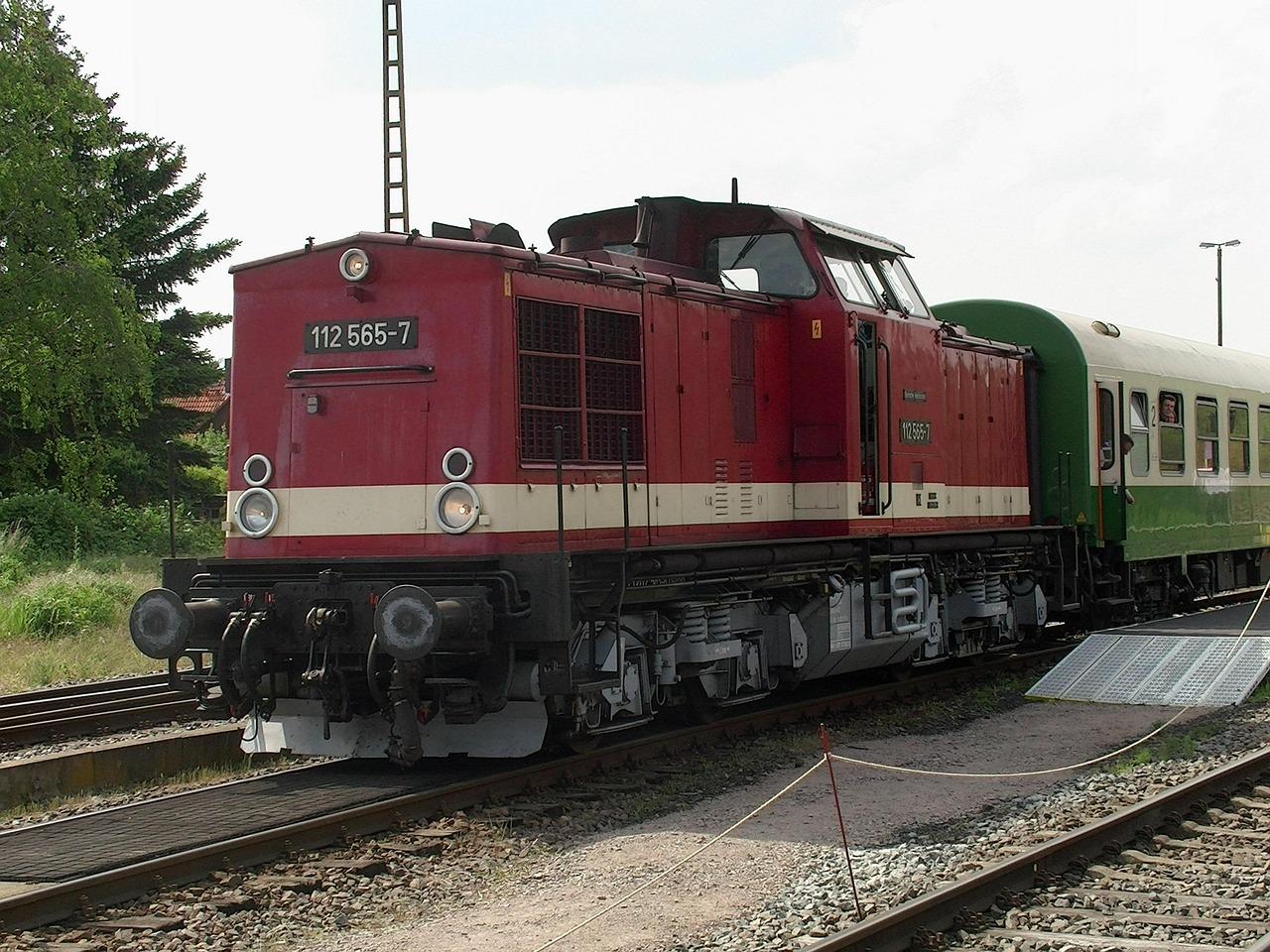
A diesel locomotive is a railway vehicle that transmits the power generated by an internal combustion diesel engine to the wheels to propel trains. Power transmission is typically achieved through diesel-electric or diesel-hydraulic systems. Emerging in the 20th century to replace steam locomotives, these locomotives became one of the fundamental elements of modern railway transport due to their high efficiency, long range and ability to operate without electrification.
Following the era dominated by steam-powered locomotives in railway transport, diesel-powered locomotives began to appear from the early 20th century. The first known diesel locomotive was produced in 1912 by the Swiss company Sulzer for the Prussian State Railways. With this development, Sulzer assumed a pioneering role in the design and production of diesel locomotive engines, closely following innovations in compression-ignition (diesel) engine technology and maintaining a high standard of reliability. By the mid-20th century, diesel locomotives began to increasingly replace steam engines. The United Kingdom and other European countries rapidly entered a process of “dieselisation,” introducing diesel locomotives on main lines. British Railways added hundreds of diesel locomotives equipped with Sulzer-designed engines to its fleet during this period.
After World War II, the global use of diesel locomotives accelerated. Countries such as the United States, Germany, France and the Soviet Union established diesel-powered locomotive fleets to modernise their railways. Advances in diesel engine technology continuously increased the power and efficiency of locomotives. By the 1960s, locomotives could be produced with inline six, eight or twelve-cylinder diesel engines, delivering power ranging from 1,160 hp to 2,750 hp. These developments enabled railways to haul heavier loads and longer trains while achieving higher speeds.
In Türkiye, railway operations during the Ottoman Empire were exclusively conducted using steam locomotives. Although railways arrived early in Ottoman territories, diesel locomotive technology was not adopted. During the early years of the Republic, Turkish State Railways (TCDD) continued operating with steam locomotives for a prolonged period, with no significant change in the locomotive fleet until the 1950s. However, following global trends after World War II, Türkiye began shifting toward diesel locomotives. In the 1950s, Türkiye’s railway policy underwent a major turning point: under the Marshall Plan, economic aid from the United States led to railway investments being deprioritised in favour of promoting road transport. During this period, the United States advised Türkiye not to establish a locomotive manufacturing facility, while simultaneously supporting the transition to diesel locomotives based on a petroleum-fuelled operational model. As a result, Türkiye began incorporating its first mainline diesel locomotives into its fleet by the end of the 1950s.
During the early Republic, railways continued to operate using steam locomotives inherited from the Ottoman period. The political climate and international aid after 1950 laid the groundwork for the transition to the diesel era in the railway sector.
During the Democrat Party government (1950–1960), while road transport investments gained momentum and railways were sidelined, the first diesel locomotives were introduced into the fleet. The year 1958 marked a turning point for Turkish railways. The first of 90 diesel locomotives ordered from the United States arrived in Türkiye in February 1958. It was announced that the introduction of these locomotives would reduce travel time between Ankara and Istanbul by 3.5 hours and that steam locomotives would retire from service, leaving behind their soot, smoke and delays.
During the 1960s, as the import and use of diesel locomotives increased, a new era in Turkish railway operations was fully established. However, this transition was not without challenges. In particular, in 1963, a parliamentary investigation was launched into the procurement tender for 33 diesel locomotives. Allegations of irregularities emerged during the selection process favouring General Motors (GM) locomotives. It was claimed that GM locomotives used two-stroke diesel engines, while competing firms offered four-stroke diesel engines with locomotives 200 hp more powerful. Furthermore, criticism arose over the higher unit price of GM locomotives and the projected annual additional fuel cost of 3 million lira. These debates revealed that the integration of diesel locomotives into Türkiye’s railway policy involved not only technical and economic considerations but also political struggles.

A TCDD DE24000 Locomotive (ODTÜ)
Although diesel locomotive use in Türkiye began with imported machines, domestic production capabilities were soon developed in this field. The most important institution in this regard was TÜLOMSAŞ (Türkiye Lokomotif ve Motor Sanayii A.Ş.). Founded in 1894 in Eskişehir as a small maintenance workshop, this facility grew during the Republic era into a major locomotive production centre. The Eskişehir Cer Workshop produced Türkiye’s first domestically manufactured locomotive in 1961.
The major step in domestic production focused on diesel locomotive technology. In 1968, production began in Eskişehir under licence from the German company MAK of diesel-hydraulic shunting locomotives (DH 3600 series) with 360 hp. In 1971, a licensing agreement was signed with the French company Traction Export, initiating production of the DE 24000 type diesel-electric mainline locomotive with 2,400 hp. Between 1971 and 1985, a total of 431 DE 24000 locomotives were produced for TCDD and added to the fleet.
In 1986, the factory in Eskişehir adopted the name TÜLOMSAŞ. In 1987, under a licensing agreement with GM-EMD, production of DE 22000 type locomotives with 2,200 hp began. In 1994, a completely domestically designed DH 7000 type diesel-hydraulic shunting locomotive was produced. In 2003, 89 DE 33000 type diesel-electric locomotives were manufactured under GM licence. In the 2010s, TÜLOMSAŞ merged under the TÜRASAŞ umbrella to become Türkiye’s modern locomotive production hub.

A TCDD DE24000 Locomotive (ODTÜ)
Diesel locomotives convert the mechanical energy produced by an internal combustion diesel engine into tractive effort. The most common system is the diesel-electric traction system. In this system, the diesel engine drives a generator or alternator to produce electricity, which is then transmitted to traction motors. Early-generation locomotives used DC traction motors; today, to improve efficiency, asynchronous (AC) traction motors are preferred.
In modern diesel-electric locomotives, the alternating current generated by the alternator driven by the diesel engine is first rectified to direct current and then converted back to alternating current using inverters before being supplied to the traction motors. This system provides high efficiency and precise speed control. While the DE 24000 locomotives produced in Türkiye during the 1970s used DC systems, the new models developed by TÜRASAŞ today feature AC traction technology.
In diesel-hydraulic systems, power is transmitted through torque converters and gearboxes. Models produced in Türkiye such as the DH 7000 and DH 9500 use this system.
The development of diesel locomotives brought advantages in speed, reliability and cost efficiency to railway transport. Diesel locomotives require less maintenance than steam locomotives and can be brought into service more quickly, significantly improving railway efficiency in Türkiye.
With the introduction of diesel locomotives in 1958, travel time between Ankara and Istanbul was reduced by 3.5 hours. Diesel locomotives have a significantly lower environmental impact than steam locomotives; however, compared to electric systems, they still face environmental disadvantages due to their continued reliance on fossil fuels.
In the 21st century, diesel locomotives are being replaced by battery-electric and hydrogen fuel cell trains. The Coradia iLint hydrogen train, introduced in Germany in 2018, was the world’s first such example. These trains emit only water vapour. In Europe, electrification rates have reached 60%, and electric line usage accounts for 80% of railway traffic.
The United Kingdom aims to eliminate all diesel trains by 2040, while India has electrified 98% of its railway network. In Türkiye, TÜRASAŞ is developing domestic electric locomotives and alternative-fuel train projects. Diesel locomotives have shaped the history of railways and laid the foundation for modern transport, yet they now stand as an engineering legacy preparing to be replaced by zero-emission technologies.
"Alternative Fuels Observatory – Rail Transport Mode." European Commission Alternative Fuels Observatory. Accessed October 25, 2025. https://alternative-fuels-observatory.ec.europa.eu/transport-mode/rail
Deveci, Halil. “Dizel Elektrikli Lokomotiflerde Cer Sistemlerinin Gelişimi Üzerine Bir İnceleme.” *Demiryolu Mühendisliği Dergisi* 11 (2020): 52–59. Accessed October 25, 2025. https://dergipark.org.tr/tr/pub/demiryolu/issue/50417/652297
TÜRASAŞ (Türkiye Raylı Sistem Araçları Sanayii A.Ş.). "Eskişehir Bölge Müdürlüğü Tarihçesi." Accessed October 25, 2025. https://www.turasas.gov.tr/tarihcedetay/eskisehir-bolge-mudurlugu-tarihcesi
Tönük, Ergin. “DE 24 000 TÜLOMSAŞ (ELMS).” Middle East Technical University, Mechanical Engineering Department. Accessed October 25, 2025. https://users.metu.edu.tr/tonuk/E40003/24000/
Türkiye Bilimler Akademisi (TÜBA). "Elektrikli Lokomotifin Üretimi ve İlk Millî Dizel Elektrikli Manevra Lokomotifleri." *Bilim ve Düşün Dergisi*, 2024. Accessed October 25, 2025. https://tuba.gov.tr/files/yayinlar/bilim-ve-dusun/TUBA-978-625-8352-16-0_ch28.pdf
“A Diesel Traction Jubilee: Sulzer Diesel Engines for Rail Traction.” *Schweizerische Bauzeitung* 80, no. 22 (1962): 852–858. Accessed October 25, 2025. https://www.e-periodica.ch/cntmng?pid=swo-001%3A1962%3A0%3A%3A852
“Coradia iLint Hydrogen Train Operation on Cuxhaven–Buxtehude Line.” European Committee of the Regions News. Accessed October 25, 2025. https://cor.europa.eu/en/news/stories/operation-alstom-coradia-ilint-hydrogen-train-cuxhaven-buxtehude-line
“Electrification of U.S. Railways: Pie in the Sky or Realistic Goal?” Environmental and Energy Study Institute (EESI). Accessed October 25, 2025. https://www.eesi.org/articles/view/electrification-of-u.s.-railways-pie-in-the-sky-or-realistic-goal
“Fası l-86 Nakil Vasıtaları.” *Orgtr.org Resmî Mevzuat Platformu*. Accessed October 25, 2025. https://orgtr.org/fasil-86-nakil-vasitalari
“Indian Railways Achieves 98% Electrification.” *Press Information Bureau of India*. Accessed October 25, 2025. https://www.pib.gov.in/PressReleaseIframePage.aspx?PRID=2115511
“Kent ve Demiryolu: Dizel Lokomotif İşletmeciliğine Geçiş Sürecinde Yaşananlar.” *Kent ve Demiryolu Dergisi*. Accessed October 25, 2025. https://kentvedemiryolu.com/dizel-lokomotif-isletmeciligine-gecis-surecinde-yasananlar
“The Future of Rail.” International Energy Agency (IEA). Paris: IEA Publications, 2019. Accessed October 25, 2025. https://iea.blob.core.windows.net/assets/fb7dc9e4-d5ff-4a22-ac07-ef3ca73ac680/The_Future_of_Rail.pdf
“Trains Fit for the Future? Rail Decarbonisation by 2040.” *UK Parliament Transport Committee Report* (2021). Accessed October 25, 2025. https://publications.parliament.uk/pa/cm5801/cmselect/cmtrans/876/87603.htm


First Production | 1912 – Sulzer, Switzerland | ||||||||
|---|---|---|---|---|---|---|---|---|---|
First Use in Türkiye | 1958 – TCDD | ||||||||
Local Production | 1971 – DE 24000, TÜLOMSAŞ | ||||||||
System | Diesel-electric or diesel-hydraulic | ||||||||
History
Developments During the Republic Era
Diesel Locomotive Use and Domestic Production in Türkiye
Technical Features and Operating Principles
Engineering Advancement and Impact on Modern Railways
Global Transformation and Future Trends