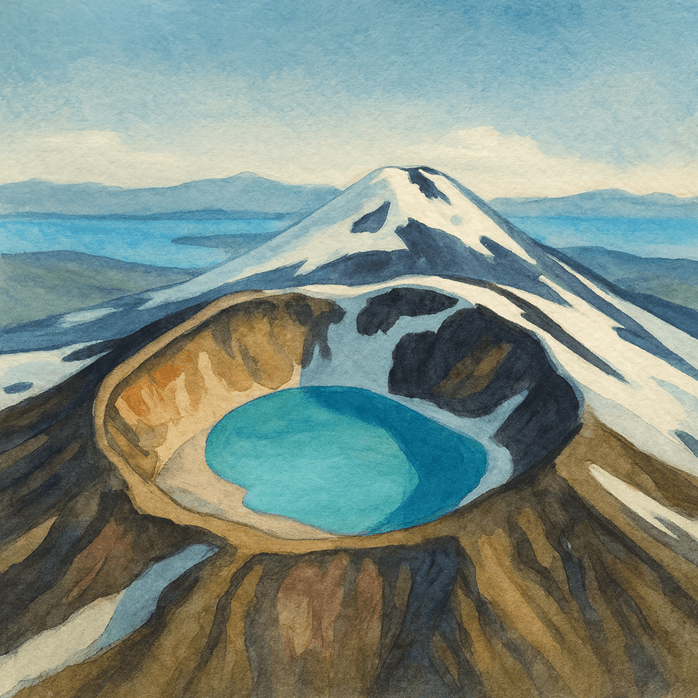




Süphan Mountain
Mount Süphan, rising between Adilcevaz, Erciş and Patnos to the north of Lake Van, is the third highest mountain in Türkiye. With an elevation of 4058 metres, it ranks second among volcanic mountains after Mount Ağrı. This mountain is an important natural area both for its landscape and the biodiversity it supports, and it is also one of the premier destinations for mountaineering and outdoor sports.
(Generated by Artificial Intelligence)
Where Is It Located?
Mount Süphan lies at the borders of the provinces of Bitlis, Ağrı and Muş. Its summit is known as Sandık Tepe. The surrounding area features lava flows and volcanic plateaus. These fertile soils are used for agriculture and livestock farming. Water sources originating from the mountain sustain districts such as Adilcevaz, Ahlat, Malazgirt and Patnos.
How Was It Formed?
Mount Süphan is an extinct volcanic mountain. Scientists believe its last eruption occurred around 8000 BCE. At the summit, remnants of lava domes and glacial lakes remain from past eruptions. One of these lakes is particularly noted for its depth.
Natural Life and Plant Species
The mountain is exceptionally rich in endemic plant species—those found nowhere else. Some of these include Isatis undulata, Marrubium vanense, Paracaryum leptophyllum, Salvia odontochlamys and Verbascum coronopifolium. Additionally, the Süphan lizard is found only in this region. Predatory birds such as the bearded vulture also nest here.
(Generated by Artificial Intelligence)
Sports and Activities
Climbing Mount Süphan is most commonly undertaken during the summer months. The optimal climbing period runs from late June to mid-September. Those interested in winter sports can visit from early March to late December. Climbs typically begin from the east, via Aydınlar Village. The round-trip ascent and descent take 8 to 10 hours. Along the route, climbers encounter water sources, craters and glacial lakes. From the summit, views of Lake Van can be observed.
Threats It Faces
Overgrazing, expansion of agricultural land, construction of radio transmission roads, and the removal of certain plant species are damaging the mountain’s natural structure. For this reason, the area is protected as a wildlife development zone.