
KURE Kids Header Line
badge icon

This content was originally written in Turkish for children and is automatically translated into English using artificial intelligence.

article-image

What Is Energy Flow?

Last Updated: 06.01.2026

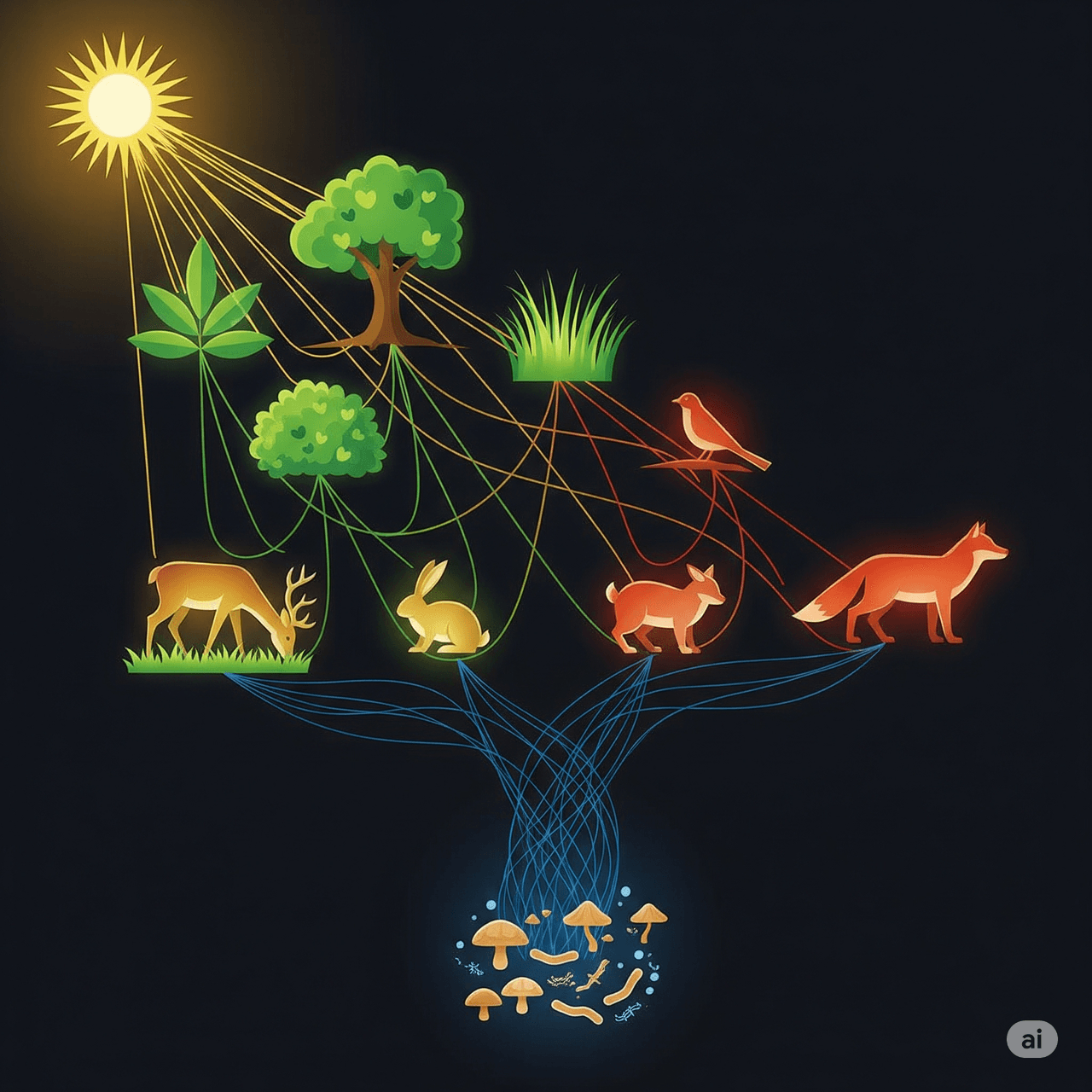
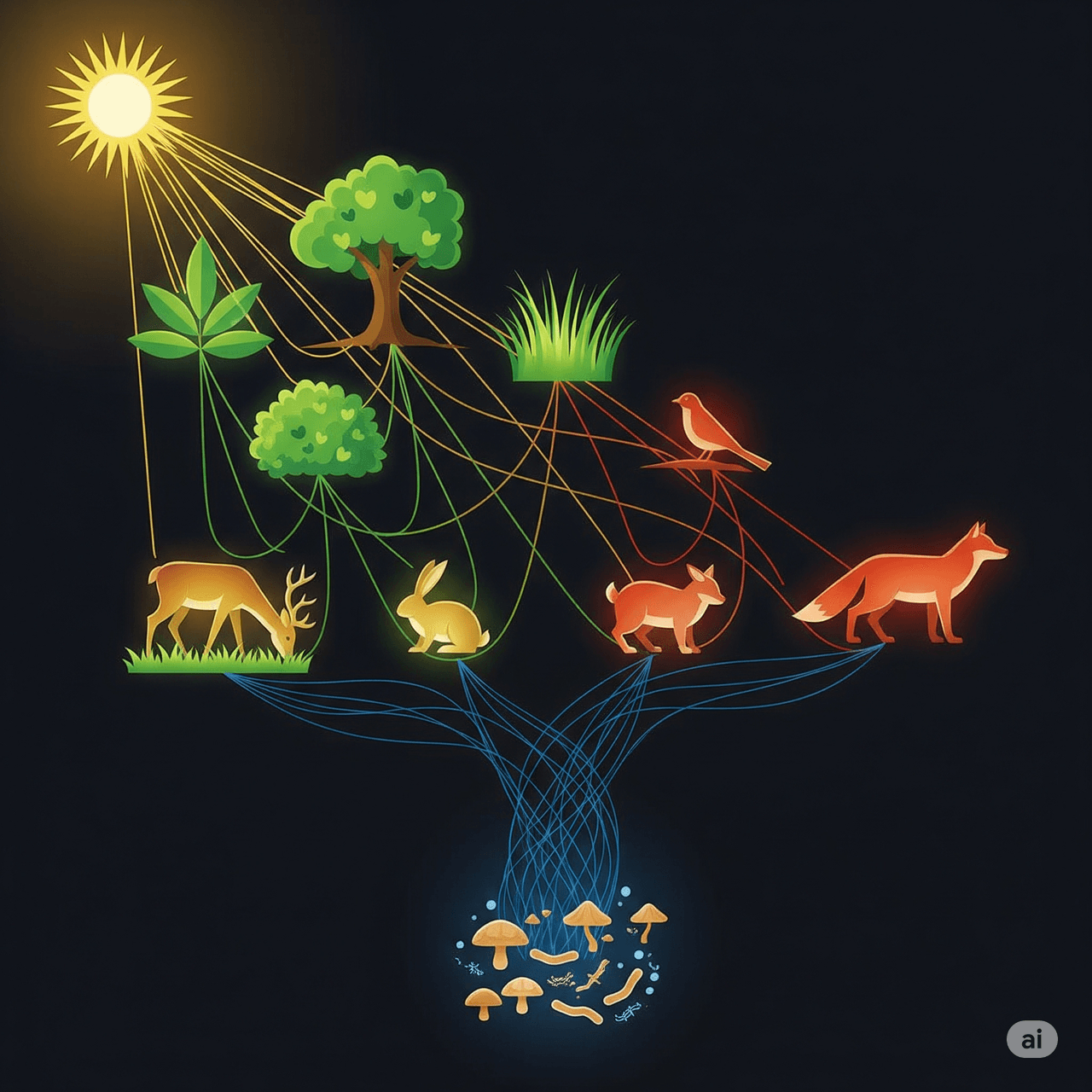
Energy flow is the journey of energy from one living organism to another in nature. This journey begins with sunlight and continues within a system that affects all living things. Thanks to energy flow, plants grow, animals feed, and nature remains alive.


How Does the Energy Journey Begin?

The first stop of energy is the sun. Plants use sunlight to produce their own food. Plants that carry out this process are called producers. Without producers, the energy journey cannot begin.


Who Receives Energy and Who Gives It?

Animals that feed on plants are called herbivores. Animals that eat herbivores are called carnivores. In this sequence, energy passes from one organism to another. This arrangement is known as a food chain.


Who Keeps the Energy Flow Going?

Animals that eat plants, namely herbivores, carry energy to the second stage. Then carnivores that consume these animals come into play. Each organism is a link in the energy chain. The chain continues in this manner.


Does Energy Always Follow the Same Path?

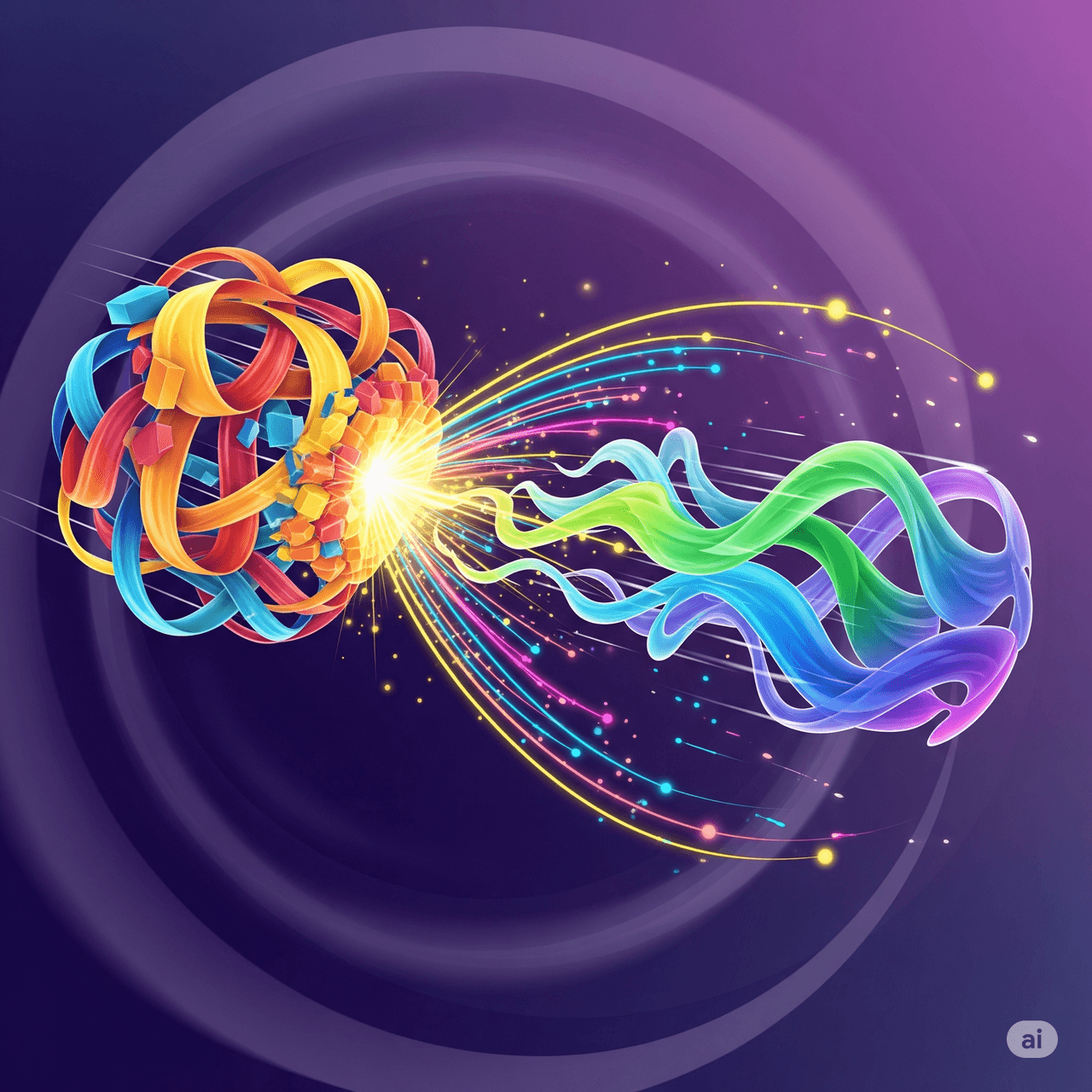
No! Organisms in nature are connected in many different ways. Multiple food chains interconnect to form a food web. Energy circulates within these networks.


Is Any Energy Lost?

As energy passes between organisms, some of it is lost as heat. Energy is not destroyed, but a portion is released into the environment at each stage. Therefore, energy flow in nature is unidirectional and decreases continuously.


What Is the Role of Decomposers?

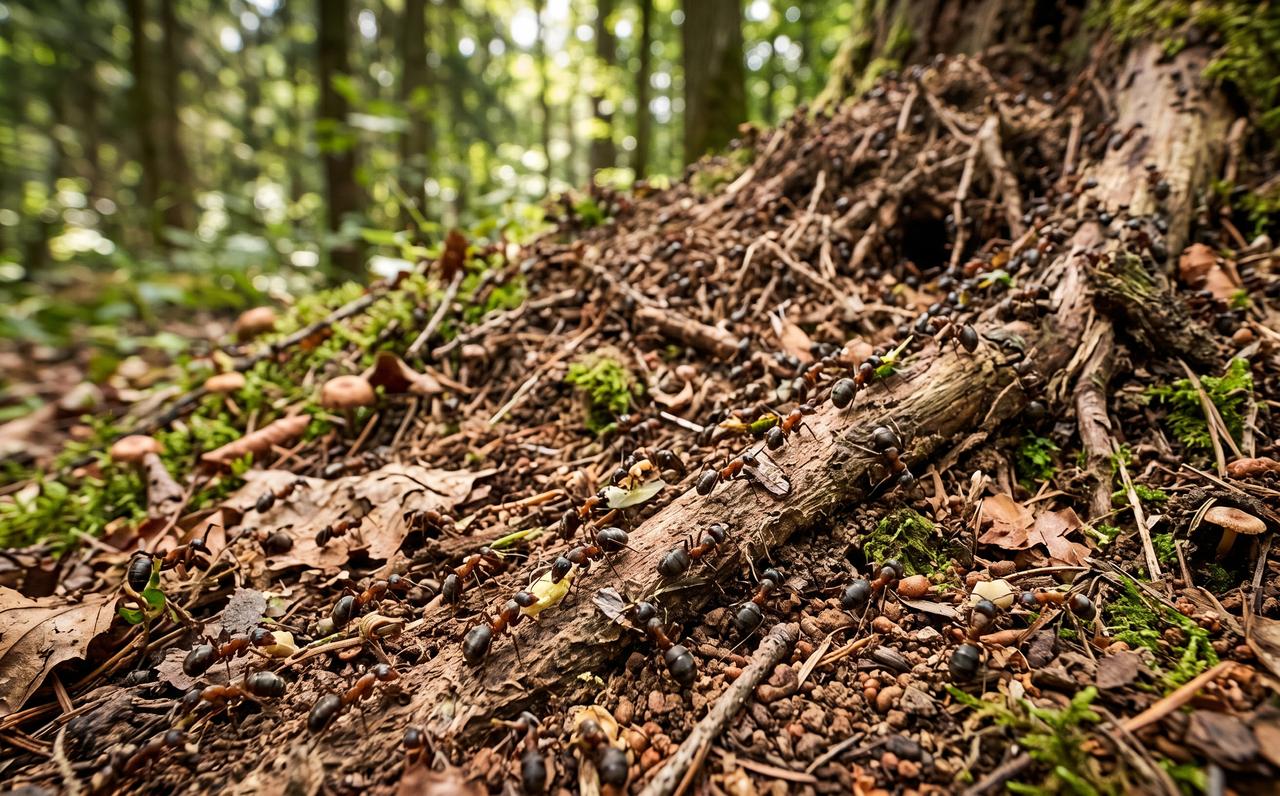
When plants and animals die, decomposers become active. Fungi, bacteria, and certain insects break down these organisms and return nutrients to the soil. In this way, the energy cycle is completed and nature regenerates food.


Does Soil Contribute to Energy?

Yes! Small organisms in the soil break down dead plant and animal matter, enriching the soil with nutrients. These organisms are called decomposers. Thanks to them, energy and nutrients return to the ecosystem.


Is Energy Used the Same Way by All Organisms?

No. Each organism uses the majority of the energy it receives for movement, maintaining body heat, and sustaining life. Only a small portion is transferred to the next organism. As a result, energy decreases as the chain extends.


Energy Balance in Nature

Every organism in nature contributes to energy balance. Plants, animals, humans, and microorganisms are all parts of this system. If this balance is disrupted, nature suffers damage.


Why Is Energy Flow Important?

Understanding energy flow is essential for protecting nature. It is also crucial for using sustainable energy sources responsibly and for leaving a healthy planet to future generations.

Don't Forget to Look at These!
Natural Sciences
cat img
History and Culture
cat img
Art and Literature
cat img
image
Most Read
Pasifik Okyanus
arrow
image
Last Added
Fener Balığı
arrow
ilham-notu-bg
INSPIRATION NOTE FOR CURIOUS KIDS!

There is a glowing light within all living beings, and this light moves in a magical dance at the heart of nature.

Who Wrote?
Kids Writing
Authorİbrahim FilizJanuary 6, 2026
bottom-bg-effect-bottom
bottom-bg-effect-top

Energy flow describes the transfer of energy from the Sun through plants to animals and decomposers. Plants produce food, which is consumed by herbivores and carnivores. Energy decreases at each step and is converted into heat. Decomposers break down dead organisms and return nutrients to the soil. Energy flow is essential for the continuation of life in nature.

Bibliographies


Akpınar, Adem, Murat İhsan Kömürcü, Murat Kankal, İsmail Hakkı Özölçer, and Kamil Kaygusuz. "Energy Situation and Renewables in Turkey and Environmental Effects of Energy Use." *Renewable and Sustainable*

Aydın, Ömer Said. “Enerji Akışı.” KÜRE Ansiklopedi, July 23, 2025. Accessed August 11, 2025. https://kureansiklopedi.com/tr/detay/enerji-akisi-70567.

Cebrian, Just. "Energy Flows in Ecosystems." *Science* 349 (2015): 1053–1054. Accessed August 12, 2025. https://doi.org/10.1126/science.aad0684.

Energy Reviews 12, no. 8 (2008): 2013–2039. https://doi.org/10.1016/j.rser.2007.04.011.

Morris, Sherri J., and Christopher B. Blackwood. "The Ecology of the Soil Biota and Their Function." In *Soil Microbiology, Ecology and Biochemistry*, edited by Eldor A. Paul, 273–309. 4th ed. Academic Press, 2015. https://doi.org/10.1016/B978-0-12-415955-6.00010-4.

National Geographic Education. "Energy Flow Through Ecosystem." Accessed August 12, 2025. https://education.nationalgeographic.org/resource/resource-library-energy-flow-through-ecosystem.

National Geographic Education. "Energy Flow Through Ecosystem." Accessed August 12, 2025. https://education.nationalgeographic.org/resource/resource-library-energy-flow-through-ecosystem.

National Geographic Education. "Food Chain." Accessed August 12, 2025. https://education.nationalgeographic.org/resource/food-chain/.

Odum, Eugene P. "Energy Flow in Ecosystems: A Historical Review." *American Zoologist* 8, no. 1 (February 1968): 11–18. Oxford University Press. Accessed August 12, 2025. https://www.jstor.org/stable/3881528.

Zhang, J., and L. Guo. "Scaling Behaviors of Weighted Food Webs as Energy Transportation Networks." *ArXiv*, 2010. https://doi.org/10.1016/j.jtbi.2010.03.024.

ilham-notu-bg
ilham-notu-bg
ilham-notu-bg
HEYY!
Did You Know?
These?
Lamb
Lamb
Ask to Küre