


What is Horon?
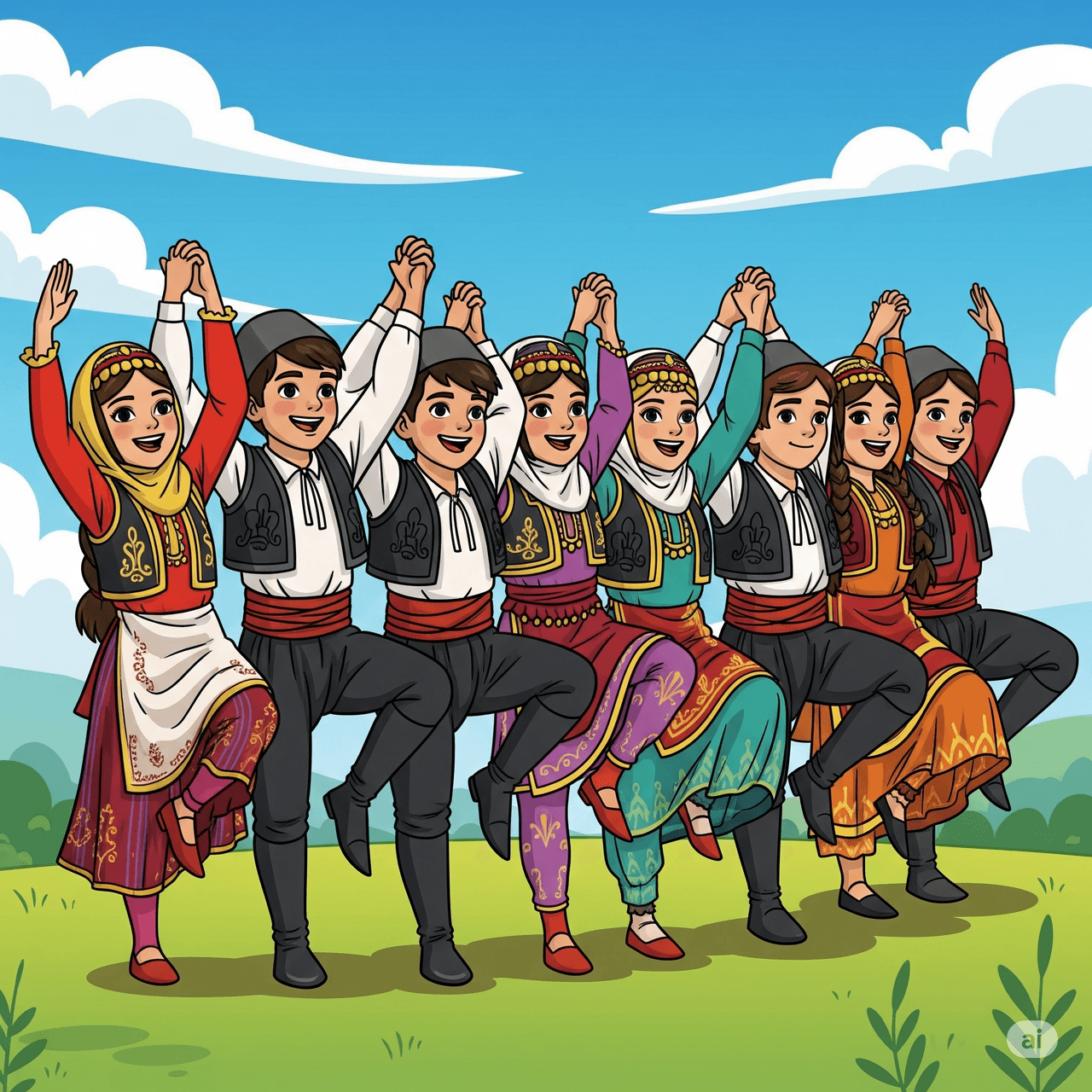
Horon is a highly lively and energetic folk dance unique to the Black Sea Region. In this dance, participants hold hands and move together in rhythmic patterns.
While dancing horon, everyone stamps their feet simultaneously in time with the music, dancing with great enthusiasm. This dance is both entertaining and a tradition.

Generated by artificial intelligence.
The Dance from the Black Sea: The History of Horon
Horon is an ancient dance shaped by the mountains, sea, and people of the Black Sea. It has been performed for centuries in provinces such as Trabzon, Rize, and Artvin.
According to research, horon was also used to express community solidarity. Thus, this dance is not merely for entertainment but also a symbol of unity.
Step by Step Rhythm: How Is Horon Danced?
Horon is typically performed in a line or circle. Dancers move together, either shoulder to shoulder or holding hands.
Feet strike the ground rapidly, knees bend, and the upper body leans slightly forward. The movements are fast and must be performed in unison by all participants. Therefore, dancing horon requires both concentration and teamwork.
The Heart of the Music: Instruments of Horon
The kemençe is the most commonly used instrument in horon music. The davul, zurna, and tulum also accompany the dance. The music is fast and vibrant.
Dancers must match their movements to the tempo of the music. Since the rhythm never stops, performers must remain energetic and move with precision.

Generated by artificial intelligence.
The Place of Celebration: Where Is Horon Danced?
Horon is frequently performed during holidays, weddings, and celebrations throughout the Black Sea Region. People of all ages gather to dance together.
Today, horon is not only danced in villages but also on urban stages, at folk dance competitions, and during festivals. This demonstrates how deeply cherished the dance is.
Moving Together: The Meaning of Horon
Horon is more than just a dance. It is also a symbol of friendship, mutual aid, and solidarity. It is essential that everyone synchronizes with the same rhythm.
In this dance, the group takes precedence over the individual. This teaches children how to move together, share, and be patient.
Different Horons: Each Region Has Its Own Dance
There are many variations of horon. For example, types such as Deli Horon, Sıksara, and Atabarı are danced in different areas.
Each horon has its own rhythm, steps, and speed, reflecting the rich cultural heritage of the Black Sea people. Each variation carries the spirit of its local region.