



What Is Oxygen?
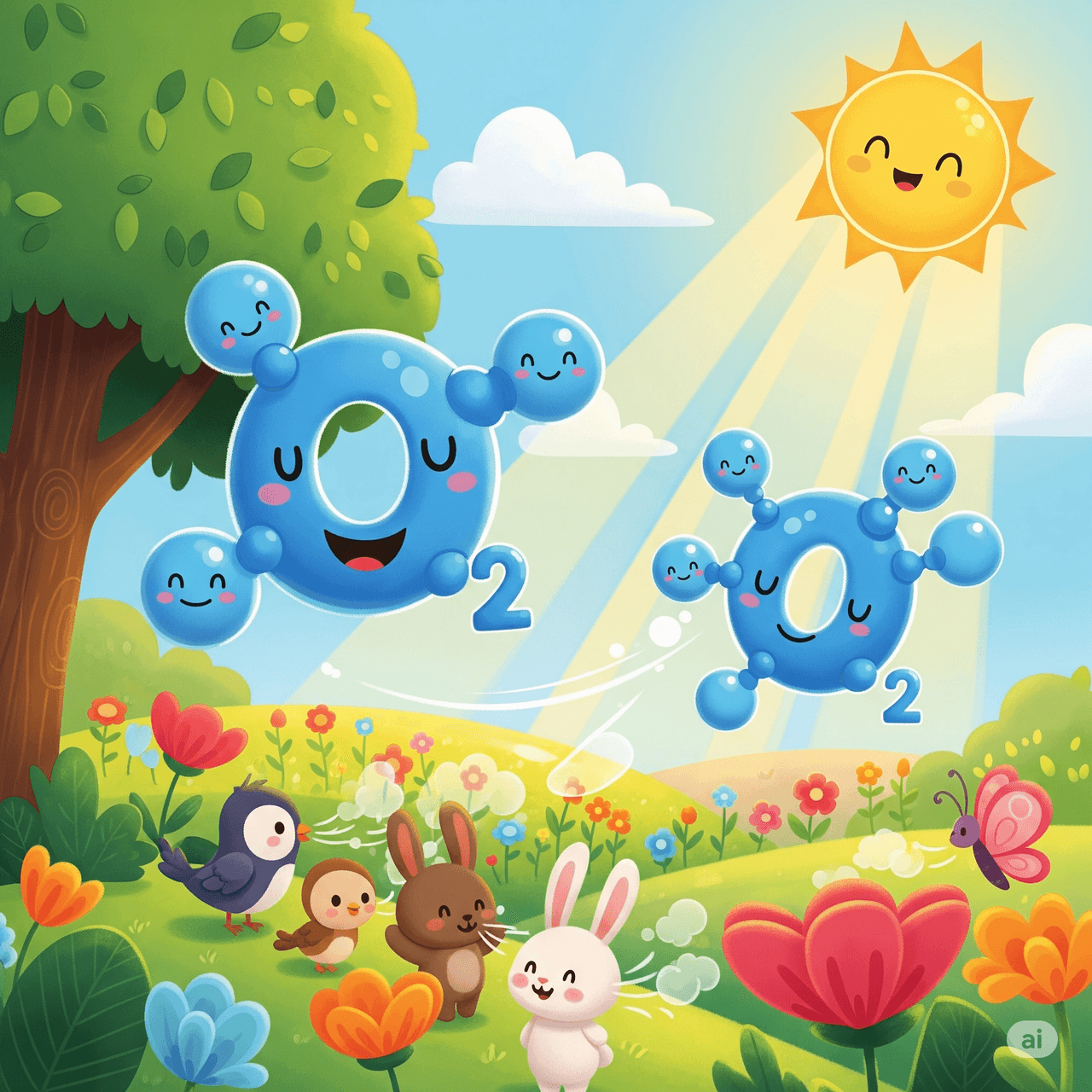
Oxygen is a gas found in the atmosphere and is essential for life. It is colorless, odorless, and tasteless. In chemistry, it is represented by the symbol "O" and has an atomic number of 8. In nature, it is most commonly found as O₂ (a diatomic molecule).

(Generated by Artificial Intelligence.)
Why Is Oxygen Important?
Humans, animals, and some microorganisms survive by breathing oxygen. Oxygen plays a key role in the production of energy within our cells. During respiration, oxygen is consumed and carbon dioxide is expelled.
How Do Plants Produce Oxygen?
During photosynthesis, plants use sunlight to absorb carbon dioxide and produce oxygen. This oxygen is released into the atmosphere and supports the survival of living organisms.
Where Is Oxygen Used?
Oxygen is used not only for respiration but also in hospitals for medical treatment, in industry for cutting and welding, and in rocket propellants.
Is There Oxygen in Water?
Yes! Oxygen is dissolved in water. This allows fish and other aquatic organisms to obtain the oxygen they need to survive.

(Generated by Artificial Intelligence.)
Properties of Oxygen
Oxygen is a colorless and odorless element that exists in nature as a gas. It is represented by the symbol "O" in the periodic table and has an atomic number of 8. In nature, it is most commonly found in the diatomic molecular form O₂. The liquid state of oxygen is achieved at very low temperatures, around -183 °C. It makes up approximately 21% of the atmosphere, a proportion that is crucial for the respiration of living organisms.