


 Recently Added:
This article was automatically translated from the original Turkish version.
The Seventy-Eighth Session of the World Health Assembly, the highest decision-making body of the World Health Organization, is a diplomatic meeting on global health. It is being held in Geneva, Switzerland, from 19 to 27 May 2025.
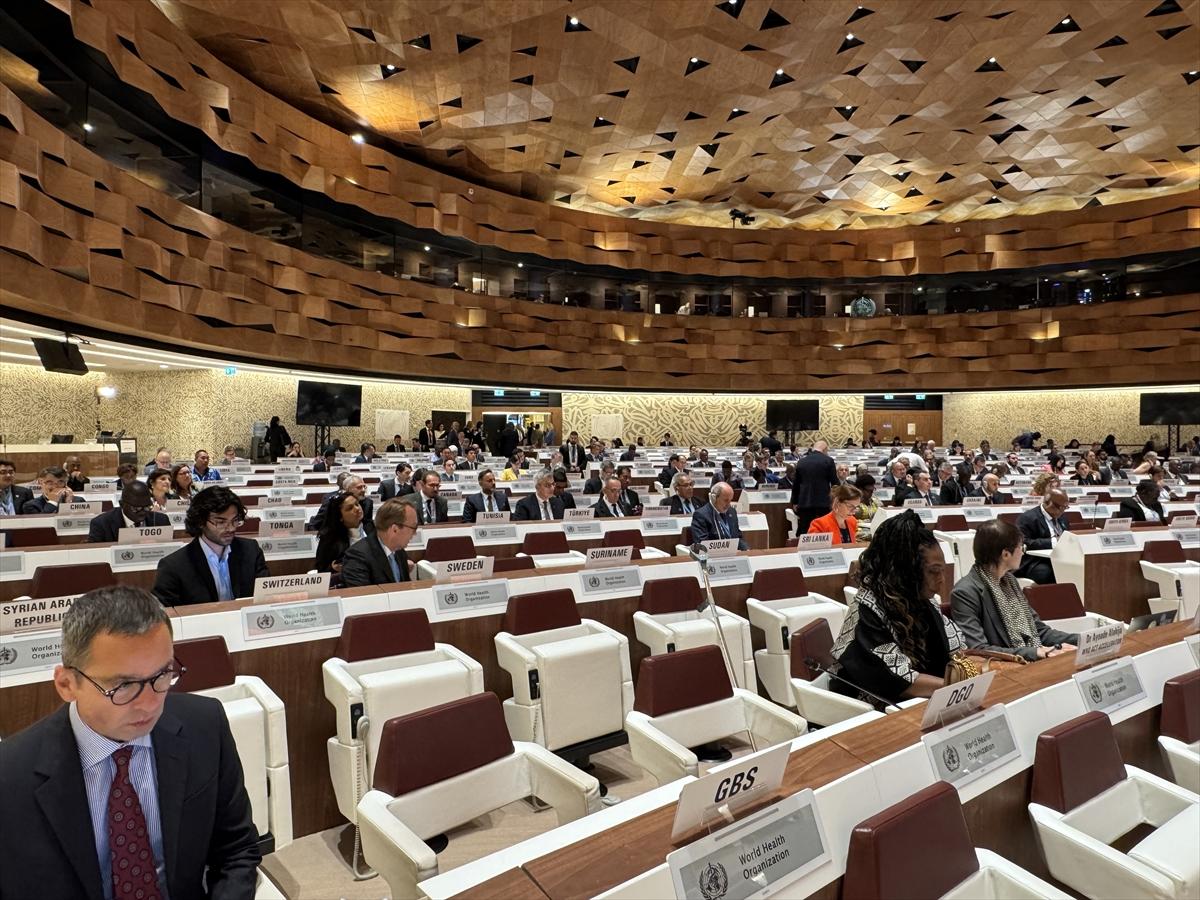
78th World Health Assembly, 19 May 2025 – Anadolu Ajansı
The 78th World Health Assembly (WHA) is scheduled to begin on 19 May 2025 and continue until 27 May 2025. The assembly is taking place in the Palais des Nations building, located at the United Nations Office in Geneva. All sessions during the meeting are being live-streamed via the World Health Organization’s (WHO) online platforms, with simultaneous interpretation provided in Arabic, Chinese, English, French, Russian and Spanish.
The theme for the 2025 Assembly has been set as “One World for Health.” Under this theme, international solidarity in health, the principle of equity and global health security are prioritized. Delegations from all member states, along with health ministers, representatives of international organizations, technical experts, civil society organizations and private sector stakeholders, are participating in the meeting.
At the opening session, Dr. Teodoro Herbosa, Minister of Health of the Philippines, was elected President of the 78th WHA. In his opening address, WHO Director-General Dr. Tedros Adhanom Ghebreyesus addressed current global crises including the ongoing humanitarian crisis in Gaza, continuing conflicts in Sudan and attacks on health services. Ghebreyesus also noted that the proposed WHO programme budget for 2026–2027 had been reduced by 21 percent and that this budget is currently under discussion at the Assembly.
Throughout the meeting, technical and diplomatic negotiations are being conducted under Committee A and Committee B, in addition to plenary sessions. Committee A addresses health policies, international agreements and budget matters, while Committee B considers technical reports and administrative issues. A dedicated agenda has been prepared for each day, with updates published on WHO’s official documents page.
The event is still ongoing, and WHO’s future programmes and international health agreements are being negotiated during this session.
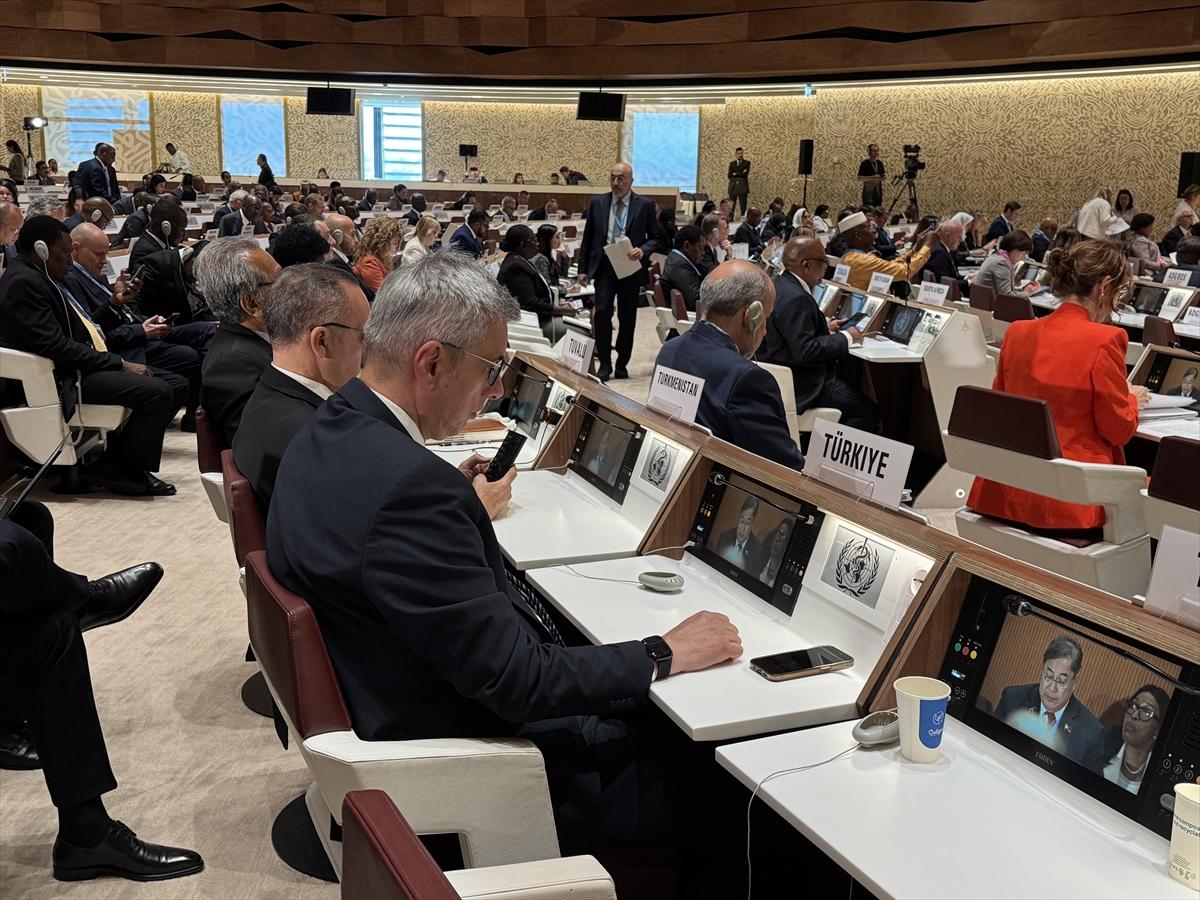
78th World Health Assembly, 19 May 2025 – Anadolu Ajansı
In his opening address at the 78th World Health Assembly, WHO Director-General Dr. Tedros Adhanom Ghebreyesus assessed the current humanitarian crises facing the global health system, disruptions to health services in conflict zones and WHO’s role in these processes.
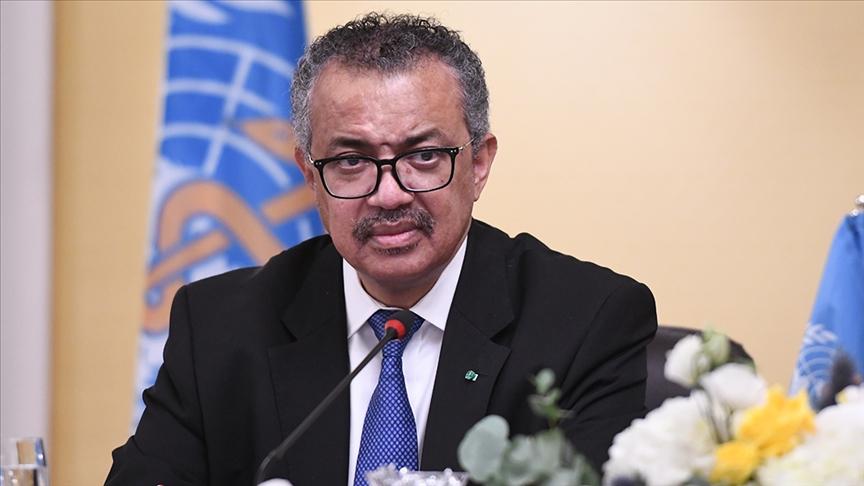
Tedros Adhanom Ghebreyesus – Anadolu Ajansı
During his speech, he highlighted the success of the polio vaccination campaign in Gaza in preventing the disease, but emphasized that the people of Gaza continue to face numerous other threats. He stated, “Two months have passed since the latest blockade began, and two million people are facing starvation while 116,000 tons of food are being blocked at a border just minutes away.”
Ghebreyesus noted that the deliberate obstruction of humanitarian aid during the ongoing blockade has increased the risk of famine, and that the health system has collapsed, leading to preventable deaths. “Rising conflicts, evacuation orders, shrinking humanitarian space and aid blockades are causing massive loss of life in an already collapsed health system,” he said.
Addressing the challenges in accessing medicines and health services in Gaza, he stated that people are dying from preventable diseases while medicines remain stuck at the Gaza border, and that attacks on hospitals have made the delivery of care impossible.
Regarding medical evacuations, Ghebreyesus said, “Since November 2023, WHO has supported the medical evacuation of more than 7,300 patients, including 617 cancer patients.” He emphasized that over 10,000 more patients still need to be evacuated from Gaza and called on WHO member states to accept more patients.
The Director-General also addressed the ongoing armed conflict in Sudan, noting that approximately 32,000 people have lost their lives, 30 percent of the population has been displaced, and 20 million people in the country require humanitarian assistance. He further recorded that globally, 122 million people have been forced to flee their homes due to conflict. On the scale of attacks on health services, he stated, “Last year we verified more than 1,500 attacks on health services in 15 countries and regions, resulting in the deaths of over 900 people. The best medicine in every country is peace and political solution.”
Ghebreyesus noted that sudden and severe cuts in international aid funding in some countries have crippled health systems, leaving patients without treatment and health facilities closed in at least 70 countries.
Ghebreyesus stated that member states at the WHA are expected to address and adopt the WHO Pandemic Agreement, adding, “This is truly a historic moment. Even amid crisis and significant opposition, you have worked tirelessly, never given up, and reached your goal.”
The WHO Pandemic Agreement is an international legal instrument adopted on 20 May 2025 during the 78th session of the World Health Assembly. The agreement was developed under Article 19 of the WHO Constitution and is the second instrument formally adopted under this provision.
The drafting process of the agreement was initiated through the Intergovernmental Negotiating Body (INB), established in December 2021. The negotiation process involved WHO member states and culminated in consensus on a draft text on 16 April 2025, after more than three years of discussions.
The agreement was first adopted on 19 May 2025 by Committee A with 124 votes in favor, 11 abstentions and no votes against. Subsequently, on the morning of 20 May 2025, the plenary session formally approved the document.
The agreement outlines principles for international cooperation on pandemic prevention, preparedness and response. It preserves the principle of national sovereignty, and WHO has no authority to interfere in the domestic laws of member states. Countries’ rights to determine their own policies are guaranteed.
As part of the implementation process, an additional protocol titled the Pathogen Access and Benefit Sharing (PABS) system is planned to be developed. This protocol will be subject to negotiation at the 79th World Health Assembly in 2026.
According to the agreement, under the PABS system, manufacturers commit to making at least 20 percent of vaccines, diagnostics and therapeutics produced during a pandemic available for distribution through WHO, based on risk and need. Developing countries are designated as priority recipients.
Additionally, it was decided to initiate processes for establishing the Global Supply Chain and Logistics Network (GSCL) and the Coordination Finance Mechanism. These structures aim to facilitate rapid and equitable access to medical products during pandemics. The international instrument will enter into force after ratification by 60 countries. Currently, the completion of the PABS protocol is awaited before the agreement is opened for signature.
At the 78th World Health Assembly, the proposed programme budget for WHO for the 2026–2027 period was discussed. This budget constitutes the first two-year financial cycle under WHO’s 14th General Programme of Work (GPW14), covering the years 2025 to 2028.
The proposed programme budget was reduced by 22 percent from the previous proposed amount of USD 5.3 billion to USD 4.267 billion. This reduction reflects WHO’s current financial constraints and global economic conditions.
Member states considered a proposal to increase their assessed contributions. The proposal recommends a 20 percent increase in membership contributions, as in the previous two budget periods. If approved, this increase would enable assessed contributions to reach 50 percent of WHO’s total budget by 2030.
Anadolu Ajansı. "DSÖ Salgın Anlaşması, Dünya Sağlık Asamblesi’nde Resmi Olarak Kabul Edildi." Accessed May 20, 2025. https://www.aa.com.tr/tr/dunya/dso-salgin-anlasmasi-dunya-saglik-asamblesinde-resmi-olarak-kabul-edildi/3573698
Anadolu Ajansı. "Dünya Sağlık Asamblesi’nin 78’inci Toplantısı Cenevre’de Başladı." Accessed May 20, 2025. https://www.aa.com.tr/tr/dunya/dunya-saglik-asamblesinin-78nci-toplantisi-cenevrede-basladi/3572966
Anadolu Ajansı. “DSÖ Salgın Anlaşmasının Kabulü İçin Nihai Karar Bugün Dünya Sağlık Asamblesi Toplantısında Alınacak.” Accessed May 20, 2025. https://www.aa.com.tr/tr/dunya/dso-salgin-anlasmasinin-kabulu-icin-nihai-karar-bugun-dunya-saglik-asamblesi-toplantisinda-alinacak/3573414
Health Policy Watch. “United States Appears Set to Skip World Health Assembly, While China Sends Delegation of More Than 180.” Health Policy Watch. Accessed May 20, 2025. https://healthpolicy-watch.news/united-states-appears-set-to-skip-world-health-assembly-while-china-sends-delegation-of-more-than-180/
Pan American Health Organization (PAHO). “Health Leaders from the Americas and Around the World Gather at the 78th World Health Assembly with a Call for Unity.” PAHO. Accessed May 20, 2025. https://www.paho.org/en/news/16-5-2025-health-leaders-americas-and-around-world-gather-78th-world-health-assembly-call
World Health Organization (WHO). "One World for Health: The Seventy-Eighth World Health Assembly Convenes from 19 to 27 May 2025." WHO. Accessed May 20, 2025. https://www.who.int/news/item/16-05-2025-one-world-for-health--the-seventy-eighth-world-health-assembly-convenes-from-19-to-27-may-2025
World Health Organization (WHO). “Health and Climate Change at the 78th World Health Assembly.” WHO Events Calendar. Accessed May 20, 2025. https://www.who.int/news-room/events/detail/2025/05/19/default-calendar/health-and-climate-change-at-the-78th-world-health-assembly
World Health Organization (WHO). “Member States Approve WHO Pandemic Agreement in World Health Assembly Committee, Paving Way for Its Formal Adoption.” WHO. Accessed May 20, 2025. https://www.who.int/news/item/19-05-2025-member-states-approve-who-pandemic-agreement-in-world-health-assembly-committee--paving-way-for-its-formal-adoption
World Health Organization (WHO). “Seventy-Eighth World Health Assembly.” WHO. Accessed May 20, 2025. https://www.who.int/about/governance/world-health-assembly/seventy-eighth
World Health Organization (WHO). “World Health Assembly Adopts Historic Pandemic Agreement to Make the World More Equitable and Safer from Future Pandemics.” WHO. Accessed May 20, 2025. https://www.who.int/news/item/20-05-2025-world-health-assembly-adopts-historic-pandemic-agreement-to-make-the-world-more-equitable-and-safer-from-future-pandemics

The 78th World Health Assembly began in Geneva on 19 May 2025. The theme for the 2025 Assembly was set as “One World for Health”. On 20 May, the WHO Pandemic Agreement was adopted unanimously. Within the framework of the meeting, issues such as health equity, humanitarian conditions in crisis zones and sustainable budget policies are being addressed. The Assembly is expected to continue until 27 May.
No Discussion Added Yet
Start discussion for "78th World Health Assembly (2025)" article
May 20, 2025
Overall Framework and Theme of the Meeting
May 20, 2025
Opening Address by Director-General Tedros Adhanom Ghebreyesus
May 20, 2025
Adoption of the WHO Pandemic Agreement
May 20, 2025
Financial Negotiations