

This article was automatically translated from the original Turkish version.
+1 More
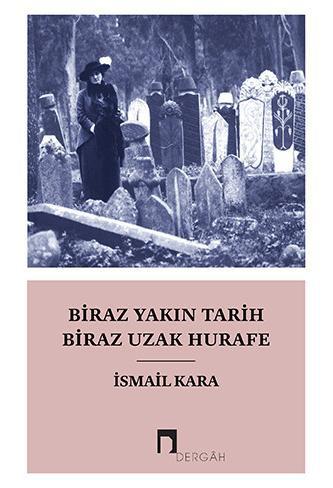
A Little Recent History, A Little Distant Superstition is an essay and research book by İsmail Kara, published as part of Dergâh Publications’ series “Contemporary Turkish Thought.” It offers a critical examination of our recent intellectual and cultural history. The work focuses particularly on the relationships established between the Ottoman Empire and early Republican periods and the West, processes of modernization, and the misunderstandings, adaptation challenges, and “superstitions” that emerged during these processes. First published in February 2017, the book consists of 350 pages and has reached its fourth edition as of June 2024.
The book A Little Recent History, A Little Distant Superstition analyzes certain paradoxes and striking events in the modernization journey of the Ottoman State and the Islamic world through historical anecdotes. It opens with the following words attributed to Kavalalı Mehmet Ali Pasha, the Governor of Egypt, to his Turkish Armenian interpreter Artin, regarding a translation of Machiavelli’s The Prince:
“I have read all the passages you translated. I found very little that was new in the first ten pages, though I hoped for something better. The next ten pages were no better. The final ones were entirely ordinary. I see that I have nothing much to learn from Machiavelli; I possess more knowledge about political cunning than he does. There is no longer any need for you to translate him.”
This anecdote forms the core argument of the book: during a period when the Ottoman Empire and the Islamic world, following military defeats, turned toward Europe and European values either out of necessity or choice, and sent students to Paris and London to “bring enlightenment and civilization,” the forms of such intellectual reactions are critically questioned.
İsmail Kara uses these “recent history” segments to examine the superficiality of processes labeled as modernization, the shortcomings in understanding and adapting to the West, the neglect of one’s own knowledge and experience, or conversely, the incorrect or incomplete transfer of Western ideas into one’s own context. The term “superstition” in the book is used not only to denote religious superstitions but also to encompass historical misperceptions, distortions of knowledge, and anachronistic evaluations. In this sense, the work provides a critical and profound perspective on Türkiye’s experience of modernization.
The language and style in İsmail Kara’s work combine academic seriousness with a humorous and occasionally ironic tone. The author presents complex historical and intellectual subjects in a fluent, accessible, and clear manner that allows readers to follow easily. An objective analysis and descriptive approach are adopted, with no promotional or laudatory language included in the text. Kara’s distinctive style stands out through his ability to derive general conclusions from anecdotes and to prompt readers to reflect critically.
İsmail Kara is a prominent thinker, historian, and writer known for his extensive research on contemporary Turkish intellectual history and the recent Ottoman-Turkish intellectual life. His works are recognized for their original interpretations on issues such as Islamism, modernization, and the conflict between tradition and modernity. This book is a significant contribution that reflects his deep scholarly knowledge and critical analytical capacity in these fields.
The book serves as an essential reference for students and academics working in the fields of Turkish intellectual history, political science, sociology, and cultural studies. It is an indispensable source for anyone seeking to understand Türkiye’s modernization journey, its relations with the West, and its own intellectual dynamics. The work addresses readers interested in discovering how past events and intellectual currents have shaped the present, and in uncovering the historical origins of phenomena that appear as “superstitions.”

No Discussion Added Yet
Start discussion for "A Bit of Recent History, A Bit of Distant Folklore (Book)" article
Content and Thematic Structure
Language and Style
The Author’s Position and the Significance of the Work