


This article was automatically translated from the original Turkish version.
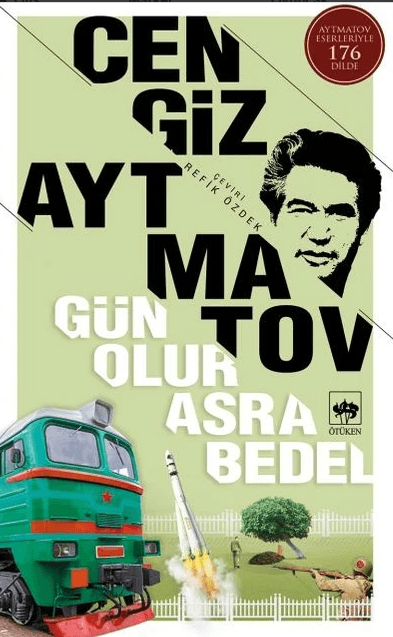
The 1980 novel The Day Lasts More Than a Century by Kyrgyz author author Chingiz Aytmatov deals with events taking place on the Central Asian steppes during the Soviet era. Through Aytmatov’s narrative rooted in Kyrgyz culture, the novel explores the clash between local traditions and ideological structures while focusing on individual memory identity and the struggle for existence under social pressure.
The novel centers on Yedige a railway station worker stationed on the steppes Kazakhstan character place. The story unfolds around Yedige’s efforts to bury his friend Kazangap according to ancient customs. This seemingly simple act symbolizes the struggle to preserve one’s cultural roots and resist societal pressures.
Two primary narrative threads intertwine in the novel. On one side is Yedige’s daily life and the process of bidding farewell to his friend. On the other side memories legends and speculative elements from the past and future are woven into the narrative. Particularly the legend of Nayman Ana and the myth of the Mankurt a species of alien beings detached from humanity enrich the symbolic structure of the work.
The main themes highlighted in the novel include:
Cultural Identity and Memory: Yedige’s determination to bury Kazangap in accordance with ancestral traditions underscores the importance of personal connection to one’s roots and the enduring bond with the past.
The Mankurt Legend: One of the most striking symbols in the novel the Mankurt represents an individual whose memory has been erased and whose roots have been severed. Through this symbol Aytmatov reveals how the destruction of memory and self-awareness can reduce a human being to the state of a robot.
Technology and Humanity: The narrative of a group of astronauts who establish contact with extraterrestrial beings reflects humanity’s thirst for knowledge and a critical perspective on technological advancement.
Pressure and Critique of Totalitarian Regimes: The novel contains critical elements addressing the ideological impositions of the Soviet Union and the identity crises individuals faced under such systems.
Aytmatov employs a rich language enhanced by symbols and metaphors. Particularly the myths of the Mankurt and Nayman Ana are woven into the narrative giving the novel mythological and spiritual depth. The author’s plain yet powerful descriptions contribute significantly to the novel’s strong atmospheric tone.
The Day Lasts More Than a Century generated widespread attention upon its publication and has secured a prominent place in world literature. The individual and societal issues addressed in the novel transcend the Soviet era and carry universal significance. Novel is a major work reflecting Aytmatov’s profound insights into human history cultural heritage and the nature of humanity.
Aytmatov’s novel is regarded by literary critics not merely as a novel but as a warning to humanity about history and self-awareness.
Mankurtization is a legendary concept in Chingiz Aytmatov’s novel The Day Lasts More Than a Century describing the process of erasing memory to turn an individual into a mindless and identityless slave. Although used symbolically in Aytmatov’s work this concept draws its origins from ancient Turkish legends.
According to the legend dehumanization a cruel method was employed to erase the memories of captives and transform them into will-less slaves. The process is described as follows:
Shaving the Hair: The captives’ heads are completely shaved removing the hair from the roots.
Wrapping with Camel Skin: Fresh and wet camel camel skin is tightly wrapped around the shaved head. As the skin dries it shrinks exerting increasing pressure on the skull.
Exposure to the Sun: The captive is left for days under the scorching desert sun with hands and feet bound. During this time the camel skin dries and applies even greater pressure to the skull.
Unbearable Pain: The drying camel skin presses against the scalp and skull causing intense pain. During this process the nerve endings on the scalp are harm and the individual suffers memory loss.
Loss of Memory: By the end of the process the survivor forgets everything about their past their identity their family and their social ties. They become merely a slave who obeys only the commands given to them.
Chingiz Aytmatov uses the concept of mankurt not merely as a physical torture method but as a symbol of the destruction of individual identity cultural roots and conscious thinking capacity. In the novel the process of mankurtization emerges as a metaphor for the oppression exerted by totalitarian regimes cultural assimilation and the dehumanization of individuals.
Aytmatov’s portrayal offers a powerful critique of individuals who have lost their memory and critical thinking abilities and who merely obey orders imposed upon them.

No Discussion Added Yet
Start discussion for "A Day Is Worth a Century (Book)" article
The Day Lasts More Than a Century
Plot and Structure
Major Themes
Language and Narrative Style
The Novel’s Impact
Mankurtization
The Mankurtization Process
Symbolic Meaning of Mankurtization