


This article was automatically translated from the original Turkish version.
+2 More
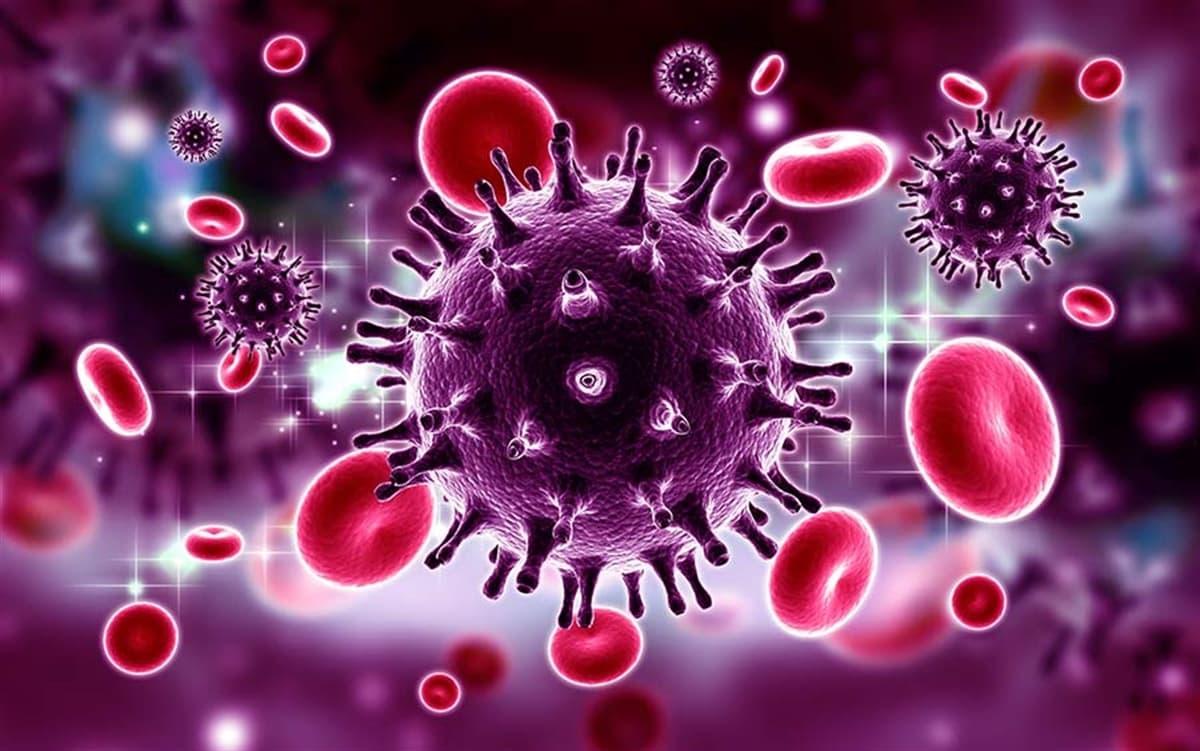
Generated with Artificial Intelligence Support
Acquired Immunodeficiency Syndrome (AIDS)
Definitions | The final stage of HIV; collapse of the immune system | ||||||||
|---|---|---|---|---|---|---|---|---|---|
Properties | Decline in CD4+ cells, opportunistic infections, viral replication | ||||||||
Treatment | ART, >90% success rate, lifelong use | ||||||||
Prevalence | In 2023, 39 million people were HIV positive, with 630,000 deaths | ||||||||
Etiology | specifically HIV-1 and HIV-2 AIDS is a progressive immunodeficiency caused by a lentivirus species belonging to the retrovirus family | ||||||||
Transmission Routes | childbirth or breastfeeding) mother-to-child transmission (during pregnancy shared needle use infected blood or blood products Unprotected sexual contact | ||||||||
Signs and Symptoms | malignancies tuberculosis and other opportunistic infections Kaposi's sarcoma Pneumocystis jirovecii pneumonia mucocutaneous candidiasis recurrent infections fever and night sweats prolonged diarrhea weight loss Persistent lymphadenopathy | ||||||||
Diagnosis | CD4+ T cell count measurement of HIV RNA levels by PCR antigen/antibody combination tests Western Blot) Serological tests (ELISA | ||||||||
Prevention | preventive measures (PrEP and PEP) HIV testing and prenatal treatment for pregnant women avoidance of needle sharing regular testing and counseling Safe sexual practice (condom use) | ||||||||
AIDS (Acquired Immunodeficiency Syndrome) is a contagious disease caused by the HIV virus, characterized by severe weakening of the immune system. It is marked by opportunistic infections and certain types of cancer. First identified in the 1980s, it has affected millions of people worldwide and has become a global health issue.
AIDS was first recognized in 1981 in the United States, among young and otherwise healthy men presenting with rare opportunistic infections such as Pneumocystis jirovecii pneumonia and Kaposi’s sarcoma. The disease was initially stigmatized with names like “gay male syndrome,” but in 1983, Luc Montagnier and his team identified HIV as the causative agent, establishing its scientific definition. In the same year, Robert Gallo demonstrated that the virus belonged to the retrovirus family and targeted CD4+ T lymphocytes. The first ELISA test was developed in 1985, enabling screening of blood donations. By the late 1980s, it became clear that HIV/AIDS was not limited to high-risk groups but could also spread through heterosexual contact.
HIV (Human Immunodeficiency Virus) is a lentivirus belonging to the retrovirus family. Its entry into host cells begins when the viral surface glycoprotein gp120 binds to the CD4 receptor. This binding is followed by viral fusion mediated by the coreceptors CCR5 or CXCR4, allowing HIV genetic material to integrate into the host cell. As a result, CD4+ cells are driven into apoptosis or destroyed by cytotoxic T cell responses.
The annual average decline of CD4+ T cells by 50–100 cells/mm³ leads to progressive immune system weakening. When the CD4 count falls below 200 cells/mm³, the condition is classified as AIDS. At this stage, individuals become vulnerable to opportunistic infections (such as tuberculosis, candidiasis, CMV, and toxoplasmosis) and malignancies (such as Kaposi’s sarcoma and non-Hodgkin lymphoma).
According to UNAIDS 2023 data, 39 million people worldwide are living with HIV. Since the outbreak began in the 1980s, more than 85 million people have been infected with HIV, and approximately 40 million have died from AIDS-related causes. Currently, about 1.3 million new infections and 630,000 HIV-related deaths are reported annually.
HIV prevalence exceeds 5% in Sub-Saharan Africa; in countries such as Eswatini, Lesotho, and Botswana, it reaches up to 20%. While new case numbers remain stable in high-income countries, they are rising in Eastern Europe and Central Asia due to stigma and inadequate testing infrastructure.
Sexual Transmission: Anal intercourse carries the highest risk (1–3%), vaginal intercourse carries a risk of 0.1–0.2%, and oral intercourse carries a risk of 0.01%.
Blood Transmission: Transmission through needle sharing has a risk of 0.67–0.85%; transmission via blood transfusion carries a risk exceeding 90%.
Vertical Transmission: In untreated HIV-positive mothers, transmission risk can reach up to 25%; with ART during pregnancy, it drops below 1%.
1. Acute HIV Infection (Primary Infection)
2. Chronic Infection (Asymptomatic Stage)
3. AIDS Stage
HIV is one of the few viruses that infect the central nervous system. The virus infects microglia and astrocytes, triggering neuroinflammation. Chronic inflammation leads to synaptic dysfunction and neuronal degeneration, resulting in the spectrum of HIV-Associated Neurocognitive Disorders (HAND):
Fourth-generation antigen/antibody combination tests
HIV RNA (PCR) test
Western blot or immunoblot
CD4 count and viral load monitoring
Antiretroviral therapy (ART) consists of drug combinations that suppress HIV:
New developments:
Global and national strategies to prevent HIV/AIDS transmission encompass both individual protective measures and public awareness and service access initiatives.
Protective Methods (Condom Use):
Pre-Exposure Prophylaxis (PrEP):
Post-Exposure Prophylaxis (PEP):
Needle Exchange Programs:
ART During Pregnancy:
Public Education and Test Access:
HIV is not only a medical condition but also a disease with profound social consequences. HIV-positive individuals frequently face stigma, exclusion, and discrimination, leading to psychological issues at the individual level and public health challenges at the societal level.
Social Isolation:
Discrimination in Employment:
Barriers to Health Services:
Impact on Public Health:
The first case in Türkiye was identified in 1985.
As of 2023, according to Ministry of Health records, over 35,000 individuals in Türkiye are HIV-positive. The actual number is likely higher due to undiagnosed cases. Regarding transmission routes, more than 80% of cases are attributed to sexual contact; injection-related transmission is low.
Treatment and Monitoring: Antiretroviral therapy (ART) is covered by the Social Security Institution. Individuals diagnosed with HIV receive free treatment in state hospitals.
Early detection efforts continue through prenatal screening, premarital testing, and routine blood donation screening. Stigma remains a significant public health barrier. However, social support initiatives are being carried out through civil society organizations and counseling centers.
Modern medicine has made significant advances in HIV treatment and prevention strategies. In the 2020s, scientific research on the concept of a “cure” has accelerated.
Sterilizing Cure Research:
Functional Cure:
HIV Vaccine Development:
UNAIDS 2030 Target:
Gallo, Robert C., and Luc Montagnier. "AIDS in 1988." *Scientific American* 259, no. 4 (1988): 40–51. Accessed July 8, 2025. https://www.jstor.org/stable/24987949.
González-Scarano, Francisco, and Julio Martín-García. "The Neuropathogenesis of AIDS." *Nature Reviews Immunology* 5, no. 1 (2005): 69–81. Accessed July 8, 2025. https://www.nature.com/articles/nri1527.
HIV, WHO, and H. Long. *AIDS*. 2012. Accessed July 8, 2025. https://dhs.saccounty.gov/PUB/Documents/AZ-Health-Info/BR-HIVAIDS.pdf.
Joint United Nations Programme on HIV/AIDS and World Health Organization. *AIDS Epidemic Update, December 2006.* Geneva: World Health Organization, 2006. Accessed July 8, 2025. https://books.google.com/books?hl=tr&lr=&id=q2H0b-WY1pUC.
Joint United Nations Programme on HIV/AIDS. *2008 Report on the Global AIDS Epidemic.* Geneva: World Health Organization, 2008. Accessed July 8, 2025. https://books.google.com/books?hl=tr&lr=&id=WepARRFDEAwC.
Mann, Jonathan M., Daniel Tarantola, and Thomas W. Netter, eds. *AIDS in the World.* Cambridge: Harvard University Press, 1992. Accessed July 8, 2025. https://books.google.com/books?hl=tr&lr=&id=1owvhLafzDgC.
Piot, Peter, et al. "AIDS: An International Perspective." *Science* 239, no. 4840 (1988): 573–579. Accessed July 8, 2025. https://www.science.org/doi/abs/10.1126/science.3277271.
Serter, Demir. "Türkiye'de ve Dünyada Cinsel Yolla Bulaşan Enfeksiyonlar ve HIV/AIDS." *Türkiye Klinikleri Journal of Internal Medical Sciences* 2, no. 11 (2006): 1–5. Accessed July 8, 2025. https://www.turkiyeklinikleri.com/article/en-turkiyede-ve-dunyada-cinsel-yolla-bulasan-enfeksiyonlar-ve-hivaids-45371.html.
Tümer, Aygen, and Serhat Ünal. "HIV/AIDS Epidemiyolojisi ve Korunma." *Sosyal Politika Çalışmaları Dergisi* 4, no. 4 (2001). Accessed July 8, 2025. https://dergipark.org.tr/en/download/article-file/198216.

Generated with Artificial Intelligence Support
Acquired Immunodeficiency Syndrome (AIDS)
Definitions | The final stage of HIV; collapse of the immune system | ||||||||
|---|---|---|---|---|---|---|---|---|---|
Properties | Decline in CD4+ cells, opportunistic infections, viral replication | ||||||||
Treatment | ART, >90% success rate, lifelong use | ||||||||
Prevalence | In 2023, 39 million people were HIV positive, with 630,000 deaths | ||||||||
Etiology | specifically HIV-1 and HIV-2 AIDS is a progressive immunodeficiency caused by a lentivirus species belonging to the retrovirus family | ||||||||
Transmission Routes | childbirth or breastfeeding) mother-to-child transmission (during pregnancy shared needle use infected blood or blood products Unprotected sexual contact | ||||||||
Signs and Symptoms | malignancies tuberculosis and other opportunistic infections Kaposi's sarcoma Pneumocystis jirovecii pneumonia mucocutaneous candidiasis recurrent infections fever and night sweats prolonged diarrhea weight loss Persistent lymphadenopathy | ||||||||
Diagnosis | CD4+ T cell count measurement of HIV RNA levels by PCR antigen/antibody combination tests Western Blot) Serological tests (ELISA | ||||||||
Prevention | preventive measures (PrEP and PEP) HIV testing and prenatal treatment for pregnant women avoidance of needle sharing regular testing and counseling Safe sexual practice (condom use) | ||||||||
No Discussion Added Yet
Start discussion for "Acquired Immunodeficiency Syndrome (AIDS)" article
Historical Background
The Relationship Between HIV and AIDS
Epidemiology and Global Spread
Routes of Transmission
Clinical Course and Stages
Neuropathogenesis and Effects on the Nervous System
Diagnostic Methods
Treatment Approaches
Prevention Strategies
Social Impacts and Stigma
Situation in Türkiye
Current Status and Future Perspectives