


This article was automatically translated from the original Turkish version.
+2 More
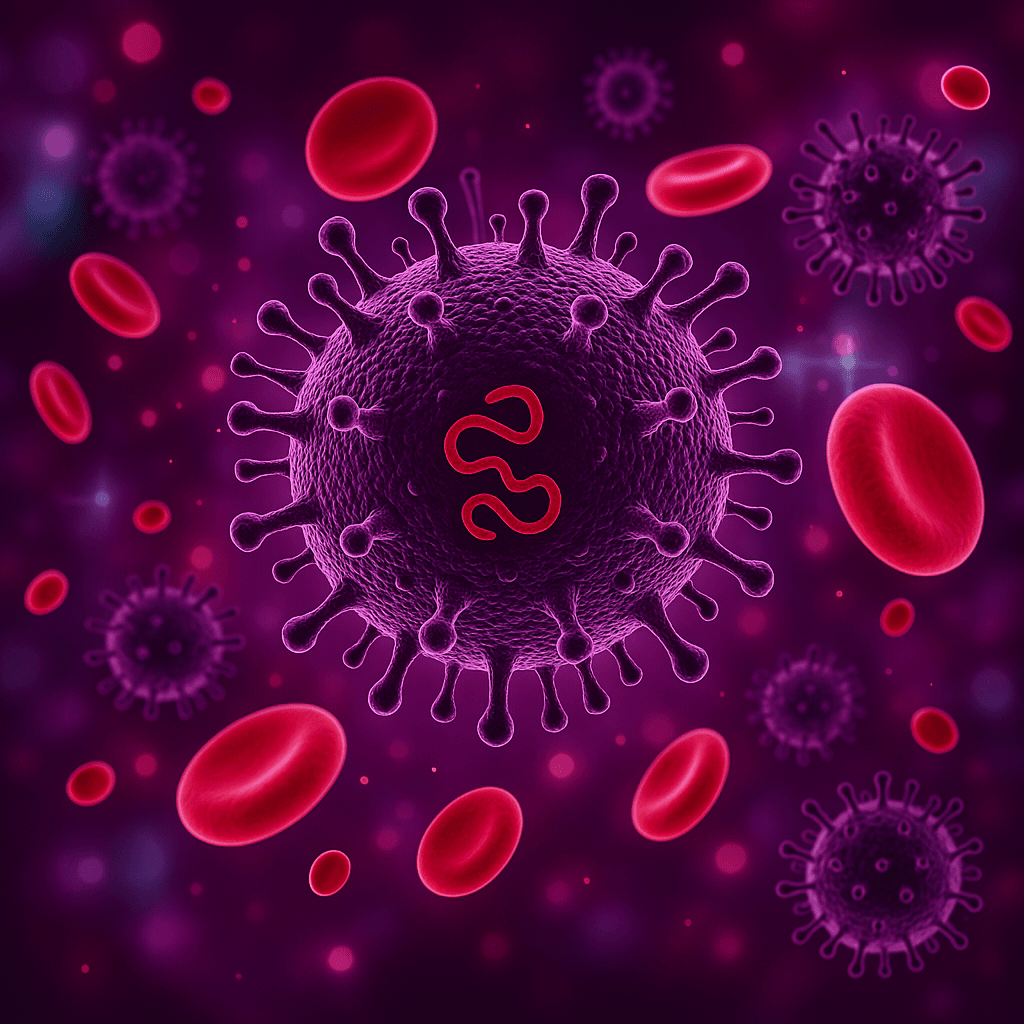
Designed by artificial intelligence
HIV
Definition(s) | Retrovirus CD4+ T Cell Infection | ||||||||
|---|---|---|---|---|---|---|---|---|---|
Properties | Immunodeficiency, opportunistic infections | ||||||||
Transmission(s) | Sexual contact Mother-to-child Blood | ||||||||
Treatment | Antiretroviral combination therapy | ||||||||
Prevention | PrEP (Pre-Exposure Prophylaxis), PEP (Post-Exposure Prophylaxis), Protective (condom) use, Regular testing and partner's HIV status, Prevention of mother-to-child transmission | ||||||||
HIV (Human Immunodeficiency Virus – İnsan İmmün Yetmezlik Virüsü) is a retrovirus that targets the human immune system. It infects various immune cells, primarily CD4+ T lymphocytes, and can lead to the progressive collapse of immune function. The advanced stage of HIV infection is defined as acquired immunodeficiency syndrome (AIDS). It is estimated that approximately 39 million individuals worldwide are living with HIV (2023). In Türkiye, as of 2023, 5–10 HIV cases per 100,000 people have been reported.

Entry Mechanism of HIV (Designed by Artificial Intelligence)
HIV cases were first reported in the United States in 1981 and were formally identified in medical literature after the virus was isolated in 1983. The development of antiretroviral therapies in the 1990s significantly improved control over disease progression. Despite these advances, HIV remains a major public health issue at both global and local levels. Approximately 1.3 million new HIV infections are reported worldwide each year.
HIV is a lentivirus belonging to the retrovirus family and possesses an RNA genome. The major genes encoded in its genome are listed below:
There are two main types: HIV-1 and HIV-2. HIV-1 is the primary cause of the global pandemic; subtype B predominates in Western countries, while subtype C is most common in Sub-Saharan Africa.
HIV entry into host cells begins with the binding of the gp120 protein to the CD4 receptor. This attachment enables the virus to adhere to immune cells. Subsequently, conformational changes in gp120 allow binding to the coreceptors CCR5 or CXCR4. Without this coreceptor interaction, the virus cannot enter the cell. The gp41 protein then fuses the viral envelope with the host cell membrane, facilitating the delivery of the viral genome into the cell.
Routes of HIV transmission:
1. Sexual contact (>70%):
2. Blood exposure:
3. Mother-to-child transmission:
HIV is not transmitted through saliva, tears, or sweat.
HIV infection is a complex pathophysiological process that targets and systematically weakens the immune system. The virus binds to CD4+ T cells, enters them, replicates, and produces new viral particles. During this process, the death or dysfunction of infected cells leads to a gradual decline in immune function.
The course of the disease can generally be divided into three stages:
1. Acute HIV Infection: Develops within 2–4 weeks after initial infection. Characterized by high viral replication and a sharp drop in CD4+ T cells. Symptoms may resemble those of influenza.
2. Chronic (Asymptomatic) Stage: Individuals may remain asymptomatic for years, but the virus continues to replicate at low levels. CD4 cell counts gradually decrease.
3. AIDS (Acquired Immunodeficiency Syndrome): Defined by a CD4+ T cell count below 200 cells/mm³ or the occurrence of opportunistic infections or certain cancers. At this stage, the immune system is severely compromised. Opportunistic infections include Pneumocystis jirovecii, CMV, and Kaposi sarcoma.
HIV can also affect the central nervous system. Some individuals develop neurological complications such as dementia and motor dysfunction. HIV-associated neurocognitive disorders are more common in advanced stages of the disease.

HIV Replication Mechanism (Designed by Artificial Intelligence)
HIV reaches the central nervous system early in infection. Microglial cells and perivascular macrophages become infected. Excessive release of cytokines such as IL-1, TNF-α, and MCP-1 by infected cells triggers neuroinflammation. Research has demonstrated that this process contributes to the development of HIV-associated neurocognitive disorders (HAND).
Multiple testing methods are used for HIV diagnosis. These tests aim to detect either the virus itself (nucleic acid tests), viral antigens (p24 antigen), or the host’s immune response (anti-HIV antibodies). The most commonly used method, ELISA (Enzyme-Linked Immunosorbent Assay), has high sensitivity and specificity. When initial screening tests are positive, confirmation is performed using Western blot or immunoblot techniques.
Today, fourth-generation HIV tests detect both p24 antigen and antibodies, enabling earlier diagnosis. Viral load testing (HIV RNA) is used to monitor disease progression and assess treatment efficacy.
The primary goal of ART is to suppress viral replication and preserve immune function. Modern treatment regimens typically include at least three different drugs (combination therapy – HAART).
Drug Classes
Clinical Data
HIV prevention strategies are planned at both individual and community levels. Effective prevention methods include:
Pharmacological Methods
Other Methods
Development of Resistance
Challenges in Vaccine Development
HIV infection is not only a physical illness but also has significant psychological and social dimensions. People living with HIV frequently face stigma, discrimination, and exclusion from employment and social circles. These experiences can negatively affect mental health and reduce adherence to treatment. Psychosocial support plays a vital role in improving the quality of life for people living with HIV.
Moreover, HIV remains inadequately discussed in many societies due to taboos surrounding sexuality and drug use. This hinders the widespread adoption of preventive measures.
People living with HIV may face stigma and discrimination, which restrict access to healthcare and reduce treatment adherence. Psychosocial support is an integral part of HIV management.
HIV has been a major public health threat worldwide since the 1980s. According to data from the World Health Organization (WHO) and UNAIDS, approximately 39 million people were living with HIV globally as of 2023. Sub-Saharan African countries bear the highest burden of HIV infection.
Women, young people, and marginalized groups (e.g., LGBTQ+ individuals, people who use drugs) are at higher risk. International awareness campaigns, testing services, and access to treatment have played a critical role in controlling the epidemic.
Global Status
Türkiye
HIV is known for its high mutation rate and genetic diversity. The viral RNA genome is converted into DNA by the reverse transcriptase enzyme, which frequently makes errors during replication, leading to the emergence of new variants. These mutations enhance HIV’s ability to evade the immune system and reduce the effectiveness of antiretroviral therapies.
HIV-1 and HIV-2 each have distinct subtypes. HIV-1 is divided into four major groups: M (Major), N (Non-M, Non-O), O (Outlier), and P. Group M is the primary driver of the global pandemic. Subtypes of group M (A, B, C, D, F, G, H, J, K) vary geographically and epidemiologically. This genetic diversity poses challenges for treatment planning and vaccine development.
With the widespread use of antiretroviral therapy, HIV has evolved into a virus capable of developing resistance to drugs. Mutations occurring during viral replication can alter the structure of drug target proteins, reducing or eliminating the effectiveness of antiretroviral medications.
To prevent resistance, regular viral load monitoring, appropriate selection of treatment regimens, and ensuring patient adherence are critical. In cases of established resistance, new combination therapies incorporating drugs from different classes are employed. Additionally, novel drug molecules must be developed to address multidrug-resistant strains.
A long-term solution for controlling HIV infection lies in the development of an effective vaccine. However, this goal remains challenging due to HIV’s genetic diversity, viral escape mechanisms, and its complex interaction with the immune system.
Many vaccine candidates have been developed and tested in clinical trials, but no HIV vaccine has yet been approved for widespread use. Current vaccine research focuses on targeting viral entry and replication processes, particularly the gp120 and gp41 glycoproteins, and strategies to stimulate T-cell immune responses.
HIV infection can affect not only the immune system but also the central nervous system (CNS). The virus can reach the CNS early and infect microglial cells and macrophages, triggering neuroinflammation. This process can lead to HIV-associated neurological disorders (HIV-associated neurocognitive disorders – HAND).
HAND encompasses a spectrum of cognitive, behavioral, and motor impairments ranging from mild to severe. Although the frequency of these complications has decreased with ART, neurological effects remain a significant concern among aging people living with HIV.
HIV continues to face stigma and discrimination in societies where infectious diseases and sexuality are socially taboo. This hinders access to healthcare, discourages testing, and reduces treatment adherence.
Psychosocial support and public awareness campaigns are essential to improve the quality of life for people living with HIV and to control the epidemic. Respecting the rights of people living with HIV and preventing discrimination are important issues on the international human rights agenda.
Current research in HIV focuses on better understanding the viral life cycle, identifying new drug targets, and advancing vaccine development. In particular, the elimination of latent viral reservoirs (“cure strategies”) is regarded as a critical goal for achieving a true cure for HIV.
Gene therapy and immunotherapy approaches are still in experimental stages, aiming to reduce intracellular viral reservoirs and enhance immune responses. Additionally, research on broadly neutralizing antibodies (bnAbs) holds promise for both protective and therapeutic potential against diverse HIV variants.
Bekker, Linda-Gail, Chloe Orkin, Peter Reiss, Chloe L. Thio, and Sharon R. Lewin. 2023. “HIV Infection.” *Nature Reviews Disease Primers* 9, no. 1: 42. Accessed July 8, 2025. https://www.nature.com/articles/s41572-023-00452-3.
Centers for Disease Control (US), Center for Infectious Diseases (US), Division of HIV/AIDS, and National Center for Infectious Diseases (US), Division of HIV/AIDS. 1990. *HIV/AIDS Surveillance*. Atlanta: US Department of Health and Human Services, Public Health Service, Centers for Disease Control, Center for Infectious Diseases, Division of HIV/AIDS. Accessed July 8, 2025. https://books.google.com/books?hl=tr&lr=&id=IgxePn-9txEC&oi=fnd&pg=PA2&dq=Hiv&ots=gei69cn5F8&sig=cdKwAsHAVlGXZDnwGG9iw7NgptQ.
Deeks, Steven G., Sharon R. Lewin, Diane V. Havlir, and Douglas D. Richman. 2015. “HIV Infection.” *Nature Reviews Disease Primers* 1, no. 1: 1–22. Accessed July 8, 2025. https://www.nature.com/articles/nrdp201535.
Esté, José A., and Amalio Telenti. 2007. “HIV Entry Inhibitors.” The Lancet 370, no. 9581: 81–88. Accessed July 8, 2025. https://www.thelancet.com/journals/lancet/article/PIIS0140-6736(07)61052-6/abstract.
Flexner, Charles. 1998. “HIV-Protease Inhibitors.” *New England Journal of Medicine* 338, no. 18: 1281–1293. Accessed July 8, 2025. https://www.nejm.org/doi/abs/10.1056/NEJM199804303381808.
Gendelman, Howard E., Ikuo Lipton, Susan B. Tardieu, and others. 1994. “The Neuropathogenesis of HIV-1 Infection.” *Journal of Leukocyte Biology* 56, no. 3: 389–398. Accessed July 8, 2025. https://academic.oup.com/jleukbio/article-abstract/56/3/389/6978888.
Klimas, Nancy, Anne O’Brien Koneru, and Mary Ann Fletcher. 2008. “Overview of HIV.” *Psychosomatic Medicine* 70, no. 5: 523–530. Accessed July 8, 2025. https://journals.lww.com/psychosomaticmedicine/FullText/2008/06000/Overview_of_HIV.2.aspx.
Shaw, George M., and Eric Hunter. 2012. “HIV Transmission.” *Cold Spring Harbor Perspectives in Medicine* 2, no. 11: a006965. Accessed July 8, 2025. https://perspectivesinmedicine.cshlp.org/content/2/11/a006965.short.

Designed by artificial intelligence
HIV
Definition(s) | Retrovirus CD4+ T Cell Infection | ||||||||
|---|---|---|---|---|---|---|---|---|---|
Properties | Immunodeficiency, opportunistic infections | ||||||||
Transmission(s) | Sexual contact Mother-to-child Blood | ||||||||
Treatment | Antiretroviral combination therapy | ||||||||
Prevention | PrEP (Pre-Exposure Prophylaxis), PEP (Post-Exposure Prophylaxis), Protective (condom) use, Regular testing and partner's HIV status, Prevention of mother-to-child transmission | ||||||||
No Discussion Added Yet
Start discussion for "Human Immunodeficiency Virus (HIV) (Virus Immunodeficientiae Humanae)" article
HISTORICAL DEVELOPMENT
BIOLOGICAL STRUCTURE AND CHARACTERISTICS
VIRAL ENTRY MECHANISM
TRANSMISSION ROUTES AND RISK
PATHOGENESIS AND EFFECTS ON THE IMMUNE SYSTEM
NEUROPATHOGENESIS
DIAGNOSIS
Diagnostic Methods Used
TREATMENT
Antiretroviral Therapy (ART)
PREVENTION METHODS
DRUG RESISTANCE AND VACCINE RESEARCH
SOCIAL AND PSYCHOLOGICAL IMPACTS
GLOBAL STATUS AND EPIDEMIOLOGY
Epidemiology
EVOLUTIONARY PROCESS AND GENETIC DIVERSITY
DRUG RESISTANCE AND TREATMENT CHALLENGES
VACCINE DEVELOPMENT RESEARCH
NEUROPATHOGENESIS AND CENTRAL NERVOUS SYSTEM INVOLVEMENT
SOCIAL DIMENSIONS AND STIGMA
FUTURE STRATEGIES AND RESEARCH