

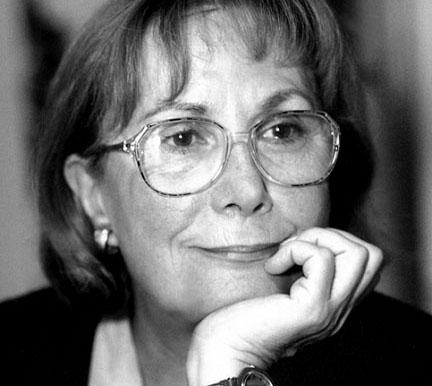
+1 More

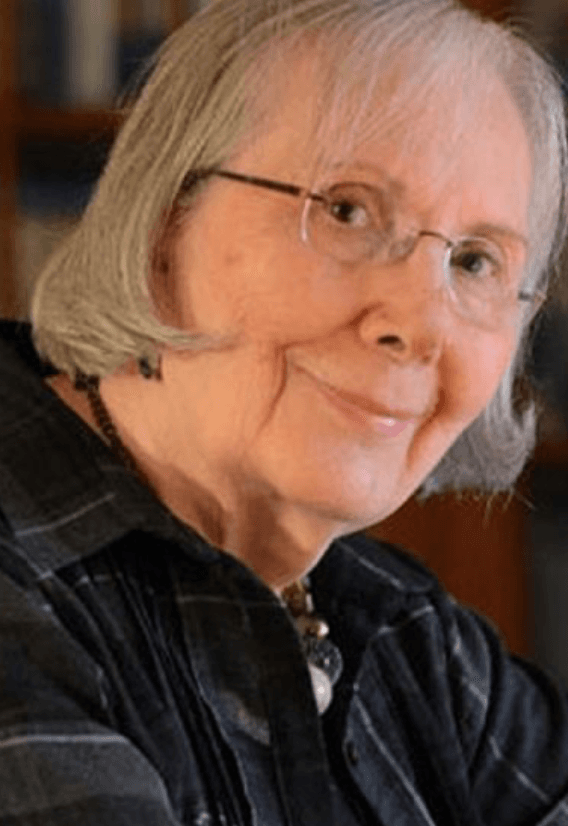
Adalet Ağaoğlu was born on 13 October 1929 in Nallıhan district of Ankara. Her mother, Emine İsmet Hanım, belonged to a wealthy Bosniak family that migrated from Sarajevo to Istanbul after the 93 War (1878); her father was the merchant Mustafa Sümer. The name recorded in her population register as Fatma İnayet was unknown to her until she turned eleven. At university, by court order, she changed her name to Adalet.
Her childhood years passed in Nallıhan until she completed primary school. She is the eldest of three brothers: Dr. Cazip Sümer, Ayhan who is two years younger than her, and the youngest, Güner Sümer. Due to her determination to attend middle school, her family moved to Ankara in 1938. Her older brother also moved to Ankara. The experiences she had in Nallıhan would later play a significant role in shaping the plots of her novels.
She completed her secondary education in 1946 at Ankara Girls’ High School. In 1950, she graduated from the Department of French Language and Literature at Ankara University’s Faculty of Language, History and Geography. On 15 December 1954, she married engineer Halim Ağaoğlu and changed her surname from “Sümer” to “Ağaoğlu”. Her marriage lasted until her husband’s death in 2018. She began her writing career during her student years and continued actively writing after 1970.
In 1951, Adalet Ağaoğlu entered Ankara Radio through an examination. Between 1951 and 1970, she held various positions at this institution and later at TRT, working as a librarian, dramaturg, and head of script and performance broadcasts. She also served as an expert and director in the Central Programs Department at TRT.
After 1970, she left TRT entirely to focus on writing. She resigned from her position as Director of TRT Radio Department in 1971 following the institution’s loss of autonomy.
Ağaoğlu began her artistic career at an early age, entering the literary world in 1946 with theatre reviews published in the newspaper Ulus. Her poems appeared in the journal Kaynak between 1948 and 1950. During this period, her poem “From the Shadows” and subsequently “The Mill” were awarded first prize by a selection committee chaired by Nurullah Ataç in a competition organized by the New Students’ Association of Ankara University’s Faculty of Language, History and Geography.
Adalet Ağaoğlu was among the founders of Ankara Meydan Theatre and worked as a dramaturg and translator between 1961 and 1965. She devoted approximately twenty years of her writing career to theatre. During this period, she explored in her plays the effects of social disorder and outdated value systems on individuals.
The play “Let’s Write a Play,” co-written with Sevim Uzgören, was staged at Ankara Küçük Theatre in 1953; however, it was never published as a book. In her first published play, “The Marriage Game” (1964), staged for the first time in the 1963–1964 season, she addressed the dramas of people trapped in unhappy marriages due to conservative social values and a lack of sexual education. The play offered critiques of gender relations and various aspects of social life through the lens of gender roles.
In “The Crack on the Roof” (1965), the economic hardships and uncertainties about the future of a merchant family and a working-class family are portrayed, while themes such as social class division, economic inequality, the social status of women, and labor exploitation are also explored. The characters’ tendency to avoid confronting their past and to distance themselves from reality is subtly conveyed through their daily lives.
In “Tombala” (1967), the focus is on an elderly couple who come to understand the true nature of their relationship during the final stage of a purposeless and meaningless life. This work was interpreted as a critique of social life, particularly for reducing old age to trivial intellectual games devoid of reflective depth.
Other important plays include “On the Borders” (1970), “Three Plays” (1973 — containing “Exit,” “Cocoons,” and “The Death of a Hero,” for which she won the 1974 Turkish Language Association Play Award), “The Song That Writes Itself” (1976), “Too Far, Too Close” (1991), and “The Wall Story” (1992). In “Exit,” the position of women within the family under capitalist structures and the balance of domestic power are examined. In “Cocoons,” the isolation of three women from the outside world, their entrapment in narrow personal worlds, and their routine lives are laid bare. In “On the Borders” and “The Song That Writes Itself,” Ağaoğlu’s feminist critical stance is evident as the place of women in society is scrutinized. In “Too Far, Too Close” and “The Death of a Hero,” the ways in which society imposes ideologies and rigid thought patterns on individuals, forcing them into psychological confinement and causing them to lose their sense of self, are addressed.
Ağaoğlu’s plays reflect the perspective of a writer sensitive to social issues and contemporary developments. She portrays, with plain language, how individuals under the pressure of psychological and social institutions are compelled to submit to deceptive values within family and personal relationships. Universal themes such as fear, death, peace, gender relations, sacrifice, love, old age, youth, rebellion, and freedom are interwoven with the author’s contemporary concerns and social changes. With masterful use of dramatic elements, she occasionally employed irony, preferring to leave subtle clues and gaps rather than direct statements, inviting the audience to complete the meaning themselves.
Six radio plays and one radio sketch written between 1952 and 1971 were collected under the title “The Messenger of Our Age” (2011). All her plays, including radio plays, were published in a single volume in 2019 under the title “Collected Plays.”
After the 1970s, Adalet Ağaoğlu shifted her focus from theatre to the novel and short story. This transition was the result of her literary aim “to grasp and reflect reality in all its dimensions” and “to accurately reveal the relationships beneath appearances.” In this direction, she sought new narrative methods. The author herself described the distinctive feature of her novelistic approach as “ending the single narrator; becoming the narrator of voices; introducing changes in time and place.”
Until the publication of her first novel in 1973, Ağaoğlu had primarily focused on playwriting. Although she took a break from theatre in the 1970s, she returned to it in the 1990s. Yet she gained her main reputation and literary identity through her novels and short stories. She had begun experimenting with novels since her high school years, and during this period she wrote a draft novel titled “Heartache.” While at university, she also wrote a novel draft titled “Hunchback Kamil.”
For Ağaoğlu, the act of writing meant “inventing another place, another life” and “tearing off and discarding a suffocating shirt, leaping beyond boundaries.” It is noted that Sait Faik’s honesty influenced her decision to become a writer; she learned the idea of writing stories from him, and this eventually became a passion. According to Adalet Ağaoğlu, a work of art is the product of an idea. Continuously renewing herself both technically and narratively, Ağaoğlu held a socialist realist artistic outlook, yet her novels are also recognized as pioneers in adopting new techniques.
Adalet Ağaoğlu’s novels draw attention for their examination of turbulent periods in society and their effects on individuals. The author is known not only for her subjects but also for the formal excellence of her works, particularly her mastery of detail, use of flashbacks, and interior monologues. Guided by the belief that “the novel is more closely tied to life than any other literary genre, it narrates life,” her novels are also regarded as masters of time in modern Turkish fiction.
The series “Tough Times,” which established Ağaoğlu as a novelist and holds a significant place in Turkish literature, consists of four novels:
Chronologically, Adalet Ağaoğlu, transitioning from modernist to postmodernist lines with “End of Summer” (1980), remained in constant search and developed her own unique narrative techniques. She became a transformative writer, changing both technically and in terms of content and theme in response to change.
Alongside her novels, Adalet Ağaoğlu also wrote short stories. In her stories, as in her novels, she strives to portray the human truth within a specific formation, while also engaging in various narrative experiments. It is noted that in the early stages of her story writing, she focused more on how to convey her subject than on what to convey.
Adalet Ağaoğlu’s published short story collections are as follows:
In her short stories, as in her novels, action is minimized as much as possible. A critical attitude toward the individual and society is maintained throughout. Some stories are multi-layered, multi-character, and multi-thematic, while others are very short, single-themed, and crafted to produce a single effect. The narrators vary. Füsun Akatlı attributes what makes Adalet Ağaoğlu one of today’s important short story writers to her ability to unite truths at the level of thought with truths at the level of art.
Adalet Ağaoğlu, in addition to her novels and short stories, produced works in various literary genres and remained a prolific writer.
Adalet Ağaoğlu also translated several works from foreign languages into Turkish:
Her works have been translated into German, English, Slovak, Bulgarian, and Dutch. Her play “Living” was broadcast on French and German radio. Tunç Okan adapted her novel “The Delicate Rose of My Thought” into a film titled “Yellow Mercedes” in 1993. Her name appears in the Reader’s Encyclopedia of World Drama (New York, 1969).
Adalet Ağaoğlu is recognized as one of the most prolific and significant artists of contemporary Turkish literature, producing works across nearly every literary genre — theatre, novel, short story, essay, memoir, and letter. Although a multifaceted writer, she gained her primary reputation through her novels.
The observations and experiences from her childhood in Nallıhan and later in Ankara provided a vital foundation for the plots of her works. Before publishing her first novel in 1973, she wrote novel drafts during high school, published poems in journals, and wrote theatre reviews. Her nearly twenty years of continuous playwriting are regarded as a formative process preparing her for novel writing. Although she returned to theatre in the 1990s after a break in the 1970s, she is primarily known for her novels.
The main themes prominent in Ağaoğlu’s literary works are: the intellectual identity, intellectual responsibility, intellectual crisis, unassimilated modernism, ideologically rigid structures based on slogans, all processes of social and political change, gender relations, female identity, social pressure, and sexual issues.
Continuously renewing herself both technically and narratively, Adalet Ağaoğlu adopted a socialist realist artistic outlook. Her novels are also recognized as pioneers and precursors in adopting new techniques. She is among the first and most skilled Turkish writers to employ the stream-of-consciousness and interior monologue techniques. Her novel “A Wedding Night” is noted as the first in Turkish literature to experiment with the “independent interior monologue” technique. Her statement — “ending the single narrator; becoming the narrator of voices; introducing changes in time and place” — clearly defines the distinctive features of her novelistic approach.
In her novels and short stories, Ağaoğlu gives space to a wide range of characters — administrators, engineers, bureaucrats, academics, merchants, clerks, secretaries, students, workers, teachers, artists, businessmen, mafia members, villagers, and servants — representing nearly every segment of society. Types such as the intellectual, the degenerate, the religious, the heir, and urban delinquents are also observed in her works.
A writer of remarkable thematic diversity, she addresses social themes and issues such as the woman question, feminism, rural life, university, migration to the city, technology and the nuclear age, generational conflict, family, and marriage, as well as individual themes such as alienation, loneliness, escape, avoidance, sexuality, death, suicide, rebellion, lovelessness, and love. Political themes are embedded in the texts according to their historical context. Although Adalet Ağaoğlu incorporates political and social issues into her novels, she should not be labeled a political writer. Unlike socialist realist writers of her generation who sought to produce “revolutionary art,” she maintained a balance, never neglecting aesthetics or the functional and transformative role of the work. For this reason, she is also regarded as a “master of time in modern Turkish novel.”
Through her plays and fictional works, she has secured her place in Turkish literature as an intellectual bearing witness to her era. The four-volume memoir series “Drop by Drop Days” is a vital source demonstrating her witness to her time; the traces of history between 1970 and 1996 are observed in these memoirs through the lens of her social sensitivity and literary concerns. Doğan Hızlan evaluated Ağaoğlu as: “Every word she writes is a heartbeat for the reader. She always avoids the trap of being liked and represents the perfection that every innovator fails to achieve.”
Throughout her rich literary career, Adalet Ağaoğlu received numerous prestigious awards, confirming her importance and contributions to Turkish literature:
The final years of Adalet Ağaoğlu’s life were marked not only by literary production but also by health problems. In 1996, she was severely injured in an accident and underwent long-term medical treatment.
A founding member of the Turkish Writers’ Union (TYS) and a member of the Honorary Council of the Association of Writers, Ağaoğlu died in Istanbul on 14 July 2020 due to multiple organ failure.
After her funeral prayer held at Kocatepe Mosque on 15 July 2020, she was buried at Cebeci Asri Cemetery.
"Adalet Ağaoğlu." Türk Edebiyatı İsimler Sözlüğü (TEİS). Accessed May 28, 2025. https://teis.yesevi.edu.tr/madde-detay/adalet-agaoglu
"Adalet Ağaoğlu." Türk Edebiyatı. Accessed May 28, 2025. https://www.turkedebiyati.org/adalet-agaoglu/#google_vignette
Adalet Ağaoğlu Hayatı ve Eserleri (1929-). İstanbul Sanat Evi. Accessed May 28, 2025. https://www.istanbulsanatevi.com/unlu-sanatcilarin-hayati/soyadi-a-unlu-sanatcilarin-hayati/adalet-agaoglu-hayati-ve-eserleri-1929/

TRT Period and the Beginning of Her Writing Career
Theatre Playwriting
Transition to Novel and Short Story Writing
Novels and Thematic Analyses
The “Tough Times Quartet”
Other Novels
Short Stories and Literary Features
Other Works and Studies
Memoir (Recollection)
Essay and Criticism
Diary
Letters
Anthology
Translations
Literary Identity and Artistic Vision
Awards
Later Years and Death