


This article was automatically translated from the original Turkish version.
+1 More
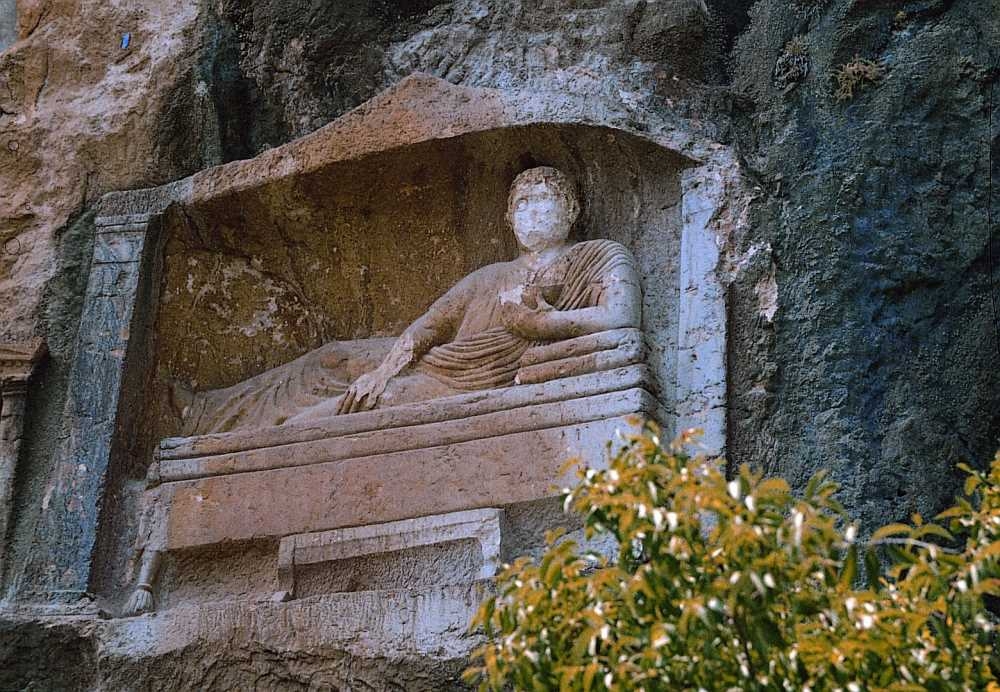
Adamkayalar is an archaeological site located on the road from Kızkalesi to Hüseyinler Village in the Silifke district of Mersin, renowned for its rock reliefs. The site consists of nine niches carved into the steep slope of Şeytan Deresi Valley, featuring figures engraved on the rock surfaces. The reliefs at Adamkayalar date to the 2nd century CE and shed light on the religious, social, and cultural structure of the period.
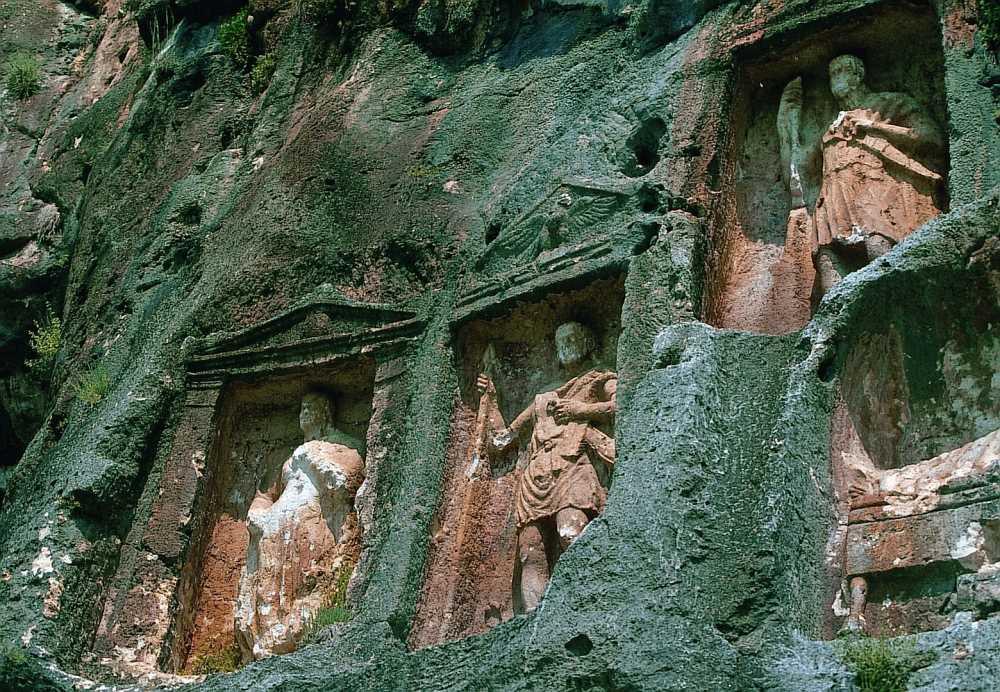
Adamkayalar (Culture Portal)
The most striking figures at Adamkayalar are those depicting scenes of the feast for the dead. In these scenes, the deceased are portrayed either alone or accompanied by their spouses and children. Among these figures are sons depicted as soldiers honoring their deceased fathers. At the center of the reliefs stands an altar stone alongside a male and a female figure. To the right of the female figure is a five-step platform carved into the rock, likely used for ritual ceremonies. These compositions provide important clues about the ritual and religious practices of the time.

Adamkayalar. (Republic of Türkiye Mersin Governorship)
In another relief, a man is shown carrying a goat by its horns in one hand and a bunch of grapes in the other. This scene may be interpreted as representing agriculture and animal husbandry. Additionally, in the farewell scene at Adamkayalar, a man is depicted shaking hands with his deceased wife, who is seated. This scene may symbolically reflect the relationship between the living and the dead.
Other figures appear in the reliefs whose functions are not fully understood. These include a man wearing a cloak and another man carrying an object in his hand. Although the precise meaning of these figures remains unclear, they may be regarded as symbols related to religious rituals.
Inscriptions found beneath the reliefs at Adamkayalar appear to list the names of deceased priests. These inscriptions have helped date the reliefs to the 2nd century BCE. They also provide valuable insight into the religious and social structure of Adamkayalar.
At the highest point of the Adamkayalar site is a tower structure and a complex of rooms with single or cross vaults. These structures were built using a polygonal wall system. Furthermore, the presence of numerous sarcophagi at the site suggests it may have served as a cemetery or a religious center.
Adamkayalar is located within the boundaries of Mersin Province, at the end of a two-kilometer stony road that branches westward from the main route between Kızkalesi and Silifke, five kilometers from Kızkalesi.
Feast for the Dead Scenes and Reliefs
Second Relief and Farewell Scene
Other Reliefs
Inscriptions and Dating
Adamkayalar Archaeological Site and Structures
Location and Access