

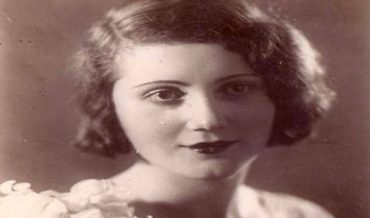

Afife Jale (1902–1941) is recorded in Turkish theatre history as the first Muslim woman to appear on stage. The social, political and cultural conditions that emerged during the final years of the Ottoman Empire and the transformative environment of the early Republic significantly shaped her artistic life. Afife Jale’s entry into theatre and the challenges she encountered reflect the historical development of women’s representation in the public sphere in Türkiye.
Throughout the 19th century, Muslim women were prohibited from appearing on stage in Ottoman theatre. Female roles were typically performed by non-Muslim actresses, particularly Armenian women. This practice was linked to both religious considerations and social norms. With the modernization process initiated during the Tanzimat and Second Constitutional periods, women’s presence in education, publishing and civil society began to expand. Parallel to these developments, new openings emerged in the performing arts.
Established in 1914, Darülbedayi was founded to provide Western-style theatre training and initially offered education exclusively to male students. In 1918, Darülbedayi accepted a group of five female students who were Muslim: Behire, Memduha, Beyza, Refika and Afife. Of this group, only Afife went on to perform on stage.
In 1920, Afife Jale took on the role of “Jale” under a stage name in Hüseyin Suat’s play Yamalar, performed at the Apollon Theatre in Kadıköy. This marked the first professional stage appearance by a Muslim woman in recorded history. Shortly after this event, the official prohibition of Muslim women appearing on stage was issued in writing, and Afife was removed from Darülbedayi.
After leaving Darülbedayi, Afife Jale continued performing with private theatre troupes. However, she faced pressure from the security forces of the time: her plays were censored, she was arrested, and she underwent various investigations. The repression she endured led to psychological and physiological health problems; the morphine prescribed for her treatment eventually caused addiction.
Afife Jale’s family did not support her involvement in theatre. She was eventually forced to withdraw from the stage, struggling to cope with financial hardship, health issues and social pressure. In 1929, she married composer Selahattin Pınar, but the marriage did not last. Throughout her artistic career, she received no support from state institutions or theatre circles; even after the proclamation of the Republic, she was never re-invited to Darülbedayi.
With the founding of the Republic of Türkiye in 1923, various legal rights were gradually extended to women. Reforms were introduced in education, employment and political representation, increasing women’s visibility in the public sphere.
However, the female figures promoted by the state during this period were shaped within a specific framework of modernity and social conformity. Individuals like Afife Jale, who gained a place on stage through personal struggle, were systematically excluded. In contrast, artists such as Bedia Muvahhit received direct state support to perform on stage.
Afife Jale died in 1941 at the Bakırköy Mental and Neurological Diseases Hospital in Istanbul. She is buried in the Edirnekapı Cemetery. For many years after her death, she was only marginally acknowledged in theatre history. However, beginning in the 1980s, she began to be more comprehensively evaluated within the contexts of feminist historiography and theatre research.
Afife Jale’s name is now kept alive through various cultural events. Since 1997, the Afife Theatre Awards, organized annually by the Istanbul City Theatres, have been established in her memory. In 2021, on the 80th anniversary of her death, an article published by the Anadolu Agency once again emphasized her significance in the world of culture and the arts.

Social and Cultural Structure of the Era
Darülbedayi and Afife Jale’s Stage Debut
Obstacles Encountered in Her Artistic Life
The Republican Era and Afife Jale’s Exclusion
Her Death and Subsequent Commemorative Efforts