

This article was automatically translated from the original Turkish version.
+1 More
Ahırlı Foam Halva is a traditional halva variety produced in the Ahırlı district of Konya Province, Türkiye, made using the root of the çöven plant (Gypsophila arrostii). The product was officially registered on 14 August 2024 under registration number 1629 as a “Geographical Indication” pursuant to Law No. 6769 on Industrial Property. The registration application was submitted by the Ahırlı District Directorate of Agriculture and Forestry.
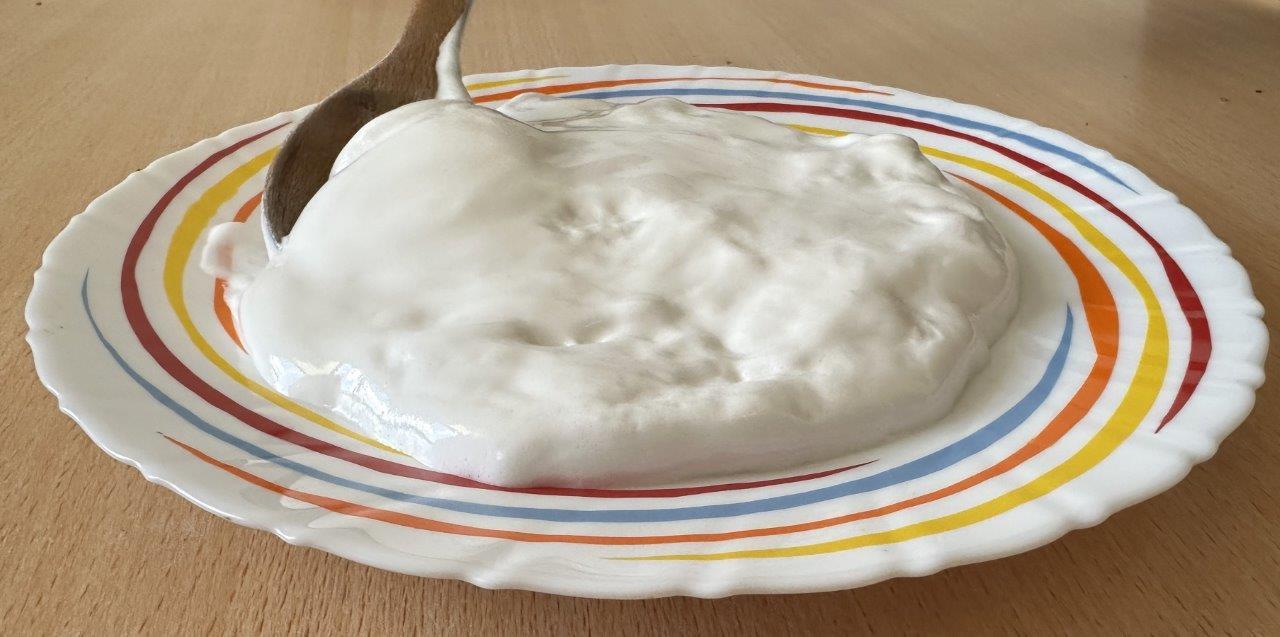
Ahırlı Foam Halva is a sweet made from çöven root, white sugar, citric acid, and water. It has a snow-white color, a creamy, foamy texture, and a fluid, spreadable consistency that rapidly dissolves in the mouth with a light, airy structure. Its flavor is mildly sweet, and it carries an aromatic quality derived from the çöven root.
The distinctive characteristic of the product is provided by saponin, a natural compound found in the çöven root. This substance enables the boiled çöven water to foam when whipped. When this concentrated çöven foam is combined with an agave-like mixture of citric acid and sugar, Ahırlı Foam Halva is formed. The halva is typically served with tahini and is commonly consumed during special occasions, guest接待, and local events within Konya’s culinary culture.
The origins of Ahırlı Foam Halva date back to the Seljuk and Ottoman periods. Historically, grape molasses (pekmez) was used in place of sugar in its production. This demonstrates the product’s adaptability to historical production conditions and the preservation of its traditional structure up to the present day.
The production center of foam halva has been located since the Seljuk era on the northern slopes of the Taurus Mountains, where naturally occurring çöven plants and low-calcium natural spring waters serve as key environmental factors supporting the halva’s characteristic foamy texture.
According to the registration certificate, the following ingredients are used to produce 27 kilograms of Ahırlı Foam Halva:
1. Preparation of çöven water: 80 grams of crushed çöven root is added to 2 liters of water and boiled for 6–7 hours at a temperature of 120–130 °C. The resulting çöven water is filtered three times to remove sediment.
2. Preparation of the syrup: In a separate container, sugar, citric acid, and water are mixed and boiled until they reach a syrupy consistency.
3. Foaming and mixing: Traditionally, copper cauldrons (diğdan) were used; today, stainless steel mixers and blending systems are preferred. The foamed çöven water is mixed with the hot syrup. This process takes approximately 2–3 hours when performed with a wooden spoon using modern methods. When done by traditional hand method, mixing continues for 6–7 hours.
4. Resting and packaging: Once the halva reaches a creamy foam consistency, it is allowed to rest and, after cooling, becomes ready for consumption or packaging. In historical periods when sugar was unavailable, the same method was used but with pekmez substituted for sugar.
The Ahırlı district is characterized by karstic water sources originating from the Taurus Mountains, with low-calcium spring waters. This water composition interacts with the saponin in the çöven root to produce a denser and more persistent foam. Simultaneously, the naturally occurring çöven plant in the region’s flora is the fundamental element defining the halva’s local character.
These environmental conditions and production traditions directly link the reputation of Ahırlı Foam Halva to its geographical boundaries. Therefore, all stages of production must be carried out within the administrative limits of Ahırlı District, Konya Province.
The production of Ahırlı Foam Halva is regularly monitored by a three-member oversight committee coordinated by the Ahırlı District Directorate of Agriculture and Forestry. The committee includes representatives from:
Inspections are conducted twice annually, with additional investigations carried out as needed or upon complaint. Inspections evaluate the production method, ingredient ratios, final product consistency, and correct usage of the geographical indication emblem.
Ahırlı Foam Halva is an integral part of Ahırlı District’s cultural identity and gastronomic heritage. Local production techniques, the region-specific çöven plant, and the use of Taurus spring waters impart a unique character to the product. Its registration aims to protect local producers and promote regional gastronomic tourism within Ahırlı’s economy.

Definition and Distinctive Characteristics
History
Production Method
Geographical Features and Product Link
Monitoring and Protection
Cultural and Economic Significance