This article was automatically translated from the original Turkish version.
Motif Sources | Seljuk, Ilkhanid, Akkoyunlu, and Ottoman geometric patterns | ||||||||
|---|---|---|---|---|---|---|---|---|---|
Production Techniques | Inlay, carving, embossing, and engraving | ||||||||
Auxiliary Materials | Bull horn, silver, bone, and rice | ||||||||
Primary Raw Material | Cultivated walnut tree grown in the Ahlat region | ||||||||
Historical Background | Approximately 3000 years (registered with Urartu period findings) | ||||||||
Geographical Origin | Bitlis Province, Ahlat District | ||||||||
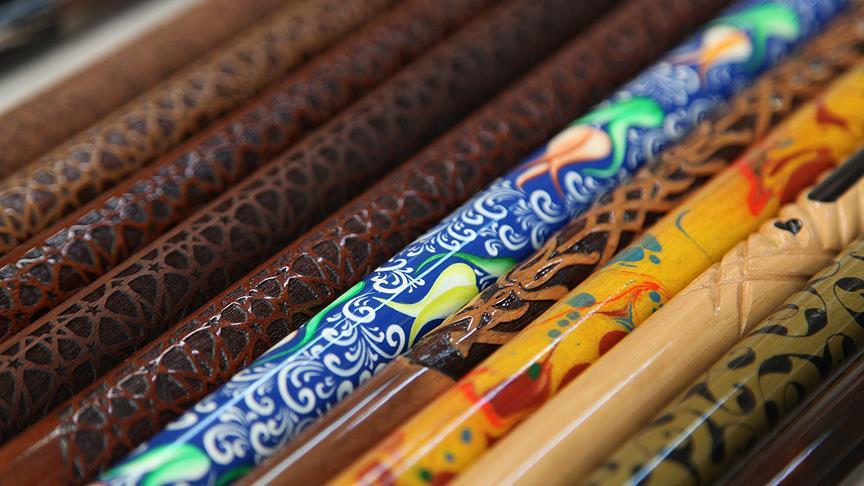
Ahlat Cane is a traditional craft product made from walnut trees grown in the Ahlat district of Bitlis province, with origins dating back approximately 3,000 years. The patterns on the product are uniquely designed using motifs found in historical artifacts of the region, including Seljuk, Ilkhanid, Akkoyunlu, and Ottoman elements, and have been passed down through generations to the present day. In 2005, during excavations at Van-Yoncatepe that uncovered artifacts from the Urartian period, a find identified as the world’s oldest known wooden cane was discovered and is regarded as the ancestor of the Ahlat cane. As a result of an application by the Ahlat District Governorship, the product was officially registered as a geographical indication with registration number 298 by the Turkish Patent and Trademark Office on 26.12.2017.
The craft of cane-making in Ahlat district is a deeply rooted tradition that has continued uninterrupted from the Seljuk period to the present. The oldest surviving canes in the district, passed down from generation to generation, are estimated to be around 150 and 250 years old. The designs of the canes are primarily inspired by decorative elements found on historical artifacts unearthed during excavations in Ahlat, as well as on stone, wood, and architectural embellishments of historical buildings in the area. The application of traditional Turkish art patterns such as ebru, tezhip, and miniature painting onto the cane surface is a distinctive feature unique to the Ahlat cane.
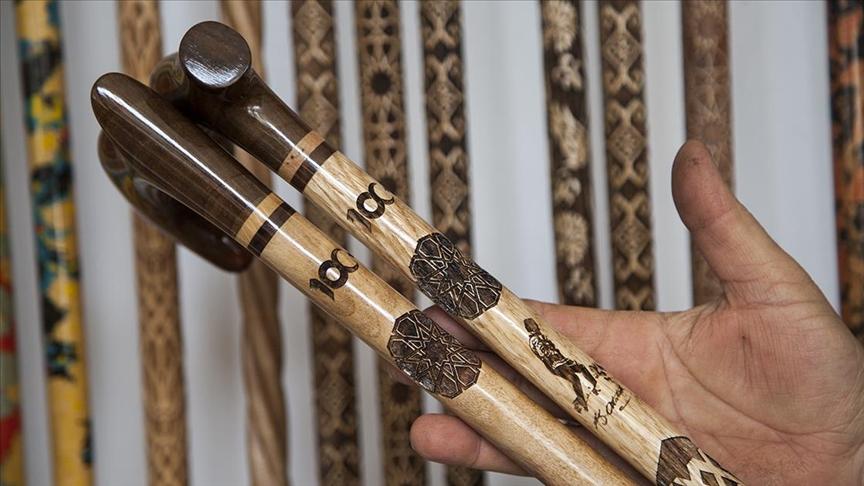
Traditional Motifs on Ahlat Cane. (Anadolu Ajansı)
The primary material used in production is the timber of walnut trees cultivated in the Ahlat region through systematic irrigation and cultivation. Trees grown in this cultural environment have long, straight shoots and few knots, providing technical advantages for cane-making. Walnut trees growing naturally without control tend to have excessive knots and irregular shoots and are therefore not preferred for production. In addition to walnut wood, valuable materials such as silver and buffalo horn may be incorporated into the design as required. At the tip of the cane, where it contacts the ground, bones from animals such as horse, buffalo, cattle, or ram are used to protect the surface.
Cane production requires a meticulous technical process from raw material preparation to final polishing.
Freshly cut walnut timber is not exposed directly to sunlight to prevent warping and cracking. The wood must be dried for at least one year in a dark, enclosed space to allow moisture to drain, followed by an additional year of natural air-drying outdoors, for a minimum total drying period of two years.
The dried timber is shaped using region-specific custom molds and planed into a rectangular prism form. The shaft is then tapered from top to bottom using a spindle turning machine and hand rasps. The handle is separately cut and rounded before being inserted into a dowel hole in the shaft and secured with wood glue.
Motifs are applied to the cane shaft using the following four methods:
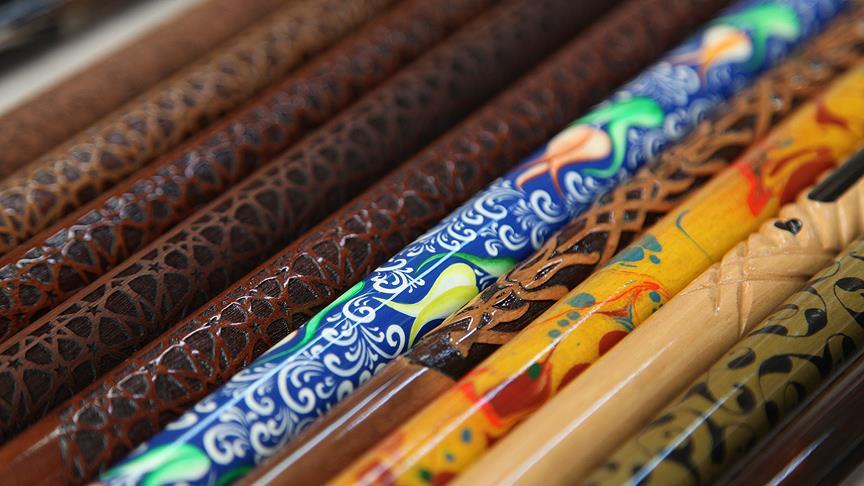
Traditional Motifs on Ahlat Cane. (AA)
Ahlat canes are divided into two main types according to their intended use: durable models designed for the elderly and infirm, and artistic, gift-oriented, or decorative models.
Two primary polishing techniques are applied:
Compliance of production with registration standards is periodically monitored by an inspection authority coordinated by the Ahlat District Special Administration, evaluating raw material selection, mold usage, and production methodology.
Adıyaman, Serdar. "Asırlık motifleri bastona yansıtıyor." Anadolu Ajansı, December 13, 2018. Accessed January 11, 2026. https://www.aa.com.tr/tr/yasam/asirlik-motifleri-bastona-yansitiyor-/1337258
Doğan, Hilal and Ayhan Alaz. "Baston Sanatına Ahlat ve Devrek İmzası." Türk Tarım Orman Dergisi. October 30, 2018. Accessed January 11, 2026. https://www.turktarim.gov.tr/Haber/174/baston-sanatina-ahlat-ve-devrek-imzasi
Turk Patent and Trademark Office. "Devrek Bastonu Coğrafi İşaret Tescil Belgesi." Accessed January 11, 2026. https://ci.turkpatent.gov.tr/Files/GeographicalSigns/cef12515-72e1-48ee-b8dd-5ffabff67051.pdf
Türkiye Kültür Portalı. "Ahlat Bastonu - Bitlis." Accessed January 11, 2026. https://www.kulturportali.gov.tr/turkiye/bitlis/nealinir/ahlat-bastonu


Motif Sources | Seljuk, Ilkhanid, Akkoyunlu, and Ottoman geometric patterns | ||||||||
|---|---|---|---|---|---|---|---|---|---|
Production Techniques | Inlay, carving, embossing, and engraving | ||||||||
Auxiliary Materials | Bull horn, silver, bone, and rice | ||||||||
Primary Raw Material | Cultivated walnut tree grown in the Ahlat region | ||||||||
Historical Background | Approximately 3000 years (registered with Urartu period findings) | ||||||||
Geographical Origin | Bitlis Province, Ahlat District | ||||||||
Historical Background and Cultural Value
Raw Material and Material Properties
Production Methodology
Drying Process:
Shaping and Assembly:
Motif Application Techniques
Typology and Classification
Polishing and Inspection