


This article was automatically translated from the original Turkish version.
+2 More
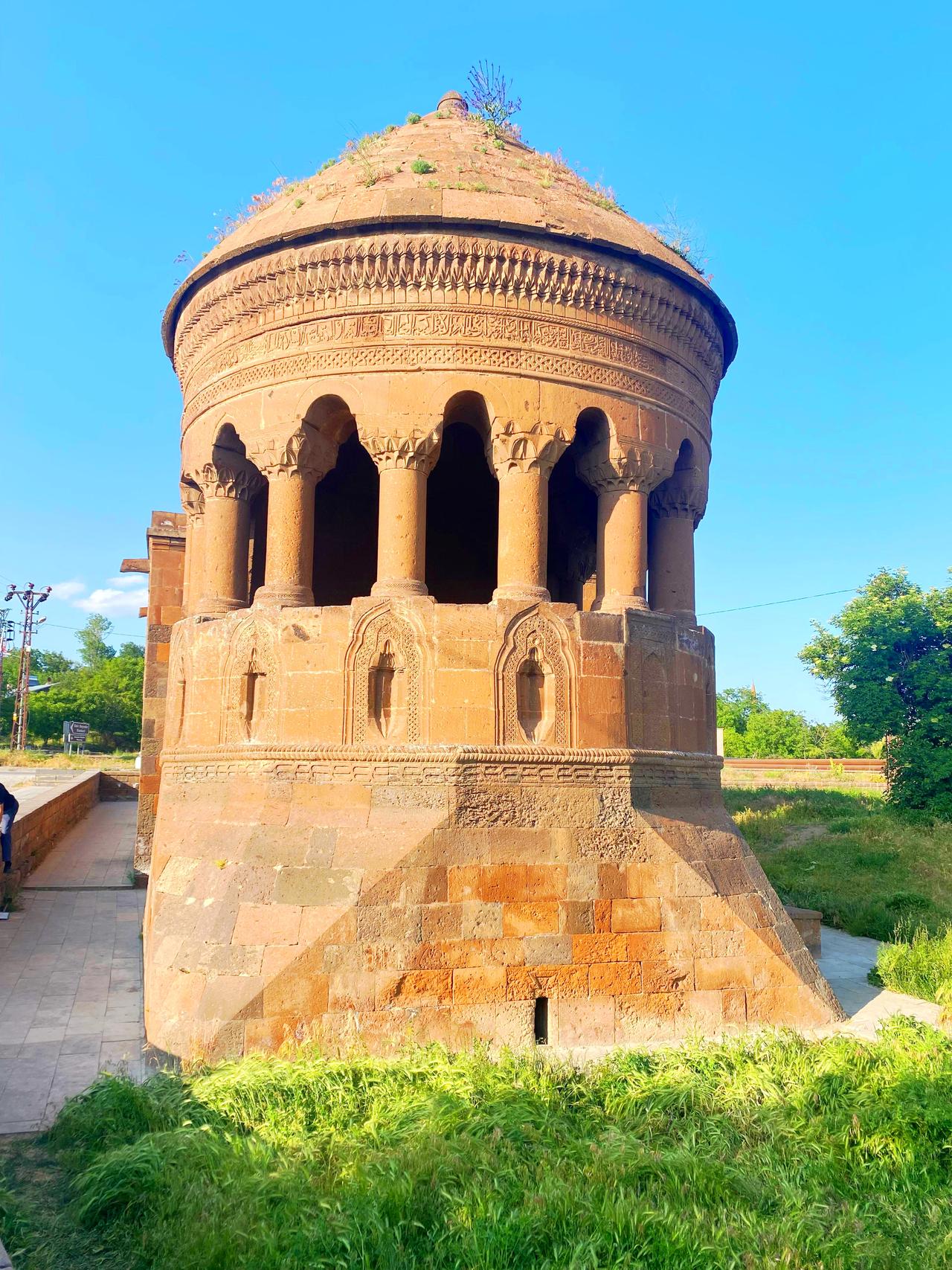
Kümbet Made from Ahlat Stone (Photo: Selin Nisa Baykar)
Region of Origin | Ahlat - Bitlis / Türkiye | ||||||||
|---|---|---|---|---|---|---|---|---|---|
Geological Origin | Tuff Pumice Ignimbrite | ||||||||
Color Varieties | Beige Gray Brown Red | ||||||||
Area(s) of Use | Historical monument restoration Architectural decoration Interior/exterior claddings Landscaping | ||||||||
Notable Structures | Emir Bayındır Kümbeti Ahlat Seljuk Cemetery | ||||||||
Ahlat stone is a type of stone extracted from the foothills of Mount Süphan and Mount Nemrut in the Ahlat district of Bitlis Province. It originates from volcanic rocks such as ignimbrite, pumice, and tuff. It has been used in numerous historical structures and continues to be employed in many contemporary buildings. It commonly appears in red, brown, gray, and beige hues, with different uses depending on its color.
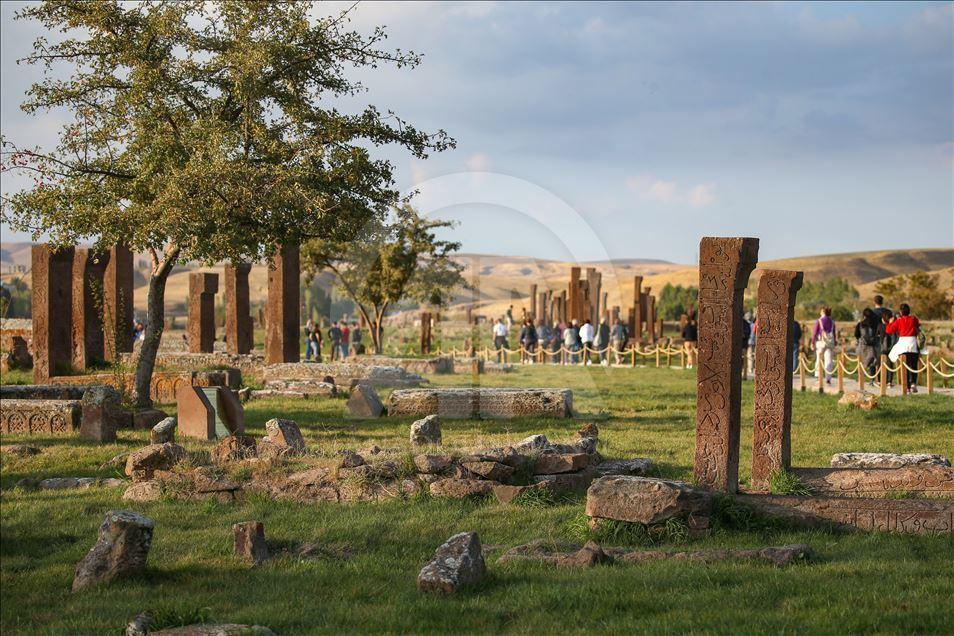
Selçuklu Mezarlığı (Anadolu Agency)
This stone, formed by the combination of volcanic rocks such as tuff, ignimbrite, and pumice, is soft when first extracted and easy to work with; however, it hardens over time upon exposure to air, becoming durable. Thanks to its light and sponge-like structure, it provides sound and thermal insulation, making it a preferred material for both interior and exterior building facades. It is available in a variety of colors including red, brown, gray, and beige tones. Due to its aesthetic richness and ease of shaping, it has been widely used in decorative stonework and historical architecture. Additionally, its porous texture allows the stone to breathe, contributing to moisture control.
When volcanic mountains such as Nemrut and Süphan erupt, the ejected lava flows cool upon contact with the atmosphere and transform into tuff, a very light type of volcanic rock. Tuff is a lightly porous stone variety. It begins to consolidate when mixed with pumice (sponge stone), volcanic fragments, and ignimbrite. This consolidation gradually hardens and compacts over millions of years due to geological processes and subsurface pressure, yet retains its workability. As a result, it becomes suitable for use in various buildings and structures.
This variety, distinguished by its reddish tones, derives its color from the chemical composition and oxidation processes of minerals such as iron oxide within it. Due to its porous and lightweight structure, it is an excellent material for thermal and acoustic insulation, and its ease of shaping further enhances its appeal. These properties make it suitable for both architectural decoration and exterior cladding. Red Ahlat stone, frequently found in historical structures from the Seljuk and Ottoman periods, is one of the traditional building elements noted for its distinctive aesthetic impact.
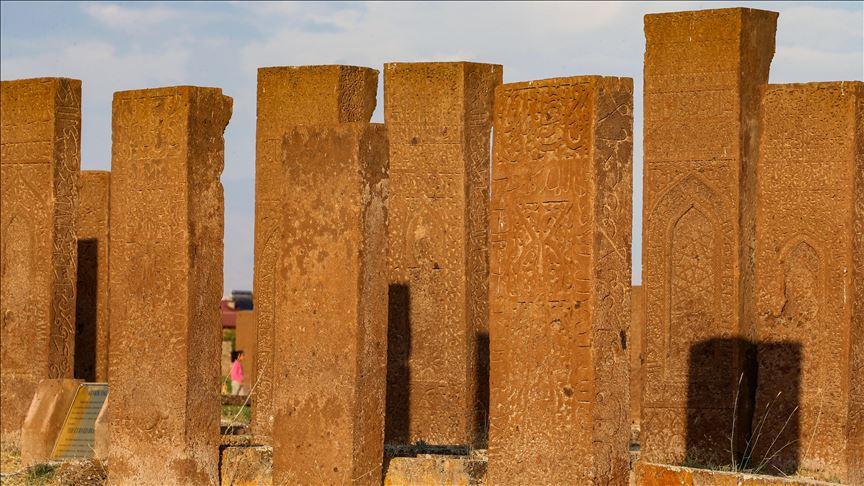
Example of the Stone’s Use in Historical Structures: Selçuklu Mezarlığı (Anadolu Agency)
Brown Ahlat stone acquires its color from the minerals and chemical components it contains, ranging from dark chestnut to beige tones. It is commonly used in landscape design, fountains, garden decorations, and garden walls. It has been employed in numerous historical monuments such as the Selçuklu Mezarlığı and Emir Bayındır Kümbeti. When first extracted from the quarry, the stone has a softer structure, but it hardens and becomes more durable after being worked and over time.
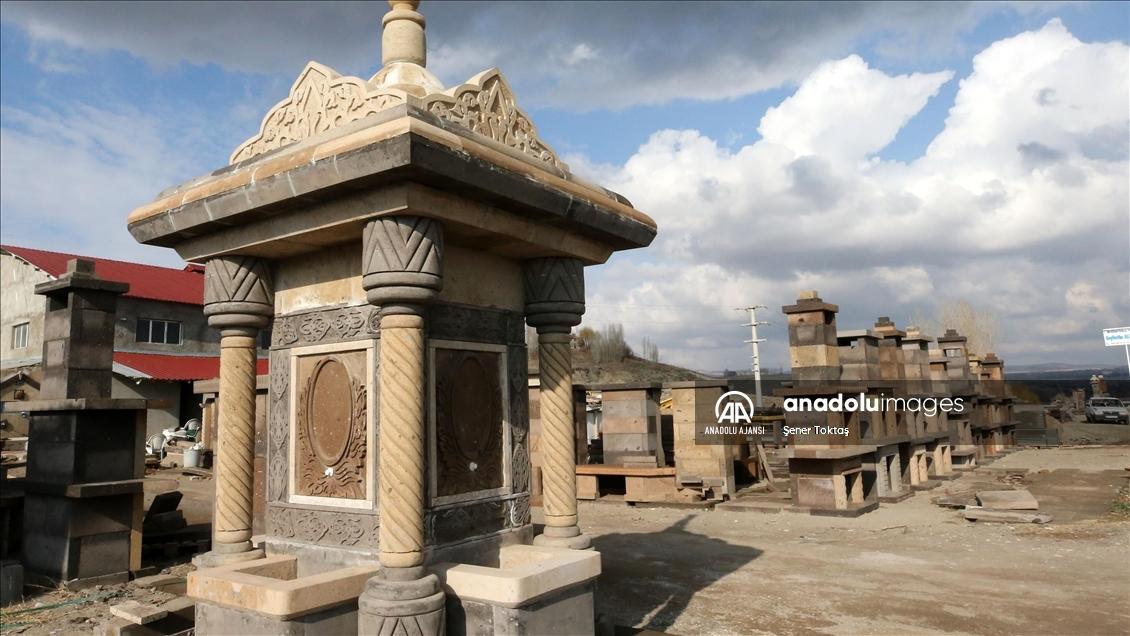
Example of the Stone’s Use in Landscape Design (Anadolu Agency)
Gray Ahlat stone derives its color from its pumice content and mineral composition. Its lightweight, porous, and moisture-permeable structure offers particular advantages for acoustic and thermal insulation. Its gray tones darken when wet and lighten when dry, providing an aesthetic appearance suitable for both interior and exterior cladding. Its ease of shaping has made it a preferred material in stonework and decorative details, and it has also found application in modern architectural practices.

Example of the Stone’s Use in Stonework Art ((Anadolu Agency)
Anadolu Ajansı. "Ahlat Taşının Nemrut'un Eteklerinden Yapılara Uzanan Zorlu Yolculuğu." Accessed July 30, 2025. https://www.aa.com.tr/tr/pg/foto-galeri/ahlat-tasinin-nemrutun-eteklerinden-yapilara-uzanan-zorlu-yolculugu
Anadolu Ajansı. "Ahlat taşının Nemrut'un eteklerinden yapılara uzanan zorlu yolculuğu." Accessed July 29, 2025.
Anadolu Ajansı. "UNESCO Listesine Alınan Ahlat Taş İşçiliği Geleneği Hünerli Ellerle Yaşatılıyor." Accessed July 30, 2025.
Anadolu Ajansı. "UNESCO Listesine Alınan Ahlat Taş İşçiliği Geleneği Hünerli Ellerle Yaşatılıyor." Accessed July 30, 2025.
Biçer, Ayşe. “Ahlat – Malazgirt Yapı Taşlarının Isıl Ve Mekanik Özellikleri.” *Fırat Üniversitesi Mühendislik Bilimleri Dergisi* 31, no. 2 (September 2019): 301–7. Accessed July 22, 2025. https://dergipark.org.tr/tr/download/article-file/796791
Güzel, Eylem, and Kurtuluş Demirkol. “Ahmed Bin Hüseyin: Ahlat Selçuklu Meydan Mezarlığı’nda Bir Taş Ustası”. *Dumlupınar Üniversitesi Sosyal Bilimler Dergisi*, no. 78 (October 2023): 311–25. Accessed July 22, 2025. https://dergipark.org.tr/tr/download/article-file/3339564
Mutlu, M. "Geleneksel Yapı Malzemesi Olarak Kullanılan Ahlat Taşı nın Fiziksel ve Mekâniksel Özellikleri Hakkında Bir Araştırma." *Standart ve Ekonomi Dergisi*, no. 2 (2002): 44–49. Accessed July 22, 2025. Accessed adresi
Sökmen, Sultan. "Ahlat’ta Geleneksel Taş İşçiliği." *Trakya Üniversitesi Sosyal Bilimler Dergisi* 17, no. 2 (2015): 99-119. Accessed July 22, 2025. https://dergipark.org.tr/tr/download/article-file/321301

Kümbet Made from Ahlat Stone (Photo: Selin Nisa Baykar)
Region of Origin | Ahlat - Bitlis / Türkiye | ||||||||
|---|---|---|---|---|---|---|---|---|---|
Geological Origin | Tuff Pumice Ignimbrite | ||||||||
Color Varieties | Beige Gray Brown Red | ||||||||
Area(s) of Use | Historical monument restoration Architectural decoration Interior/exterior claddings Landscaping | ||||||||
Notable Structures | Emir Bayındır Kümbeti Ahlat Seljuk Cemetery | ||||||||
Properties
Formation
Varieties and Applications
Red Ahlat Stone
Brown Ahlat Stone
Gray Ahlat Stone