This article was automatically translated from the original Turkish version.
+2 More
Location | Doğubayazıt Ağrı | ||||||||
|---|---|---|---|---|---|---|---|---|---|
Construction Date(s) | 2014–2016 | ||||||||
Opening Date(s) | 13 August 2017 | ||||||||
Architectural Style(s) | Ottoman architecture of the 18th–19th centuries influential | ||||||||
Building Units | Medrese, Traditional Doğubayazıt House, Courtyard and şadırvan | ||||||||
Function(s) | City museum Cultural heritage and ethnography exhibition space | ||||||||
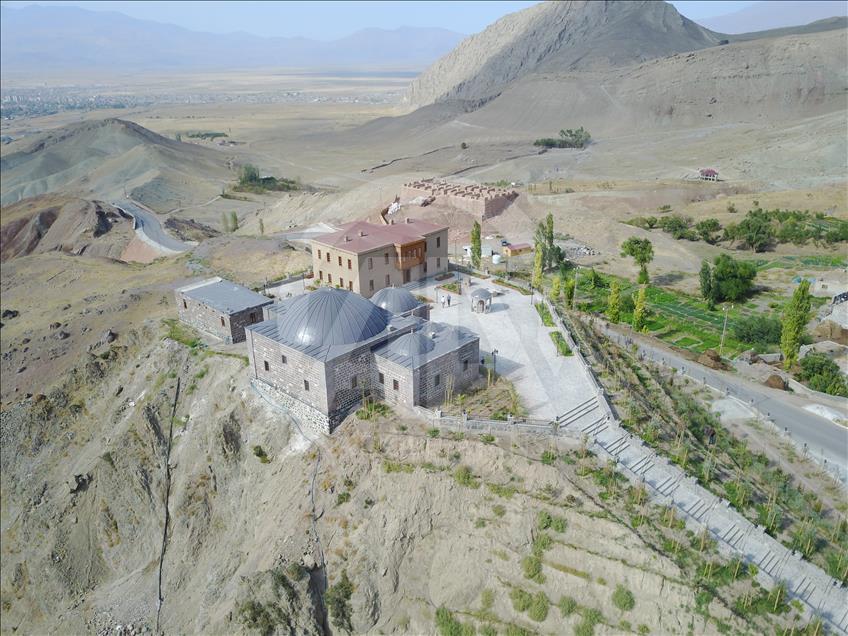
Ahmed-i Hani City Museum is a cultural structure located in the center of Doğubayazıt district, Ağrı Province, in Çifte Pınar Neighborhood, south of the İshak Paşa Palace road, on the site of the former Government House. The museum was founded in 2014 and opened to the public in 2017. Designed with consideration for 18th and 19th century Ottoman architectural elements, it was constructed in a külliye layout. The museum consists of two main buildings: one in the form of a medrese and the other a traditional Doğubayazıt house, with a şadırvan situated at the center of the courtyard between them.
%2520kopya.jpg&w=1280&q=75)
Ahmed-i Hani City Museum and Traditional Doğubayazıt House (Culture Portal)
The museum was constructed between 2014 and 2016 through the initiative of the Doğubayazıt Subprovince and with financial support from the Ministry of Development and the Serhat Development Agency (SERKA). The architectural design was prepared by Dr. Şahabettin Öztürk. The foundation-laying ceremony took place on 19 July 2014, attended by the then Minister of Interior, the Governor of Ağrı, members of parliament, local officials and members of the public. The opening ceremony was held on 13 August 2017 as part of the Ahmed-i Hani Culture, Art and Tourism Festival, with the participation of the then Minister of Culture and Tourism and the Minister of Family and Social Policies.
The museum was established to preserve the historical, cultural and architectural identity of Doğubayazıt, to exhibit the lifestyle of the local population and to introduce the intellectual legacy of Ahmed-i Hani. It is named after Ahmed-i Hani (Ehmedê Xanî), a 17th-century Sufi poet and thinker. The museum operates under the administration of the Doğubayazıt Subprovince.
The museum is situated on a hilltop commanding a panoramic view of the town of Doğubayazıt. From this location, the old Doğubayazıt settlement, İshak Paşa Palace, and the ruins of castles from the Urartian and Ottoman periods, as well as Mount Ağrı, are visible. Access to the museum complex is provided via a 100-meter side road branching off from the southern side of the İshak Paşa Road, followed by stone staircases.
The Ahmed-i Hani City Museum Külliyesi comprises two buildings inspired by traditional Ottoman architecture: the Ahmed-i Hani Medrese and the Traditional Doğubayazıt House. The külliye courtyard extends in an east-west direction and contains a şadırvan constructed from hewn stone. The buildings are arranged in a detached layout.
Located on the southern side of the courtyard and oriented east-west, this single-story structure is built of basalt and andesite stone. The building features a central large dome flanked symmetrically by six smaller domes. The structure is supported by pointed arches connected by metal tension rods. Inside, the spatial arrangement includes symmetrical fireplaces, niches and bookshelves. The medrese space has been organized as a museum illustrating scenes from Ahmed-i Hani’s works through silicone sculptures. Passages from his works Akide-i İman, Nubihar-ı Biçukan and Mem û Zin are presented through figurative sculptures and ethnographic elements.
%2520kopya.jpg&w=1280&q=75)
Ahmed-i Hani Medrese (Culture Portal)
This two-story structure, located on the western side of the courtyard, is built using traditional adobe materials. The interior layout reflects the conventional domestic culture of Doğubayazıt. The ground floor contains a kitchen, tandır oven, storeroom and sofalar; the upper floor houses sitting rooms and a köşk section. Scenes depicting the daily life, customs and traditions of the Doğubayazıt community are rendered through silicone sculptures. Themes such as local attire, jewelry, henna night, dengbêj tradition, tandır culture and handicrafts are presented using ethnographic artifacts. This section of the museum also displays radios, gas lamps, copper kitchen utensils, hand-knitted socks and slippers, carpet-weaving looms and historical photographs.
%2520kopya.jpg&w=1280&q=75)
Traditional Doğubayazıt House (Culture Portal)
The Ahmed-i Hani City Museum features two distinct exhibition areas. In the medrese section, thematic displays present scenes from the life, philosophy and works of Ahmed-i Hani; in the Old Doğubayazıt House section, local lifestyles, folk culture and traditional production methods are depicted.
In the medrese building, scenes of Ahmed-i Hani teaching his students, educational representations aimed at children, and a segment from the Mem û Zin mesnevi are rendered through sculptures. In the Doğubayazıt House, scenes of women baking bread, villagers spinning wool, preparations for henna night, carpet-weaving activities and dengbêj storytelling are artistically recreated. Additionally, in the garden area, old agricultural tools, plows, railway tracks and shears are exhibited.
The Ahmed-i Hani City Museum serves as a vital center for the preservation and promotion of the cultural heritage of Doğubayazıt district. It functions as a “memory space” that sustains the material and spiritual values of the local community and reinforces regional identity.
Akça, İbrahim. “Ahmed-i Hani Kent Müzesi ve Eski Beyazıt Evi.” *Türkiye Turizm Ansiklopedisi*, 2020. Accessed October 8, 2025. https://turkiyeturizmansiklopedisi.com/ahmed-i-hani-kent-muzesi-ve-eski-beyazit-evi.
Anadolu Ajansı. “Ahmed-i Hani Kent Müzesi’ne Ziyaretçi İlgisi.” Accessed October 8, 2025. https://www.aa.com.tr/tr/pg/foto-galeri/ahmed-i-hani-kent-muzesine-ziyaretci-ilgisi/147.
Engin, Hatice. “Bir Kentin Hafıza Mekânı; Doğubayazıt Ahmed-i Hani Kent Müzesi.” *Munzur Üniversitesi Sosyal Bilimler Dergisi* 10, no. 1 (2021): 455–471. Accessed October 8, 2025. https://dergipark.org.tr/tr/download/article-file/1631142.
Ministry of Culture and Tourism of the Republic of Türkiye. "Ahmed-i Hani City Museum and Traditional Doğubayazıt House." Ağrı Provincial Directorate of Culture and Tourism. Accessed October 8, 2025. https://agri.ktb.gov.tr/TR-393066/ahmed-i-hani-kent-muzesi-ve-geleneksel-dogubayazit-evi.html.
Ministry of Culture and Tourism of the Republic of Türkiye. "Ahmed-i Hani Kent Müzesi ve Eski Bayezid Evi." *Kültür Portalı*. Accessed October 8, 2025. https://www.kulturportali.gov.tr/turkiye/agri/gezilecekyer/dogubayazit-kent-muzesi-.
Öztürk, Şahabettin, and Vedat Evren Belli. “Ahmed-i Hani Kent Müzesi (Medrese ve Ev).” IV. Uluslararası Ağrı Dağı ve Nuh’un Gemisi Sempozyumu, October 18–20, 2017, Ağrı. Accessed October 8, 2025. https://www.researchgate.net/publication/368983431_Ahmed-i_Hani_Kent_Muzesi_Medrese_ve_Ev.

Location | Doğubayazıt Ağrı | ||||||||
|---|---|---|---|---|---|---|---|---|---|
Construction Date(s) | 2014–2016 | ||||||||
Opening Date(s) | 13 August 2017 | ||||||||
Architectural Style(s) | Ottoman architecture of the 18th–19th centuries influential | ||||||||
Building Units | Medrese, Traditional Doğubayazıt House, Courtyard and şadırvan | ||||||||
Function(s) | City museum Cultural heritage and ethnography exhibition space | ||||||||
No Discussion Added Yet
Start discussion for "Ahmed-i Hani City Museum and Traditional Doğubayazıt House" article
History
Location and Environmental Features
Architectural Features
Ahmed-i Hani Medrese (Sheikh Ahmed El-Hani Museum)
Traditional Doğubayazıt House (Old Bayezid House)
Exhibition and Arrangement System
Current Status and Significance