

This article was automatically translated from the original Turkish version.
+2 More
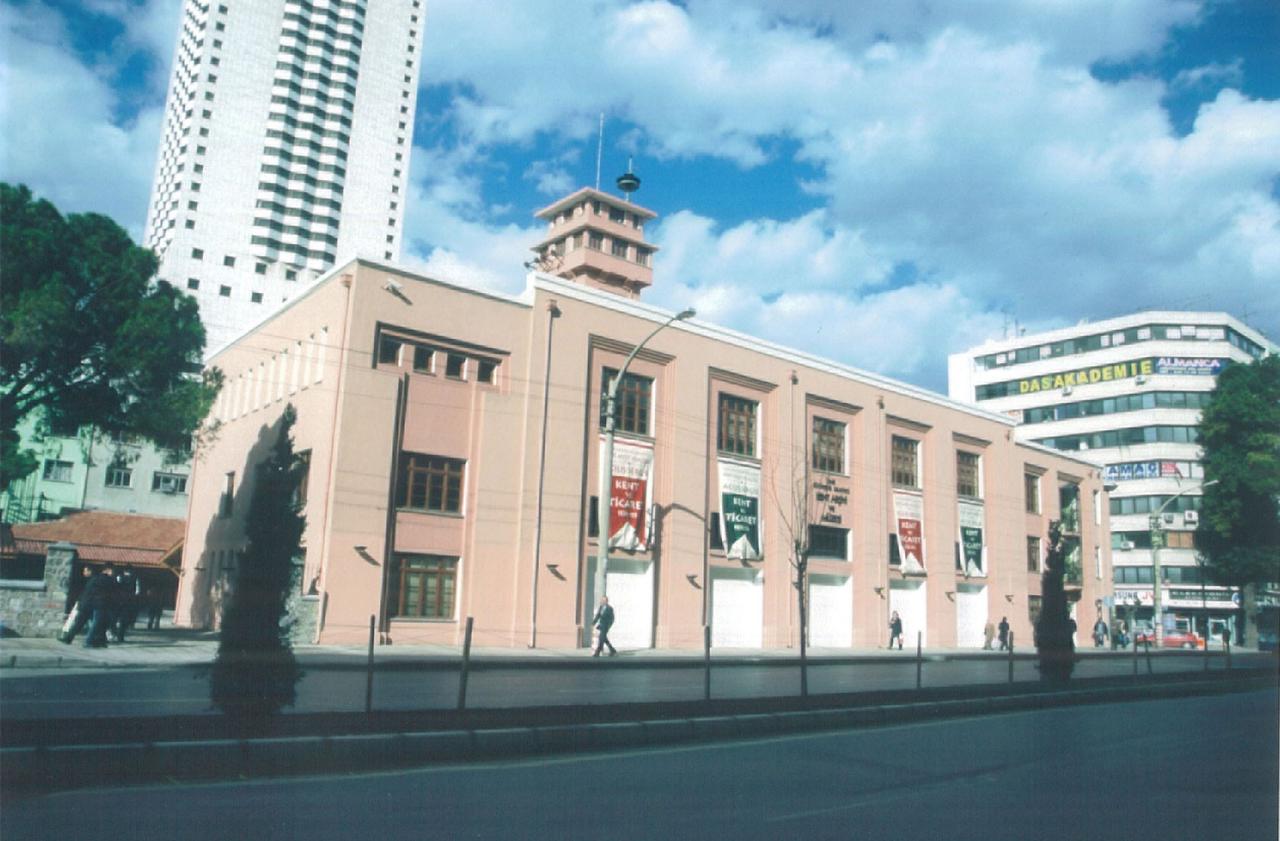
Ahmet Piriştina City Archive and Museum (APİKAM) is a city archive and museum institution operating in a historic fire station building in the Çankaya district of İzmir. The institution simultaneously fulfills both archive and museum functions and operates under the Directorate of Culture and Arts of the İzmir Metropolitan Municipality. APİKAM, a first of its kind in Türkiye, has been established to preserve, archive, and make accessible the city’s historical and cultural values.

Ahmet Piriştina City Archive and Museum
The building was constructed in 1932 following measures taken after a major fire in İzmir, serving as a fire station. Designed by architect Mesut Özok, the structure exhibits architectural features characteristic of the early Republican period. The fire station, opened in 1932, operated continuously for 70 years until November 2001.
As the surrounding area became densely developed with high-rise buildings and traffic congestion increased along the boulevard, the building could no longer serve effectively as a fire station. In 2002, under the urban heritage preservation project initiated by İzmir Metropolitan Mayor Ahmet Piriştina, restoration works began. The museum opened on 10 January 2004 under the name İzmir City Museum and Archive (İKEMA). After the death of Ahmet Piriştina, the museum was renamed Ahmet Piriştina City Archive and Museum (APİKAM).
The museum was established to carefully preserve and evaluate İzmir’s historical and traditional values and to document the city’s archive using contemporary methods. The institution consists of two main units—the city archive and the museum—and also assumes the official archival responsibility on behalf of the İzmir Metropolitan Municipality. The museum aims to convey to residents the historical depth and cultural heritage of İzmir.
The City Archive section, located on the second floor, is a repository of all information and documents relating to İzmir in the fields of history, culture, architecture, art history, and ethnography. The archived documents are classified and digitized for public research. Documents are preserved through hybrid cameras capable of producing both microfilm and digital copies. Additionally, the archive research room features computerized workstations and a library with a capacity of 11,000 books.
The City Museum, situated on the ground floor, presents the city’s history visually. Designed in an accessible museum format, this section hosts exhibitions on various themes. It also includes a 55-seat theater and meeting hall, a sales area for publications by the İzmir Metropolitan Municipality City Library, and spaces where newspapers and manuscript works from the National Library collection are made available to researchers. In the museum courtyard, there is a restaurant offering regional Aegean delicacies and an outdoor garden area for open-air exhibitions.
The building housing the Ahmet Piriştina City Archive and Museum was constructed between 1930 and 1932 as a fire station and reflects the influences of early Republican architecture. Designed by Mesut Özok, it represents a significant municipal investment realized under the resource constraints of its time.
The structure has a rectangular plan and embodies the simplicity and functionality typical of public buildings from the Republican era. Its location was strategically chosen at the time to allow rapid response to fires, with direct access to a boulevard. Over time, urban development and increased traffic made it difficult to continue its function as a fire station; however, this location and structure proved suitable for its new role as a museum and city archive.
During the restoration process, the building’s historical fabric was preserved. Decorative elements, interior fittings, and exhibition spaces were modernized in harmony with the building’s original architectural features. As a result, the building has been maintained as an exemplary work of early Republican architecture while acquiring the functions of a contemporary city archive and museum.

No Discussion Added Yet
Start discussion for "Ahmet Piriştina City Archive and Museum" article
History and Establishment Process
Objectives and Responsibilities
Sections of the Museum
City Archive Section
City Museum Section
Architectural Features