


This article was automatically translated from the original Turkish version.
+2 More
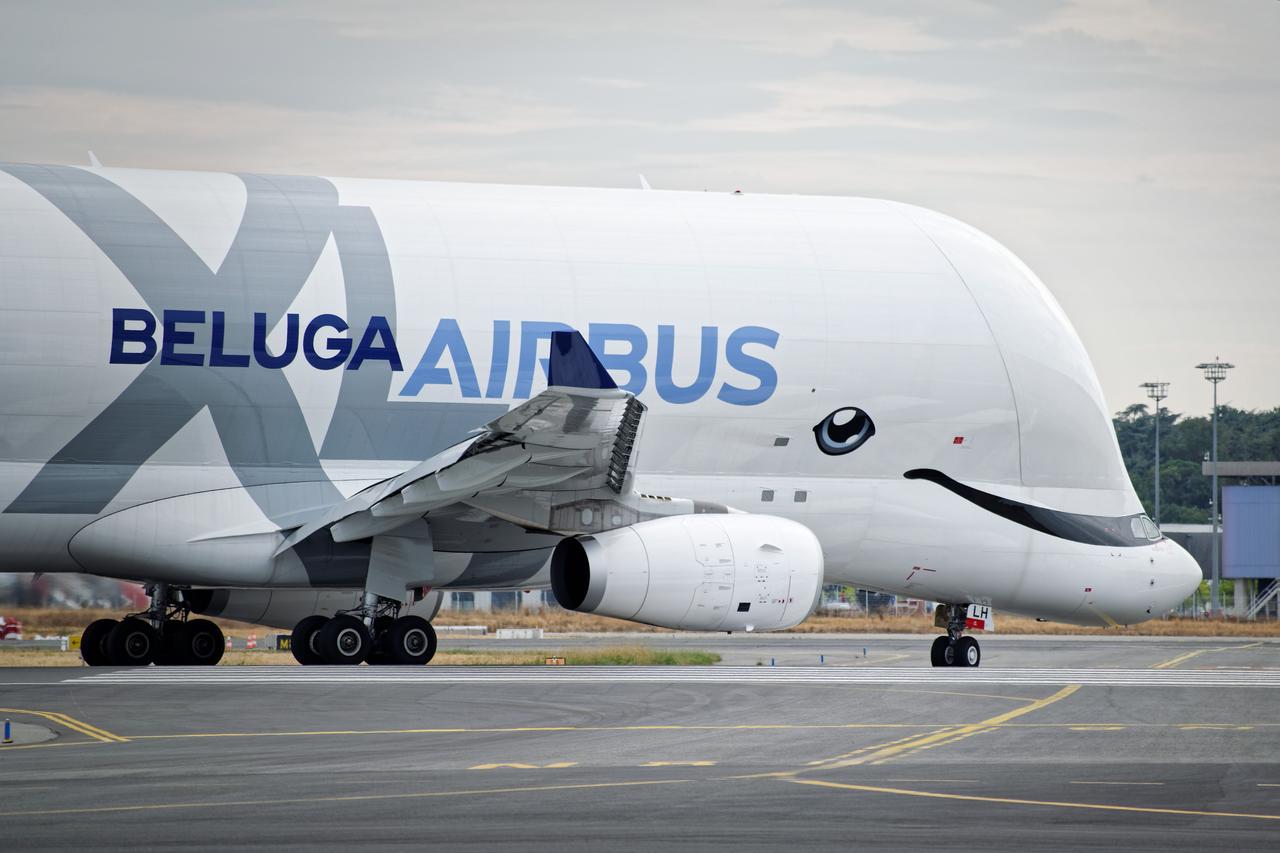
Airbsu Beluga
Producer(s) | Airbus Industrie (Europe) | ||||||||
|---|---|---|---|---|---|---|---|---|---|
First Flight(s) | 13 September 1994 | ||||||||
Entry into Service | 1995 | ||||||||
Aircraft Type(s) | Heavy cargo aircraft (oversized cargo aircraft) | ||||||||
Models | BelugaXL (A330-743L) Beluga ST (A300-600ST) | ||||||||
Airbus Beluga, officially known as the A300-600ST (Super Transporter), is a cargo aircraft distinguished by its unusual design, developed by Airbus to transport its own manufactured aircraft components and other oversized payloads. The name "Beluga" (White Whale) derives from the aircraft’s resemblance to a whale. It was designed to accelerate the transfer of parts between Airbus manufacturing facilities and optimize logistics processes. Later, it began offering specialized cargo transportation services.
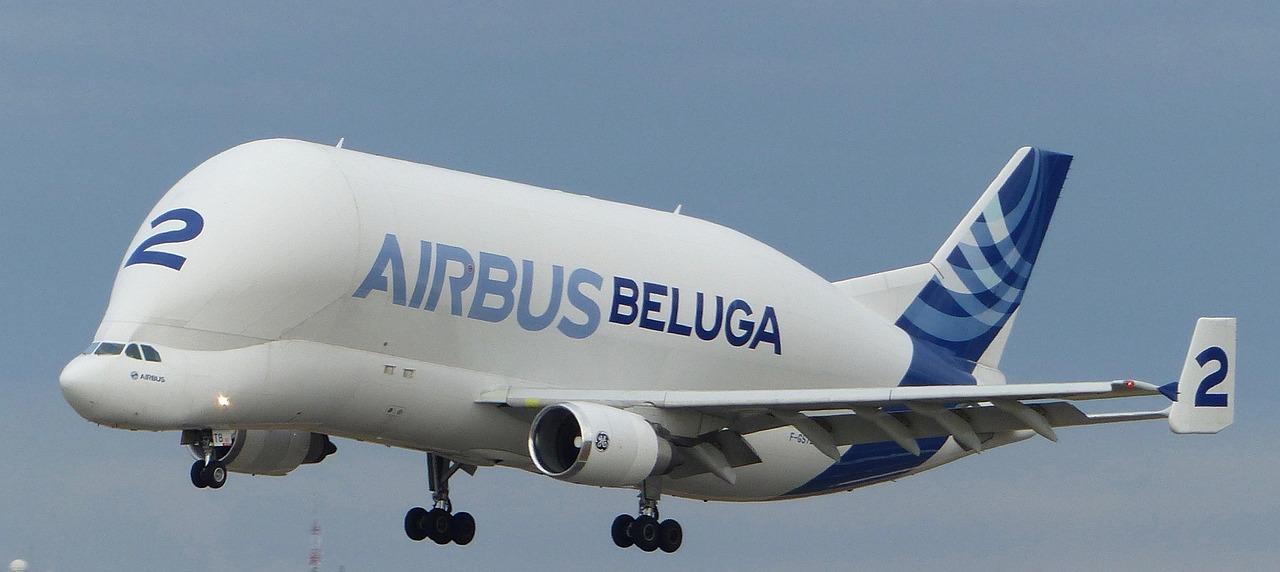
Airbus Beluga (Pixabay)
In the early 1990s, Airbus needed a fast and efficient way to transport aircraft components—such as wings and fuselage sections—produced at its facilities across different countries to final assembly lines. The capacity of the Super Guppy transport aircraft then in use proved insufficient, prompting Airbus to seek a larger and more modern solution. The A300-600ST Beluga project emerged from this need and was realized through modification of the existing A300-600 model. The first Beluga made its maiden flight in 1994 and entered service in 1995.

Airbus Beluga (Rawpixel)
The most distinctive feature of the Beluga is its large and tall cargo compartment. This section, positioned above the normal fuselage and resembling a whale’s hump, enables the transport of very large and voluminous loads. Access to the cargo bay is gained by raising the front section of the aircraft. This design allows for rapid and easy loading and unloading. The Beluga is powered by two turbofan engines.
The original Beluga model is designated as the A300-600ST. To meet growing transportation demands, a larger and more advanced variant, the BelugaXL (A330-743L), was developed. The BelugaXL is based on the A330-200F cargo aircraft and offers greater payload capacity and range. The first flight of the BelugaXL took place in 2018, and it entered service in 2020.
Airbus Beluga A300-600ST (YouTube)
The primary purpose of the Beluga is to transport large aircraft components between Airbus manufacturing facilities. However, its unique cargo capacity has also enabled its use in specialized cargo transportation. The Beluga can carry a variety of large and heavy loads, including helicopters, works of art, sensitive machinery, and even spacecraft.
The BelugaXL is a larger and more capable variant developed to replace the original Beluga. Based on the A330-200F platform, the BelugaXL offers 30% greater payload capacity and extended range. The BelugaXL’s cargo compartment is large enough to carry two A350 XWB wings simultaneously.
Airbus. "Airbus Beluga Transport." Accessed May 13, 2025. https://aircraft.airbus.com/en/services/expand/airbus-beluga-transport.
Airbus. "BelugaST." Accessed May 13, 2025. https://www.airbus.com/en/products-services/commercial-aircraft/freighter-family/belugast.
Aircargonews. "Airbus explains decision to put Beluga Airline to bed." Accessed May 13, 2025. https://www.aircargonews.net/airbus-explains-decision-to-put-beluga-airline-to-bed/1079613.article.
Aviationfile. "The Airbus A300-600ST Beluga." Accessed May 13, 2025. https://www.aviationfile.com/the-airbus-a300-600st-beluga/.
Ceyrekmuhendis. "Uçan Beyaz Balina: Airbus Beluga." Accessed May 13, 2025. https://ceyrekmuhendis.com/ucan-beyaz-balina-airbus-beluga/.
Emairplane. "Where is the Airbus Beluga Made?" Accessed May 13, 2025. https://www.emairplane.com/journal/where-is-the-airbus-beluga-made/.
Havayolu101. "Airbus A300-600ST Beluga." Accessed May 13, 2025. https://www.havayolu101.com/2012/03/25/airbus-a300-600st-beluga/.
YouTube. "Airbus Beluga A300-600ST - Takeoff at Hamburg Finkenwerder!" Accessed May 13, 2025.

Airbsu Beluga
Producer(s) | Airbus Industrie (Europe) | ||||||||
|---|---|---|---|---|---|---|---|---|---|
First Flight(s) | 13 September 1994 | ||||||||
Entry into Service | 1995 | ||||||||
Aircraft Type(s) | Heavy cargo aircraft (oversized cargo aircraft) | ||||||||
Models | BelugaXL (A330-743L) Beluga ST (A300-600ST) | ||||||||
Development Purpose and History
Design Features
Variants
Technical Specifications (A300-600ST Beluga)
Applications
BelugaXL