


This article was automatically translated from the original Turkish version.
+2 More
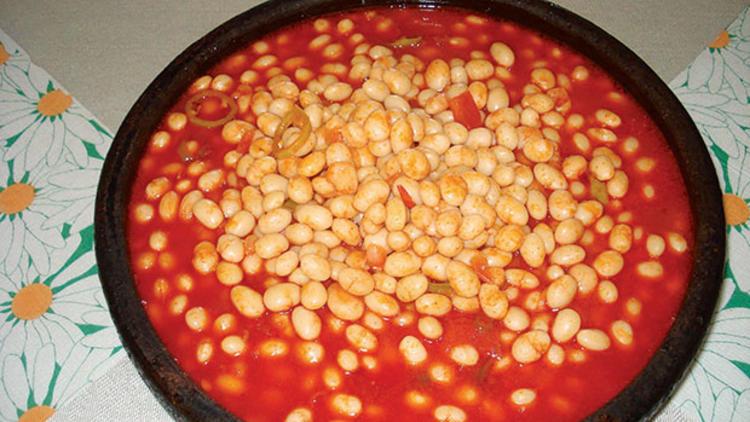
Akkuş Sugar Bean
Registration Number | 156 | ||||||||
|---|---|---|---|---|---|---|---|---|---|
Protection Date | 26.03.2010 | ||||||||
Application Number | C2010/017 | ||||||||
Type of Geographical Indication | Place of Origin | ||||||||
Applicant | Akkuş Chamber of Agriculture | ||||||||
Applicant’s Address | Yazlık Belen Mah. Dr. Hasan Rıza Çakır Sok. No:8 Akkuş ORDU | ||||||||
Product Name | Bean | ||||||||
Name of Geographical Indication | Akkuş Sugar Bean | ||||||||
Usage Format | Labeling | ||||||||
Akkuş Sugar Bean is a local variety of dry bean registered under its place of origin, Akkuş district of Ordu. This product features white, kidney-shaped seeds and is cultivated in agricultural lands characterized by a loamy, humus-rich, and clayey soil structure at elevations between 750 and 1400 meters. Akkuş Sugar Bean is produced without the use of chemical fertilizers or agrochemicals and grows as a pole-type plant with no tendency to twine, featuring light green leaves.

Akkuş Sugar Bean (AA)
Akkuş Sugar Bean is a locally registered dry bean variety with geographical indication, cultivated in the Akkuş district of Ordu province and surrounding villages in Türkiye’s Black Sea Region. Registered under the “name of origin” category, this product was officially registered on 26 March 2010 and placed under protection following its publication in the Official Gazette No. 28004 on 24 July 2011. The registering institution is the Akkuş Chamber of Agriculture.
The district’s elevation ranges from 750 to 1400 meters. The soil structure is loamy, humus-rich, and clayey. The ecological conditions of this region—particularly elevation, soil composition, and climatic factors—play a decisive role in determining the morphological and chemical properties of the bean. A notable feature of Akkuş Sugar Bean production is the absence of agrochemicals and synthetic fertilizers.
Akkuş Sugar Bean has white, kidney-shaped seeds. The plant exhibits a pole-type growth habit without any twining tendency. The plant has medium pigmentation and is characterized by light green leaves and a short-hairy surface. The leaflet shape is lanceolate, with terminal leaflets measuring on average 4 cm in both length and width.
The first pod height averages 47 cm. Immature pods are dark straw-colored, slightly curved, and have a medium wall thickness. The average pod length is 12 cm and the width is 0.93 cm. Each pod contains an average of five seeds (loci). The plant reaches a height of approximately 183 cm and produces an average of 13 pods per plant.
The seeds are on average 0.80 cm long and 0.60 cm wide. The weight of one thousand seeds is 455 grams.

Akkuş Sugar Bean (Ministry of Culture and Tourism of the Republic of Türkiye)
Seeding is typically carried out in April and May. Seeds are sown in fields fertilized with 4 kg of nitrogen (N) and 6 kg of phosphorus (P₂O₅) per hectare. The inter-row spacing is 50 cm and the intra-row spacing is 10 cm. Experimental plots usually consist of three rows, each 3 meters in length.
Weeding is performed two to three times depending on field conditions to remove weeds. Irrigation may be applied during dry periods. Harvesting is generally conducted in mid-September. Harvested pods are dried on racks at the threshing site for one week. Subsequently, pods are cleaned to extract seeds, and drying continues until the moisture content reaches approximately 13 percent.
Some key physical and technological parameters of the dried seeds are as follows:
These values enable the evaluation of Akkuş Sugar Bean in terms of cooking quality and nutritional value.
The geographical indication process and usage of Akkuş Sugar Bean are regularly monitored by authorized control authorities. The monitoring commission consists of representatives from the Ordu Provincial Directorate of Agriculture, the Field Crops Department of Ordu Faculty of Agriculture, and the Ordu Provincial Control Laboratory Directorate of the Ministry of Agriculture and Forestry, coordinated by the Akkuş Chamber of Agriculture. This commission is responsible for ensuring compliance with production methods, verifying the accuracy of production stages, and monitoring the correct use of the geographical indication. It also has the authority to conduct inspections when complaints arise.
Anadolu Ajansı. “Tescilli Akkuş Fasulyesinde Rekolte Artışı Bekleniyor.” Accessed June 15, 2025. https://www.aa.com.tr/tr/turkiye/tescilli-akkus-fasulyesinde-rekolte-artisi-bekleniyor-/1253639.
Ministry of Culture and Tourism. "Akkuş Kuru Fasulyesi." Kültür Portalı. Accessed June 15, 2025. https://www.kulturportali.gov.tr/turkiye/ordu/neyenir/akkus-kuru-fasulyesi.
Turk Patent and Trademark Office. "Akkuş Kuru Fasulyesi Tescil Belgesi." PDF document. Accessed June 15, 2025. https://ci.turkpatent.gov.tr/Files/GeographicalSigns/156.pdf.
Turkish Patent and Trademark Office. "Akkuş Kuru Fasulyesi." Geographical Indications. Accessed June 15, 2025. https://ci.turkpatent.gov.tr/cografi-isaretler/detay/38022.

Akkuş Sugar Bean
Registration Number | 156 | ||||||||
|---|---|---|---|---|---|---|---|---|---|
Protection Date | 26.03.2010 | ||||||||
Application Number | C2010/017 | ||||||||
Type of Geographical Indication | Place of Origin | ||||||||
Applicant | Akkuş Chamber of Agriculture | ||||||||
Applicant’s Address | Yazlık Belen Mah. Dr. Hasan Rıza Çakır Sok. No:8 Akkuş ORDU | ||||||||
Product Name | Bean | ||||||||
Name of Geographical Indication | Akkuş Sugar Bean | ||||||||
Usage Format | Labeling | ||||||||
Geographical Production Area and Agricultural Environment
Morphological Characteristics
Production Method
Physical and Technological Properties
Monitoring and Control