


This article was automatically translated from the original Turkish version.
+2 More
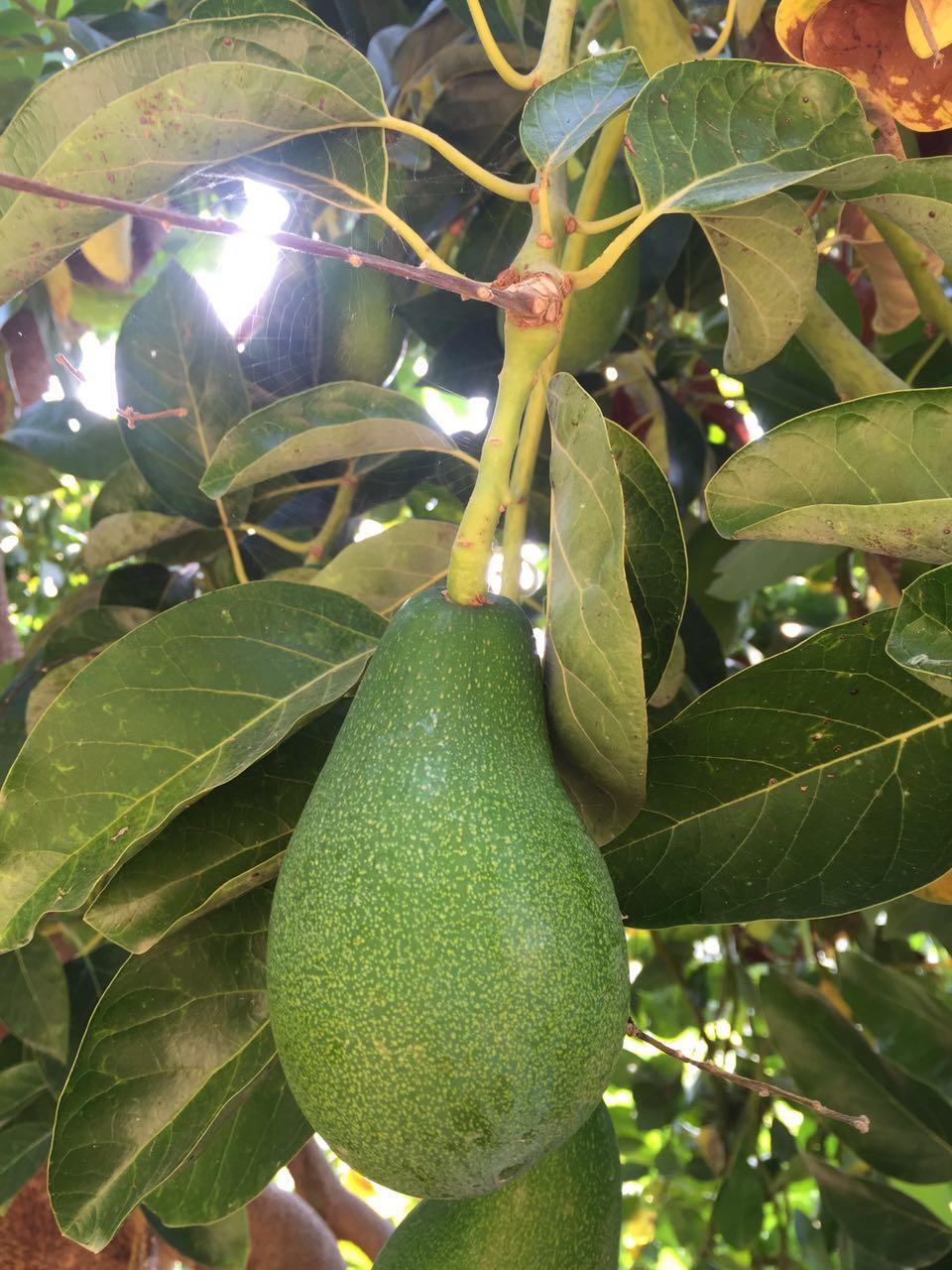
Alanya avocado is a variety of Fuerte avocado, geographically registered and cultivated in the districts of Alanya and Gazipaşa in Türkiye’s Antalya Province. It is recognized by its dark green, slightly textured, pear-shaped fruits, which typically weigh 150–300 grams and are distinguished by their pale yellow-green flesh and large seed. The region’s microclimate, particularly the protective influence of the Taurus Mountains and the Mediterranean climate, provides ideal natural conditions for its cultivation. Alanya avocado is notable for its high oil content (15–20%) and significant nutritional value; it is produced using controlled propagation, irrigation, fertilization, and pruning techniques, with harvest occurring between November and April.

Alanya Avocado (AA)
Alanya avocado is an agricultural product grown exclusively in the districts of Alanya and Gazipaşa in Türkiye’s Antalya Province and officially registered as a geographical indication on 15 October 2018. This avocado, registered under its place of origin, is protected by the Alanya Chamber of Commerce and Industry, and the designation “Alanya Avocado” may be used alongside its brand mark on the product. Approximately 80% of Türkiye’s avocado production occurs in Antalya Province, with over 80% of that produced in Alanya and Gazipaşa, across a total area of 4,000 decares and approximately 60,000 trees.
Avocado was introduced to Türkiye in the 1970s through initiatives by Turkish embassies in the Americas and with the support of the Food and Agriculture Organization. The initial varieties brought in included Fuerte, Hass, Bacon, and Zutano. Early planting trials conducted along the Antalya-Mersim coast demonstrated the region’s suitability for avocado cultivation.
Alanya avocado can be cultivated in open fields, but successful production requires adaptation to local climatic conditions. Late frosts in winter and spring, low temperatures during flowering and fruit set, sudden temperature fluctuations, strong winds, and excessively high temperatures during the seedling stage negatively affect plant development. Over many years, the average annual temperature in the Alanya region is 19°C, with August being the hottest month at 27°C and January the coldest at 12°C. The region exhibits typical Mediterranean climate characteristics: wet and humid winters and hot, dry summers. Land designated for orchards must be sheltered from strong winds and free from frost risk. Damage may occur when temperatures fall below 2.8°C.
For Alanya avocado cultivation, the soil should be well-drained, deep, rich in organic matter, loamy-sandy, loose, and neutral in reaction (pH approximately 7.0). The region’s soils are slightly alkaline (pH 7.89), low in lime (2.8%), non-saline, and sandy-clayey in structure. Organic matter content is 3.1%, available phosphorus is 26 ppm, and available potassium is 205 ppm.
The most commonly used propagation method in production is grafting. Eye or whip grafts are performed on rootstock seedlings. Seeds are sown immediately after extraction from the fruit. To facilitate germination, the seed coat is removed and a thin layer is carefully cut from the lower or upper side of the cotyledons. Seeds can be sown in trays, polyethylene bags, pots, or directly in nurseries. Spacing in trays should be 10x10 cm and in nurseries 40x90 cm. When sowing in bags or pots, only one seed is placed per container, and a partially shaded environment is preferred. The sowing medium typically consists of a peat:sand:perlite mixture (3:1:1) with a pH maintained between 6.5 and 7.0.
Seeds germinate within 1 to 6 months and develop into rootstock seedlings. Seedlings grown in partial shade reach seedling size in 2 to 2.5 years, while those grown in greenhouses achieve this in half the time. Seedlings are fertilized once they develop 5 to 6 leaves. When transplanting seedlings from the nursery to the orchard, well-drained soil is preferred and irrigation is carried out every 7 to 10 days. During summer months, irrigation frequency increases due to the effects of hot and dry winds.
In nurseries, 10 grams of pure nitrogen (ammonium sulfate) is applied per meter of row. When sown in bags or pots, 20–25 grams of ammonium sulfate is added per container. Alanya avocado is sensitive to iron deficiency, particularly lime-induced chlorosis; therefore, preparations such as iron chelate or iron sulfate are applied.
Seedlings reach grafting thickness within one year after autumn sowing; under greenhouse conditions, this period is reduced to six months. Grafting is performed during the bark-splitting period. Eye grafts are typically carried out in autumn or spring, while whip grafts are applied especially in spring (April–May). Scions used are shoots of the same thickness as the rootstock, bearing 3 to 4 buds. After grafting, the graft union is tied with plastic grafting tape and covered with grafting wax. Successful grafts show sprouting signs within 2 to 3 weeks; during this period, shoots emerging from the rootstock are removed, leaving only the most vigorous shoot. Graft ties are removed after approximately 8 to 10 weeks.
Recommended planting spacings for orchards are 6x6 m or 7x7 m. It is essential to plant cross-pollinating varieties together; therefore, Hass or Wurts varieties, which have A-type flower structure, are planted at a 1:9 ratio alongside Fuerte. The optimal planting time is early spring, after the risk of frost has passed. During planting, plastic tubes are carefully removed without damaging roots, twisted or damaged roots are pruned, and the seedling is positioned so that the graft union remains above ground level. Immediate watering is applied after planting, followed by staking.
In the Alanya region, drip irrigation and basin irrigation are the most common methods. Drip irrigation ensures efficient water use by moistening only the root zone; irrigation frequency varies between 1 and 7 days. Basin irrigation is practiced using either conventional basin or long-basin methods. The conventional basin method involves watering enclosed areas on flat terrain using small earth bunds; the long-basin method creates long strips along the slope to allow controlled water flow. Irrigation is most intensive in July and August.
Nitrogen fertilization for young trees increases annually. In the first year, 50 grams of pure nitrogen per tree is applied; in the second year, 100 grams; in the third year, 150 grams; and in the fourth year, 200 grams. For bearing trees, 3–4 kilograms of ammonium sulfate, 500 grams of triple superphosphate, and 750 grams of potassium sulfate are applied annually per tree. Phosphorus and potassium fertilizers are applied in November–December from the fourth year onward, while nitrogen fertilizers are applied in January–February and April–May. Additionally, every 3 to 4 years, 2–3 tons of manure per decare are applied to support soil structure.
Initial pruning is performed at planting; thereafter, a central leader system is established with three main branches and one central leader. Grafting wax is applied to cuts on thick branches. The pruning period occurs after harvest and extends into February–April, when vegetative growth resumes. Summer pruning involves tip removal.
Harvesting begins 3 to 4 years after grafting. Harvest occurs between November and April. Fruits are carefully hand-picked or collected using harvesting tools, keeping the stem attached; they must not be dropped from height to avoid damage. After sorting, washing, and grading, fruits are wrapped in paper and placed in special cardboard boxes. Alanya avocado softens in 6–12 days at room temperature (21°C) and in 30–40 days at 5°C; storage temperature should be maintained at 5–6°C, and the product should not be stored for more than three weeks.
Compliance with specified characteristics and technical requirements during the production, storage, transportation, and marketing of Alanya avocado is monitored under the provisions of Law No. 6769 on Industrial Property. This inspection is carried out by a three-member inspection unit coordinated by the Alanya Chamber of Commerce and Industry, comprising one expert each from the Alanya Agricultural Chamber and the Alanya District Directorate of the Ministry of Agriculture and Forestry.
Inspections are conducted at least once annually; additional inspections may be carried out as needed or upon complaint. The primary responsibility of the inspection unit is to verify whether the product possesses the distinctive characteristics of Alanya avocado and whether it has been cultivated in accordance with approved production methods, as well as to monitor compliance with the geographical indication.
The main factors considered during inspections are:
Laboratory analyses are conducted at the Alanya District Food, Agriculture and Livestock Directorate Analysis Laboratory. The inspection unit has the authority to initiate legal proceedings upon identifying non-compliance.
The unit also provides information to producers, chambers, and actors in the marketing and distribution chain regarding the scope and obligations of the geographical indication registration, aiming to raise awareness. Inspection results are reported and submitted annually to the Turkish Patent and Trademark Office.
During inspection processes, support may be obtained or services procured from public institutions, private organizations, or qualified experts in the field. The unit is also responsible for pursuing legal actions to protect rights.

Geographical Indication Information
History
Production Methods
Climatic Conditions
Soil Characteristics
Propagation Methods
Seedling Production
Fertilization
Grafting
Orchard Establishment
Irrigation Methods
Fertilization of Young and Bearing Trees
Pruning and Training
Harvesting, Packaging, and Storage
Monitoring and Inspection