


This article was automatically translated from the original Turkish version.
+2 More
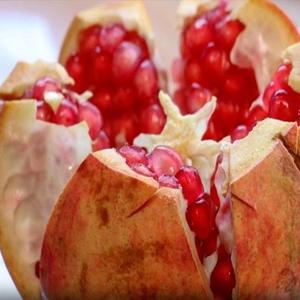
Gazipaşa Seedless Pomegranate
Registration Number | 1458 | ||||||||
|---|---|---|---|---|---|---|---|---|---|
Registration Date | 24.08.2023 | ||||||||
Application Number | C2022/000354 | ||||||||
Application Date | 24.10.2022 | ||||||||
Name of the Geographical Indication | Gazipaşa Seedless Pomegranate | ||||||||
Product / Product Group(s) | Pomegranate / Processed and Unprocessed Fruits and Vegetables and Mushrooms | ||||||||
Type of Geographical Indication | Place of Origin | ||||||||
Applicant/Registrant(s) | Gazipaşa Municipality | ||||||||
Address of the Registrant | Yeni Mah. İnönü Cad. Gazipaşa Belediyesi No:5 Gazipaşa ANTALYA | ||||||||
Geographical Boundary | Gazipaşa District Antalya Province | ||||||||
Gazipaşa Seedless Pomegranate is a variety of pomegranate (Punica granatum L.) native to the Gazipaşa district of Antalya, resulting from natural mutations. Known as “seedless” due to its exceptionally soft seeds, this pomegranate is primarily consumed as a table fruit. Its outer peel is thin and light green-yellow in color, while the internal arils are pale pinkish-red. It has low acidity and a sweet aroma. The arils are large and easily separable. Grown at elevations between 100 and 1800 meters in Gazipaşa’s sloped, terraced, and permeable soils, this pomegranate thrives under the region’s specific climate and soil conditions.
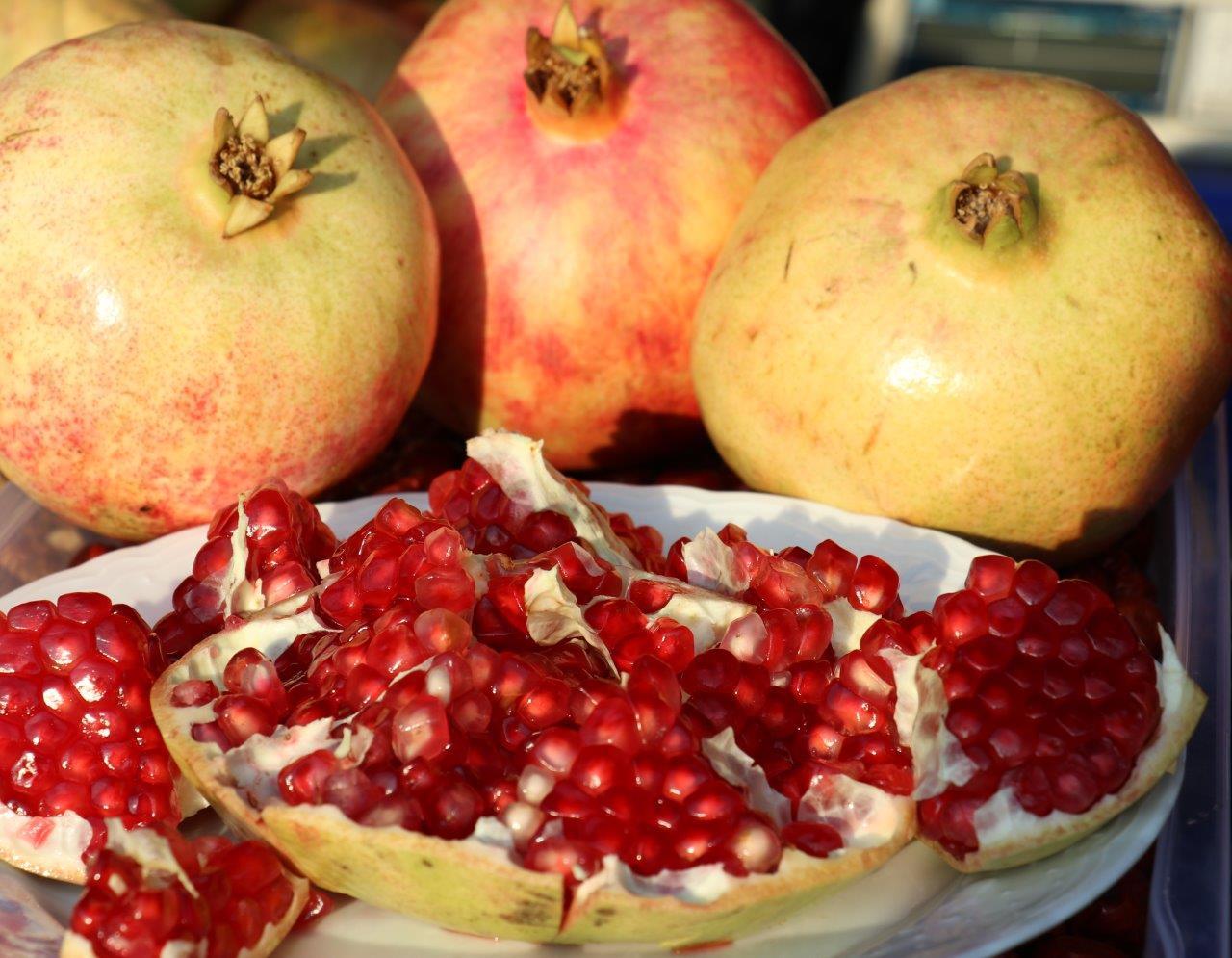
Gazipaşa Seedless Pomegranate (Türk Patent)
The Gazipaşa Seedless Pomegranate belongs to the species Punica granatum L. and is cultivated exclusively within the boundaries of Gazipaşa district in Antalya Province, Türkiye. This variety emerged through natural mutations and was officially registered as a geographical indication on 24 August 2023 under number 1458. The application for registration was submitted on 24 October 2022 by the Gazipaşa Municipality, and the geographical indication applies solely to products grown within Gazipaşa’s administrative limits.
As its name suggests, the Gazipaşa Seedless Pomegranate possesses a very soft seed structure, which qualifies it as “seedless.” It is generally suited for table consumption. Its arils are large, easily separable, and sweet. Due to its low acidity level (%0.216 ± 0.028), the fruit exhibits a mild, sugary aroma. The outer peel is thin and light green-yellow, while the internal flesh is described as pale pinkish-red.
Its pomological and chemical properties can be summarized as follows:
Cultivation areas are predominantly sloped and terraced. The soil structure is sandy, permeable, stony, and slightly calcareous. Production zones range from 100 to 1800 meters above sea level. Particularly in late summer and autumn, a temperature difference of approximately 5 °C between sea level and higher elevations influences fruit color development and internal composition.
The tree has a medium vigor and can reach a trunk diameter of up to 25 cm in a single-stem system. The plant is prone to developing basal shoots and vigorous branches. Moderate thorniness is observed on young shoots. Flowers are hermaphroditic and red in color. Fruit formation typically occurs on two-year-old shoots. Economic yield is reached between the fifth and sixth years, with the first harvest possible from the third year onward.
The Gazipaşa Seedless Pomegranate is produced exclusively using cuttings taken from pomegranate trees grown within the designated geographical boundaries. This production method ensures that the entire vegetative propagation process relies solely on region-specific materials.
The variety is cultivated under conditions of hot, long summers and mild, rainy winters. It has low chilling requirements but high total heat needs. Although tolerant to temperatures as low as -10 °C, its late flowering reduces vulnerability to late spring frosts. The risk of early autumn frosts during harvest season is low in the region. Cultivation is typically carried out on sloped and terraced land. Soil is sandy, permeable, stony, and slightly calcareous; production is occasionally also possible in clayey soils.
Propagation is achieved through cuttings. Cuttings of 20–25 cm length are planted directly into soil or plastic bags during January–February for root development. Cuttings rooted in spring and summer continue to develop until leaf drop. A rooting success rate of 95% is achieved. Seedlings are transplanted directly from the soil or removed from bags for orchard planting.
Before planting, deep tillage is performed and existing vegetation is cleared. Planting holes are 30–40 cm wide and 40–50 cm deep. 2–2.5 tons of well-rotted farmyard manure per hectare are applied. Planting density is determined according to land structure and agricultural practices: inter-row spacing ranges from 2.5 to 5 meters and intra-row spacing from 2.5 to 5 meters. Bare-root seedlings are planted during the leafless period, while container-grown seedlings can be planted outside the hot summer months. Root pruning is performed during planting, followed by irrigation. Orchards may be established using either single-stem or multi-stem systems.
Soil management is carried out manually or with small machinery, especially in narrow and fragmented plots. Pruning begins after autumn leaf fall and is completed in spring. Due to the high tendency for basal and vigorous shoot development, these are regularly removed. In single-stem systems, a heading cut at 60–70 cm height promotes canopy formation. Yield pruning begins from the third year. Since fruit develops on two-year-old shoots, these are carefully preserved. Older branches are removed to stimulate renewal from basal shoots.
From bud break in spring until harvest, adequate soil moisture must be maintained. Drip irrigation is the predominant method; flood irrigation is used only in limited areas. Irrigation is stopped approximately 10–15 days before harvest, as late irrigation may cause fruit cracking. Rainfall near harvest and significant day-night temperature differences promote chlorophyll degradation in the peel and internal color transformation.
Fertilization is planned based on soil analysis. For a 10-year-old tree, the general recommendation is 300–500 g nitrogen, 200 g phosphorus, and 200 g potassium. Phosphorus and potassium are applied in November–December, while nitrogen is applied in two stages: February and May–June. Ammonium sulfate and urea (nitrogen sources), potassium sulfate, and triple superphosphate (TSP) are commonly used fertilizers. These are either incorporated into the soil or applied after irrigation. Liquid fertilizers delivered via drip systems are especially common during the vegetative phase.
Orchards may be affected by diseases such as brown spot, anthracnose, and fruit rot, as well as pests including the Mediterranean fruit fly, pomegranate whitefly, aphids, citrus flatid planthopper, and mealybugs. Control measures follow current cultural and chemical practices. Measures such as pruning, adjusted irrigation schedules, and kaolin applications can help reduce physiological problems like fruit cracking and sunburn.
Harvesting begins in the second half of October. Due to extended flowering periods, harvesting is typically conducted in two to three stages. First, fruits with fully opened calyces and large size are collected. Care is taken during harvest to avoid damaging the calyces, using specialized fruit shears. After harvest, fruits are waxed and packed with calyces aligned in the same direction. Due to its thin peel, the fruit is susceptible to injury, which can shorten shelf life. The product is stored at 0–6 °C and 85–90% relative humidity under modified atmosphere conditions. Storage areas are disinfected prior to use with approved fungicides.
Monitoring of the production and commercialization processes of the Gazipaşa Seedless Pomegranate is coordinated by the Gazipaşa Municipality. Monitoring authority is assigned to a three-member expert team appointed by the Gazipaşa Municipality, the Gazipaşa District Directorate of Agriculture and Forestry, and the Gazipaşa Chamber of Agriculture. This team conducts inspections at regular intervals, at least once per year. Additional inspections may be carried out at any time during the year if deemed necessary or upon receipt of a complaint.
The inspection scope includes compliance with established production methods, orchard establishment, disease and pest control practices, harvesting techniques, storage and preservation conditions, as well as verification that the product’s chemical and pomological characteristics conform to those specified in the registration dossier. It also checks whether the designation “Gazipaşa Seedless Pomegranate” and its geographical indication emblem are correctly applied.
The inspection team may seek support from or contract experts from public institutions or the private sector as needed. Legal matters concerning the geographical indication rights of the product fall under the responsibility of the registering authority.
Gazipaşa Belediyesi. “Çekirdeksiz Nar.” Accessed June 15, 2025. https://gazipasa.bel.tr/18--cekirdeksiz-nar
Turk Patent and Trademark Office. "Gazipaşa Çekirdeksiz Narı Coğrafi İşaret Tescil Belgesi." Accessed June 15, 2025. https://ci.turkpatent.gov.tr/Files/GeographicalSigns/0b2d8cc9-e922-41e1-b195-05acab19a296.pdf
Turk Patent and Trademark Office. "Gazipaşa Çekirdeksiz Narı." Accessed June 15, 2025. https://ci.turkpatent.gov.tr/cografi-isaretler/detay/7786

Gazipaşa Seedless Pomegranate
Registration Number | 1458 | ||||||||
|---|---|---|---|---|---|---|---|---|---|
Registration Date | 24.08.2023 | ||||||||
Application Number | C2022/000354 | ||||||||
Application Date | 24.10.2022 | ||||||||
Name of the Geographical Indication | Gazipaşa Seedless Pomegranate | ||||||||
Product / Product Group(s) | Pomegranate / Processed and Unprocessed Fruits and Vegetables and Mushrooms | ||||||||
Type of Geographical Indication | Place of Origin | ||||||||
Applicant/Registrant(s) | Gazipaşa Municipality | ||||||||
Address of the Registrant | Yeni Mah. İnönü Cad. Gazipaşa Belediyesi No:5 Gazipaşa ANTALYA | ||||||||
Geographical Boundary | Gazipaşa District Antalya Province | ||||||||
No Discussion Added Yet
Start discussion for "Gazipaşa Seedless Pomegranate" article
Distinguishing Characteristics
Ecological Conditions
Botanical Characteristics
Production Process
Climate and Soil Conditions
Seedling Production and Orchard Establishment
Soil Management and Pruning
Irrigation Practices
Fertilization
Diseases and Pests
Harvesting, Packaging, and Storage
Monitoring